
KINTEX: Developing a Global Space Competitiveness by Constructing its Third Exhibition Center
Opening a New Runway for K-Industry
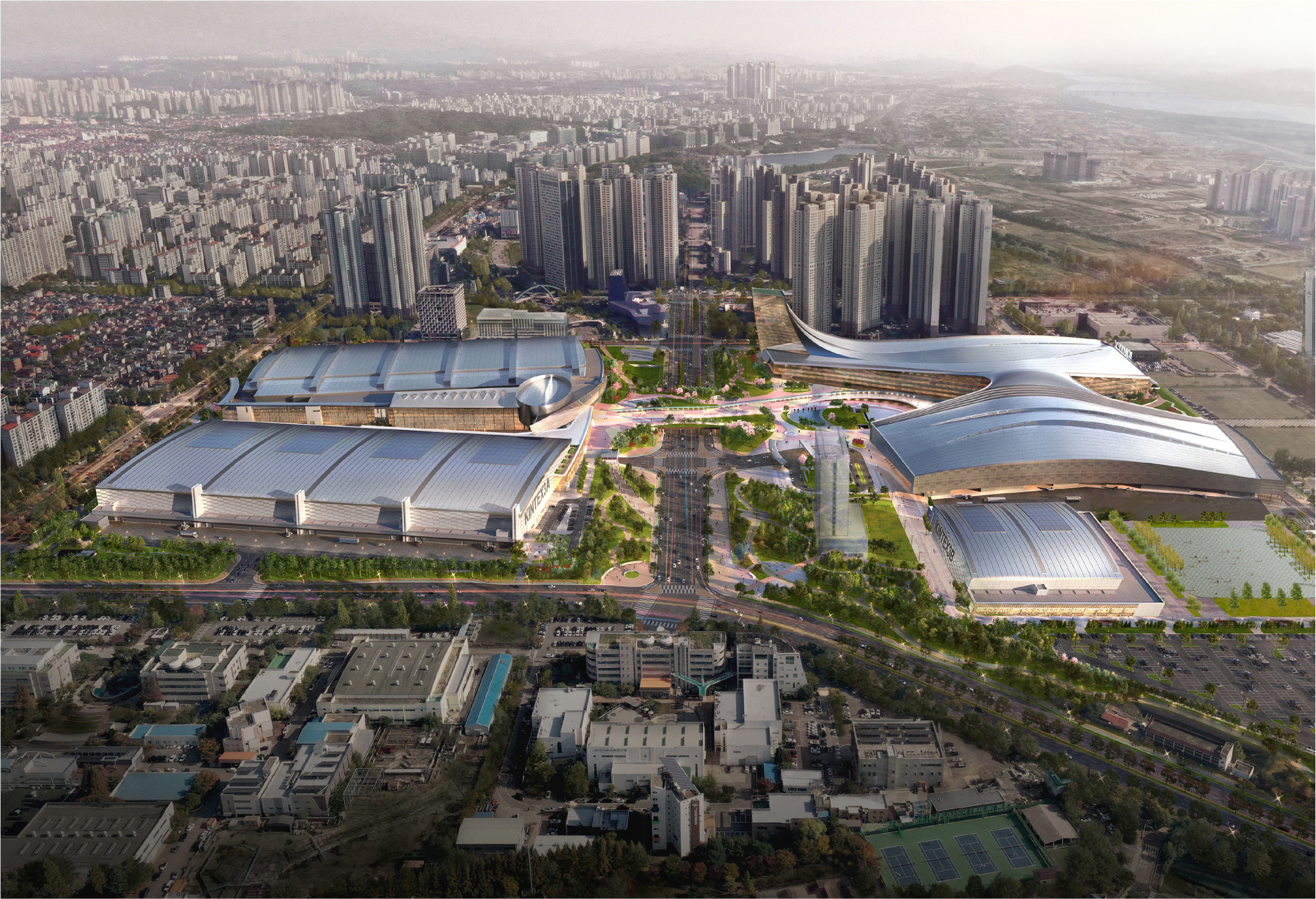
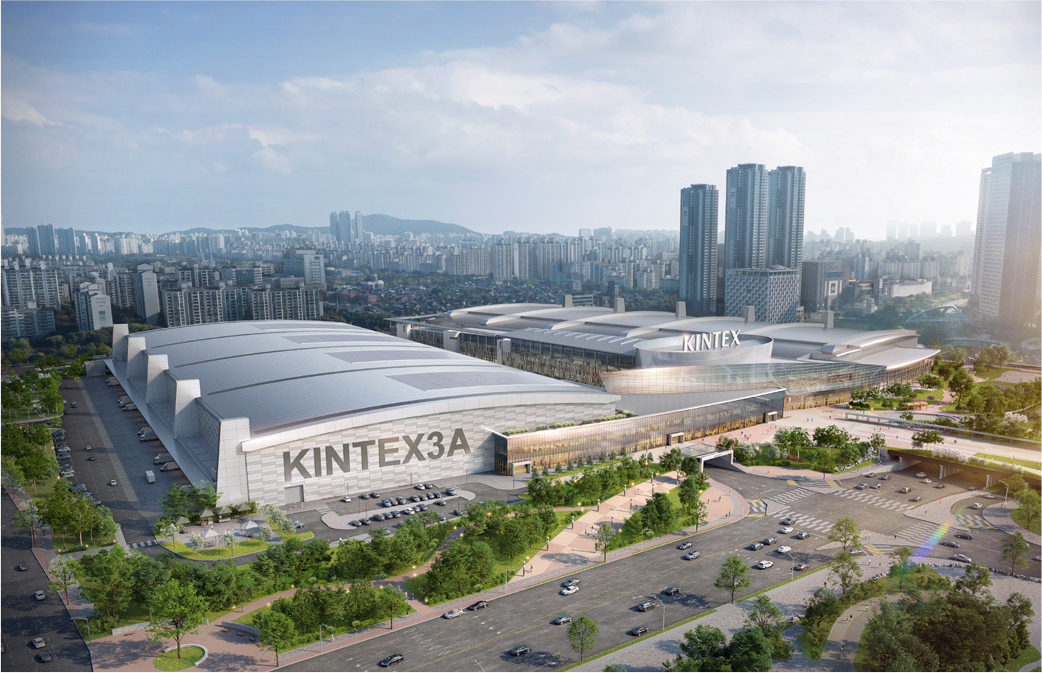
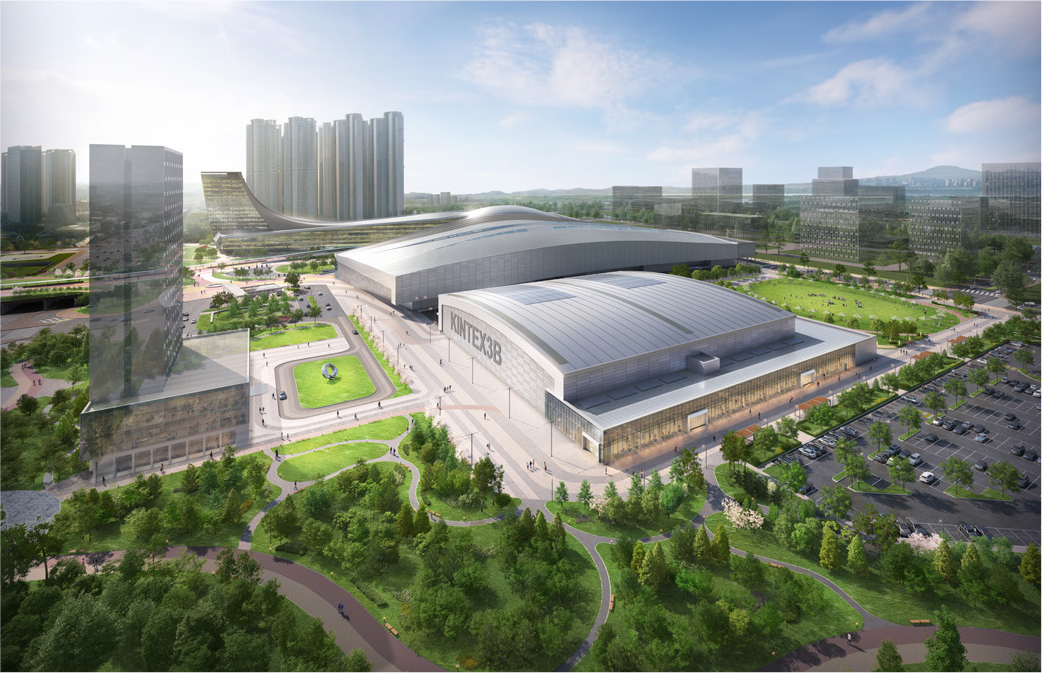
KINTEX is currently constructing its third exhibition center, scheduled for completion in the second half of 2028. This project represents an infrastructure investment aimed at overcoming the structural limitations of the Korean exhibition industry, while also embodying a strategy to steadily attract large-scale global exhibitions and elevate KINTEX on the global stage.
With the completion of the third exhibition center, KINTEX’s total exhibition space will increase from 108,000 square meters to 170,000 square meters. It will also rise from 66th to the top 30 globally in terms of exhibition space, providing KINTEX with the physical capacity to simultaneously accommodate large-scale and multi-purpose exhibitions. This will effectively establish the foundation for KINTEX’s full-fledged entry into the global exhibition market.
For KINTEX, the construction of the third exhibition center is not simply an expansion project; it is a strategic decision that reflects the reality that the competitiveness of the nation’s exhibition industry hinges on the scale of its space. The exhibition center will function as an industrial platform where technology disclosure, market validation, and contract signing can occur simultaneously. It is not simply a space for promotion, but a space where business is completed.
Accordingly, the value of offline space in the exhibition industry is actually increasing even amid the proliferation of digital technology. As of 2025, the scale of the global exhibition industry reached approximately $60 billion, with an average annual growth rate of over 5%.
The problem, however, still lies in Korea’s spatial competitiveness. Exhibition powerhouses like the USA, China, and Europe are leading the global exhibition market with exhibition infrastructure spanning millions of square meters. In contrast, Korea’s total exhibition space is a mere 310,000 square meters, occupying a mere 0.7% of the global overall scale. Compared to its economic size, Korea’s exhibition infrastructure is significantly lagging behind. This gap in space availability is leading to a significant gap in Korea’s competitiveness in the hosting of exhibitions.
The construction of this third exhibition center aims to take this challenge to the next level. Beyond mere quantitative
expansion, it will be transformed into a smart exhibition center utilizing big data and artificial intelligence (AI). With the construction of the new center, visitor flow will be managed through data, further enhancing the efficiency of matching between participating companies and buyers. Furthermore, temperature, lighting, and power will be managed automatically. The goal is to transform all aspects of exhibition center operations into a data-driven system, thereby enhancing efficiency and productivity.
The opening of the GTX-A express train line has also improved accessibility to KINTEX. With the expansion of linked infrastructure, including anchor hotels, and multiplex buildings for parking, the whole area of KINTEX is expected to develop into a self-sufficient MICE complex combining exhibitions, lodging, transportation, and business.
KINTEX’s CEO Lee Min-woo described the construction of the third exhibition center as an expansion of Korea’s business runway, emphasizing, “Exhibition centers are economic infrastructure that connects industries and actualizes contracts. The third exhibition center will serve as a significant opportunity to broaden the physical foundation for domestic companies to compete in the global market.”
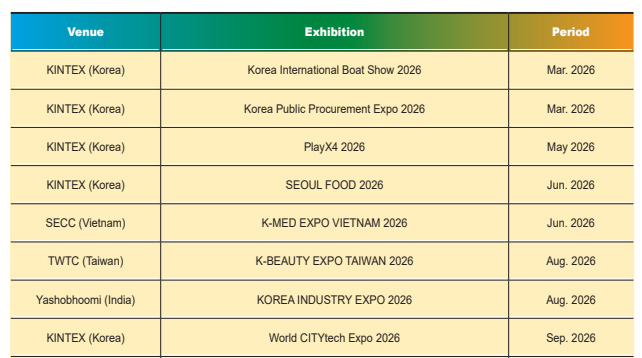
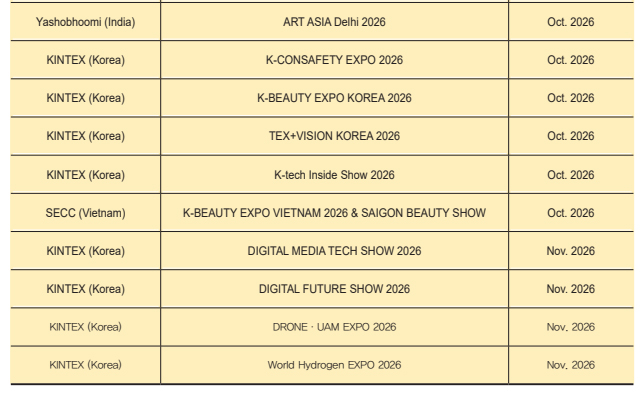
Major Exhibitions in 2026
korean-electronics.com | Blog Magazine of korean electronics, brands and Goods



 Korean-Electronics.com
Leave a comment