AVATEC

https://korean-electronics.com//inquiry

AVATEC: Growing into a Reliable Partner Of Global Leading Companies

“We are differentiating ourselves as a global technology partner that helps customers solve real-world challenges and deliver reliable, application-specific performance, by not simply staying caught in the production of standard MLCCs.”

CEO Park Myoung-sub
 

AVATEC, founded in 2000, is a KOSDAQ-listed company specializing in high-reliability Multi-Layer Ceramic Capacitators (MLCCs) and electronic component solutions. Beginning with the domestic production of core display components, AVATEC established a mass- production system for automotive and industrial MLCCs at its business place located in Gumi City, North Gyeongsang Province, in 2018.
Based on global certifications, AVATEC has been supplying its highly competitive components to customers in diverse sectors, including automotive electronics, energy industries, etc.
We met the CEO of the company – in order to find out the secret of the sustainable growth of the company in the global markets.


First, could you please introduce AVATEC to our readers?
Since its establishment in 2000, AVATEC has been at the forefront of localizing and advancing key display components in Korea. In 2011, we expanded into LCD and OLED etching processes, which laid the foundation for our continuous growth. Building on that expertise, we officially entered the high-reliability MLCC business for automotive and industrial applications in 2018.
By integrating precision control with advanced automation, we successfully internalized core equipment technologies. This achievement has allowed us to secure both productivity and quality competitiveness. Our MLCC products have passed the rigorous qualification tests of leading global companies, proving our technological excellence.
We do not see ourselves merely as a parts supplier. Instead, we aim to become a true technology partner, providing customized solutions tailored to each customer’s needs. Moving forward, we will continue to build on trust and collaboration to deliver differentiated competitiveness in the global MLCC market.

What are the differentiated strengths of AVATEC?
While many MLCC manufacturers focus on obtaining standard certifications and building mass-production systems, AVATEC distinguishes itself by developing technologies optimized for specific applications.
Firstly, we offer proprietary low-noise MLCC technology, which ensures optimal performance in automotive infotainment systems and other noise-sensitive environments. Rather than supplying generic products, we provide tailored solutions that reflect the customer’s actual operating conditions.
Secondly, our fine-particle selection technology allows us to maintain stability and reliability even when dielectric layers become thinner. By utilizing highly crystalline fine particles, we can achieve both miniaturization and high capacitance ― two critical requirements in automotive and energy applications.
Finally, through advanced material composition technology, we have achieved stable dielectric constants in the range of 2,000 to 3,000. This enables high-capacitance designs that ensure long-term reliability, even in high-voltage and high-power environments. Customers can depend on our MLCCs to perform consistently in demanding applications.
AVATEC goes beyond the production of standard MLCCs. We differentiate ourselves as a technology partner that helps customers solve real-world challenges and deliver reliable, application-specific performance.

What are Avatec’s core technological capabilities?
Our main focus is on high-reliability MLCCs ― X5R, X7R, X8R, and C0G types ― designed for automotive and industrial environments where stability and durability must be guaranteed even under extreme conditions. For example, in Highly Accelerated Life Testing (HALT), our products have maintained stability over extended periods of severe stress, delivering performance that exceeds the stringent reliability standards of AEC-Q 200.
This demonstrates our technological strengths in areas such as multi-layer design optimization, ceramic powder control technology, and strict process monitoring. By managing the entire production process ― from raw material preparation through to final inspection ― we ensure consistent quality across all lots. This level of control is critical in industrial settings where even the slightest performance deviation cannot be tolerated.
Reliability is very important in the field of automotive electronics. How do you guarantee it?
International quality standards and AEC-Q200 certification are just the baseline for us. Beyond that, we conduct extended verification tests such as HALT, Thermal Shock, and Long-term Voltage Endurance Testing.
Every product undergoes a fully traceable quality-control system across all manufacturing stages, ensuring consistency from start to finish. We also provide customers with transparent access to our reliability test results. Through this approach, our components deliver not only laboratory-level performance, but also proven stability in real-world operating environments.

What markets and applications are you planning to focus on in the future?
Our core focus is on automotive electronic systems for OEMs and Tier-1 suppliers, including ADAS, inverters, DC-DC converters, BMS, and infotainment systems. In the automotive industry, stability, high reliability, and long-term quality assurance are non-negotiable. That is why durability and consistent performance are the top priorities for our MLCC solutions.

In addition, we are strategically strengthening our presence in the renewable energy sector, particularly in solar and energy applications. In ESS, battery test equipment, and inverters, where high-voltage and high-power environments demand exceptional durability and secure supply capabilities, our competitiveness truly stands out.
Going forward, we aim to position ourselves not just as a supplier, but as a technology partner that provides tailored MLCC solutions to meet customer needs. By doing so, we will continue to drive innovation together with the automotive and energy industries.

Could you share an example of how AVATEC has responded to a certain customer’s needs?
Even during the COVID-19 period, we successfully delivered a large volume of MLCCs within a short timeframe to a leading global solar solutions company― proving once again the strength of our competitiveness. Behind this achievement was our in-house manufacturing capability and ability to rapidly shift into mass production. By building and internalizing key processes instead of relying on external suppliers, we established a system that allows us to immediately respond with large-scale production whenever customers require it.
Since 2018, we have also accumulated extensive experience in mass-producing MLCCs for automotive and industrial applications. This background enabled us to significantly shorten the timeline from pilot production to full-scale manufacturing. Developing a single product meant running hundreds of experiments and verifications, repeatedly applying international quality standards within our own system until we reached the confidence of saying, “this is reliable.”
As a result, our products passed the demanding qualification processes of global leaders on the first attempt, earning trust from the very early stages of collaboration and securing a stable supply chain within a short period of time.
Equally important, we had already positioned both automotive electronics and renewable energy ― especially solar and ESS ― as strategic growth pillars. The alignment between our market strategy and the customer’s core business needs turned this large-scale supply success into more than just a transaction; it became a reinforcement of a long-term partnership. Going forward, we will continue to respond swiftly to customer demands and solidify our role as a technology partner, delivering tailored MLCC solutions and strengthening our presence in the global market.

What is AVATEC’s vision for the next five years?
Our vision is to establish AVATEC as the ‘go-to partner’ in the global market for high-reliability MLCCs in automotive and industrial applications. By combining advanced material technology, rigorous reliability testing, and a partnership-driven mindset, we aim to become synonymous with precision, trust, and innovation.
To achieve this, we will continue to invest in advanced materials research, further strengthen our already strict reliability testing protocols, and deepen collaborative relationships with our customers. For us, success is not measured simply by market share, but by the long-term value we create together with our partners.

 Lastly, do you have any message for potential customers in the global markets?
Our focus is not on competing by volume, but on building trust and long-term partnerships. Every component we produce carries a sense of responsibility and commitment to our customers’ success.
As the automotive industry accelerates toward electrification and intelligence, and as the energy sector continues to advance, the role of proven, high-quality MLCCs has never been more critical. We ensure that each and every MLCC we deliver embodies consistent quality and circuit stability. We are committed to being a reliable partner, preparing for the future hand-in-hand with our customers.


korean-electronics.com | Blog Magazine of korean electronics, brands and Goods
Paving the Way to the Future of Buyeoas a Strong Economy County

https://korean-electronics.com//inquiry

By responding to regional crises through investment attraction, overseas agriculture expansion, local currency, and global branding, Mayor Park Jung-hyun is promoting engines for Buyeo’s future growth

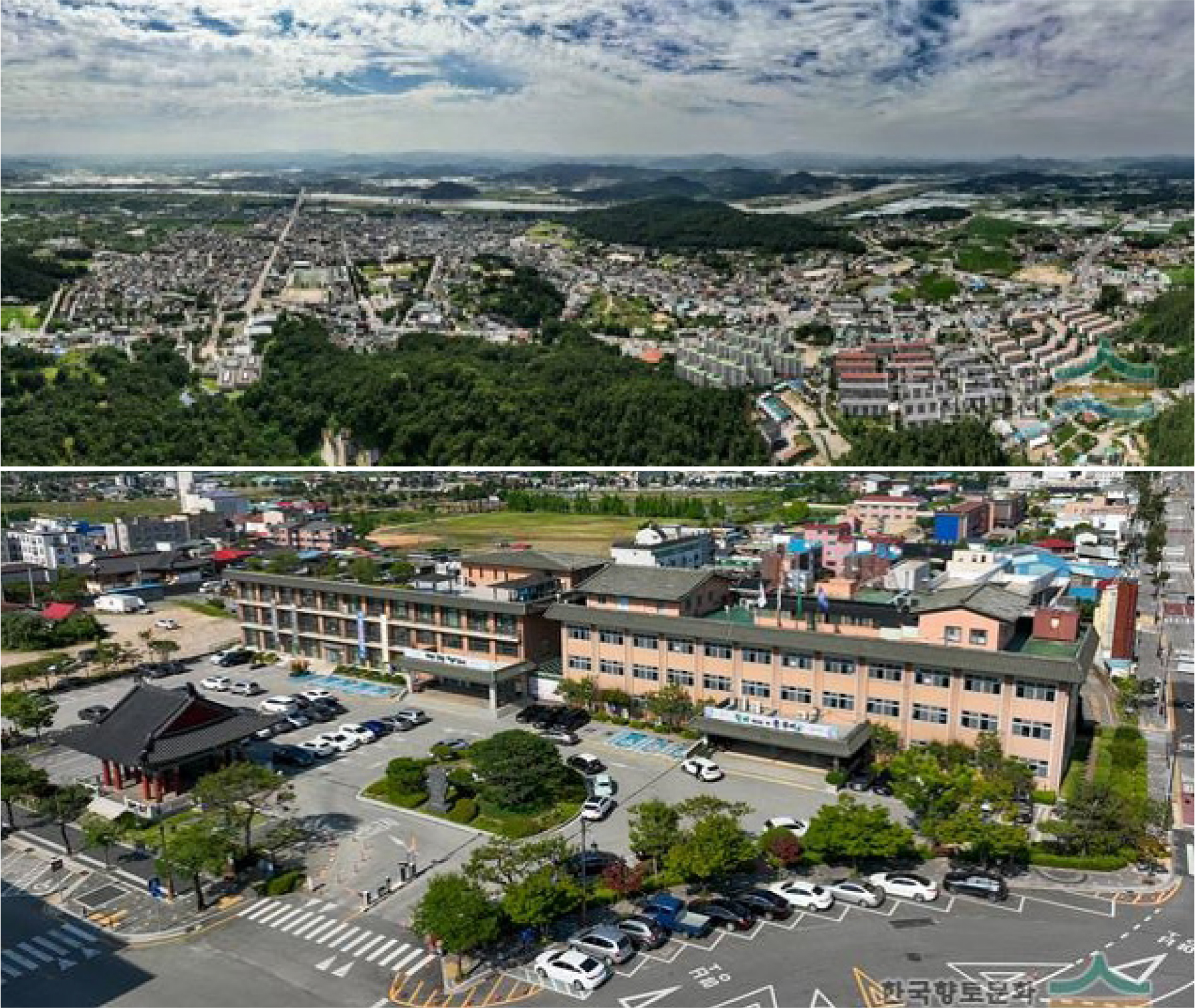
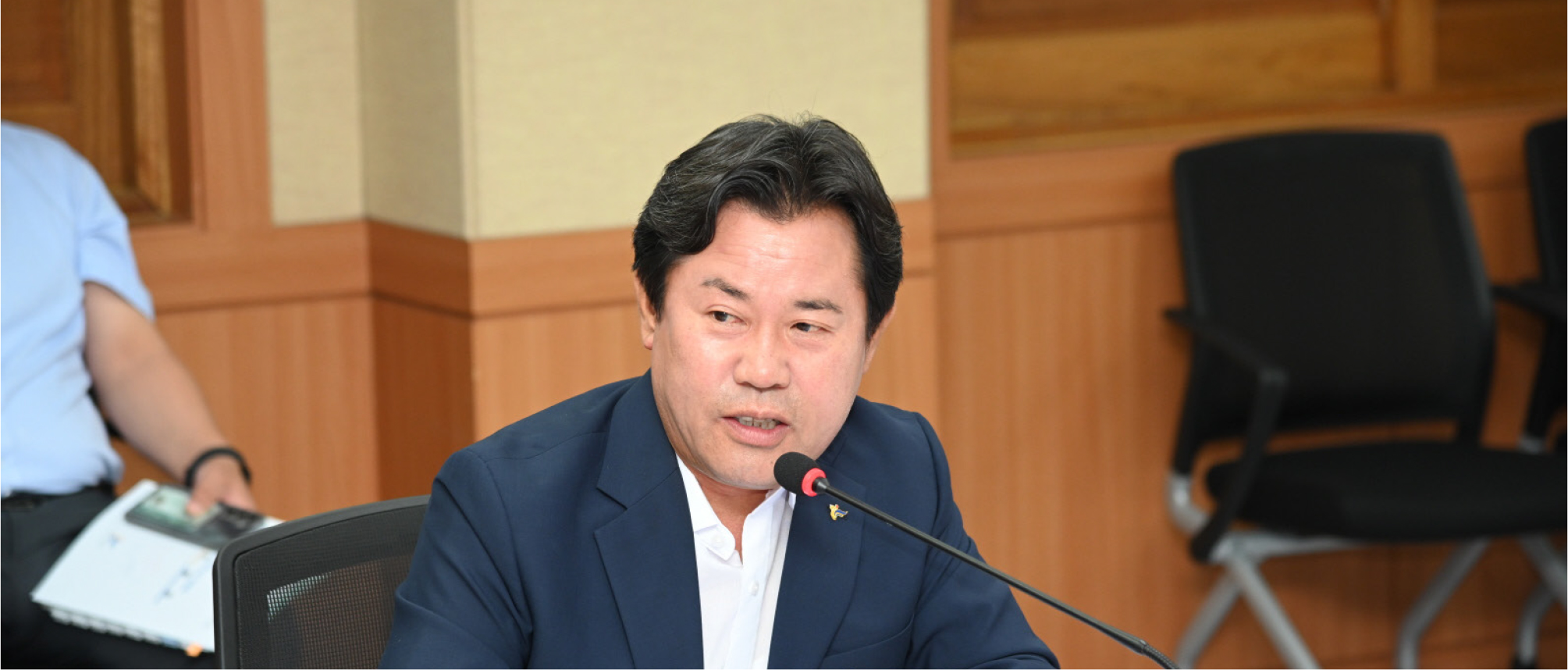
Park Jung-hyun, Mayor of Buyeo County, is a politician who succeeded in winning re-election in Buyeo, and is a representative figure of Chungcheongnam-do Province who enjoys wide support beyond political parties and factions. Based on his experience as an entrepreneur during his younger days, he is helping to create practical results in the economic and welfare sectors – thanks to his customer-centered thinking and outstanding business execution capability.
His notable achievements include the global marketing of Goodtrae agricultural products, expansion of agriculture to overseas, fostering the largest smart farm in Korea, attracting foreign investment companies, expanding Goodtrae pay incentives, and the Social Impact and Compensation Business (SIB). We met with Mayor Park in order to listen to his views on recent hot issues and future plans.

Mayor Park Jung-hyun

 What is your vision for the future of Buyeo County?
Rural local governments across Korea are facing the threat of extinction due to population decline and aging. Given this situation, the most important value is
sustainability. The future development strategy of Buyeo County is to secure economic growth momentum to build a ‘sustainable rural community.’ It is thus intended to create a ‘Buyeo where people want to live.’

What are Buyeo County’s goals and strategies for attracting corporate investments?
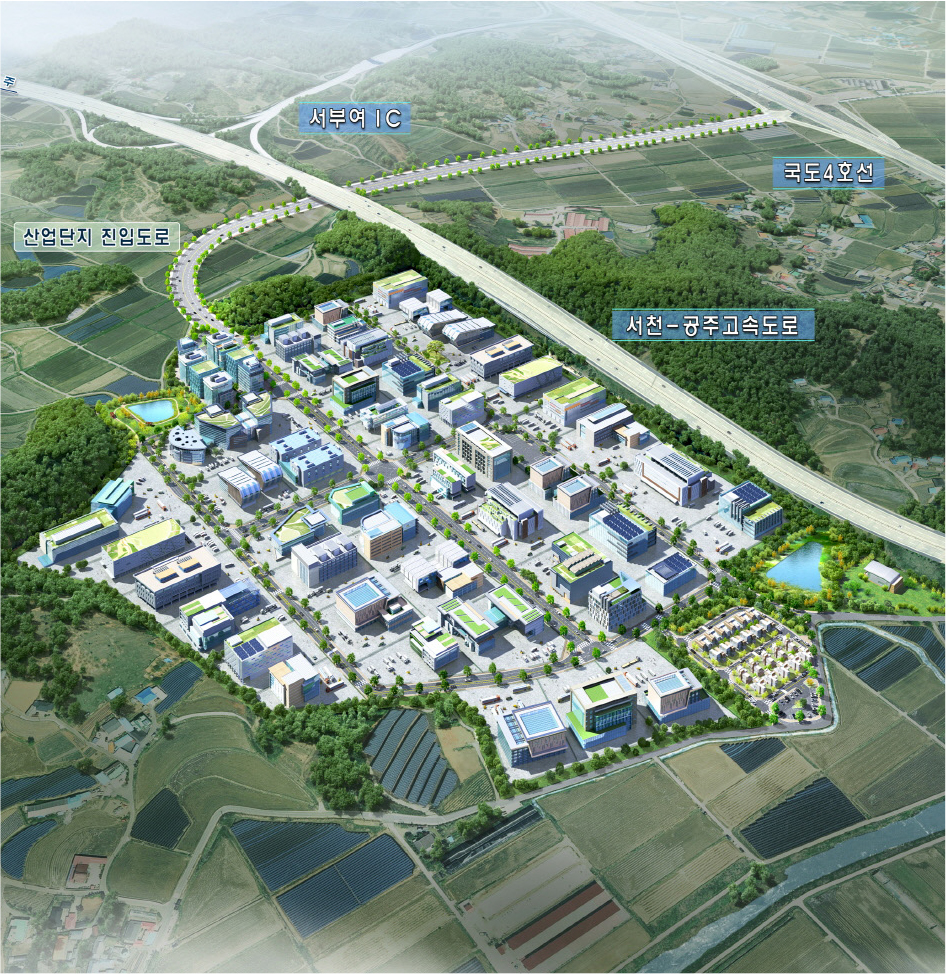
Buyeo County was selected as an Opportunity Development Zone (ODZ) by Korea’s Ministry of Trade, Industry and Energy (MOTIE) in 2024. Last year, it attracted Hangke, a Chinese partner of LG Energy Solution, to Buyeo County, gaining an investment of KRW 65 billion. In order to foster the County, with its ancient capital of Baekje, as a historical and cultural city, the County is visualizing its plan to build a 5-star hotel, and an investment of KRW 150 billion is expected to be made soon.
We are converting undesirable facilities into preferred facilities. For example, our bio-gasification facility was selected for a public contest of 47.1 billion won. We aim to achieve sustainable development through eco-friendly energy production and resource recycling. We plan to actively attract bio companies in connection with the selected ODZ.


Buyeo is known to be an advanced county in agriculture. Could we hear more about any strategies for strengthening agricultural competitiveness?
Buyeo County is generating annual sales of KRW 900 billion in the field of horticultural facilities such as smart farms. Buyeo County has global competitiveness in smart farm operations. In addition, the County has been planning and promoting the plant leather industry, which replaces animal leather and artificial leather, for more than 10 years. Buyeo County is the largest mushroom producing region in Korea, and is utilizing mushroom mycelia as plant leather materials. Currently, a prototype has been developed, and the vegan leather development and demonstration cluster construction project has won a government contest, securing KRW 13 billion in project expenses until 2027.
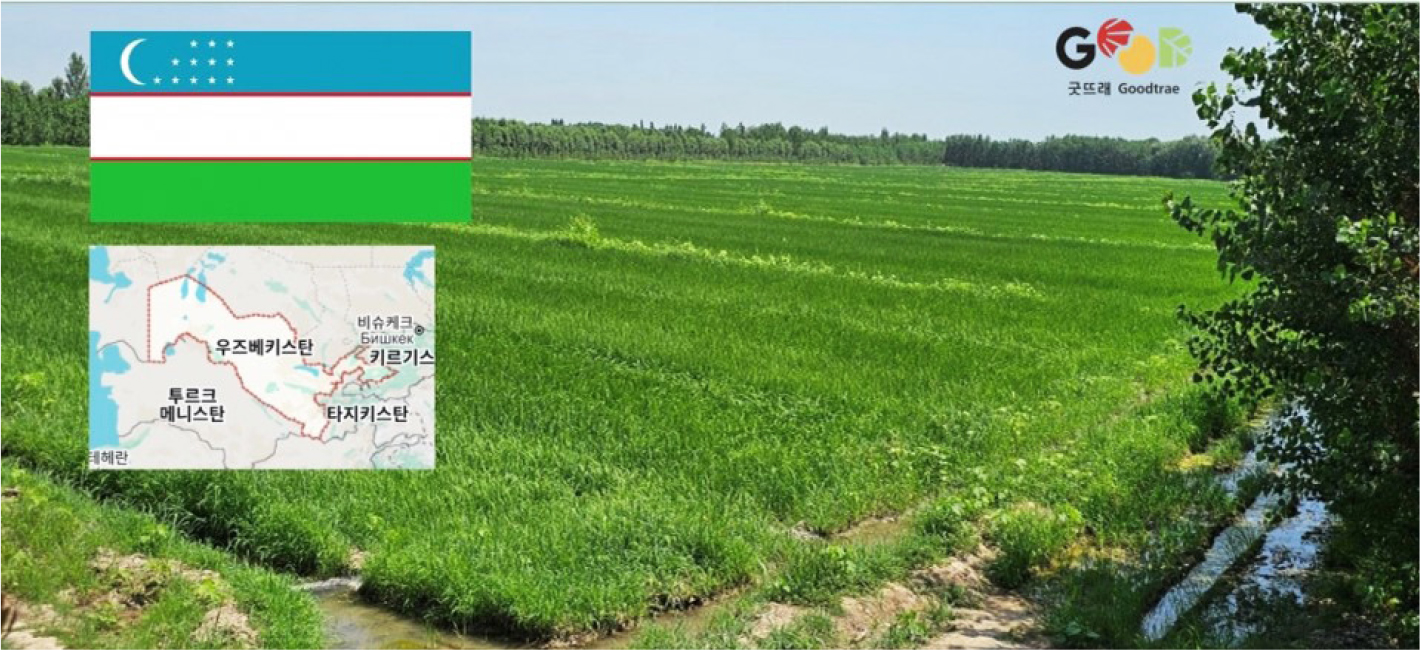
As for overseas agriculture, Buyeo County is carrying out a K-Goodtrae rice cultivation project in Namangan Province, Uzbekistan, and it is expected to produce seven tons of rice per hectare. The crops produced in this way will be exported to neighboring countries. Buyeo County’s agriculture will contribute to the globalization of K-agriculture, and also contribute to the nation’s food security.

What is the globalization strategy of the agricultural specialty brand Goodtrae?
Goodtrae is the No. 1 local agricultural brand in Korea. We will increase Goodtrae’s international recognition through global marketing. We are pursuing various projects such as securing sales channels for Goodtrae agricultural products through collaboration with Lotte Wellfood.

What is your future economic strategy for balanced regional development?
Goodtrae Pay is recognized for having protected local businesses, leading to stable growth of the regional economy. Goodtrae Pay in fact created KRW 52.7 billion of circulated added value in Buyeo County.
In the administrative sector, Buyeo County secured the largest amount of KRW 148.1 billion in investments ever among Chungcheongnam-do’s balanced development projects.
What we sensed through our interview with the Mayor Park Jung-hyun was that he is administrating the county as if he were a leader of a strong but small nation, despite the fact that he is a Mayor in a lower-level local government. The Mayor is playing a leading role in responding to the crisis of local extinction through overseas agricultural development, attracting foreign investment, and global city marketing targeting the global market. Thus, Mayor Park Jung-hyun is seen to be building a foundation for a bigger global small, but strong, county.


korean-electronics.com | Blog Magazine of korean electronics, brands and Goods
KCAB’s Growing Efforts toward Becoming An Arbitration Leader in Northeast Asia

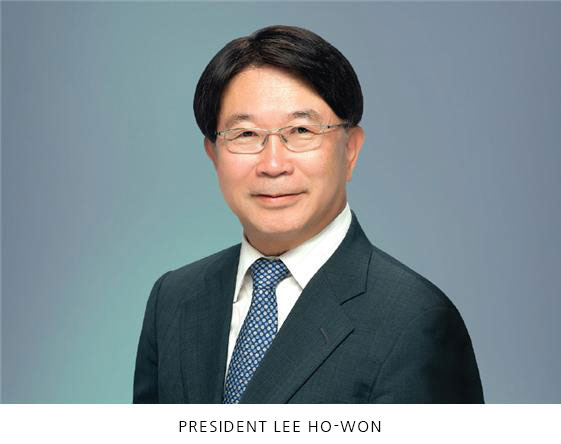
https://korean-electronics.com//inquiryMost global trade companies face potential risks of trade conflicts among themselves amid the deepening dependence on trade in this global economic era. Moreover, as more cases of global trade conflicts are emerging through the damage caused by the global spread of COVID-19, finding solutions for such trade conflicts seem to be an urgent challenge. In line with this global situation, I conducted an interview with Lee Ho-won, the president of the Korean Commercial Arbitration Board (KCAB), to discuss possible solutions to overcome this current situation, an especially about the importance of arbitration.

Firstly, could you briefly introduce KCAB?

KCAB, as a permanent court arbitration organization, was established in 1966 and has since been consistently committed to preventing conflicts occurring in the process of business transactions in advance both domestically and overseas, and to assist in settling the conflicts speedily and fair-mindedly through the arbitration procedures. KCAB has thus contributed to the creation of better conditions for the business deals, and thereby to the development of Korea’s national economy.


Why do you think arbitration is so important for global trading enterprises?

Arbitration is now recognized as the most efficient tool among global trading enterprises in order to resolve trading conflicts. Trading companies have significant potential and practical risks of conflicts while being engaged in trading. Frankly speaking, there is no exception to such risks for global trading companies.
If a Korean exporter is facing a situation in which it cannot receive an export bill in exchange for its delivered export goods to a purchasing company, because the two companies failed to insert arbitration clauses in the sales contract due to each company’s individual choices — then, normally, the most efficient way for the Korean company to retrieve the trading bill is to take the matter to court in the United States. However, this involves many risks in terms of time, cost and process.
In this regard, arbitration deserves to be called the most efficient option for the Korean company. Unlike the results of each country’s judicial trials, arbitration has its guarantee in execution in 159 nations through the New York Convention, an abbreviation of The United Nations Convention on the Recognition and Enforcement of Foreign Arbitral Awards (1958). If the Korean company failed to use arbitration at a suitable time, the company may face danger in terms of its business management caused by such risks.
It is therefore recommended that trading companies engaged in frequent international transactions utilize the arbitration procedures in order to protect their own interests. The utilization of the arbitration with KCAB would help Korean exporters avoid any damages caused by irrational judgements, and the expenses amounting to more than the transaction amount.

Which type of businesses are currently making the most use of arbitration in Korea?

In Korea, companies engaged in the construction industry are currently using arbitration services more than other enterprises. I believe this is related to the issue of business volume. It is very important for companies under business dispute to decrease business risks by settling the problem as soon as possible through the arbitration procedure.
Now nearly thirty percent of domestic clients for arbitration services are from the construction industry. It’s a recognized fact that the use of arbitration has become common sense in the overseas construction field. For construction enterprises, the reducing of financing risk is a crucial step they must take as soon as they can.

Is there any new noticeable movement among international commercial arbitration boards amid the global widespread of Corona Virus 19?

It is true that there is no lack of competition in the area of webinars among international commercial arbitration boards, caused by the global widespread of CV-19, in order to innovatively meet the needs of international arbitration services.
For example, the Hong Kong International Arbitration Centre (HKIAC) uses webinars most frequently among international commercial arbitration boards. Currently the main flow in the demand for webinar is shifting from China to Korea, indicating that KCAB offers more security than commercial arbitration boards in China.
There were cases where many Korean companies could not keep promises with Chinese partners in the time when Korea ranked No. 1 in the number of CV-19 infectees worldwide. In such an environment, the question of which partner should take responsibility for potential force majeure was a hot issue. I think this kind of dispute will certainly be a debated issue in the global business dealings from now on.
KCAB is now discussing how to provide online arbitration services to clients in a secure way, more than the level of webinars. In a similar vein, I think it is very important for us to issue a Seoul Protocol in advance. In consideration of the current times when only webinars must be used for a considerable time, I think finding ways to secure the veracity and impartiality of arbitration services is a most important issue for us all.
Fortunately, I think Korea’s current showing of crisis management ability is assisting in the perception and reputation of our services of arbitration to be consistently elevated in the global arbitration markets.

Do you have any special plans to boost people’s perception of arbitration and thus to help companies secure their profits?

KCAB has developed standard contracts and we have begun to distribute these contracts to some companies. From now on, KCAB plans to develop and distribute standard contracts to various types of companies.
KCAB will persistently encourage companies to insert arbitration clauses in their standard contracts, and in this regard, we will carry out arbitration education on a regular basis.
I think the consistent expansion of infrastructure is necessary for enhancing the perception of KCAB and arbitration, through the expansion of human resources. KCAB currently has many professional and experienced arbitrators, and we will seek to recruit professional and experienced arbitrators in order to meet clients’ various arbitration demands.
I believe that the creation of a virtuous circle in which companies actively recognize KCAB and its arbitration services can be made after they develop the habit of utilizing KCAB’s high level of arbitration services naturally.
KCAB will consistently build cooperative systems with related global organizations. We already concluded a Memorandum of Understanding (MOU) with HKIAC. In a time when the disturbances in Hong Kong are occurring again, the demand for our arbitration services is expected to rise naturally. I think the elevation of the perception of KCAB and its services is important, in line with the increased “Korea Premium” amidst the CV-19 crisis.
KCAB will continue to distribute promotional videos in order to consistently publicize our performance of arbitration services. It is an encouraging phenomenon that our popularity is steadily increasing in international arbitration markets, backed by Korea’s crisis management ability.

Lastly, do you have any advice for our domestic companies?

KCAB carried out 444 cases of arbitration last year, showing that a growing number of companies are seeking to use our arbitration services. However, I think there are Korean companies still reluctant to utilize arbitration, thus missing the opportunity for keeping their business profits. In this context, I think KCAB needs to carry out at least 1,000 arbitration cases on a yearly basis in line with Korean companies’ growing perceptions of the importance of arbitration services offered by KCAB.
Most Korean companies are still too neglectful about the importance of the conflict settlement clauses in drawing up their business contracts. I hope that companies under the situations where arbitration becomes necessary will recognize the vital necessity of the use of arbitration. Korean companies need to perceive the importance of such arbitration procedures now more than ever in order not to suffer damage their businesses. I therefore strongly recommend that Korean companies bring the arbitration cases to KCAB as much as possible, even if they need to give up other clauses in exchange.

korean-electronics.com | Blog Magazine of korean electronics, brands and Goods