
Blossoming Journey: 5 Must-Visit Spring Destinations in South Korea
Spring in South Korea transforms the peninsula into a vibrant canvas of colors and renewal. As winter recedes, the country awakens with blossoming landscapes perfect for unforgettable travel experiences. From iconic cherry blossom festivals to fields of golden flowers and historic sites adorned with spring’s touch, here are five exceptional destinations showcasing Korea’s springtime splendor.
Jinhae: A Spectacular Cherry Blossom Festival
Jinhae, in South Korea’s southern coastal region, is the country’s premier cherry blossom destination. Each spring, this naval city hosts the Jinhae Gunhangje Festival, Korea’s largest cherry blossom celebration. Originally started in 1952 as a memorial for Admiral Yi Sun-sin, it has evolved into a magnificent celebration of naval heritage and natural beauty. The 63rd Jinhae Gunhangje Festival in 2025 will run from March 29 to April 6, attracting millions of visitors.
Key viewing spots include Yeojwacheon Stream, where cherry trees form a tunnel of blossoms along its banks, with the “Romance Bridge” being particularly captivating. Though now closed as a functioning station, Gyeonghwa Station’s railway tracks lined with cherry trees create one of Korea’s most photographed springtime scenes. For panoramic views, visitors can ascend Jinhae Tower at Jehwangsan Park.
Visit from late March to early April for peak bloom. From Seoul, intercity buses take 4-5 hours, or you can take the KTX high-speed train to Changwon or Busan followed by local transportation. Local delights include cherry blossom-themed foods and fresh seafood from nearby waters.

Gyeongju: Spring Amidst Ancient History
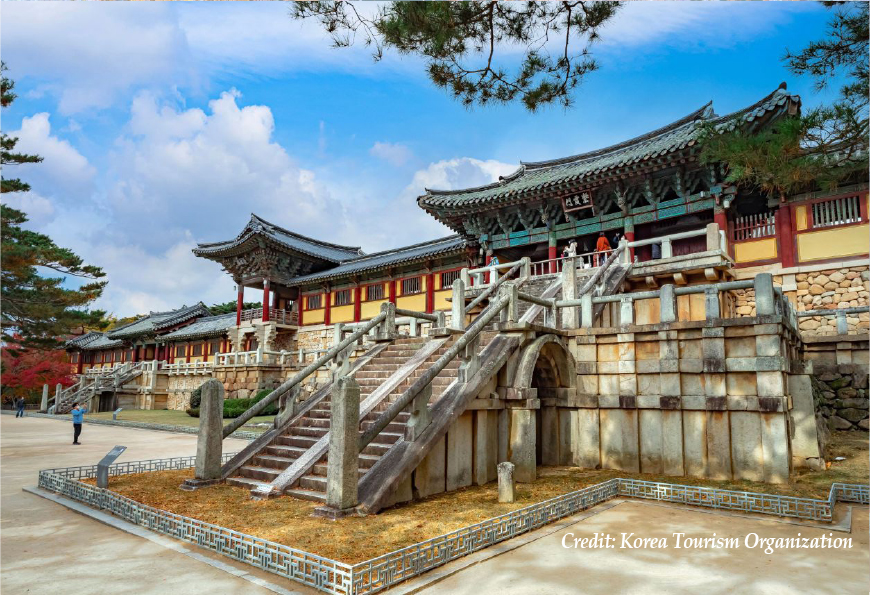
Gyeongju, the thousand-year capital of the ancient Silla Kingdom, offers a unique blend of historical landmarks and beautiful spring scenery. This UNESCO World Heritage city becomes even more captivating when cherry blossoms adorn its numerous historical sites.
Hwangnyongsa Cherry Blossom Road, the path in front of General Kim Yu-sin’s tomb, is famous for its “popcorn-like” fluffy cherry blossoms. At Daereungwon Royal Tombs, ancient burial mounds create a striking contrast with the cherry and canola flowers that bloom around them. UNESCO World Heritage sites Bulguksa Temple and Seokguram Grotto take on an enhanced spiritual atmosphere in spring, while Bomun Lake offers leisure activities alongside cherry blossom viewing.
Spring flowers typically bloom from late March to early April. Transportation to Gyeongju is convenient, with KTX trains and express buses connecting the city to Seoul and other major centers. Accommodation options range from traditional hanok guesthouses to modern hotels and resorts. Don’t miss traditional cuisine including Gyeongju ssambap (wrapped rice) and historic Gyeongju bread.
Gurye Sansuyu Village: A Sea of Golden Yellow
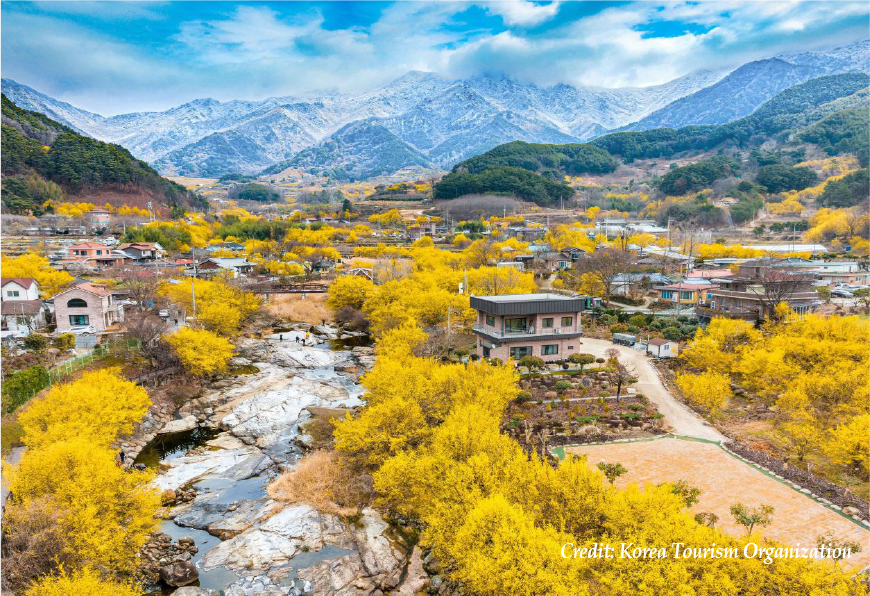
While cherry blossoms dominate much of Korea’s spring imagery, Gurye Sansuyu Village offers a distinctly different spring palette with its golden yellow cornelian cherry flowers. From mid-March to early April, the entire village transforms into a stunning landscape of bright yellow blossoms stretching approximately 2km through Daepyeong, Bangok, Hawui, and Sangwi Villages.
The sansuyu flowers hold special cultural significance in the region. According to local tradition, couples in old Gurye would exchange these flowers and fruits as a form of proposal, giving the area a romantic heritage. Peak bloom typically occurs in late March, coinciding with the annual Gurye Sansuyu Flower Festival which celebrates with various cultural performances and programs.
Accommodation includes traditional hanok guesthouses and pensions that allow visitors to experience the countryside lifestyle. The area is known for products made from sansuyu fruits such as tea and makgeolli (rice wine), which make perfect souvenirs.
Jeju Island: A Rainbow of Spring Colors
Jeju Island, Korea’s largest volcanic island, transforms into a painter’s palette in spring with multiple flower varieties blooming across its unique landscape. The combination of volcanic terrain, lush vegetation, and coastal scenery creates a multi-dimensional spring experience.
Jeonnong-ro in Jeju City becomes a 1.2km tunnel of cherry blossoms, while Noksan-ro features an enchanting blend of cherry blossoms and yellow canola flowers. In Seongeup Folk Village, traditional thatched-roof houses against a backdrop of cherry blossoms create a nostalgic scene. Gapado Island, off Jeju’s coast, is covered with fields of green barley in spring, creating an emerald sea effect against the blue ocean.
Jeju’s cherry blossoms typically bloom from late March to early April, while canola flowers bloom from March through May, making April the ideal time to experience Jeju’s full spring spectrum. Jeju is accessible via flights from major Korean cities, and renting a car is the most convenient way to explore. The island offers distinctive local cuisine featuring fresh seafood, black pork, and abalone.

Suncheon: Embracing Spring’s Ecological Awakening
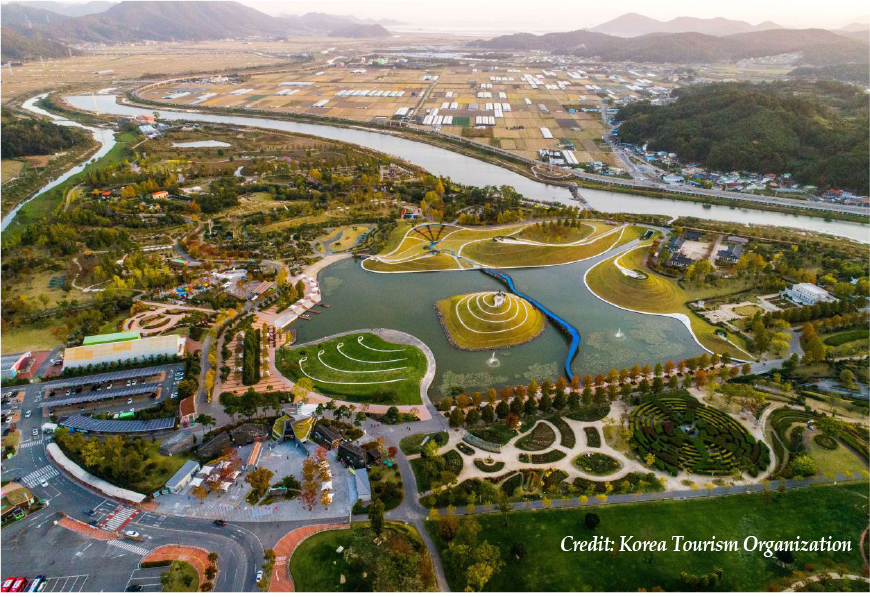
Suncheon, in South Korea’s southwestern region, offers a comprehensive spring experience centered around verdant natural environments and ecological preservation. The Suncheon Bay National Garden bursts with colorful flowers in spring, while the nearby Suncheon Bay Wetland Reserve, famous for its vast reed beds and migratory bird habitats, takes on a fresh green appearance.
For spiritual tranquility, Songgwangsa Temple surrounded by mountains offers a peaceful spring retreat, while Naganeupseong Folk Village allows visitors to imagine life in Korea’s pastoral past while surrounded by fresh spring greenery.
Spring in Suncheon brings mild temperatures and lush greenery perfect for outdoor exploration. The National Garden’s spring flowers typically reach their peak in April and May, offering a slightly later spring experience than other Korean destinations.
korean-electronics.com | Blog Magazine of korean electronics, brands and Goods



 Korean-Electronics.com