
A Bloom That Travels North
Every spring, South Korea undergoes a breathtaking transformation. Millions of cherry trees — known locally as beot-kkot — burst into bloom, turning roads, riverbanks, palace grounds, and temple paths into corridors of pale pink and white. For 2026, forecasters have identified an earlier-than-usual season, with blossoms expected to arrive approximately three to eight days ahead of historical averages due to evolving climate patterns. The bloom begins in the south and moves steadily northward, giving travelers the rare opportunity to follow the season across the entire peninsula.
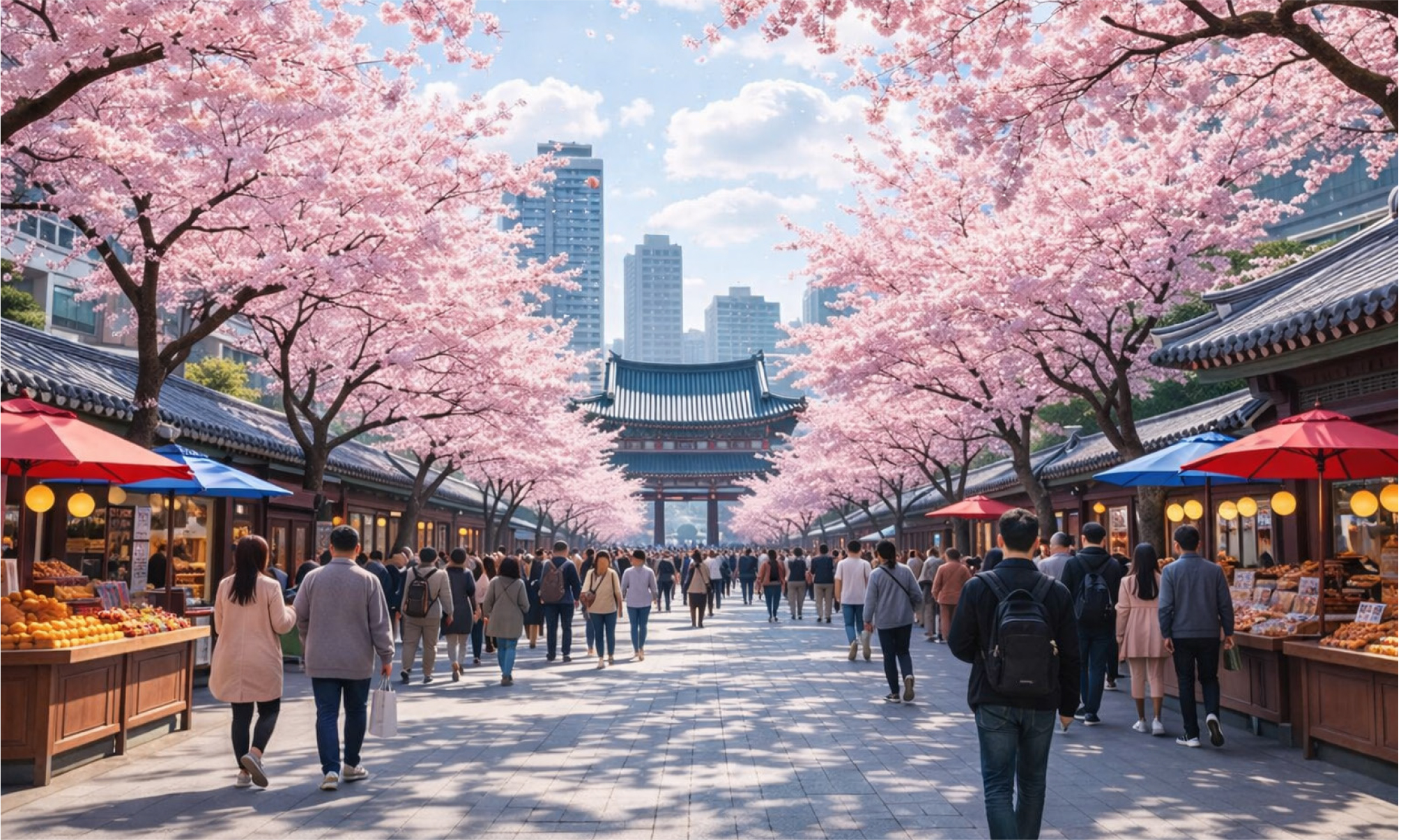
Where the Season Begins: Jeju Island
The cherry blossom journey starts on Jeju Island, where the first blooms are expected around March 22. Jeju is the primary habitat of the native King Cherry tree — a species distinct from the more widely known Somei Yoshino variety — and the island’s festivals celebrate this indigenous tree as a symbol of Korean identity.
Top viewing spots include Jeonnong-ro in Jeju City, a 1.2-kilometer road closed to vehicles during the festival period to allow pedestrians full immersion under a dense canopy of mature trees. The entrance road of Jeju National University offers a slightly later bloom due to its elevation, while Jangjeon-ri in Aewol-eup is celebrated for its evening illuminations that highlight white petals against the dark volcanic landscape. Hallim Park adds a dramatic geological element, pairing the delicate blossoms with lava caves and volcanic stone formations.
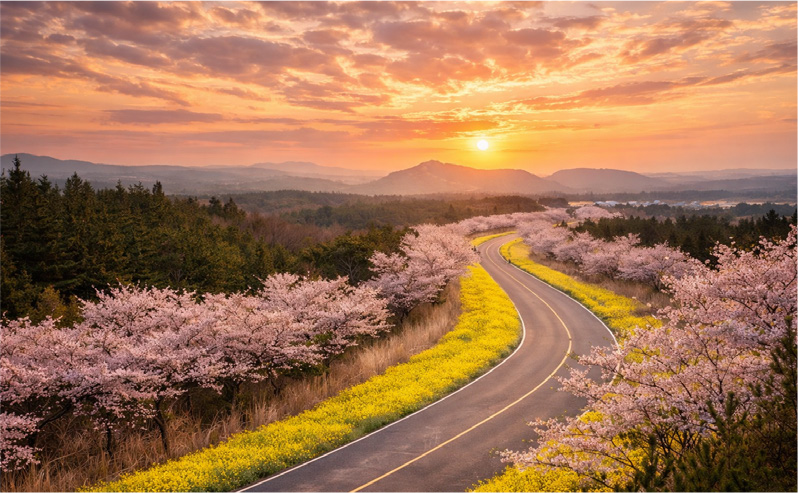
The Southern Coast: Festivals on a Grand Scale
The southern coastal region hosts Korea’s most celebrated spring festivals. Jinhae, a city that is home to more than 360,000 cherry trees, holds the Jinhae Gunhangje Festival — the largest spring celebration in the country, drawing over 2.6 million visitors annually. In 2026, the festival is expected to run from March 27 to April 5. Originally established in 1952 to commemorate Admiral Yi Sun-sin, the event now blends military heritage with floral tourism. The iconic Yeojwacheon Stream, with its “Romance Bridge” and water reflections, and the photogenic Gyeonghwa Station — a retired railway track lined with mature cherry trees — are among its most beloved spots.
Nearby Busan offers a coastal counterpoint, pairing cherry blossoms with seaside views at Dalmaji Hill in Haeundae, where a winding path overlooks the East Sea. The city’s peak bloom is projected between March 27 and March 31.
In Hadong, the Hwagae Cherry Blossom Festival centers on a roughly four-kilometer road connecting Hwagae Market to the ancient Ssanggyesa Temple, popularly called the “Wedding Road” after a local legend promising eternal love to couples who walk it together. Visitors are also encouraged to sample regional spring delicacies at the market.
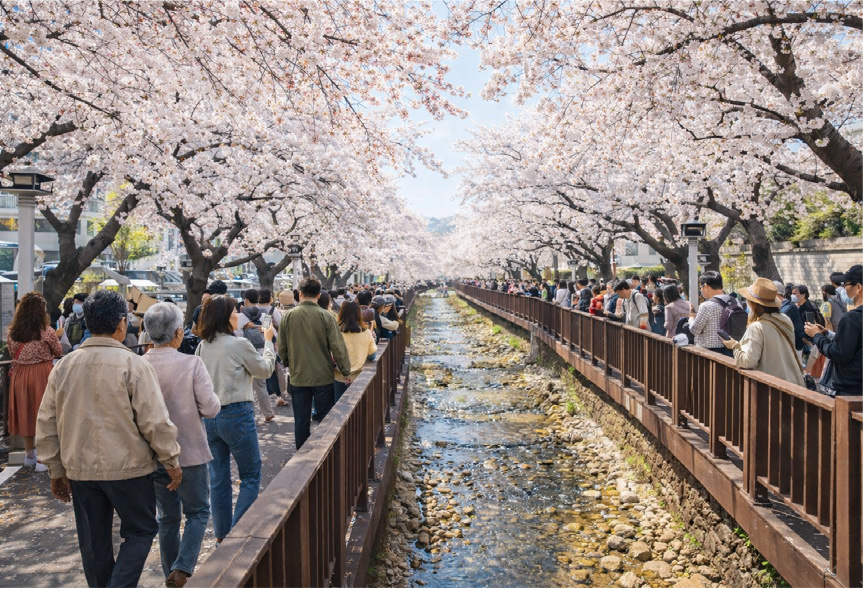
History in Full Bloom: Gyeongju and Jeonju
Gyeongju, the former capital of the Silla Dynasty, offers one of Korea’s most unique blossom experiences. The city is considered a living museum, and its 2026 peak bloom is forecast between March 27 and April 5. The Daereungwon Tomb Complex, with its grass-covered royal burial mounds framed by pink petals, creates a powerful sense of history meeting impermanence. Bulguksa Temple, a UNESCO World Heritage site, is known for its rare “double” cherry blossoms, which bloom slightly later than standard varieties, extending the season. Gyeongju also hosts a Cherry Blossom Marathon in early April, with courses ranging from 5 kilometers to a full marathon distance.
Further west, the Maisan Cherry Blossom Festival in Jeonju features a hiking trail leading to Tapsa Temple, and many visitors combine this with a visit to the historic Jeonju Hanok Village.
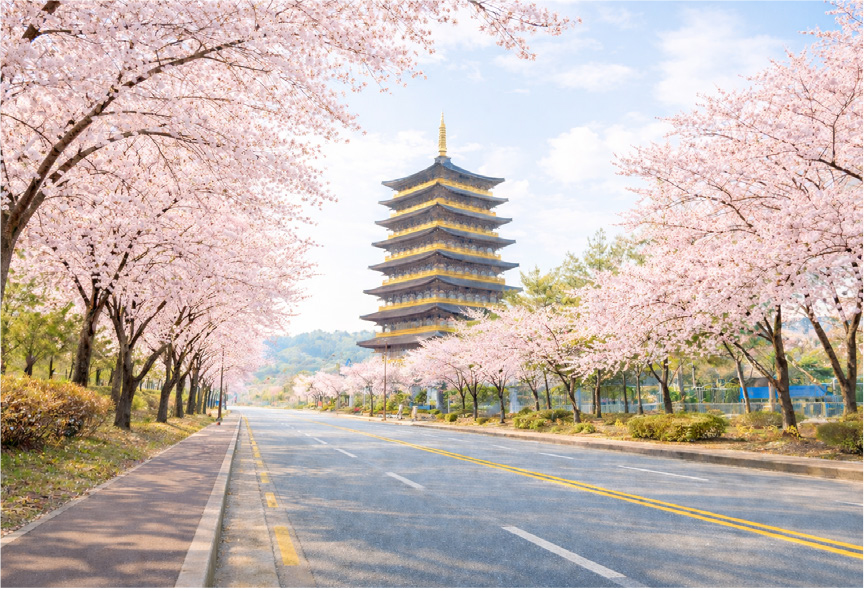
Seoul: Urban Cherry Blossom at Its Finest
Seoul’s blossoms reach their peak between April 7 and April 14. The Yeongdeungpo Yeouido Spring Flower Festival draws crowds to a 1.7-kilometer Cherry Blossom Tunnel along the Han River, accompanied by live performances and evening illuminations. Seokchon Lake in the Jamsil district reflects blossoms on its calm surface against the backdrop of the city skyline.
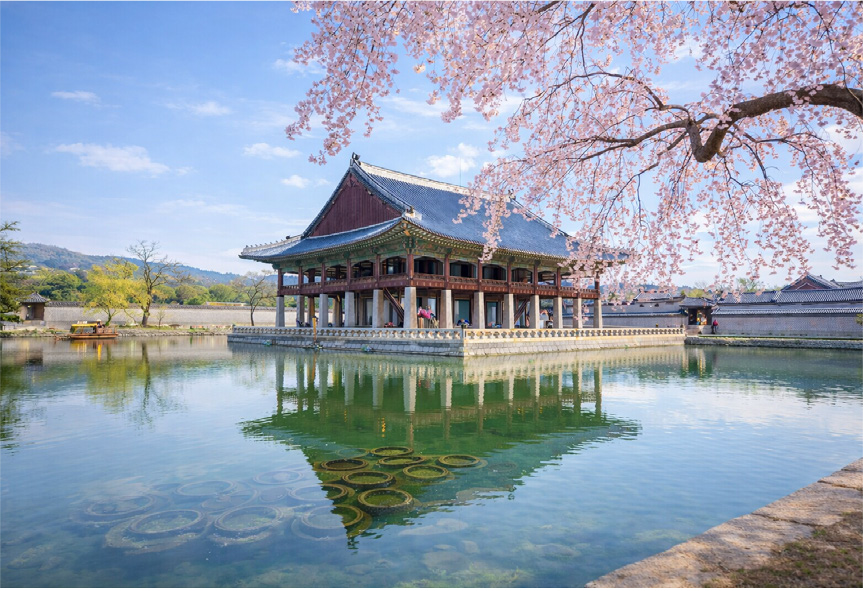
Seoul’s five grand palaces provide a more serene setting. Gyeongbokgung offers coveted Moonlight night tours, while Changdeokgung’s guided walks through the Secret Garden include a traditional tea ceremony. Visitors wearing traditional hanbok clothing are typically admitted to the palaces free of charge. The E-land Han River Cruise also offers specialized cherry blossom cruises departing from Yeouido Pier, some featuring live jazz and evening fireworks.
Planning Your Trip
The optimal window for experiencing blossoms across the southern and central regions is March 25 to April 10. Travelers should book KTX rail tickets exactly one month in advance, as seats on popular routes sell out quickly. For Jinhae, which lacks direct KTX access from Seoul, organized shuttle bus tours departing from major Seoul hubs offer a practical alternative. To avoid peak-hour crowds, weekday visits and early morning arrivals — before 9:00 a.m. at major sites — are strongly recommended. Monitoring real-time bloom reports from the Korea Meteorological Administration can also help travelers adjust their itineraries as the season unfolds.
korean-electronics.com | Blog Magazine of korean electronics, brands and Goods



 Korean-Electronics.com