
Accelerating the Transition of North American Factories from EV Batteries to ESS
Planning to mass-manufacture LFP batteries within the year at LG Ensol’s
Canadian joint plant
Samsung SDI’s U.S. plant also produces ESS.
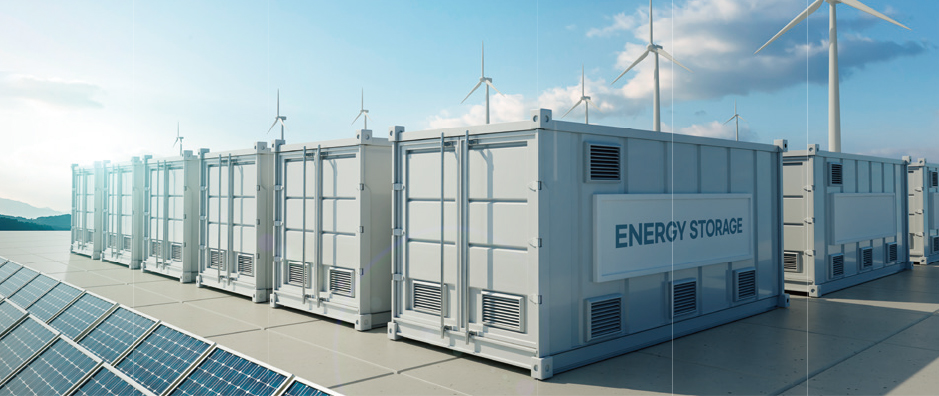
Battery companies chose the energy storage system (ESS) business as a breakthrough in the declining electric vehicle (EV) market and to capture the market. They are accelerating a two-track strategy that focuses on technological advancement and production efficiency.
LG Chem recently announced that it has signed a joint development agreement with Sinopec, China’s largest integrated energy and chemical company, to develop core materials for sodium-ion batteries. Through this agreement, the two parties plan to jointly research and develop core materials, including cathode and anode for sodium-ion batteries, and secure cost competitiveness.
Sodium-ion batteries are a type of secondary battery utilizing sodium to replace lithium, the main material in existing secondary batteries. Compared to lithium-ion batteries, which have been a mainstay item of Korea’s battery industry, the advantages of sodium-ion batteries include lower prices and easier resource procurement.
Accordingly, the two companies plan to expand their business model by applying the materials they jointly developed to batteries for global ESS and mass-market electric vehicles (EVs).
LG Energy Solution, which has recently been strengthening its attack on the North American ESS market, is relocating its production lines to streamline local ESS production and procurement. This is a conceived plan to increase production of ESS batteries following a sharp decline in North American EV demand due to the U.S. government’s decision to end subsidies of approximately US$ 7,500 per vehicle last September.
According to the battery industry, NextStar, a joint venture in Canada between LG Energy Solution and Stellantis, is converting some of its ternary lithium-ion battery production lines for EVs to lithium iron phosphate (LFP) batteries for ESS. It plans to begin mass-production of LFP batteries for ESS within the year with the expedited conversion. This will allow NextStar to flexibly respond to market demand fluctuations by establishing ‘a two-line system’ that produces batteries for both electric vehicles and ESS.
LG Energy Solution already converted its plant in Holland, Michigan, into a dedicated LFP-based ESS production base earlier this year, and with this conversion to Canada, it will complete its two major ESS hubs in North America.
Samsung SDI and SK On are also preparing to diversify their income sources by converting existing EV battery production lines to ESS. Samsung SDI converted the EV production line at Star Plus Energy, a joint venture in North America with Stellantis located in Indiana, USA, to ESS, and began mass-production in October.
SK On produces ESS batteries at its SK Battery America (SKBA) plant in Georgia, USA. It plans to supply ESS ordered from Flatiron Energy Development in the USA using its existing production facilities in the United States.
korean-electronics.com | Blog Magazine of korean electronics, brands and Goods



 Korean-Electronics.com