
Korea’s January Exports Hit a Record High of $65.85 Billion
In the first month of the New Year, Korea’s exports reached a record high of $65.85 bil., fueled by a semiconductor boom. Semiconductor exports doubled compared to the same month of last year.
According to the Ministry of Trade, Industry and Energy (MOTIE), Korea’s exports last month reached $65.85 billion, a massive 33.9% increase year-on-year. Average daily exports, taking into account operating days, also rose 14.0% to $2.8 bil., a record high.
January imports were recorded at $57.11 bil., an 11.7% increase. Energy imports decreased by 11.9%, but non-energy imports increased by 18.4%.
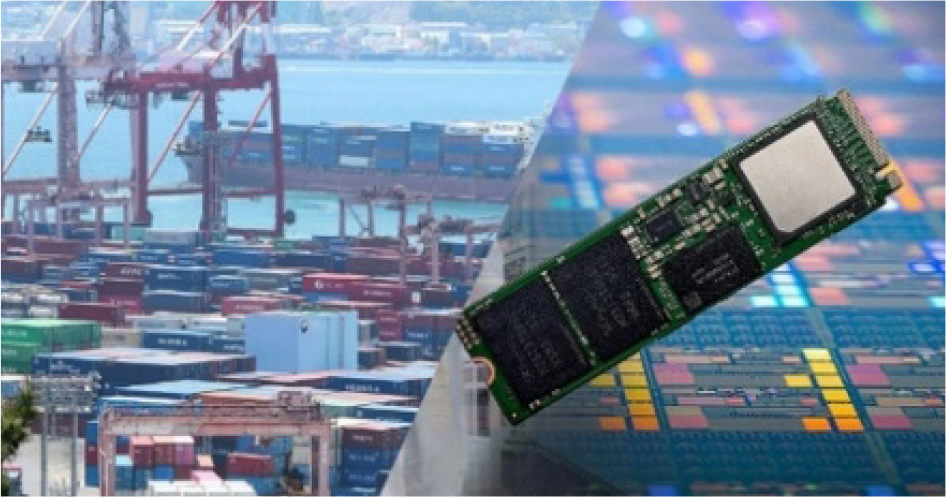
With exports exceeding imports, the trade balance in January reached a surplus of $8.74 billion, a $10.71 billion increase year-on-year, marking the 12th consecutive month of surplus.
Exports of 13 of the 15 major export items increased. Of these, semiconductor exports reached $20.54 bil., a 102.7% year-on-year increase. While this represents a slight decrease from the all-time high of $20.8 bil of December last year, it still represents the second-highest performance on record.
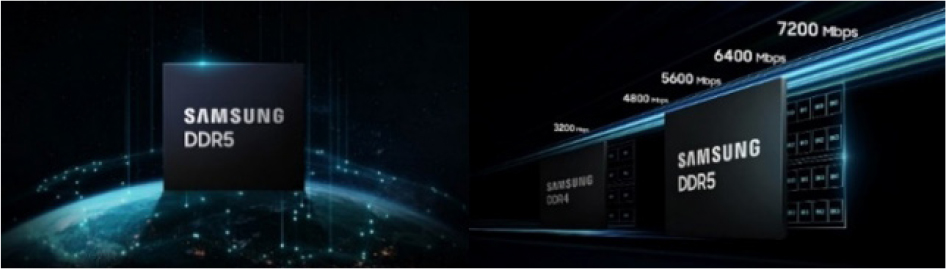
The strong semiconductor performance was largely due to rising memory fixed prices driven by demand for artificial intelligence (AI) and data center infrastructure. Compared to the same month of last year, international memory fixed prices increased by 752% for DDR4 (8Gb), 661% for DDR5 (16Gb), and 334% for NAND (128Gb).
Wireless communication devices (USD 2.03 bil., up 66.9%) increased for the third consecutive month, while computers (USD 1.55 bil., up 89.2%) saw their fourth consecutive month of growth, driven by robust SSD exports fueled by growing demand for AI infrastructure. Displays (USD 1.38 bil., up 26.1%) also saw growth for the second consecutive month.
Automobile exports rose 21.7% to USD 6.07 bil., driven by increased operating days due to the Lunar New Year holiday being moved from January last year to February this year, and strong performance in eco-friendly vehicles such as hybrids and electric vehicles.
Conversely, petrochemical exports decreased 4.5% to USD 3.52 bil., impacted by lower export prices due to global oversupply.
By region, exports increased in seven of the nine major export markets, excluding Japan and the Commonwealth of Independent States (CIS).
Exports to the USA (USD 12.02 bil., up 29.5%) were sluggish in many categories, including automobiles, auto parts, and general machinery, due to tariffs. However, semiconductor exports showed growth, setting a new record for January.
Exports to ASEAN also increased by 40.7% to USD 12.11 bil., demonstrating the continued recovery in manufacturing and trade in ASEAN countries.
korean-electronics.com | Blog Magazine of korean electronics, brands and Goods



 Korean-Electronics.com