 [INQ. NO. 1806E04] JTway (President & CEO: Ji-hwan Park), a company specializing in lenses, has localized the micromini aspheric lens. JTway recently announced that, with the support of optical design and analysis technology from the Korea Photonics Technology Institute, they had developed a microscopic aspheric lens with a diameter of 1mm and established a mass-production system capable of producing more than 400,000 pieces per month by introducing a special automation robot.
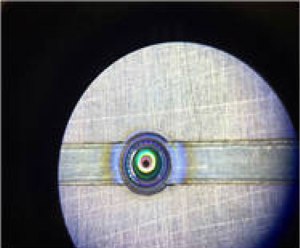
Aspheric lens is a key component for enhancing performance of the optical modules such as cameras, closed circuit (CC) TV, laser, etc. As micro aspheric lenses with a diameter of 1 mm were difficult to manufacture due to the high defect rate, mainly Japanese products were imported and used up till now. The micromini aspheric lenses now developed by JTway are cheaper by 10% or more than the existing Japanese products, and they are supplied as components for network servers, optical communications, and light emitting 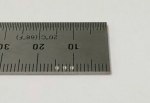 diodes (LEDs).
The company recently started joint development and production of aspheric lenses for LED with a Japanese enterprise of middle standing and plans to pursue exports to the USA, Japan, China and Taiwan by setting up agencies in those countries..
President & CEO Ji-hwan Park said, “The aspheric lens localized this time has better performance than Japanese products, so it is definitely getting a good response from customers. We plan to achieve turnover of KRW3 billion this year, which is more than twice as much as that of last year, by striving for quality control and delivery management.”
korean-electronics.com | Blog Magazine of korean electronics, brands and Goods
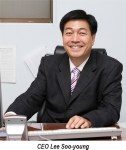 SMEs, excellent venture entrepreneur, etc. It continues to keep growing as it was selected as the world’s top product manufacturer in the field of expanded beam connectors, which is the company’s main product, especially in 2017. Currently, it gets sales figures of approximately 9 billion won with about 60 employees. It expects to grow with a goal of 20 billion won worth of sales by 2020.
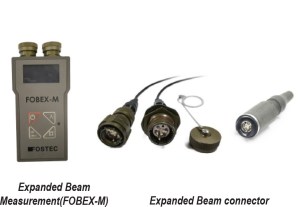 expanded beam connector. FOSTECH succeeded in commercializing it after about five years of research and development. It secured a stable client until 2025 as it became a key component for the defense program. It also achieved annual export figures of approximately US$2 million from 2016 by diversifying the product based on local demand. Core strategies for securing global competitiveness are to secure price competitiveness compared to other existing advanced products, to secure excellent performance, and also to enhance service. It is expected that overseas clients will continue to grow constantly in the future based on the stable base of domestic demand. For this, marketing activities are being strengthened.
 If you have any special management philosophy as CEO, please tell us about it



 Korean-Electronics.com