Semiconductors Lead Korea’s Exports

https://korean-electronics.com//inquiry

Exporters Acively Pursuing Promising New Markets

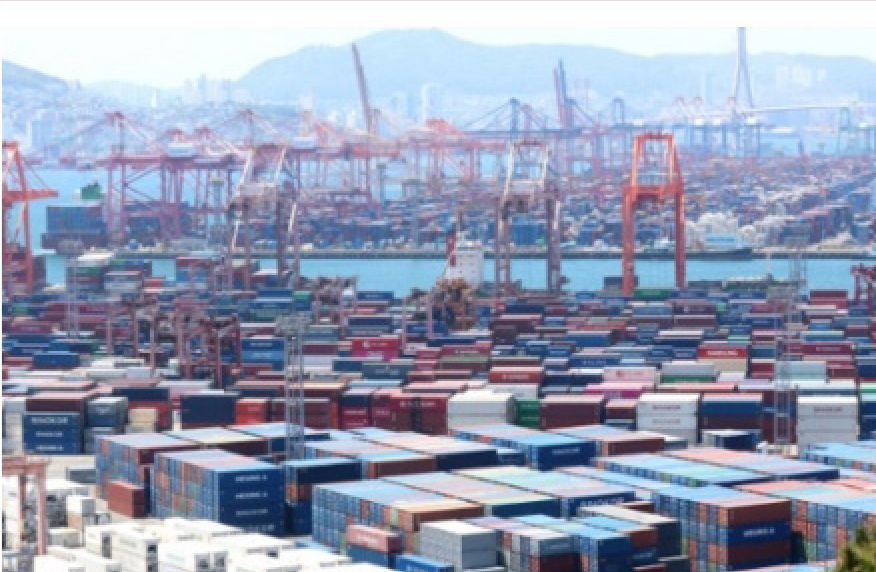
According to the Ministry of Trade, Industry and Energy (MOTIE), last month’s exports amounted to $57.27 billion.
By item, semiconductor exports recorded the highest-ever performance in May at $13.8 billion (+21.2%). Amidst continued solid demand for high-value memory products such as high-bandwidth memory (HBM) and DDR5, fixed prices also showed an upward trend, continuing the trend of positive semiconductor export growth.
The prices of DDR4, DDR5, and NAND continued to rise compared to the previous month. In addition, the demand for high-value memory products such as HBM for AI servers continues to increase. It is expected that semiconductor export trends will remain positive for the time being, as demand companies continue to secure inventory in anticipation of rising memory semiconductor prices.
Wireless communication device exports recorded $1.3 billion, up 3.9%, while smartphone exports (US$420 million, +30.0%) showed good performance. Exports of wireless communication devices increased for the fourth consecutive month.
Exports of computers (including SSDs) turned positive, recording $1.1 billion, up 2.3%. “Exports increased mainly in the category of high-capacity SSDs for servers due to the expansion of investment in AI infrastructure,” explained a spokesperson for MOTIE.
Promising Korean exporters continued to actively challenge overseas markets in order to gradually increase their export growth in the second quarter of this year.
As part of such efforts, Korean exporters are strategically developing and releasing competitive new items, which are expected to capture keen attention in global markets.
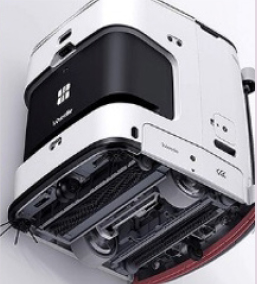

RhinOS, a robot specialist, recently unveiled five types of AI-based cleaning robots. MEDIIMG, a company specializing in hemodynamics and AI, recently unveiled its 3D color MRA reading system, ‘NeuFlow,’ at a local exhibition.
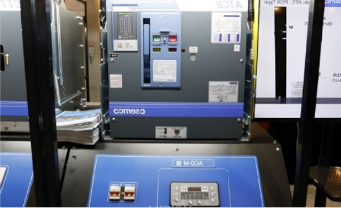
O-Sung Electric Machinery Co., Ltd. introduced the ‘OSS-ATCB,’ a low-voltage automatic transfer circuit breaker that combines an air-circuit breaker (ACB) and an automatic transfer switch (ATS), which were previously used separately in the electric power industry – at the 2025 International Electric Power Exhibition (EPTK) held at COEX in Seoul.
  
korean-electronics.com | Blog Magazine of korean electronics, brands and Goods
Samsung Electronics to Invest KRW 300 Trillion forSystem Semiconductors

https://korean-electronics.com//inquiry

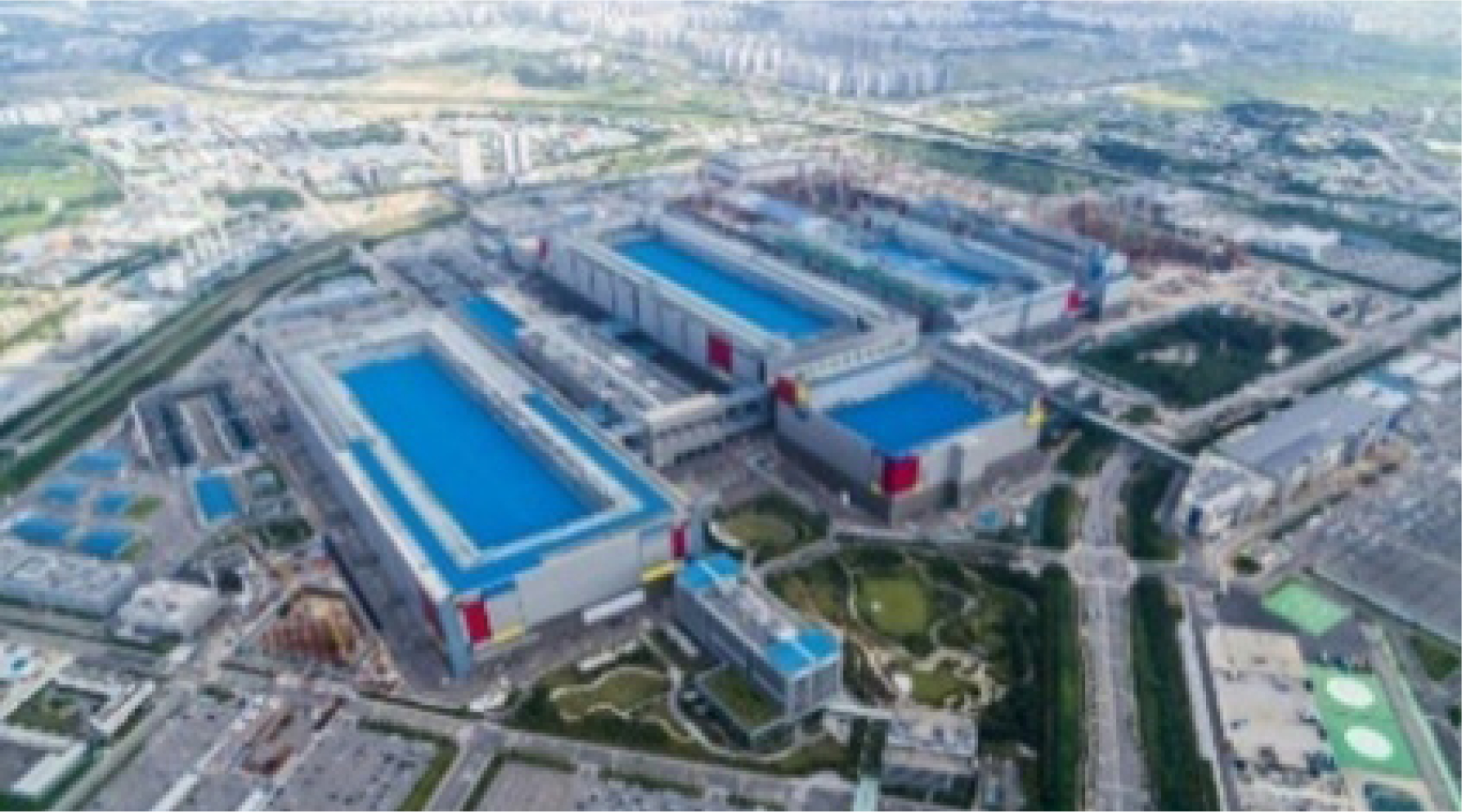
As Samsung Electronics secured production bases in Giheung, Hwaseong and Pyeongtaek, as well as Yongin, it developed a ‘semiconductor triangular mega cluster.’
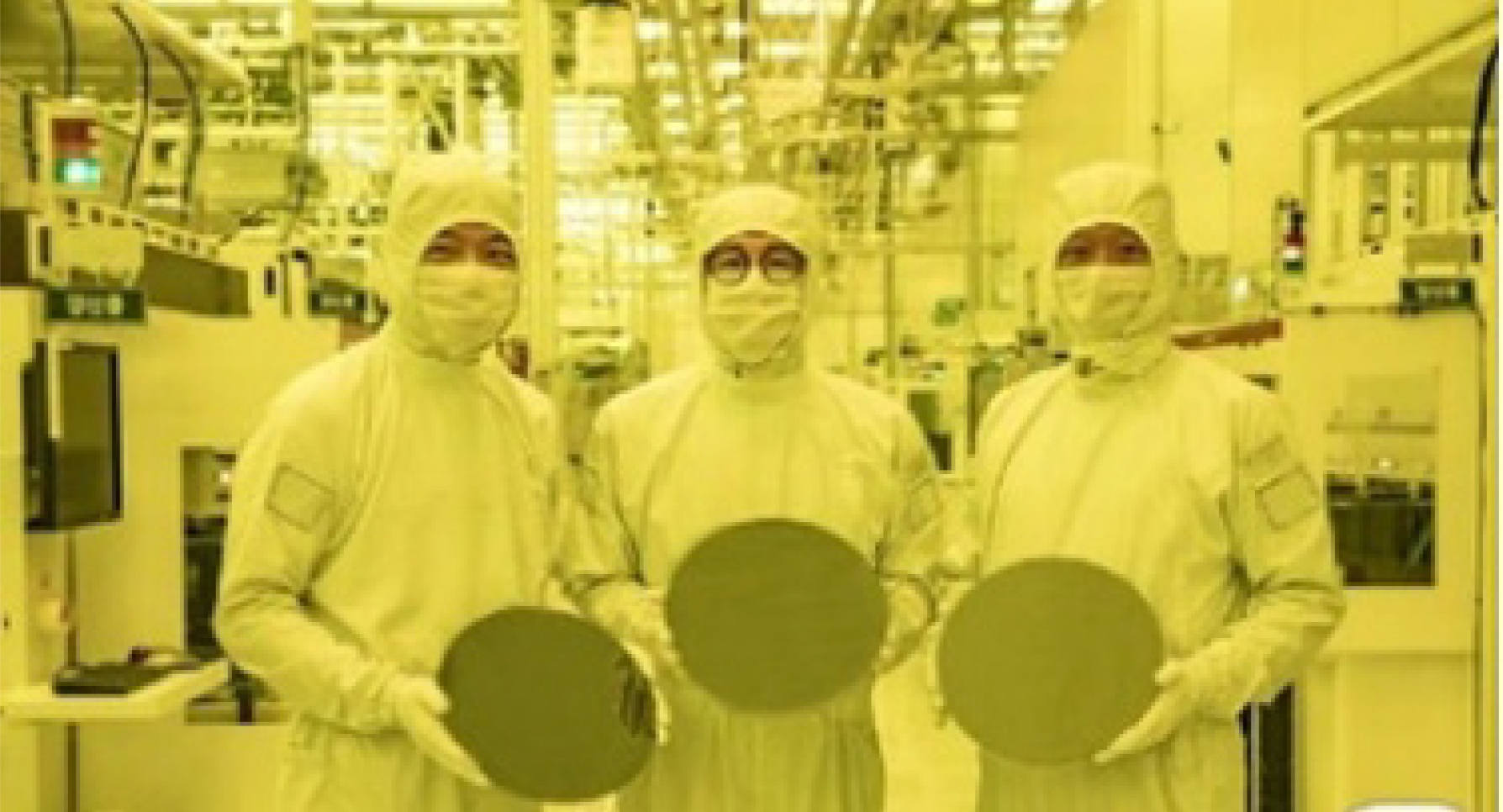
Samsung Electronics has recently decided to invest a total of KRW 300 trillion to build this ‘high-tech semiconductor cluster’ in the semiconductor national industrial complex created by the Korean government in Yongin, Gyeonggi-do.
The basic plan for the Yongin Semiconductor Cluster is to build five semiconductor manufacturing plants over the next 20 years and to attract 150 domestic and foreign excellent companies engaged in materials, parts, equipment, and semiconductor fabless.
Samsung Electronics’ KRW 300 trillion investment is estimated to have a direct and indirect production inducement effect of KRW 700 trillion, and an employment
inducement effect for up to 1.6 million people.

When the Yongin Semiconductor Cluster is created, the world’s largest semiconductor cluster will be completed by linking existing semiconductor production complexes such as Giheung, Hwaseong, Pyeongtaek, and Icheon with Pangyo, Seongnam, where nearby companies engaged in manufacturing of materials, parts, equipment and semiconductor fabless gather.

A spokesperson for the business community pointed out, “The super-gap in the memory semiconductor
sector led by Samsung Electronics is expected to widen and competitiveness in the foundry market will also
increase.”
The formation of the Yongin National Industrial Complex as a system semiconductor cluster is
interpreted as meaning that Samsung Electronics’ production strategy has reached an epoch-making
turning point.
Samsung Electronics is pushing ahead with the ‘shell first’ strategy despite the slowdown in the
semiconductor market. This is a method of constructing a ‘clean room,’ which is an essential clean space when building a semiconductor production base, first and then proceeding with facility investment. The advantage is that flexible resource allocation is possible because the use is determined by predicting the market conditions at the time of final completion, rather than building a factory by pre-determining memory or foundry.
According to Samsung C&T’s recent business report, the construction progress of Samsung Electronics’
Taylor 1 plant in Texas, USA was 43.8% as of the end of last year; and the clean room construction progress of Pyeongtaek 4 plant was 21.3%. The Pyeongtaek 4 plant is expected to be completed in October next year.
If the Yongin cluster, known as ‘the system semiconductor mecca,’ is constructed as planned, the
triangular mega cluster in southern Gyeonggi will be completed. In particular, the fact that Samsung
Electronics recently announced that it would build the Yongin cluster centered on system semiconductors is interpreted as meaning that it will enter the competition in the foundry market in earnest. Samsung Electronics

has thus widened the super-gap in the memory semiconductor field and prepared a foothold to
pursue the leading TSMC in the foundry field.

Currently, among global foundry companies, only Samsung Electronics and TSMC are capable
of mass- producing foundry processes below 5 nm. In June of
last year, Samsung Electronics began mass-production of the 3nm process that applied the
structure of GAA, a next-generation transistor, for the first time in the
world.
Unlike TSMC, which decided to apply GAA technology from the 2nm process, Samsung
Electronics is being recognized for closing the gap in the
technology race by starting mass-production from 3nm. However, it is unable to close the wide
market share gap with TSMC due to ‘physical limitations’ owing to
lack of production facilities. According to the Taiwanese market research firm Trend Force,
as of the fourth quarter of last year, TSMC had a market share of 58.5%,
ahead of Samsung Electronics (15.8%).
The Yongin cluster also means that the Korean government, which is trying to maintain its
position as the ‘strongest country in semiconductors’, and Samsung
Electronics, ‘the world’s No. 1 in memory

semiconductors’, initiated a joint private-public operation, targeting the global system
semiconductor market where TSMC has the greatest market share.
Just as TSMC has been growing rapidly based on the Taiwanese government’s full support,
it is interpreted that the Korean government started its full support for
the semiconductor industry.
The semiconductor industry is a pillar of the Korean economy and a key security asset,
accounting for 5.6% of gross domestic product (GDP), 24.2% of total facility
investment, and 19.4% of exports as of 2020. Major countries such as the United States,
China, Japan, and Taiwan are strengthening their semiconductor clusters
with full government support, while making all-out efforts to attract semiconductor
production facilities to their countries.

The Semiconductor Association’s spokesperson explained, “The customized support
strategy for system semiconductors, such as establishing a semiconductor
mega cluster, upgrading the value chain ecosystem, securing next-generation
semiconductor core technology and expanding manpower, will be of great
help in creating a strong ecosystem for the domestic semiconductor industry.”


korean-electronics.com | Blog Magazine of korean electronics, brands and Goods