
South Korea’s transport network combines smart card systems, high speed rail, scenic themed trains, and subway accessible hiking trails, helping visitors travel smoothly across the country’s cities and regions.
Smart Cards Make Travel Simple
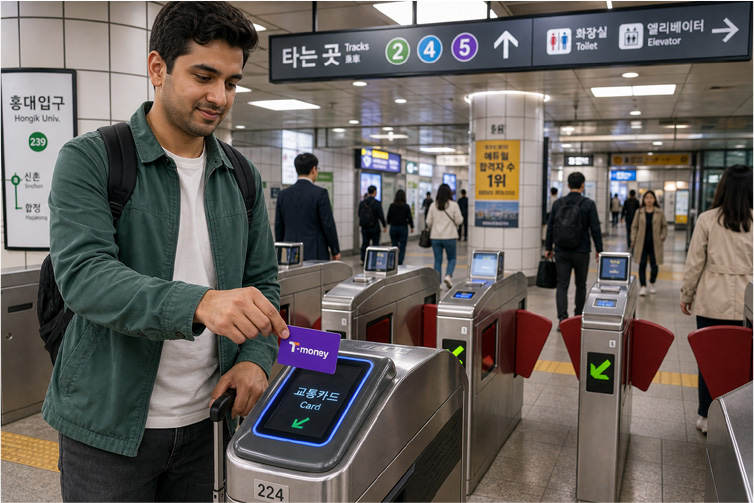
Using a transit card instead of cash tickets saves 100 won per ride and allows free transfers between subways and buses within a 30 minute window, extended to 60 minutes overnight. T-money cards cost between 3,000 and 5,000 won, never expire, and work nationwide on subways, buses, trains, and taxis. WOWPASS and NAMANE Card offer dual wallet designs that double as prepaid debit cards. The Discover Seoul Pass combines transit access with free entry to over 70 landmarks. As of early 2026, station kiosks across metropolitan lines support foreign issued Visa and Mastercard for recharges, alongside cash options.
The Seoul Climate Card for Unlimited Travel
The Seoul Climate Card offers unlimited rides on Seoul subways and city buses, with passes ranging from a one day pass at 5,000 won to a thirty day basic pass at 62,000 won. Combined, river, and premium versions add Ttareungi bikes and the Hangang River Bus. In 2026, coverage expanded to Seongnam, Hanam, Uijeongbu, and the Gimpo Goldline. Short term passes activate immediately upon loading, so tourists should charge them on their first day of travel. Unused short term passes can be refunded at the T-Town Customer Center with a passport, though thirty day passes are non-refundable.
Seoul and Busan Subway Fares Explained
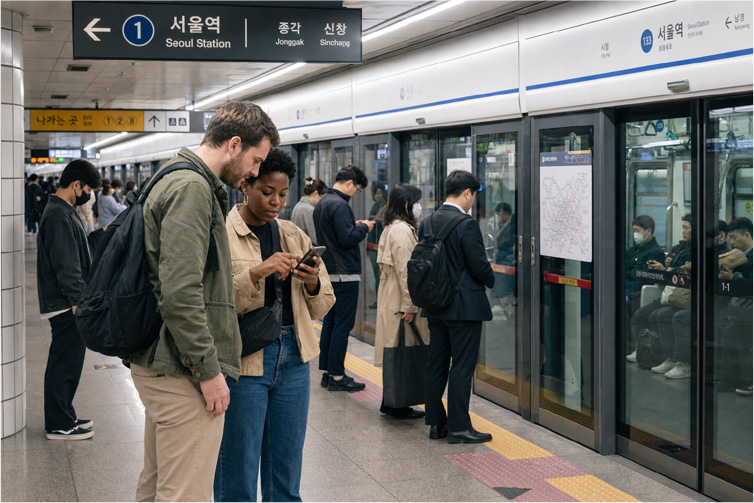
The Seoul Metropolitan Subway spans 24 lines with a unified ticketing system based on distance. The base transit card fare is 1,550 won, compared to 1,650 won for cash tickets, with surcharges added beyond 10 kilometers and an extra 700 won on the Shinbundang Line. Busan Metro uses a two tier zone system instead, charging 1,300 won for trips of 10 kilometers or less and 1,500 won for longer journeys with a transit card.
Special Transit Options for Visitors to Busan
Busan offers several programs for international visitors. The Prepaid Dongbaek Pass helps foreign residents access transit discounts through a prepaid card registered with a local currency app. Busan Pay lets tourists buy unlimited one day or three day subway passes using a dynamic QR code scanned at turnstiles. The Visit Busan Pass combines tourism benefits with a transit chip usable indefinitely anywhere in South Korea.
High Speed Rail with KTX and SRT
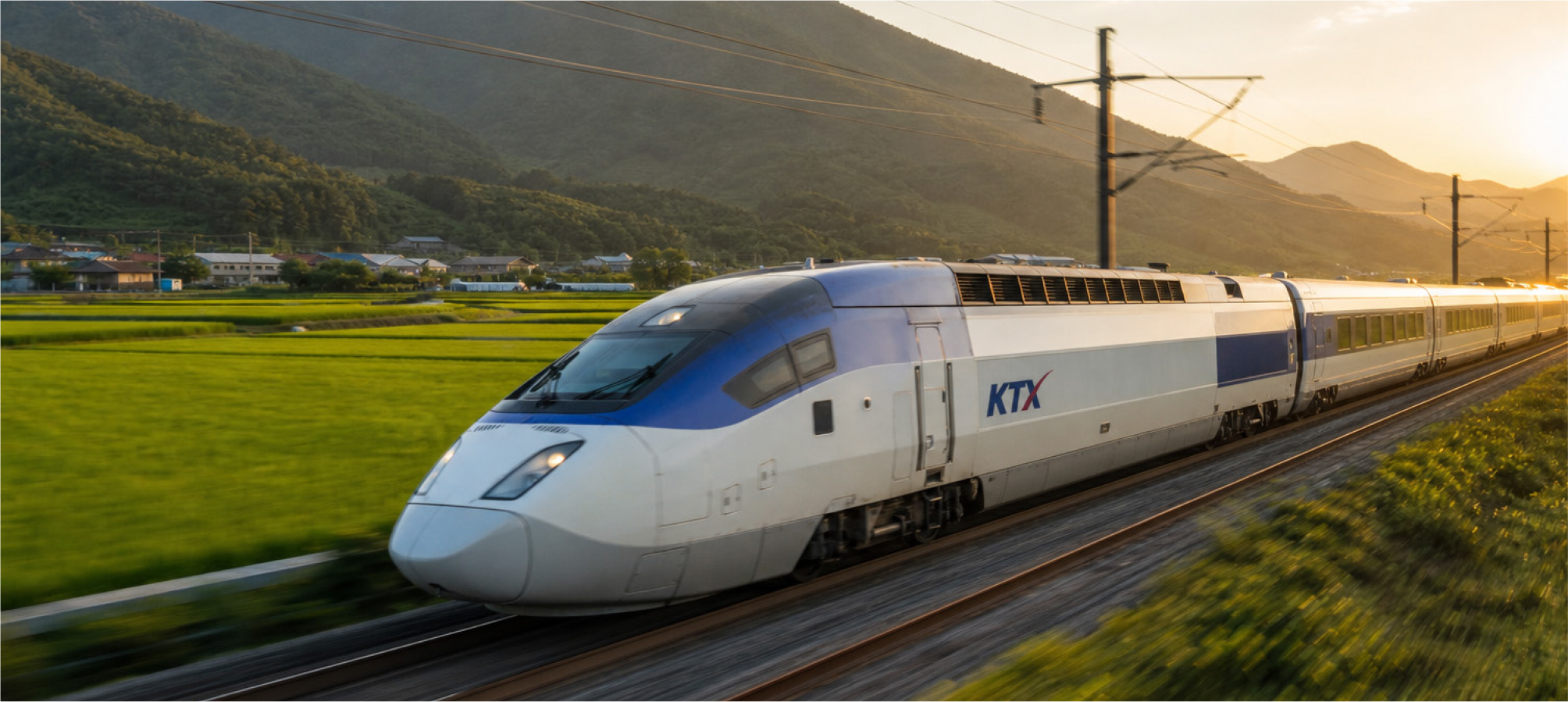
South Korea’s high speed rail network connects major cities, cutting the Seoul to Busan journey to roughly two hours and eight minutes on nonstop services. The KTX departs from Seoul Station, Yongsan Station, and Cheongnyangni Station, while the SRT departs from Suseo Station in southern Seoul. Both trains reach speeds up to 305 kilometers per hour. The Korail Pass offers unlimited travel on KORAIL trains for foreign tourists, though it excludes SRT, municipal subways, and special tourist trains.
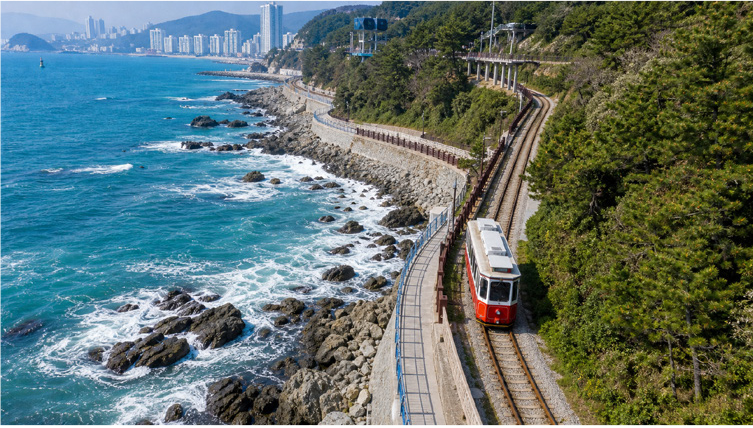
Scenic Themed Trains Across the Country
South Korea also operates themed scenic trains that highlight the country’s landscapes. The West Gold Train travels from Seoul’s Yongsan Station to Iksan along the west coast, featuring ondol heated cabins and a foot bath cafe with panoramic windows. The V-Train winds through the Baekdudaegan mountains at a leisurely 30 kilometers per hour, while the Donghae Santa Train passes through the Taebaek Mountains toward snow covered peaks.
Hiking Trails Connected to the Subway
Seoul’s mountain trails are remarkably close to subway exits, making hiking accessible without a car. Mount Bukhan, reached via Bukhansan Ui Station, offers a steep two hour climb to granite summits or a gentler alternative at Wonhyobong Peak, with a nearby tourism center renting hiking gear. Mount Nam features a barrier free sky forest deck trail, while Mount Acha offers gentle paved paths popular for night hiking.
Luggage Storage, Navigation, and Etiquette
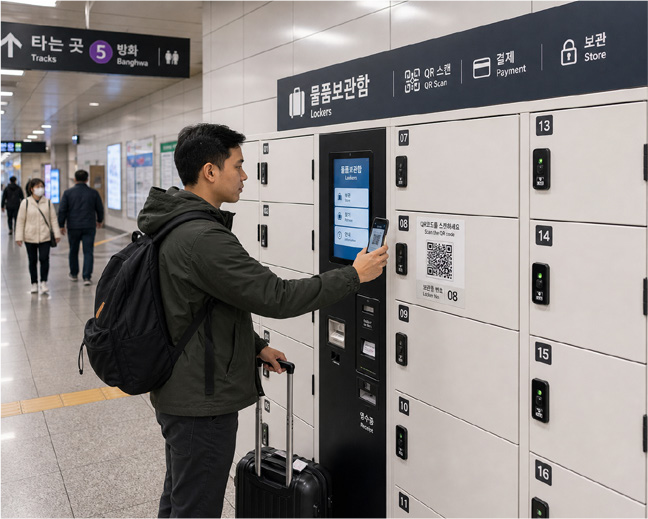
Major stations operate T-Locker and T-Luggage networks. T-Lockers are automated and unmanned, accessible via mobile app using Bluetooth or QR codes, while T-Luggage Centers offer storage and same day delivery between stations or to Incheon Airport. Since Google Maps does not function effectively in South Korea, travelers rely on Naver Map and KakaoMap for navigation. On trains and buses, commuters keep voices low, leave priority seating vacant, and avoid weekday rush hours from 7 to 9 AM and 6 to 8 PM.
korean-electronics.com | Blog Magazine of korean electronics, brands and Goods




Leave a Reply