Beginners’ Guide to: Jeju Island

https://korean-electronics.com//inquiry

Located southwest of the Korean Peninsula is the largest island of Korea, Jeju Island. The island is one of the most relaxing vacation spots found in Korea thanks to its unique local atmosphere and beautiful natural environment. The volcanic lava tubes that make up nearly 10% of the island’s area are a designated UNESCO World Natural Heritage Site.
Seongsan Ilchulbong Tuff Cone, Manjanggul Lava Tube, and Hallasan National Park are must-see sights. Additional attractions include forests, waterfalls, and parasitic cones. With so many beautiful things to see, it can be hard work to plan your itinerary.

UNESCO World Heritage Course

Rising from the sea, Seongsan Ilchulbong Tuff Cone
Seongsan Ilchulbong Tuff Cone, a landmark attraction of Jeju, was formed about 5,000 years ago from an eruption of magma on the ocean floor. It is especially famous as a sunrise viewing spot, known to be one of the top ten exquisite sceneries of Jeju Island.
Besides viewing the sunrise, Seongsan Ilchulbong Tuff Cone is also known to be an excellent trekking spot. The Seongsan-Ojo Trail connects two villages by crossing the peak. Another popular trail, the Jijil Trail, offers a closer look at the UNESCO-designated geopark as well as Jeju’s local culture. Walking along one of these paths is recommended to really experience the area; walking all the way to the summit offers views of both the vast volcanic crater in the center and the blue ocean surrounding the area. To complete your trip, head to Seongsanpo Port to watch haenyeo (female divers) at work.

Feel the breeze at Cape Seopjikoji
A short drive from Seongsan Ilchulbong Peak will take you to Cape Seopjikoji. The name comes from the Jeju dialect for a “Cape of Small Land” due to its peculiar cliff formation that protrudes into the ocean. The picturesque harmony of the hill and ocean attract tourists all year round. You might even be able to sight Jeju ponies grazing on the field of grass.
Walking northeast along the cliff, you will arrive at Bulgeunoreum Parasitic Cone, offering an exquisite view of a white lighthouse with the dark blue sea in the background. Additional noteworthy attractions of Cape Seopjikoji are the Glasshouse and Yumin Art Gallery, two masterpieces designed by world-renowned architect Ando Tadao. The two buildings blend in remarkably well with the surrounding nature.

Observe the beauty of ridges at Yongnunioreum Parasitic Cone
You can’t say you’ve been to Jeju Island without visiting one of the many oreum, Jeju dialect for parasitic cone. There are approximately 360 oreum scattered throughout Jeju. Among these hundreds of oreums, Yongnunioreum Parasitic Cone is undoubtedly the most well-known. It’s not far from Seongsan Ilchulbong Tuff Cone and has a moderately gentle slope, providing a fairly convenient trail for trekking.
Both Seongsan Ilchulbong Tuff Cone and Udo Island can be seen from the peak of Yongnunioreum, offering an unforgettable panorama. The view of curvy ridges along with the ocean also serves as an excellent backdrop for memorable photos. If you are looking for a perfect spot for souvenir photos, be sure to check out Yongnunioreum Parasitic Cone.

A long-lasting garden of nutmeg yews, Bijarim Forest
In contrast to Yongnunioreum’s open vistas, Bijarim Forest is an ideal spot for a relaxing forest retreat. The dense forest is home to hundreds of bija (nutmeg yew) trees, and is the largest forest in the world to be made up of one plant species. Most of the trees in the forest have lived for 500 to 700 years, earning the forest the nickname “Forest of a Thousand Years.” Must-see sights while at Bijarim Forest are none other than the 800-year old tree and the conjoined nutmeg yews.

Enter the mysterious underground castle, Manjanggul Lava Tube
Of all the oreum on Jeju, Geomunoreum is the only parasitic cone to be designated as a UNESCO World Natural Heritage site. The oreum holds over 20 caves within its body, although only Manjanggul Lava Tube is open to the public. With its profoundly mysterious and grand appearance, taking a step inside the cave is like stepping into Hades’ underworld. Follow the tunnel of articulate lava rock formations, and you will soon reach a giant rock pillar that indicates the end of the cave. The cave’s temperature fluctuates within 11-21°C regardless of season, allowing visitors to enjoy the magnificent cave all year round.

Seogwipo Nature & Culture Course

Enjoy artwork along the ocean, Jeongbangpokpo Falls and Waljong Art Gallery
Seogwipo, which includes the entire southern half of Jeju, exhibits a great amount of sunshine and warm temperatures, attracting crowds of tourists all year round. One attraction many people choose to visit is Jeongbangpokpo Falls, one of the top three waterfalls on Jeju Island. The water falls 23 meters straight down off the cliff and into a pool before flowing to the sea.
Located on the cliff behind Jeongbangpokpo Falls is Waljong Art Gallery. This gallery is dedicated to the Korean artist Lee Wal Jong, who settled in Jeju decades ago. The gallery is filled with his inspiring artworks, expressing the beauty of Jeju in his own unique way. The strategic location and glass-walled second floor also offer visitors an amazing view looking over the sea.

Nature-made art, Jusangjeolli Cliff and Cheonjeyeonpokpo Falls
Jeju Jungmun Resort is blessed with not only beautiful natural scenery but also with numerous entertainment and convenience facilities catering to both domestic and international tourists. Jusangjeolli Cliff, near the International Convention Center Jeju, delivers a sight to behold with its gigantic rock pillars running along the costal line. Cheonjeyeonpokpo Falls, a three-tiered waterfall, is another attraction not to be missed in Seogwipo. While the first section of the waterfall is only active after rain, the second and third sections are active all year round.

Rekindle childhood memories at the Teddy Bear Museum
Another favorite tourist attraction at Jungmun Resort is the Teddy Bear Museum. The museum boasts quite an impressive collection of teddy bears from all over the world. Exhibition halls are designed with different themes, such as 20th century history exhibition and fable parodies, all portrayed by teddy bears. The Teddy Bear Museum is a popular museum loved by visitors of all ages, recommended as an excellent place to visit with friends, families, or even on a date. The museum also has a souvenir shop, cafeteria, and a park that offers a splendid view.

Downtown Jeju History & Culture Course

Discover the history and culture of Jeju Island
Yongduam Rock, a top tourist attraction in downtown Jeju, is one of the many natural wonders of Jeju Island. Formed by underwater lava millions of years ago, eons of weathering from the rain and wind have formed it into the likeness of a dragon’s head.
After visiting Yongduam Rock, head down to the Jeju Folklore & Natural History Museum to learn about the development of the island people and culture over time. Not only does Jeju Island have its own dialect, it also has a distinct culture that separates it from the rest of mainland Korea, all of which you can see and enjoy from a quick tour of the museum. Right next to the museum is Samseonghyeol Shrine, a religious site that is also the birthplace of Jeju’s ancient mythology. The old trees and traces of the past create a devotional atmosphere.

 
korean-electronics.com | Blog Magazine of korean electronics, brands and Goods
Korea’s Exports Surpass $700 Billion

https://korean-electronics.com//inquiry

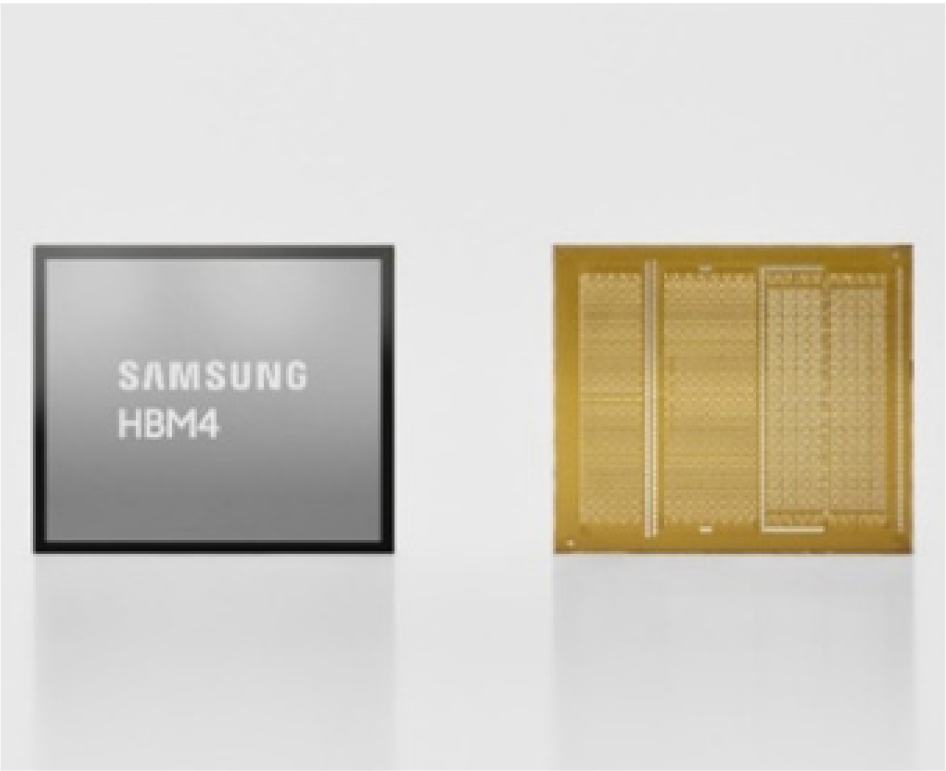
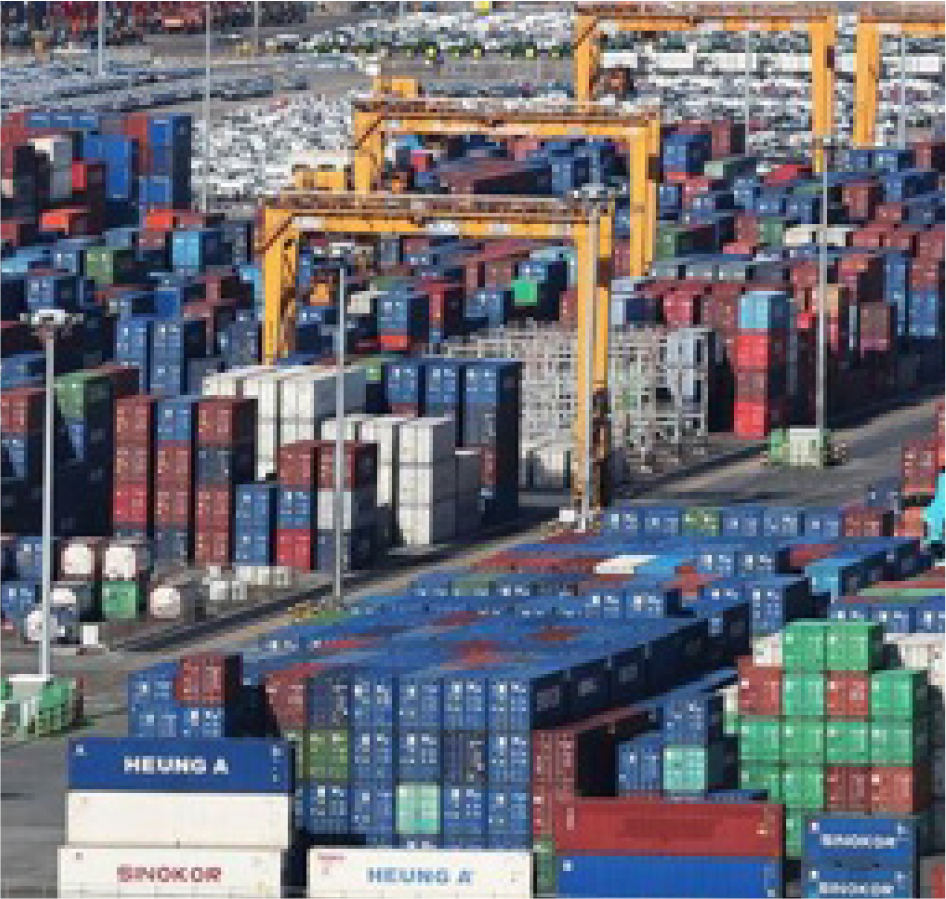
Last year, Korea’s exports surpassed $700 billion for the first time, achieving a record high. Fueled by the artificial intelligence (AI) boom, semiconductor exports reached a record high of $173.4 bil., driving the overall export growth. Exports in December last year increased by 13.4%, the highest-ever in December.
According to the Ministry of Trade, Industry and Energy (MOTIE), last year’s exports reached $709.7 bil., a 3.8% increase from the previous year, surpassing the previous record set in 2024. Daily average exports also rose by 4.6% to $2.64 bil., reaching a record high.

Semiconductor exports, the nation’s largest export item, surged by 22.2% to $173.4 bil., driven by rising prices and the booming investments in AI and data centers. This marked another record high, following the previous year’s record.
Automobile exports also reached a record high, rising by 1.7% to $72 bil. While exports to the United States, the largest market, declined due to the impact of U.S. tariffs, exports to the European Union (EU) and the Commonwealth of Independent States (CIS) saw positive growth, driven by robust exports of eco-friendly and used vehicles.
Bio and health exports increased by 7.9% to $16.3 bil., continuing their positive trend for the second consecutive year. Exports of ships (up 24.9% to $32 bil.), computers (up 4.5% to $13.8 bil.), and wireless communication devices (up 0.4% to $17.3 bil.) also showed strong performance. With the growing popularity of K-food and beauty products, exports of agricultural, fishery, and food products ($12.4 bil.), cosmetics ($11.4 bil.), and electrical instruments ($16.7 bil.) have surged to record highs.
On the other hand, exports of petroleum products decreased (down 9.6% to $ 45.5 bil.) due to falling oil prices, while exports of petrochemicals (down 11.4% to $42.5 bil.) and steel (down 9.0% to $30.3 bil.) decreased due to global oversupply.
Exports to China, the largest export market, fell by 1.7% to $130.8 bil. Exports to the USA fell by 3.8% to $122.9 bil. While exports of most items, including automobiles, general machinery, and auto parts, declined due to the effects of U.S. tariffs, the double-digit growth in semiconductor exports mitigated the decline.

Last year, the trade surplus with the United States was $49.5 bil., down by $6.1 bil. from the previous year. Exports to ASEAN increased by 7.4% to $122.5 bil., and exports to the EU increased 3.0% to $70.1 bil. Exports to the CIS also grew by 18.6% to $13.7 bil.
Last year, Korea’s imports decreased by 0.02% year-on-year to $631.7 bil. Non-energy imports, such as semiconductor manufacturing equipment, increased, but energy imports decreased due to factors such as falling oil prices. Korea’s trade balance last year recorded a $78 bil. surplus.
Exports also hit a record monthly high in December, reaching $69.57 bil., a 13.4% increase. Korea’s monthly exports have continued to increase year-on-year for the 11th consecutive month since turning upward in February.
Semiconductor exports increased 43.2% year-on-year to $20.77 bil., marking the 10th consecutive month of growth and a record high. However, automobile exports decreased by 1.5% to $5.95 bil. due to the effects of U.S. tariffs and increased overseas production of Korean automobiles.
Exports to China increased 10.1% to $13 bil., marking the second consecutive month of positive growth. Exports to the United States rose by 3.8% to $12.3 bil., breaking the record for December and returning to growth after five months.


korean-electronics.com | Blog Magazine of korean electronics, brands and Goods
exco

https://korean-electronics.com//inquiry

A Global MICE Platform Delivering Customer Value — EXCO
 
EXCO was established in 1995 and opened in 2001. It is the first exhibition and convention center built outside the Seoul metropolitan area in South Korea. Since opening, EXCO has continued to grow. The West Wing was expanded in 2011, and the East Wing was added in 2021. In 2026, EXCO will celebrate its 31st anniversary as it takes a new step forward as a global exhibition and convention center.
EXCO works to create greater value for its customers by supporting the international growth of major exhibitions. It also upgrades its eco-friendly energy facilities inside the venue. Additionally, EXCO collaborates with the local community to develop cultural programs and operates safety systems that involve citizen participation.
By March 2027, new conference rooms will be added on the 3rd floor of the East Wing. Currently, EXCO operates 25 meeting rooms (including partitioned spaces) in the West Wing, including a multipurpose hall. With up to 8 additional meeting rooms in the East Wing, EXCO will be able to host a higher volume of conferences of different sizes and formats. This expansion will increase EXCO’s ability to host international conferences.

EXCO’s Challenge toward the AX/DX Era
EXCO plans and operates strategic exhibitions linked to Daegu’s future industries. These include future mobility, healthcare, robotics, semiconductors, artificial intelligence, and big data. Through these exhibitions, EXCO supports real industrial growth. At the same time, it contributes to the local economy by connecting companies, buyers, and new markets.
To strengthen expertise, EXCO has reorganized its exhibition team structure into three categories.
● AX (AI Transformation) focuses on AI and digital innovation.
● NX (Next Growth) supports future growth industries.
● CX (Consumer Experience) highlights consumer-focused products and services. This new structure improves both exhibition quality and industry connections.

Major Exhibitions Organized by EXCO
International Green Energy Expo, one of the largest renewable energy exhibitions in Asia. It will be held for the 23rd time in 2026.
International Fire & Safety Expo Korea, Korea’s largest fire and safety exhibition. It attracts key buyers from the Middle East and Southeast Asia ranking as one of Asia’s top three exhibitions in this field.
FIX 2026(Future Innovation tech eXpo 2026), A large-scale technology exhibition covering mobility, robotics, and startups. It integrates DIFA (Daegu International Future Auto&Mobility Expo), ICT Convergence Expo Korea, and the Daegu Robot Expo.
Although 2026 marks its third edition, it has attracted over 100,000 visitors every year.
Medi Expo Korea and KOADMEX (Korea International Advanced Digital Medical Equipment & Medicine Expo), These exhibitions are held together to build a strong business platform for the healthcare industry.
K-FOOD EXPO, now in its 27th edition, is preparing to launch a new overseas edition in Bangkok this year.
Daegu Machinery Expo and International Parts & Advanced Materials Expo, co-hosted to support and strengthen regional strategic industries.
In addition, EXCO continues to expand exhibitions that reflect global business trends and corporate needs.

A Platform Connected with the Local Community and Citizens
EXCO is also evolving into a community-focused platform aiming to grow beyond being just a venue for viewing exhibitions. Instead, EXCO is becoming a space where citizens can participate in and experience events directly. This approach helps connect exhibitions with everyday life.
Popular events such as Daegu Flower Fairs, Daegu Christmas Fair, pet shows, and Baby & Kids Fairs attract many visitors each year. These exhibitions offer hands-on programs and interactive content. They are now recognized as popular regional lifestyle exhibitions, welcoming families, pet owners, and young parents alike.

Building an Industry-Specific Conference Legacy
In August 2024, Daegu launched a dedicated organization for international conferences, the MICE Bureau Office, marking a major step toward becoming a global convention city. In line with this initiative, EXCO has strengthened its international conference bidding and marketing efforts. It is also systematically promoting region-focused conventions and revitalizing the International Convention Complex District.
This move follows the path taken by Gyeongju, which has built a strong international conference legacy after hosting APEC 2025. Similarly, Daegu is being recognized for pursuing a strategy to enhance its urban competitiveness through international conferences.
Daegu has already built a legacy in the water sector. Its experience includes hosting the World Water Forum in 2015, the IWRA World Water Congress in 2021, IWIC in 2024, and securing the World Filtration Congress in 2028. These events show how Daegu has grown related industries and professional infrastructure alongside its conference portfolio.
These accumulated achievements demonstrate that international conferences are more than one-time events. Looking ahead, Daegu plans to continue using international conferences as a key growth engine, further strengthening its position as a global convention city.

A Sustainable Exhibition and Convention Center
EXCO is dedicated to the development of a sustainable MICE industry. EXCO operates as a green convention center equipped with renewable energy systems, including solar power generation, geothermal energy systems, and solar thermal hot water facilities.
EXCO is also an eco-friendly building that produces part of its annual electricity through on-site solar power generation. ESG principles are applied in daily operations as well. In 2024, EXCO significantly reduced printed promotional materials such as posters and invitation cards, by decreasing the total volume from approximately 1.6 million copies to 1.18 million. This effort further strengthened environmentally responsible exhibition operations.

In addition, EXCO launched a MICE Alliance consisting of around 60 organizations, including hotels, travel agencies, PCOs, and event companies. Through this alliance, EXCO is enhancing cooperation to attract international conferences and operate large-scale events based on ESG standards. EXCO has shared ESG-based operational guidelines for major international conferences with local industry partners.
These guidelines include low-carbon operations, the use of eco-friendly materials, and waste reduction measures. By doing so, EXCO is helping expand ESG-driven MICE operational models across the region.

Annual Event Schedule


korean-electronics.com | Blog Magazine of korean electronics, brands and Goods
Coex

https://korean-electronics.com//inquiry

Coex, Korea’s leading Convention and Exhibition Center, Prepares to Celebrate its 40th Anniversary in 2026
 
 Forty Years as a Growing Partner for Korean Industries
In 2026, Coex, Korea’s premier Convention and Exhibition Center (CEO and President Sang Hyeon Jo) will mark its 40th anniversary. Over the past four decades since its establishment in 1986, Coex has hosted approximately 6,500 conventions and exhibitions. It has played a pivotal role in expanding exports for Korean industries and stimulating international exchanges through the exhibition industry, thereby contributing to South Korea’s economic growth.
Coex started as a venue for general trade shows such as the SEOUL TRADE FAIR, but Coex has since expanded its industrial ecosystem by hosting national-level strategic industry exhibitions such as the Korea Electronics Show (KES), SEMICON Korea, Korea Factory Automation Show (KOFA) (now Smart Factory + Automation World, AW), Korea International Food Technology Exhibition (now Food Week Korea), and SIPREMIUM (now Sourcing in Market) — contributing to the earning of foreign currency, and establishing an industrial network by hosting international conferences.
Another milestone for Coex is incorporating the daily lives of citizens into the MICE platform by launching cultural exhibitions like the Seoul International Art Festival (now KIAF SEOUL, since 1996), the Seoul Book Fair (now Seoul International Book Fair (SIBF) since 1994), and the Seoul Living Design Fair (since 1995).

Hosting Exhibitions that Drive Industrial Growth in Smart Tech, Energy, and the Food & Culture Sectors
Coex, Korea’s premier exhibition and convention center, plans and operates more than 20 domestic exhibitions and over 10 overseas exhibitions annually as of 2026, establishing itself as the largest exhibition organizer in the country. Coex is creating a MICE platform that integrates technology and culture, focusing on four key industrial trends: smart tech, energy, mobility, and food & culture.
Smart Factory & Automation World (AW) and the World IT Show (WIS), hosted at Coex, showcase core technologies of the Fourth Industrial Revolution, including AI, big data, and robotics.
Coex drives industrial development as a central hub for digital transformation, providing a venue for sharing the latest trends in smart manufacturing and industrial automation.
Energy shows, such as InterBattery, Korea Smart Grid Expo, and ELEX Korea, cover the entire value chain of energy, including batteries, new and renewable energy, and the power grid. International firms gather to present a new energy ecosystem, focusing on eco-friendly technologies.
EV Trend Korea, Unmanned Systems World Congress, and Autonomous Driving Mobility Expo provide a snapshot of the trends of future mobility, including electric vehicles, drones, and autonomous driving — presenting a vision for sustainable mobility technology through convergence with the energy industry.
Food Week Korea and the Agri & Food Tech Startup Rising Expo (AFPRO) give a quick overview of the convergence of the food industry and technology. Furthermore, the Korea International Art Fair (KIAF SEOUL) and the Seoul Living Design Fair offer exhibition experiences that capture urban aesthetics, leading cultural and design trends.


An Urban Complex Cultural Space where Industry and Culture Blend
With the opening of COEX Mall in 2000, Coex transformed itself from a convention center into a multi-purpose cultural space encompassing culture, art, shopping, and entertainment. Hosting urban civic festivals like the C Festival and the Winter Festival, Coex presented a new paradigm for exhibition culture, incorporating culture into the exhibition space.
Coex has also successfully hosted large-scale government-organized international conferences such as ASEM Seoul 2000, the G20 Seoul Summit, and the 2012 Seoul Nuclear Security Summit — building up its global brand of ‘Seoul = Coex’ in the MICE sector.

Aiming for the Global MICE Market
Coex has been leading the expansion of the Korean MICE industry onto the global stage. In 2009, Coex became the first Korean company to host an exhibition in Vietnam. In 2022, it established its overseas subsidiary, “COEX VINA,” and now hosts approximately 10 overseas exhibitions annually, in Vietnam and Indonesia, respectively. Leveraging its expertise in operating overseas exhibitions and managing convention centers, Coex has operated the WTC Binh Duong New City Expo in Vietnam between 2021 and 2024, where it oversaw venue leasing, overall operations, and marketing for three years.
In addition, based on its proven expertise in the stable operation of convention venues, Coex has successfully managed aT Center, Gunsan Saemangeum Convention Center (GSCO), and Changwon Exhibition Convention Center (CECO) in Korea. Building on this experience, Coex was entrusted in 2024 with the operation of Coex Magok Convention Center—the first dedicated exhibition and convention facility in the western part of Seoul—contributing to balanced industrial development through the establishment of a regional MICE cluster.

40th Anniversary in 2026! A New Beginning for another 40 Years with Next Coex
Celebrating its 40th anniversary in 2026, Coex is pursuing a project to host commemorative exhibitions and publishing digital archives that record its history and share its vision for the future.
Additionally, in conjunction with the 2027 Yeongdong-daero Underground Space Complex Development Project, Coex plans to carry out a major renovation of the convention center, including the crown-shaped main entrance, exhibition hall, and third-floor conference rooms. By around 2029, Coex is scheduled to be transformed into a global K-MICE destination equipped with eco-friendly infrastructure.
“Coex has walked alongside the growth of Korean industry for the past 40 years,” remarked SANG HYEON JO, CEO and president of Coex “The next 40 years will be a journey of challenge and innovation toward the global market,” adding, “Celebrating its 40th anniversary, Coex will be reborn as ‘Next Coex’ and present a new standard for creative and sustainable ‘Premium MICE Platforms’.”

2026 coex exhibition schedule


korean-electronics.com | Blog Magazine of korean electronics, brands and Goods
Korean Exhibitions

https://korean-electronics.com//inquiry

Korean Exhibitions: Platforms for Opening
the Future of Industrial Innovation

The exhibition industry is a key business platform that first introduces innovations from each country and connects companies and markets. For over 20 years, the Korean government has provided support for entities to hold exhibitions through the Domestic Exhibition Support Project for Hosting, (“the Project”) and by developing exhibitions as a strategic tool for expanding exports and enhancing national trade competitiveness.
In particular, the Project supports the holding of exhibitions to strengthen industrial growth and connections with global markets, focusing on the following three key pillars:

Fostering Exhibitions by Stage of Growth
The Project categorizes the exhibitions into three growing stages: ‘New,’‘Promising,’ and ‘Global Top,’ and systematically supports the necessary capabilities for each stage.
For the New Exhibitions, the Project provides comprehensive support for attracting small and medium-sized enterprises (SMEs), and for promotional costs to secure a stable growth foundation in the domestic market.
For the Promising Exhibitions, laying the foundation for entering the global market is important, so the Project actively supports the attraction of overseas buyers, international promotion, and hosting side events to help Korean companies to advance onto the international stage.
As international exhibitions, the Global Top exhibitions are a stage that requires the advancement of their platforms. Support is provided primarily through expanding the global networks, such as attracting overseas guests and foreign journalists.
As such, Korean exhibitions, grown through such step-by-step support, are strengthening their role as a global industry platform through innovative exhibitions that lead industry trends.

Promoting Exhibitions Centered on Strategic Industries
The Korean government has designated key industries — such as semiconductors, secondary batteries, biotechnology, and robotics — as strategic industries that are crucial for the national economy, and is thus encouraging exhibitions in these fields to strengthen the nation’s industrial competitiveness.
The Project comprehensively supports the development of core capabilities of strategic exhibitions that showcase new technologies and connect global partnerships across industries, leading the expansion of the industrial ecosystem.
It is expected that these strategic industry exhibitions will grow into specialized platforms for policy announcements and technology sharing, and advance to become Global Top stages for industrial innovation at prestigious international events such as the Consumer Electronics Show (CES), Hannover MESSE, and the Mobile World Congress (MWC).

Strengthening the Foundation for Fostering Regional Exhibitions
Since 2013, the government’s efforts to foster regional exhibitions have intensified as regional exhibitions have been included in the targets of the Domestic Exhibition Support Project for Hosting. Recently, support has been focused on exhibitions linked to local industries, underlining the fact that regional exhibitions serve as key venues for showcasing regional characteristics and strengths.
In this way, regional exhibitions promote local industrial growth, support local SMEs in securing business opportunities and markets, and promote relationships for mutual growth. These changes are restoring the balance of the existing exhibition industry structure, which is concentrated in the Seoul metropolitan area, and laying the foundation for strengthening regional industrial competitiveness through growing into global-level exhibitions.
Automechanika Frankfurt, a representative global brand exhibition, has expanded its exhibition franchise model to countries like China, Turkiye, Malaysia, and the UAE — establishing itself as an international business platform that aims to connect the global supply chains into a coordinated network. Similarly, some domestically organized exhibitions that have grown under the Korean government’s systematic support are actively seeking overseas market expansion and expanding their global networks.
If more exhibitions join this trend and receive continued support at the national level, domestic exhibitions are expected to grow as global brand exhibitions for each industry, securing leading positions in the global market.


korean-electronics.com | Blog Magazine of korean electronics, brands and Goods
Software-Defined Radar Perception Technology

https://korean-electronics.com//inquiry

Deep Fusion AI wins global acclaim with its advanced software-defined radar
perception technology at CES 2026

[INQ. NO. 2601E11] Deep Fusion AI received the Best of Innovation Award at CES 2026 for its originality and technological prowess in the software-defined perception system field with its real-time attention-based pillar architecture (RAPA).
RAPA is a software-defined perception system that utilizes multiple 4D imaging radars to achieve 360-degree real-time environmental awareness. This technology leverages an attention-based deep-learning model and a proprietary dataset specialized for radar signals to achieve high-precision object-detection and tracking.
Notably, RAPA delivers detection accuracy over 40% higher than competing solutions based on public benchmarks, and its efficiency on edge-embedded platforms is a key strength.
Based on its RAPA technology, Deep Fusion AI is expanding its business beyond automotive to various other industries such as defense, marine, and robotics. According to the company, a global mobility company is going to mass-produce autonomous robot taxi vehicles with RAPA technology in October 2026.
In Korea, Deep Fusion AI has integrated RAPA technology into its unmanned surface vehicle (USV) deployment project in collaboration with a defense industry partner. Furthermore, the company is developing unmanned combat ships and ground unmanned systems utilizing RAPA-based perception technology.

A company spokesperson explained, “Our winning the Best of Innovation Award at CES 2026 demonstrates that the software-defined radar technology developed by our team can significantly improve safety and reliability in the autonomous-driving and robotics industries. We are very proud to be recognized for our technology on the global stage, and we will continue to expand the scope of our technology by collaborating with partners across various industries.”
Deep Fusion AI is a deep-tech startup that has developed a 4D imaging radar perception system based on software-defined sensor fusion technology. It has implemented human-level of high-precision, real-time perception in various fields such as autonomous driving, defense, maritime affairs, and robotics, and has thus shown that it can deliver proven stable perception performance even in harsh environments. 
 
korean-electronics.com | Blog Magazine of korean electronics, brands and Goods

AI-based Robotics Solution

https://korean-electronics.com//inquiry

[INQ. NO. 2601E10] Doosan Robotics recently announced that its AI-based robotics solution, Scan & Go, won the Best of Innovation Award in the AI category and the Innovation Award in the robotic category, respectively, at CES 2026, the world’s largest IT and consumer electronics show.
Early last year, Doosan Robotics announced its transformation into an intelligent robotics solutions company, and has focused on developing innovative products with the goal of securing future growth engines and strengthening its global technological competitiveness. As a result, Doosan’s first intelligent robotics solution won the Best of Innovation Award.
Scan & Go is a platform that combines a robotic arm and an autonomous mobile robot (AMR) and applies physics-based AI and advanced 3D vision – in order to perform various tasks on its own.
This innovative product scans the surfaces of large, complex structures such as turbine blades, aircraft fuselages, and a building’s external façade, generates an optimal work path, and then performs tasks such as inspection, sanding, and grinding.

Not only does this solution, operated in a plug-and-play manner, save work time by eliminating the need to create separate design drawings for complex tasks, but also delivers work precision of 0.1 mm. Furthermore, torque sensors mounted on the six axes of the robot arm enable real-time force adjustments regardless of the work surface, and the solution also boasts the industry’s highest level of safety (PLe, Cat4).
“To realize our vision that we proposed early last year, we are committed to developing AI robot solutions that can be deployed immediately in the field, and this Scan & Go is the signal for that. This year, we will unveil a variety of AI robot solutions that address real-world challenges in industrial settings,” explained the company’s CEO.
Doosan Robotics is a company achieving the fastest growth in the global robotics market since its first product release in 2018. With outstanding technology and various robot solutions at its foundation, Doosan Robotics reached the No. 1 spot in the Korean market, No. 4 in the global market, and No. 1 in the high payload (20 kg+) collaborative robot market.
With the industry’s biggest product lineup, Doosan Robotics is able to satisfy demands from various environments and provide robot solutions optimized for customer needs.


korean-electronics.com | Blog Magazine of korean electronics, brands and Goods
Privacy-protecting AI Solution

https://korean-electronics.com//inquiry

Winning the Innovation Awards in the categories of Smart Communities and Products in Support of Human Security for All
[INQ. NO. 2601E09] UNIUNI Corp. recently announced that it has won an Innovation Award for the second consecutive year at CES 2026, the world’s largest IT and home appliance exhibition.
UNIUNI’s flagship product, Savvy, a privacy-protecting AI solution, won the Innovation Awards in the categories of both the smart communities, and products in support of human security for all. These achievements follow last year’s winning of the Innovation Award in the smart city, continuing its record of winning the CES Innovation Award for two consecutive years.
Savvy is a non-vision AI solution that analyzes human distance and movement data without using cameras. This allows it to detect abnormal behavior, such as falls, assaults, illegal filming, and drug use, in real time in sensitive spaces such as restrooms, hospital rooms, nursing homes, and fitting rooms.
It is characterized by having no risk of privacy violations, as it does not collect or analyze video information. In many public restrooms across Korea, cases in which Savvy saved the lives of users are increasing through its functions of fall-detection and crime-prevention.
Experts describe the technology of Savvy as physical AI. This is an intelligent safety system that allows spaces to autonomously detect and respond to situations. It is evaluated that it has implemented invisible protection, rather than invisible surveillance, by moving away from a camera-centered surveillance system.

“Our AI recognizes and responds to risks even when out of sight of humans. This technology will elevate the safety of smart cities and public infrastructure to the next level,” remarked the company’s CEO.
UNIUNI recently established a local subsidiary in Silicon Valley, United States, accelerating its expansion into the North American market. Furthermore, it signed an MOU with the Selangor state government in Malaysia to expand its intelligent care safety net, and is currently pursuing demonstration projects in nursing homes, hospitals, and restrooms.
The CEO added, “Our technology is not simply a tool for preventing crime; it is AI that protects human dignity and safety. We will make Non-Vision AI, which originated in Korea, a new safety standard for cities around the world.”


korean-electronics.com | Blog Magazine of korean electronics, brands and Goods
AI-based Content Creation Solution

https://korean-electronics.com//inquiry

Winning the Best Innovation Award
[INQ. NO. 2601E08] Studio Lab, an AI-based content creation company, recently announced that it has won the Best of Innovation Award in the XR & spatial computing category at CES 2026, the world’s largest IT and consumer electronics show.
Studio Lab’s product that won the Best of Innovation Award at CES 2026 is GENCY PB, a solution that combines an intelligent photography system based on AI robotics and content-creation technology. With this solution, users can experience the AI-based photography robot and enjoy an immersive, interactive experience where they can immediately view the results.
Earlier last year, Studio Lab, in collaboration with SK Telecom, opened GENCY Studio in Seongsu-dong, Seoul, bringing physical AI-based photography technology to life. Furthermore, through collaborations with global brands such as Intel, BMW, and Galderma, Studio Lab is expanding into a new offline experience platform that integrates technology, space, and content.

GENCY is a software-as-a-service (SaaS)-based product information page creation platform. When a product image is uploaded, vision AI and generative AI automatically analyze the image and create a product information page. After identifying the product design and features, the platform automatically configures product descriptions and promotional text. Product information page creation, which previously took hours, is now completed in about 30 seconds. Customized pages can also be created by entering keywords.
Gency PB is an automated photo-shooting solution. AI analyzes the subject, model pose, composition, and background to capture photos for the detailed page. It also has the ability to control ISO, aperture, and shutter speed based on the studio’s atmosphere. Studio Lab has further enhanced Gency PB to provide on-site customization. Even in confined photoshoot locations, the robot recognizes the subject, adjusts zoom settings, and automatically rotates the mannequin to find the optimal angle.
Established in 2021, Studio Lab has grown centered on AI-based deep-tech content creation technology. It has been carrying out supportive projects such as the Open Source Commercialization Support Project and the Global SaaS Promotion Project (GSIP), organized by the Ministry of Science and ICT, and NIPA, respectively.
In particular, through its AI-based automatic detail page-generation service, GENCY, Studio Lab has revolutionized content creation in the fashion industry, and has driven the digital transformation of not only commerce companies but also small businesses.
Studio Lab has won three consecutive CES Innovation Awards: Best of Innovation Award in the AI section in 2024, the Innovation Award in the robotics section in 2025, and the Best of Innovation Award in the XR &spatial computing section in 2026.


korean-electronics.com | Blog Magazine of korean electronics, brands and Goods
AI Robot

https://korean-electronics.com//inquiry

[INQ. NO. 2601E07] Daedong Robotics, an AI robotics company within the Daedong Group, recently announced that its divot repair AI robot for golf courses, DivotFix, jointly developed with HL Group, won a CES 2026 Innovation Award.
DivotFix is an intelligent autonomous robot that detects damaged areas of grass (divots) that occur during play on a golf course using vision AI and LiDAR, and then uses a quantitative spraying system to inject and repair divot sand.
With the development of DivotFix, Daedong Robotics is expanding its robotics portfolio, which primarily focuses on agriculture, into outdoor service robots for leisure, sports, and public infrastructure.

“Our DivotFix’s winning of a CES 2026 Innovation Award is the result of Daedong Group’s technological prowess being recognized once again on the global stage, following our AI-based cultivator’s winning of an Innovation Award in 2025. We will continue to develop intelligent robots specialized for various outdoor tasks such as our DivotFix — with an aim to expand our presence in global markets,” explained the company’s CEO.
After commercialization of the robot, Daedong Robotics expects to create synergies by combining the golf-course sales network of its parent company DaedongMobility with HL D&I Halla’s experience in golf-course maintenance.
Daedong Robotics was established as a subsidiary of the Daedong Group, dedicated to pioneering AI-enhanced robotic solutions. Since its founding in 1947, the Daedong Group has led the way in smart agriculture, gaining global recognition under the KIOTI brand.
DaedongRobotics aims to integrate AI robotics with Daedong’s advanced agricultural technologies, such as autonomous tractors and precision farming, while leveraging Daedong’s extensive global marketing expertise to become a leading AI robotics company on the global stage.
Daedong Robotics strives to improve people’s quality of life, foster a more efficient and sustainable ecosystem, and ultimately lead the way into a future where robotics seamlessly integrates into human society. In this way, it aims to create a smarter, more sustainable future for agriculture through AI and robotics.


korean-electronics.com | Blog Magazine of korean electronics, brands and Goods