Complete AI-Based Treatment Process for Musculoskeletal Diseases

https://korean-electronics.com//inquiry

[INQ. NO. 2604E01] CONNECTEVE Co., Ltd. is a medical artificial intelligence (AI) company that digitally connects the entire treatment process of musculoskeletal diseases — from diagnosis, to surgery, and post-operative management — based on AI technology.
By combining more than 100,000 high-quality proprietary medical data cases with deep learning technology, CONNECTEVE has introduced CONNEVO KOA, CONNEVO Metric, and CONNEVO Suite. Recently, the company obtained European CE MDR certification and conducted PoC projects in the Middle East, demonstrating its technological capabilities in the global market and continuing its growth trajectory.

CONNECTEVE is expanding its clinical references centered on major tertiary hospitals in Korea. To implement its solutions, the company collaborates with Seoul National University Hospital, Chung-Ang University Hospital, Wonju Medical Center, Uijeongbu St. Mary’s Hospital, and CHA Bundang Medical Center.
An increasing number of adoption and demo requests are being received from secondary-level medical institutions. Overseas, active PoC projects are underway at Burjeel Hospital in the UAE and Tzu Chi Hospital in Indonesia, while clinical collaborations are being prepared with hospitals in advanced medical markets such as the United States, Japan, Singapore, Germany, and Belgium. This global network serves as a foundation for CONNECTEVE’s AI solutions to establish themselves as internationally recognized clinical tools.
CONNECTEVE’s CONNEVO Metric automatically measures lower-limb alignment and angular data, enabling data-based comparison of pre- and post-surgical changes. CONNEVO Suite integrates these diagnostic data and provides an environment optimized for clinical workflow, improving hospital operational efficiency. A key strength is its ability to reduce variability that may arise from manual measurement processes, and enable explanations based on objective numerical values.

CONNECTEVE has designated the Middle East (UAE), Southeast Asia (Indonesia and Singapore), and Europe (Germany and Belgium) as its key target markets. In the Middle East and Southeast Asia, where medical infrastructure modernization is rapidly progressing, demand for AI solutions that improve clinical efficiency is increasing. In Europe, the company is pursuing full-scale market entry based on CE MDR certification. Building on collaboration cases with regional flagship hospitals, CONNECTEVE plans to expand partnerships with global hospital chains and distribution partners.
Moving forward, CONNECTEVE will continue participating in major medical exhibitions and academic conferences in North America, Europe, and Asia to strengthen its global network ― while implementing localization strategies tailored to each country’s medical environment. With the goal of achieving orthopedic digital transformation that connects diagnosis to surgery, the company plans to expand R&D investment and advance as a global medical AI company providing a data-driven treatment environment for both physicians and patients.
 
 
korean-electronics.com | Blog Magazine of korean electronics, brands and Goods

Korea’s Exports Continue Growth

https://korean-electronics.com//inquiry

Recording trade surplus of $4.28 billion in March
Korea’s exports in March continued their growth trend for the sixth consecutive month despite a decrease in the number of working days, marking the tenth consecutive month of trade surplus. Semiconductor exports, the country’s largest export item, drove this growth by achieving their highest performance in 24 months.
According to the nation’s Ministry of Trade, Industry and Energy, exports in March totaled $56.56 billion, a 3.1% increase year-on-year, while imports recorded $52.28 billion, a 12.3% decrease over the same period. Consequently, the trade balance ― exports minus imports ― reached $4.28 billion, marking a streak of surpluses for the tenth consecutive month.
March exports were very positive, increasing compared to the previous year despite a 1.5 working days decrease (two-day on weekdays). Average daily exports, adjusted for working days, also recorded $2.51 billion ― a 9.9% increase from the previous year.
This trade surplus was the result of increased exports in seven of the 15 major export items. In particular, IT items (semiconductors, displays, computers, and wireless communication devices) led the nation’s exports by recording positive growth for the first time in 24 months since March 2022.

Exports of semiconductors, the largest export item, reached $11.7 billion in March ― marking the highest performance in 24 months since March 2022 ($13.1 billion) and continuing a positive trend for five consecutive months.
Exports of displays increased by 16.2% year-on-year, showing an upward trend for eight consecutive months, while computer SSDs rose by 24.5%, marking three consecutive months of growth.
Meanwhile, exports of ships surged by a massive 102.1%, continuing their positive trend for eight consecutive months. Exports of biohealth products also rose by 10.0%, marking five consecutive months of growth. In addition, exports of petroleum products also turned positive after just one month.

Movements toward Releasing Attractive New Items Continuing
Korean companies are continuously developing and launching new products. Striving to achieve their export performance goals for this year, steady efforts are being continued to strategically engage in research and development and market development.

Silla Systems’ flagship product, Pine-DX, is a multi-skeletal disorder diagnostic-support and integrated-analysis software solution. The system is designed to allow modular or integrated use, depending on the needs of medical institutions and screening centers.
Key functions include scoliosis analysis (Cobb’s angle and Nash-Moe analysis), bone-age assessment, ankle instability and knee ligament injury analysis, and flatfoot measurement.
VIV Health’s VIV™ Ring is a titanium smart ring equipped with a high-precision PPG sensor and AI-based biosignal-processing algorithms, designed for 24-hour continuous monitoring.
It measures and analyzes key biosignals and activity data, including heart rate, blood oxygen saturation, and step count ― while also tracking sleep, stress, heart-rate variability (HRV), and exercise data in an integrated manner. Through AI analysis, the device classifies user types and provides personalized health insights.

 
korean-electronics.com | Blog Magazine of korean electronics, brands and Goods

Hyosung Heavy Industries Wins Contract for Australian ESS Project

https://korean-electronics.com//inquiry

Securing an ESS design-construction contract worth approximately KRW 140 billion

Sales in North and Central America last year exceeded KRW 1 trillion for the first time

Hyosung Heavy Industries has secured a battery energy storage system (BESS) contract worth KRW 140 billion in Australia, thereby broadening its business prospects. The company established a presence in the United States and Europe, making over KRW 1 trillion in sales in the North and Central American markets. Following this achievement, it plans to actively seek out new markets, including Australia.

Hyosung Heavy Industries announced that it recently signed a KRW 142.5 billion contract with Tangkam BESS Pty. Ltd. for the design, procurement, and construction of energy storage systems (ESS) in Australia. The project involves building a 100MW/200MWh battery-based ESS in the Tangkam region of Queensland, Australia, with commercial operation targeted at the end of 2027. The company will handle the installation and test-drive, and the maintenance contract will be signed separately.
This marks the first time Hyosung Heavy Industries has supplied an ESS to Australia. The Australian government is implementing a policy to expand ESS aimed at stabilizing the power grid, investing a budget of AUD 20 billion (approximately KRW 20 trillion) to increase its renewable energy generation ratio to 82% by 2030.
Hyosung Heavy Industries believes that this new supply project will be a key solution for the Australian power grid, and plans to show its integrated system-control technology through its own battery management system software.
The company also plans to expand full-scale into global markets. It proved its competitiveness among leading global competitors last year, when its heavy-industry division achieved sales of KRW 1.1123 trillion in the North American market for the first time since its founding. Last month, the company secured a KRW 787 billion contract in the United States for the supply of power equipment, which is the largest in the company’s history, and a KRW 29 billion long-term supply contract for ultra-high voltage transformers in Finland.

 
korean-electronics.com | Blog Magazine of korean electronics, brands and Goods

SK Hynix to Accelerate HBM Production

https://korean-electronics.com//inquiry

Decided to introduce ASML’s EUV scanners

Actively responding to demand for AI memory

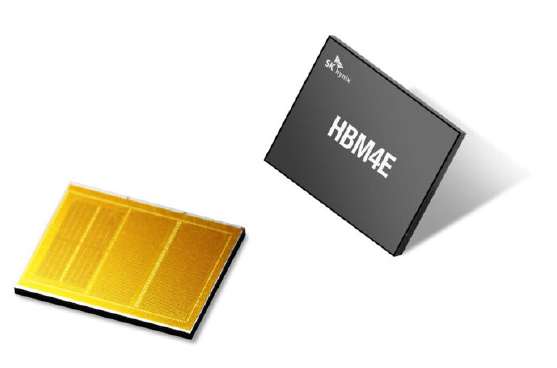
SK Hynix is speeding up its memory semiconductor production capacity by introducing extreme ultraviolet (EUV) equipment worth KRW 12 trillion. The EUV used for the production of advanced DRAM, is expected to be deployed in key lines, including the semiconductor cluster currently under construction in Yongin, Gyeonggi-do, and is also expected to accelerate the transition to SK Hynix’s advanced 6th-generation (1c) process.

The company recently disclosed that it had decided to acquire EUV scanners from ASML, a Dutch equipment manufacturer. The total acquisition cost is approximately KRW 11.9496 trillion, equivalent to 9.97% of its total assets as of the end of 2024. The procurement will take place over approximately two years through December next year and includes installation and modification costs.
Although the company did not disclose the exact number of EUV units it is introducing, industry estimates suggest it may acquire more than 20 machines, given that each unit costs between KRW 300 billion and KRW 500 billion. With around 20 EUV systems already in operation, it more than doubles its EUV line.
The EUV to be introduced in large quantities this time will be deployed at Cheongju M15X plant, while a significant portion is also expected to be allocated to the first fab (Y1) at the Yongin cluster, scheduled to begin operations next year. The rapid introduction of EUV is intended to expand production capacity across the entire Yongin cluster, where wafer production is expected to increase to between 380,000 and 400,000 wafers per month in the future.
According to SK Hynix, the investment is aimed at addressing growing demand for AI memory including HBM, and expanding demand for general-purpose DRAM. The company is trying to expand its production capacity to stabilize supply following the increasing demand for general-purpose memory in the front industry including servers and mobile.


korean-electronics.com | Blog Magazine of korean electronics, brands and Goods

K-Battery

https://korean-electronics.com//inquiry

K-Battery Wins KRW Trillions of Orders

Samsung SDI to supply ESS batteries to the USA

POSCO Future M secures a large contract on anode materials

The domestic battery industry is showing signs of recovery, following major supply contracts clinched by Samsung SDI and POSCO Future M. It is assessed that the continued securing of orders worth over KRW 1 trillion in each of the battery cell and core materials sectors is creating a positive atmosphere throughout the industry.
Samsung SDI announced that its North America subsidiary, Samsung SDI America (SDIA) signed a contract worth about KRW 1.5 trillion to supply batteries for energy storage systems (ESS) to a U.S. energy company. The contract will run from this year until 2029, with supplies delivered in phases.
The batteries supplied under the deal will be produced at the factory of StarPlus Energy, a joint venture between Samsung SDI and Stellantis, located in Indiana, USA. The company plans to supply nickel-cobalt-aluminum (NCA) and lithium iron phosphate (LFP) batteries one after another.

POSCO Future M also announced that it has signed a long-term supply contract worth about KRW 1.01 trillion with a global automaker for synthetic graphite anode materials. The contract period is five years from 2027 to 2032, and can be extended by mutual agreement.
The industry speculates that the counterparty for the contract is electric vehicle manufacturer Tesla. POSCO Future M signed another deal with Tesla in last October to supply natural graphite anode materials worth about KRW 671 billion for four years starting in 2027. Including the latest supply volume, the total value of graphite anode materials the company is expected to supply to Tesla could reach as high as KRW 4 trillion, the largest order since the company has entered the anode materials business in 2011.

 
korean-electronics.com | Blog Magazine of korean electronics, brands and Goods
LG Display’s OLED Panels

https://korean-electronics.com//inquiry

LG Display’s OLED Panels Prove Technical Prowess in China

First supply for TCL’s monitors
Targeting gaming and premium markets
Realizing 4K high-resolution

Korean display companies are stepping up efforts to target the Chinese organic light-emitting diode (OLED) market as Chinese home appliance companies rapidly transition from liquid crystal display (LCD) monitors to premium OLED monitors.
According to industry sources, TCL recently launched its first OLED monitor, the 32X3A OLED monitor, adopting the latest OLED panel from LG Display.
This product delivers 4K high-resolution, and a refresh rate of 240Hz through an LG Display OLED panel. It also features a dynamic frequency and resolution (DFR) function that allows the monitor to switch to 1080p at up to 480Hz, especially to meet demand from e-Sports gamers. The technology can currently be implemented only through LG Display’s OLED panels. TCL is said to have selected the panel for its first OLED monitor because of this feature. TCL is a strong player in the TV market but a relative newcomer in monitors.

Chinese panel makers, including TCL China Star (CSOT), Everdisplay (EDO) and BOE, have yet to match Korean companies in the latter’s mass-production scale and performance of OLED panels.
OLED panels produced by TCL China Star are reportedly currently used only in smartphones and smartwatches. As Chinese companies have yet to master mass-production of large OLED panels used in TVs and monitors, they have no choice but to still rely on Korean-made panels.

TCL’s decision to advance into the premium monitor market by launching its first LED monitor after focusing only on LCD so far reflects the rapid growth of the related industry in China. According to global market tracker Omdia, China accounted for a quarter (24.1%) of global monitor shipments last year, surpassing North America at 22.3% to become the world’s largest monitor market.

 
korean-electronics.com | Blog Magazine of korean electronics, brands and Goods

A Complete Guide to Cherry Blossom Season in Korea

https://korean-electronics.com//inquiry

A Bloom That Travels North
Every spring, South Korea undergoes a breathtaking transformation. Millions of cherry trees — known locally as beot-kkot — burst into bloom, turning roads, riverbanks, palace grounds, and temple paths into corridors of pale pink and white. For 2026, forecasters have identified an earlier-than-usual season, with blossoms expected to arrive approximately three to eight days ahead of historical averages due to evolving climate patterns. The bloom begins in the south and moves steadily northward, giving travelers the rare opportunity to follow the season across the entire peninsula. 

Where the Season Begins: Jeju Island
The cherry blossom journey starts on Jeju Island, where the first blooms are expected around March 22. Jeju is the primary habitat of the native King Cherry tree — a species distinct from the more widely known Somei Yoshino variety — and the island’s festivals celebrate this indigenous tree as a symbol of Korean identity.
Top viewing spots include Jeonnong-ro in Jeju City, a 1.2-kilometer road closed to vehicles during the festival period to allow pedestrians full immersion under a dense canopy of mature trees. The entrance road of Jeju National University offers a slightly later bloom due to its elevation, while Jangjeon-ri in Aewol-eup is celebrated for its evening illuminations that highlight white petals against the dark volcanic landscape. Hallim Park adds a dramatic geological element, pairing the delicate blossoms with lava caves and volcanic stone formations.

The Southern Coast: Festivals on a Grand Scale
The southern coastal region hosts Korea’s most celebrated spring festivals. Jinhae, a city that is home to more than 360,000 cherry trees, holds the Jinhae Gunhangje Festival — the largest spring celebration in the country, drawing over 2.6 million visitors annually. In 2026, the festival is expected to run from March 27 to April 5. Originally established in 1952 to commemorate Admiral Yi Sun-sin, the event now blends military heritage with floral tourism. The iconic Yeojwacheon Stream, with its “Romance Bridge” and water reflections, and the photogenic Gyeonghwa Station — a retired railway track lined with mature cherry trees — are among its most beloved spots.
Nearby Busan offers a coastal counterpoint, pairing cherry blossoms with seaside views at Dalmaji Hill in Haeundae, where a winding path overlooks the East Sea. The city’s peak bloom is projected between March 27 and March 31.
In Hadong, the Hwagae Cherry Blossom Festival centers on a roughly four-kilometer road connecting Hwagae Market to the ancient Ssanggyesa Temple, popularly called the “Wedding Road” after a local legend promising eternal love to couples who walk it together. Visitors are also encouraged to sample regional spring delicacies at the market.

History in Full Bloom: Gyeongju and Jeonju
Gyeongju, the former capital of the Silla Dynasty, offers one of Korea’s most unique blossom experiences. The city is considered a living museum, and its 2026 peak bloom is forecast between March 27 and April 5. The Daereungwon Tomb Complex, with its grass-covered royal burial mounds framed by pink petals, creates a powerful sense of history meeting impermanence. Bulguksa Temple, a UNESCO World Heritage site, is known for its rare “double” cherry blossoms, which bloom slightly later than standard varieties, extending the season. Gyeongju also hosts a Cherry Blossom Marathon in early April, with courses ranging from 5 kilometers to a full marathon distance.
Further west, the Maisan Cherry Blossom Festival in Jeonju features a hiking trail leading to Tapsa Temple, and many visitors combine this with a visit to the historic Jeonju Hanok Village.

Seoul: Urban Cherry Blossom at Its Finest
Seoul’s blossoms reach their peak between April 7 and April 14. The Yeongdeungpo Yeouido Spring Flower Festival draws crowds to a 1.7-kilometer Cherry Blossom Tunnel along the Han River, accompanied by live performances and evening illuminations. Seokchon Lake in the Jamsil district reflects blossoms on its calm surface against the backdrop of the city skyline.
Seoul’s five grand palaces provide a more serene setting. Gyeongbokgung offers coveted Moonlight night tours, while Changdeokgung’s guided walks through the Secret Garden include a traditional tea ceremony. Visitors wearing traditional hanbok clothing are typically admitted to the palaces free of charge. The E-land Han River Cruise also offers specialized cherry blossom cruises departing from Yeouido Pier, some featuring live jazz and evening fireworks.

Planning Your Trip
The optimal window for experiencing blossoms across the southern and central regions is March 25 to April 10. Travelers should book KTX rail tickets exactly one month in advance, as seats on popular routes sell out quickly. For Jinhae, which lacks direct KTX access from Seoul, organized shuttle bus tours departing from major Seoul hubs offer a practical alternative. To avoid peak-hour crowds, weekday visits and early morning arrivals — before 9:00 a.m. at major sites — are strongly recommended. Monitoring real-time bloom reports from the Korea Meteorological Administration can also help travelers adjust their itineraries as the season unfolds.

 
korean-electronics.com | Blog Magazine of korean electronics, brands and Goods

February’s Exports Hit Record-High Amid Semiconductor Boom

https://korean-electronics.com//inquiry

Fueled by the semiconductor boom, Korea’s exports in February increased by nearly 30%, recording the highest February performance ever.
According to the Ministry of Trade, Industry and Energy (MOTIE), Korea’s exports in February reached $67.45 billion, a 29.0% increase from the same month last year. This is the highest February performance ever. This significant increase was achieved despite three fewer working days than last year due to the Lunar New Year holidays. Record monthly export performance has been recorded for nine consecutive months since June last year.

 Semiconductors were the driving force behind Korea’s exports, reaching $25.16 billion in February, a 160.8% increase compared to the same month last year. This is in fact the highest monthly figure ever recorded. Semiconductor exports have remained above $20 billion for three consecutive months due to excess demand stemming from increased investment in artificial intelligence (AI), and the resulting surge in memory prices.
In February, only five of Korea’s 15 major export items, including semiconductors, saw an increase in exports. Computers, wireless communication devices, ships, and biohealth were these items that saw export growth. Conversely, exports of automobiles and auto parts declined due to the Lunar New Year holidays. Exports of general machinery, petrochemicals, and steel also saw declines.

By region, exports increased in seven of the nine major export regions. Exports to the United States reached $12.85 billion, a 29.9% increase, marking the highest February performance ever. Exports to China also increased by 34.1% to $12.75 billion due to higher demand for semiconductors.
South Korea’s imports in February reached $51.94 billion, a 7.5% increase from the same month last year. This resulted in a trade surplus of $15.51 billion. The trade balance increased by $11.55 billion year-on-year, reaching a record monthly high. The monthly trade balance has remained in surplus for 13 consecutive months since February of last year.
 
korean-electronics.com | Blog Magazine of korean electronics, brands and Goods

Cloud-based EMR/CRM Integrated Solutions

https://korean-electronics.com//inquiry

[INQ. NO. 2603E12] TNH Co., Ltd. is a healthcare IT company that has focused on addressing the structural challenges in healthcare. Since its founding in 2008, TNH has focused on developing specialized hospital software and has consistently provided solutions tailored to the hospital operating environment, focusing on cloud-based EMR and CRM.
TNH’s unique strength lies in expanding its solutions beyond simple electronic chart provision to encompass the entire hospital workflow, encompassing reservations, treatment, consultations, payments, insurance claims, and post-mortem care, all within a single system.

Its VegasCRM is a cloud-based EMR/CRM integrated solution for dermatology, aesthetics, and plastic surgery hospitals and clinics. It is designed to integrate not only medical record management but also reservations, customer management, and insurance claims into a single system.
Real-time status boards, treatment room status boards, and a smart reservation system allow for a comprehensive overview of hospital operations. It also offers customer management through point payment and deduction functions, and pick-up desk-based treatment distribution and statistics.

The reception and consultation function using tablet charts is also a factor that increases field usability.
TNH’s HanChart Cloud is a cloud-based electronic chart solution designed specifically for the environment of Oriental medicine clinics. It supports stable hospital operations without space or equipment constraints. It also features enhanced features specific to Korean Oriental medicine clinics, such as beauty treatment image storage, CRM functionality, kiosk (HIOSK) integration for registration, and certificate issuance.

Furthermore, TNH plans to gradually introduce a solution with enhanced field usability and mobile scalability via the tablet-based medical app Mediclo. Through these initiatives, TNH aims to more organically connect EMR and CRM-based hospital operating environments and continue its role as a technology partner that reduces actual workloads in the medical field.
Currently, TNH’s solutions are used in over 3,000 hospitals and clinics nationwide, with over 15,000 medical professionals and hospital staff utilizing them in real time on average daily. TNH continues its steady growth, with revenue of KRW 5 billion in 2022, KRW 6.2 billion in 2023, KRW 8.1 billion in 2024, and KRW 9.2 billion in 2025. This success is attributed to long-term customer retention and solution reliability.

 
korean-electronics.com | Blog Magazine of korean electronics, brands and Goods
Portable Cooling Device

https://korean-electronics.com//inquiry

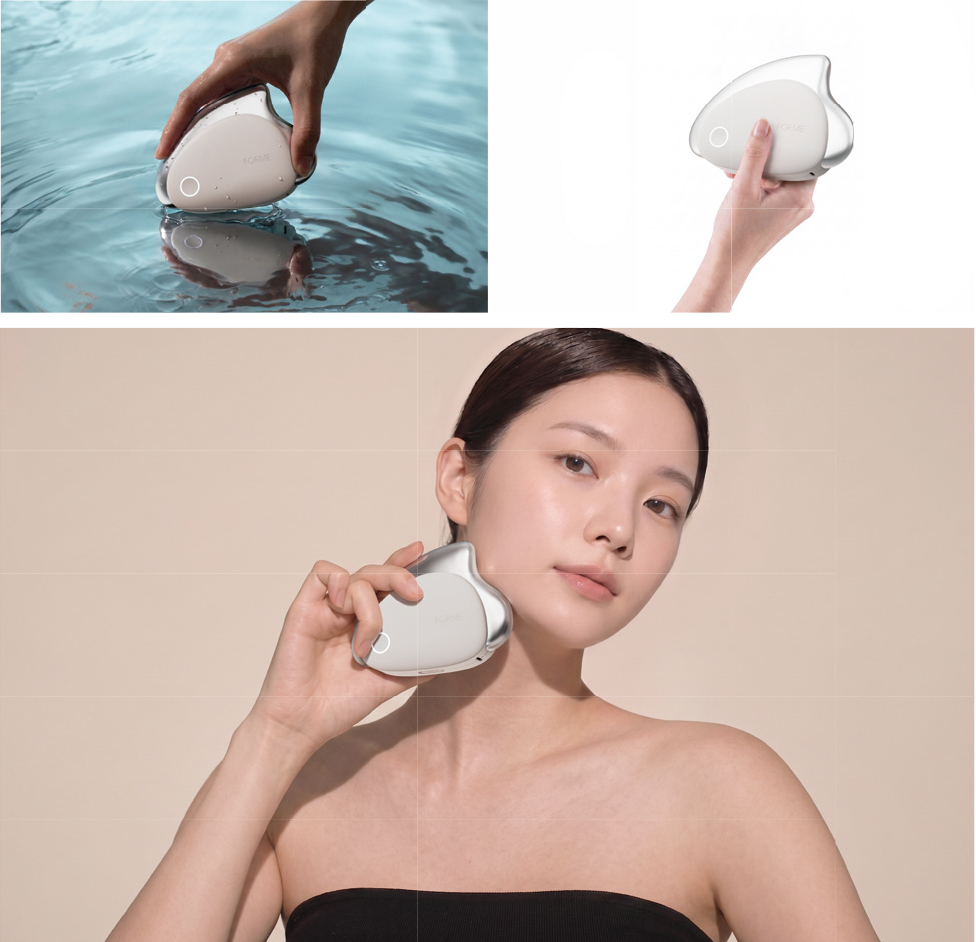
[INQ. NO. 2603E13] ICE LINKER Co., Ltd., a spin-off company of Samsung C-LAB, recently introduced the world’s first portable cooling device, Ella Thera, which can cool the skin to -10°C.
Ella Thera is a portable, two-in-one device that cools to -10°C in under 100 seconds. The temperature and functionality can be freely adjusted to suit a variety of individual needs.
The company emphasizes that the skin cooler function cools the skin and relieves pain and swelling, while the warming function relaxes muscles and promotes blood circulation. The device’s unique dual function, combining cooling and heating, allows for massage and skin care anytime, anywhere.

ICE LINKER confirmed its necessity and excellence through such various events as the Tokyo Show in Japan, the Innotech Invention Competition in Taiwan, and KIMES in Korea. Ella Thera is scheduled to be marketed as a medical device starting in 2026.
ICE LINKER is currently jointly developing various products utilizing its rapid cooling technology with mid-sized and large companies, and plans to sequentially introduce a lineup of approximately 30 products to the market. Through this, the company aims to become a specialized cooling technology company that addresses heat-related discomfort.
ICE LINKER inherited Samsung Electronics’ innovative culture and was born from a recognition of its future potential. ICE LINKER is a leading company driving innovation in the global market through cutting-edge digital cooling technology. Based on its innovative solutions and technological prowess, the company delivers quality and service that exceeds customer expectations.

ICE LINKERis a company born from Samsung Electronics’ DNA of innovation, and is recognized for its future potential. It is a leading company driving innovation in the global market through cutting-edge digital cooling technology. Based on its innovative solutions and technological prowess, ICE LINKER delivers quality and service that exceeds its customers’ expectations.
ICE LINKER aims to address heat-related issues across various sectors, including people, objects, and society, utilizing its digital cooling technology. Currently, ICE LINKER has developed and mass-produced one medical product and two wellness products by using its rapid cooling technology.

 
korean-electronics.com | Blog Magazine of korean electronics, brands and Goods