Samsung Electro-Mechanics Completes Lineup of its Core AI Semiconductor Components
Full-scale mass-production of silicon capacitors begins.
Essential components for GPUs and HBM
Targeting data centers and physical AI
Samsung Electro-Mechanics is starting full-scale mass-production of silicon capacitors, which are responsible for the stable power supply of artificial intelligence (AI) semiconductors. With the addition of silicon capacitors, the company has now completed its supply chain for core AI semiconductor components, following its existing flagship products, multilayer ceramic capacitors (MLCCs) and flip-chip ball grid array (FC-BGA) substrates for AI semiconductors.
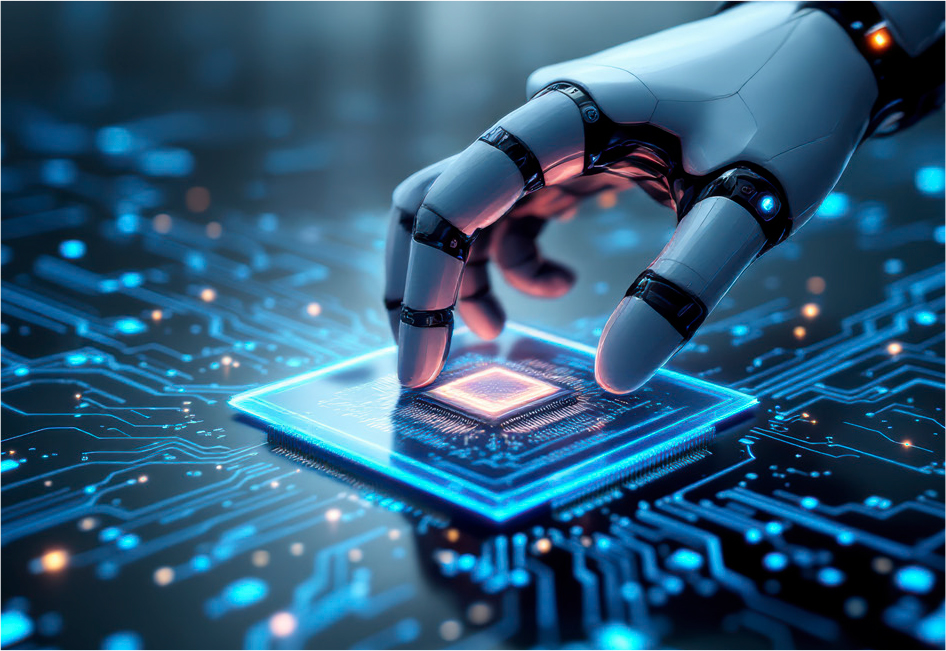
Samsung Electro-Mechanics recently announced that it has fully established a mass production system for silicon capacitors, and is expanding its presence in the global AI semiconductor market. Silicon capacitors are components used in the packaging of AI semiconductors.
Previously, Samsung Electro-Mechanics announced that it will supply silicon capacitors to a global company starting next January. The scale of the supply is KRW 1.5 trillion.
Silicon capacitors are components that store electricity and supply it stably to semiconductors when needed and reduce signal interference. They act as a ‘power buffer’ that maintains stable power-flow inside AI semiconductors.
As the era of AI semiconductors is taking off, the importance of silicon capacitors is rapidly growing.
In line with these market changes, Samsung Electro-Mechanics is cultivating silicon capacitors as a next-generation growth engine.
The strengths of silicon capacitors are pronounced, especially in AI semiconductors. They are manufactured based on silicon wafers so they can be manufactured in significantly reduced thickness and directly mounted inside semiconductor packages. Furthermore, they generate less power loss during the power transfer process than MLCCs, enabling rapid response to power fluctuations.
Competition in silicone capacitor technology is expected to intensify in the future. This is because as AI semiconductors become more advanced, power-consumption increases while operating voltage decreases, making power-quality management increasingly important.
The application fields of silicon capacitors are also expanding rapidly. The industry predicts that their application will expand in the future within the field of physical AI — such as humanoid robots, autonomous vehicles, and industrial robots.
korean-electronics.com | Blog Magazine of korean electronics, brands and Goods