Integrated and automated analytics platform

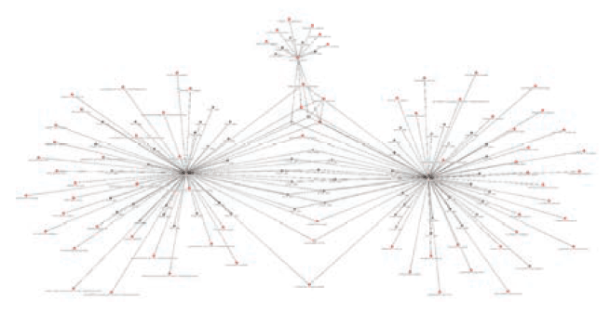
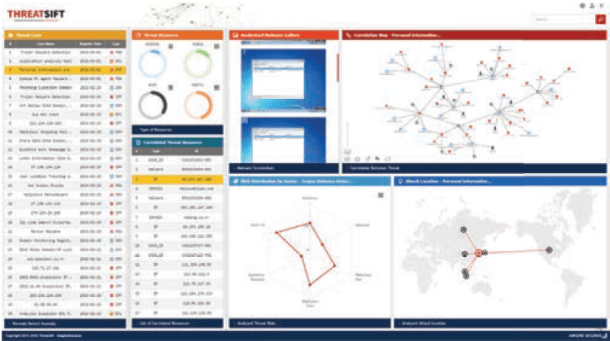
[INQ. NO. 1606E20] Amgine Securus Inc. has designed a technology solution titled “Threatsift” for enhanced investigation. https://korean-electronics.com//inquiryThis technology makes it possible to profile correlations between intrusion groups and intrusion incidents as well as the intruders through an automated analysis framework utilizing diverse invasive resources such as malware, URL and phishing mail.

Few organizations really understand their cyber security incidents and are typically not well-prepared in terms of processes. In practice, it is often difficult for organizations to identify the incident they are facing until they have carried out an investigation.
2016-06-22 11;50;222016-06-22 11;55;39
Threatsift enables integrated and automated analytics platforms based on extensive intrusion resources (Domain, IP, PE, PE32+, APK, EML, PCAP, PDF, FLASH, etc.). It provides the basis for linkage analysis and history management with regard to the results of automated analytics. It supports strategic responses to advanced, organized threats on the basis of extensive analyses of resource reputation.
IUntitled-3.jpgt enables unified responses to mass invasive resources through prompt analysis and collection of evidence. It can guide response contacts based on the results of linkage analysis into the characteristics of intruders and intrusions. Thus, the technology ensures enhanced competence in monitoring, analyzing, and counteracting invasive resources used by intrusion groups.
Amgine Securus Inc. has continued to establish cyber intelligence and investigation systems for major public institutions and governmental agencies in South Korea. In particular, Amgine has accumulated its core competencies through a great deal of experience in the development of innovative materialization for interrelationship of threat resources and has the ownership of pertinent solutions in the fields of cyber investigation, threat response, and digital forensics.

korean-electronics.com | Blog Magazine of korean electronics, brands and Goods

A Vital Agency Aiding Korea’s Economic Development


2016-06-22 11;36;32.PNG

Korea’s remarkable economic growth over the past several decades has been accompanied by an equally stunning expansion of Korean exports to global markets, which has been the major growth engine driving the nation’s prosperity. At the vanguard of Korea’s export economy is the Korea Trade-Investment Promotion Corporation (KOTRA), charged with promoting the country’s trade, attracting foreign investment, and forming cooperative technological and industrial partnerships with leading global corporations and organizations.
https://korean-electronics.com//inquiryFounded in 1962 as the Korea Trade Promotion Corporation, the establishment of the national trade promotion organization coincided with the birth of Korea’s industrialization and economic expansion. Exports led the development of the national economy, aided by a variety of trade promotion initiatives overseen by KOTRA. The organization helps Korean firms analyze foreign markets, provides administrative support, and links potential overseas buyers with Korean companies seeking markets for their products. In 1995, the name of the organization was changed to the Korea Trade-Investment Promotion Agency in order to reflect the role of KOTRA in a new global age, as foreign companies increasingly sought to invest directly in Korea.
KOTRA’s main responsibilities include the facilitation of international trade, promoting foreign investment in Korea, providing information and data to both Korean companies and foreign buyers, and operating a network of branch offices called Korea Business Centers around the world to gather information, establish contracts, and aid Korean companies operating in foreign markets. KOTRA’s overseas network includes 99 Korea Business Centers in 72 countries.
The organization supports the export activities of Korean companies through business matchmaking that aims to link foreign buyers with the right products made by Korean companies. KOTRA holds trade shows, exhibitions, seminars and business meetings to help foreign companies seeking new products or partners in Korea. As part of these efforts, KOTRA also provides support for Korean companies participating in international exhibitions and conferences by setting up “Korea Pavilions” designed to promote Korean industries and increase awareness.
In addition to promoting Korean companies and products and assisting in international commercial activities, KOTRA’s “Invest KOREA” investment promotion agency provides foreign companies with the administrative, policy and procedural assistance for investing in the Korean market. The agency is staffed by experts from related government ministries and organizations, and provides services, including investment consultation, market research, and advice on legal and tax matters related to doing business in Korea.

The IT era has created new challenges as well as roles for KOTRA. The agency has responded to the growth of ecommerce and web-based business activity by opening interactive Internet portal sites, including Invest KOREA Online and BuyKorea.org. The agency also operates a Cyber Business Center, which enables overseas buyers to conduct online business meetings with Korean companies as well as providing a wide range of online and digital services.
As one of Korea’s most prominent government organizations, KOTRA has assisted the nation’s economic development. The organization has adapted to changing market conditions, by creating new support systems for investment in Korea as well as responding to new demand for Korean cultural contents, such as movies, TV dramas and computer games, in markets around the world.

korean-electronics.com | Blog Magazine of korean electronics, brands and Goods
S. Korea to ease regulations on drones, self-driving cars, biotech

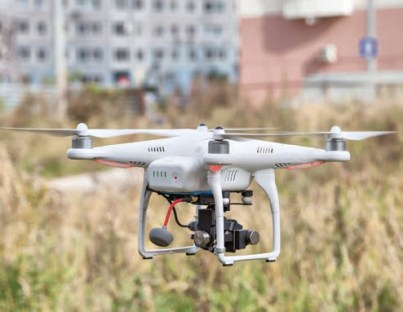
South Korea will ease regulations on drones, self-driving vehicles https://korean-electronics.com//inquiryand the biotech sector in a move to seek new industries that could help fuel new economic growth.
At a recent meeting presided by President Park Geun-hye, a panel composed of senior offi cials in charge of deregulation fi nalized a plan to ease regulations on drones, self-driving cars, the Internet of Things (IoT), and clouding as well as biotech and healthcare industries. Under the plan, parcel delivery services using drones and driving autonomous vehicles in downtown areas would be possible in Korea within this year. It was the government’s fi fth round of top-level deregulation meeting after the fi rst meeting was held in March 2014 as part of eff orts to revitalize the economy.
The government has decided to lift regulations on these sectors similar to or looser than the rules in advanced countries such as the United States and the European Union.
In particular, the Korean government would allow all types of drone-related businesses unless it sees such businesses threatening to the safety and security of the people.

This means that parcel delivery services, entertainment performances, advertisements and a wide range of services using drone technology would be legal in the country. The same rule will be applied to the self-driving car, Untitled-1allowing its test runs on most roads across the nation unless it harms public safety. Should ultra-small electric vehicles like the Twizy of Renault Samsung Motors Co. meet the safety requirements of foreign countries, they would be allowed to run on local roads.

The government also plans to raise the electromagnetic wave standard by 20 times from the current level to establish the world’s fi rst nationwide network reserved for IoT services earlier than expected and revise regulations on physical server-network separation to expand cloud services to the private sector. Rules on the use of satellite-based location data will be eased, too. In addition, the government plans to form a special team that could foster the development of bio healthcare products.

<Source: KITA>


korean-electronics.com | Blog Magazine of korean electronics, brands and Goods

Improving domestic demand props up economy, off sets faltering exports

South Korea’s domestic demand seems to support the entire economy despite faltering exports stemming from weakening global demand, a government report recently showed.
“Domestic demand, particularly private consumption, has been gett ing bett er recently, although exports have been https://korean-electronics.com//inquiryon the decline,” the fi nance ministry recently said in its monthly economy assessment report. The report is based on the latest economic indicators on such key factors as output, exports, consumption and corporate investment that could provide clues as to how the economy has been faring in recent months. Recent data showed that the country’s retail sales gained 4.2 percent in March from a month earlier on a sharp rise in durable goods like passenger cars.
The South Korean government revived an excise tax cut program on cars earlier this year in order to boost private consumption and the entire economy in the end.
Despite the somewhat favorable assessment on the domestic side, external risks, such as the global economic slowdown; uncertainties over the U.S. rate policy; and instability in emerging markets still weigh on the South Korean economy that relies a lot on exports.
Outbound shipments sank 11.2 percent in April due to a sharp drop in shipments of autos, fl at displays and petroleum products, accelerating the declining pace from a 8.1 percent drop in March. Industrial output, which is closely linked to exports, fell 1.5 percent in March due to the sluggish semiconductor sector, while the manufacturing capacity utilization rate stayed low at 73.2 percent.
“Domestic demand has been in an upside mode supported by fi scal policies and improved business sentiment, but the private sector’s momentum is still weak, along with external pressure like a protracted global slump,” the report said. The ministry also vowed to keep close tabs on fi nancial and currency markets, and economic trends at home and abroad to be ready for any necessary action.

<Source: KITA>

Untitled-2

Domestic securities firms’’ overseas business shrinks

The number of Korean securities fi rms’ overseas subsidiaries, branches and liaison offi ces continued to decrease last year, government data recently showed. According to the Financial Supervisory Service (FSS), Korean brokerage houses were operating in 12 countries through 56 subsidiaries and branches, and 19 liaison offi ces at the end of last year. The number of their foreign offi ces has been decreasing since March 2012 when they had 93 in 14 countries.
The data showed that the securities fi rms could turn to profi t if they reduced the number of their overseas business networks. In 2011, the companies’ overseas offi ces posted a $93.8 million net loss and managed to register a $16.7 million surplus in 2014 when they reduced their overseas subsidiaries and offi ces to 80. Last year, the companies recorded $23.9 million in net profi t, up $7.2 million from a year earlier.
The FSS said their overseas earnings increased for a second consecutive year in 2015, but the amount accounts for a mere 1 percent of their overall net profi t. The aggregate assets of the securities companies’ overseas businesses came to $2.01 billion at the end of last year, up 12.4 percent from a year earlier. Shareholders’ equity also rose 10.4% to $1.53 billion during the same period.
“Securities companies have made profi ts based on a successful localization in other countries,” the FSS said. “In particular, some big securities companies have actively expanded their businesses into Asian emerging markets by increasing capital or acquiring local companies.” Most of their overseas businesses were concentrated in Asia with 44 subsidiaries and branches, and 19 offi ces. China had the most offi ces with 20, followed by Hong Kong with 15 and Vietnam with 9.

Korea’’s ICT exports dip 14.3% in April

South Korea’s exports of information communication technology (ICT) goods dropped 14.3 percent in March due mainly to a continued slump in sales of semiconductors and displays, government data recently showed.
ICT exports reached $12.53 billion in April, down from $14.62 billion a year ago, according to the data compiled by the Ministry of Trade, Industry and Energy. Exports of ICT goods accounted for 30.5 percent of the country’s $41.05 billion worth of overall shipments abroad over the cited period.
South Korea’s overall exports have been in a deep slump for 20 straight months, posting an 11.2-percent on-year drop in April.
Imports of foreign ICT products also fell 4.9 percent on-year to $7.27 billion in March, with the country logging a surplus of $5.26 billion in the sector. The trade ministry recently said weak exports of display panels and semiconductors led the decline due to an oversupply and fl accid demand in the sectors.
Shipments of fl at screens sank 27.6 percent on-year to $2.13 billion and those of chips slid 11.8 percent on-year to $4.55 billion over the period. Overseas sales of mobile phones also contracted 7.9 percent to $2.15 billion on the waning impact of new smartphones releases. By region, shipments to China and Japan plunged 18.9 percent and 50.9 percent on-year, respectively, while those to the United States jumped 25.3 percent, the data showed.

<Source: KITA>


korean-electronics.com | Blog Magazine of korean electronics, brands and Goods

Hwaseong Fortress [UNESCO World Heritage]

Untitled-39.jpg

Hwaseong Fortress is an impressive structure from the latter part of the Joseon Dynasty (1392-1910) and the official fortress of Suwon-si, Gyeonggido.
The fortress (constructed from 1794 to 1796) was built as a show of the King’s filial piety towards his father Jangheonseja and to build a new pioneer city with its own economic power.
The fortress wall stretches for a total of 5.52km and has a great variety of military facilities that’s hard to find anywhere else. Four gates face each of the cardinal directions—Janganmun (north), Paldalmun (south), Changnyongmun (east), and Hwaseomun (west)—and the seven-arch style Sumun gates straddle the point where the nearby stream reaches the palace. Above the Sumun gates is a pavilion called Hwahongmun.
Untitled-40.jpgHwaseong Fortress was constructed under the guidance of Yu Hyeong-Won (1622-1673) and Jeong Yak-Yong (1762-1836), and is believed to have been constructed very scientifically. The fortress wall was built using Seokjae and Jeondol (bricks) and the holes between the bricks are just big enough to fire guns, arrows, or long spears through in case of an attack.
During construction of the fortress Jeong Yak-Yong invented ‘Geojunggi,’ which uses a ‘hwalcha’ (lever) to lift up heavy stones, greatly reducing construction time.
The Suwon Hwaseong Fortress went through many turbulent times and damage, and in the battle of June 25th, many of the facilities became so damaged that they were deemed irreparable.
Even though the fortress restoration initiative (1975-1979) restored many of the sites to their former glory, Paldalmun to Dongnamgakru (an area 491 meters in length) has still not been renovated.
The fortress was designated as Historical Monument No. 3 in January 1963, and in December 1997, it was designated a UNESCO World Cultural Heritage Site.
A variety of performances and evens are held everyday and Suwon Hwaseong Cultural Festival takes place every autumn.

• Website: http://english.swcf.or.kr (English)
Source: Korea Tourism Organization (english.visitkorea.or.kr)

korean-electronics.com | Blog Magazine of korean electronics, brands and Goods

Four Points by Sheraton Seoul, Namsan

Untitled-35.jpgLocated in Seoul’s lively Yongsan-gu area, north of the Han River, Four Points by Sheraton Seoul, Namsan offers convenient access to business areas, tourist attractions and public transportation. It is directly connected to Seoul Station, one of the city’s major railway stations, via an underground passage. Also, Incheon International Airport is just 60 minutes away via the Airport Express train.
Four Points by Sheraton Seoul, Namsan occupies floors 19 to 30 of a mixed-use development tower. The hotel offers 342 sleek and comfortable guestrooms, each featuring spectacular panoramic views of downtown Seoul. All the guestrooms are equipped with the signature Four Comfort Bed™, fast and free WiFi and complementary bottled water.
The Eatery, the hotel’s inviting all-day dining restaurant, presents an extensive menu of local and international cuisines—ideal for business lunches, family get-togethers, and romantic dinners. For social gatherings, The Bar offers an extensive selection of drinks, snacks and craft beers from the brand’s signature Best Brews™ Program, which features an authentic local brew along with a selection of international beer. The hotel offers 54 square meters of function space and two private dining rooms, and a business center provides support services for corporate meetings and social events.
In the Asia-Pacific region, Four Points is Starwood’s fastest growing brand, with 42 hotels in operation and more than 50 hotels in the pipeline. In addition to Four Points by Sheraton Seoul, Namsan, the brand was on track to open eight properties in key destinations across the Asia-Pacific by the end of 2015, including Bali and Makassar, Indonesia; Chengdu, Penghu, and Hefei in China and Vadodara in India.

• Four Points by Sheraton Seoul, Namsan
37-85 Dongja-dong, Youngsan-gu, Seoul, Republic of Korea
Tel: (82-2)6070-7000 Website: http://www.fourpoints.com/seoulnamsan

korean-electronics.com | Blog Magazine of korean electronics, brands and Goods

Becoming a Global-Leading Innovation Enterprise in the Electrics and Automation Field

Since its establishment in 1974, LSIS Co., Ltd. Untitled-35has grown as a global leader in the electrics and automation field, leading the global market by producing electric power solutions and systems, such as transformers, circuit breakers, LV/MV switchgear, etc. It also produces automation solutions, such as PLC, HMI, and inverters; and, in addition, the main parts of railroad systems and electric cars, the eco-friendly systems such as photovoltaic and energy storage systems.
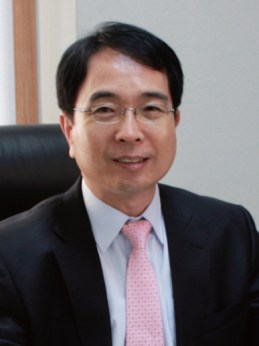
Chairman & CEO Shin Dong-hyuk


Korea’s representative enterprise in the electrics and
automation field

LSIS Co., Ltd, established in 1974, is Korea’s representative enterprise in the electrics and automation field. After having seceded from LG Group in 2003, it was relaunched under the current corporate name. In 2015, it established the new vision of “Futuring Smart Energy” through the proclamation ceremony of value management. About 3,500 executives and staff members, including CEO Koo Ja-kyun, work for LSIS, which is composed of the Operation Headquarters including Smart Power Distribution, Smart Power Transmission, Smart Industrial Automation, and China Headquarters, and the Support Department, such as CTO.
The turnover in 2015 was about KRW2.2 trillion.
LSIS has its Head Office and R&D Campus in Anyang, and domestic places of business in Cheongju (1&2), Cheonan, and Busan (1&2), respectively, and overseas subsidiaries/branches in China, Vietnam, Japan, etc. LSIS produces electric power solutions and systems, such as transformers, circuit breakers, LV/MV switchgear, and automation solutions, such as PLC, HMI, inverter, and, in addition, the main parts of railroad systems and electric cars, and eco-friendly systems such as photovoltaic and energy storage systems.
For electric power solutions and systems, LSIS offers a whole lineup ranging from low-voltage solutions to extra-high voltage electric power, such as power transformers and GIS (gas insulated switchgear), and also high-voltage direct current (HVDC) and flexible alternating current transmission systems (FACTS) as well as alternating current system.

Pursuing various innovation projects

In the field of Smart Power Transmission projects, LSIS is pursuing its convergence/integration solution project grafting IT functions onto high-voltage power equipment and systems. Its main products consist of GIS (gas insulated switchgear), power transformers, etc. for transmission of electricity generated by a power plant, and PDPS (Power equipment diagnostic & Prevention system), high-voltage direct current (HVDC) transmission systems, etc., for stable operation of power equipment. LSIS provides both total solutions of high-voltage power system ranging from AC system to DC system and onestop solutions, from design to construction. Furthermore, LSIS also promotes eco-friendly and new projects, such as smart grids, automobile electronic systems, photovoltaic solutions, and railroad systems.
In the field of Smart Power Distribution projects, LSIS produces products of low- to medium-voltage, such as vacuum circuit breakers (VCB), air circuit breakers (ACB), molded case circuit breakers (MCCB), which are positively necessary for supplying power to facilities for industry, commerce and residences. In addition, LSIS fosters next-generation business, such as smart meters and IED (Intelligent Electronic Devices).
In the field of Smart Industrial Automation projects, LSIS provides various solutions related to factory automation based on the automation solution. Main products consist of PLC (Programmable Logic Controller), low- and medium-voltage AC Drive, HMI (Human Machine Interface), and LSIS also conducts business in automation systems and the E/S (Energy Saving) field.
To explain in detail the eco-friendly field, in the smart grid field, LSIS provides xEMS (energy-management solution) under the brand name of “GridSol.” The main solutions consist of HEMS, BEMS, and FEMS (for houses, buildings, and factories, respectively). Meanwhile, LSIS’s R&D Campus has recently obtained certification of BEMS installation for the first time in Korea. In the field of energy storage systems (ESS) attracting attention these days, LSIS provides solutions for commerce/ industry, frequency regulation and renewable energy applications, etc. under the brand name of “EnGather,” thereby helping utilize efficiently the electric energy stored in the battery.

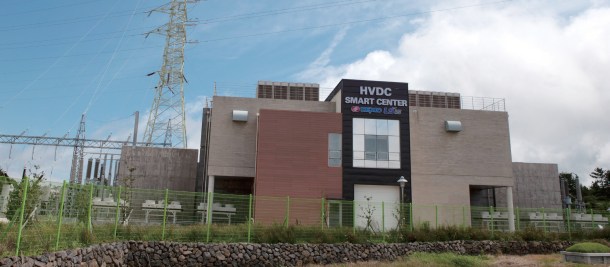
Untitled-36.jpg
Persistently striving for localization of HVDC technology

LSIS has been persistently investing in the localization of HVDC (high voltage direct current) technology called the centerpiece of next-generation power transmission. HVDC is the technology of supplying power by converting the alternating current power generated at the power plant into direct current, and it is the method of power transmission which has recovered shortcomings of alternating current power transmission, such as loss of power transmission. Due to increase of long-distance power transmission demand, increase of construction of large-scale offshore wind complexes, increase of grid connection between countries, increase of grid stabilization demand, etc., HVDC is receiving attention as the core field of the next-generation electric power market. LSIS started the joint research with KEPCO (Korea Electric Power Corporation) in 2009 for developing the conversion technology, and has secured the operation technology by successfully installing the ±80kV, 60MW test site on Jeju Island.
Moreover, in 2013, LSIS was selected as the transferee of the HVDC core technology from KAPES (KEPCO-Alstom Power Electronics Systems Inc.), the joint venture company established by KEPCO and Alstom of France. LSIS also participated in the DC500kV-level HVDC project between Bukdangjin and Godeok, promoted by KEPCO and KAPES, and plans
to manufacture and supply key components of converter stations until the first part of 2017.
HVDC can be classified into LCC (line-commutated converter) and VSC (voltage-source converter) according to the conversion method (the semiconductor device used in the converter). Since ABB succeeded in commercial operation for the first time in 1954, LCC has become widely known all over the world, and in Korea, both 2 HVDC cable routes installed between the land and Jeju Island and the HVDC project between Bukdangjin and Godeok are LCC.
Though VSC (voltage-source converter) has a comparatively short history (succeeding in the commercial operation in 1997 for the first time), it is a field rapidly growing on the strength of the business environment changes such as expansion of offshore wind. VSC has still lots of shortcomings in price, loss, maximum voltage and capacity, etc. compared with others, but it has also many selling points─e.g. it is excellent in function, and requires only small space for installation. By combining HVDC with the prior technology research related to VSC-type HVDC from the beginning of HVDC business, LSIS has already secured the generic technology, such as control algorithm, and is preparing for entering into the market at the appropriate time of market advancement through product development utilizing similar technology, like MMC STATCOM.
FACTS (Flexible AC Transmission Systems) is the collective name of various compensation devices enhancing efficiency of alternating current power systems, among which SVC (Static Var Compensator) was supplied the most and STATCOM has recently started to capture the limelight. Technologically, SVC is similar to LCC-type HVDC, and STATCOM to VSC-type HVDC respectively.
LSIS already developed the ±100MVar-level SVC system and has succeeded in delivering the system to 154kV-level substation of LS-Nikko Copper Inc. and operating it. In addition, as mentioned above, LSIS plans to release the MMC STATCOM (the system evaluated as the most advanced STATCOM reducing power loss and minimizing the effect of harmonic wave compared with the existing STATCOM) utilizing the generic technology of HVDC.

Expecting to grow as a global leader in the field of nextgeneration
smart grid systems

It seems to be premature to comment on the result as there are still many technologies under development but, if LSIS secures the above-mentioned systems (LCC-type HVDC, VSC-type HVDC, SVC and STATCOM), it will be equipped with the AC/DC portfolio ranging from low voltage to extra-high voltage. LSIS thus expects to not only establish its reputation as the representative enterprise of electric power solutions and systems, but also operate the business stably by providing systems complementary to one another.
The smart-grid system nationally, will play a role in efficient operation of the power system, and the industrial system will contribute to enhancement of the power efficiency in steel plants, and so forth. If LSIS enters the global market where sales of HVDC and FACTS are rapidly growing, LSIS is expected to gain an advantage preferably in narrowing the gap between itself and the advanced global companies, compared with the market of existing alternating current power systems, which is evaluated to be mature in the aspect of technology/business/market.
Since initiation of the full-scale business/development in 2010, LSIS looks forward to the first sales of HVDC in 2016. If the business gets off the ground, LSIS expects not merely to increase sales but also to join the ranks of global leaders in the nextgeneration smart grid systems.

korean-electronics.com | Blog Magazine of korean electronics, brands and Goods

Aiming to Become a Global Healthcare Enterprise

Untitled-30.jpgEstablished in 2001, CHUNGWOO Medical Co., Ltd. is an enterprise specializing in ITintegrated medical devices and now it has grown as a representative specialized enterprise of medical equipment in Korea in the high-end brand area having applied radio frequency and ultrasound technology. At present, it is earning a high reputation for its various high-quality brands in promising markets all over the world, including the regional market, and the domestic market. In addition, based on the company’s sound technological prowess on the strength of systematic and steady R&D, it is aiming to become a global best enterprise specializing in medical devices.

CEO Il-kwon Lee

Korea’s leading enterprise specializing in IT-integrated
medical equipment

CHUNGWOO Medical Co., Ltd. is an enterprise specializing in the IT-integrated medical equipment and is developing and producing diverse and specialized medical equipment based on new ideas, new technology, and new concepts. Based on the management philosophy of “Contribution to healthy and beautiful life,” and with the management goal of giving priority to “Confidence”, “Technology,” and “Quality,” and with the staff’s challenging spirit and innovative thinking, it produces only the products which can satisfy the customers. As a result, it is building up confidence, along with favorable evaluations in many countries besides Korea.
CHUNGWOO Medical has differentiated its products with the high-quality strategy carried forward consistently, based on high performance, high quality, and excellent design. With the company’s original technology secured over a long period time and high-quality competitiveness, it has been striving for development of new products continuously. As a result, it is planning to expand its business into various medical device areas in the medium- to long-term and, furthermore, continuously endeavors to become a
global healthcare enterprise.

Leading the domestic market with high-end brands in the
areas of skin, obesity and beauty treatment

CHUNGWOO Medical is an enterprise specializing in radio frequency and ultrasound medical equipment. Anchor products are APOLEX, the liposuction equipment using the radio frequency and CONTLEX, the equipment for reduction of skin wrinkles and lifting using the ultrasonic energy. APOLEX is the only liposuction equipment equipped with radio frequency in Korea. As the 1MHz RF(radio frequency) technology was applied for the first time in Korea through the development of Cannula to which the company’s technology has boiled down, APOLEX is the liposuction equipment capable of operating lifting as well as fat melting and liposuction simultaneously, which is differentiated from other equipment.
Besides APOLEX, CHUNGWOO Medical is producing diverse and specialized medical equipment for skin, obesity and beauty treatment, such as ROBOLEX which is a therapeutic equipment for treating obesity combined with the synergy effect of vacuum suction, radio frequency and laser. ELLISYS is a skin regeneration equipment that proliferates fibroblasts fit for the patient by sticking a gold-plated fine needle into the required skin layer and putting the radio frequency into the needle, and thereby making minor injury and collagen denaturation poles. By synthesizing collagen and elastine, and, as a result, maximizing the spontaneous cure of skin, RAFOS Premium is radio frequency equipment including the function of both CET and RET as the device capable of treating the cellulite reduction and pain most effectively.
CONTLEX is skin lifting equipment using ultrasound, and at present it is a key skin-related product and one of the best-selling items. Its distinct feature is that it generates heat in a specific part which is effective for lifting by high-intensity focused ultrasound, then coagulates the part and thus does not incur thermal damage except for the focused part. As the skin does not turn red and no scabs are formed, daily life is possible immediately after the operation and extra recovery time is not required, thereby enhancing the patients’ satisfaction.

Acknowledged as Korea’s best enterprise in the
industrialization of HIFU

Medical application of ultrasound started at the time of World War II, and since then ultrasound not only has held an unchallenged position in the 21st century diagnosis and treatment domain, but also has been developing repeatedly these days through fusion of medical imaging equipment like MRI and treatment technique using laser, etc.
Among these, since it appeared for the first time in 1993, HIFU (High-Density Focused Ultrasound) has been developing and recording high growth with China as the center, which is leading the relevant research, technical development and industrialization on the strength of state-level active investment and support, as well as in the USA, Europe and Japan.
On the other hand, in Korea, most of the medical equipment applying HIFU is still foreign-made, and the level of relevant research and technical development remains in the beginning stages, thereby requiring urgent countermeasures.
In relation to product development applying HIFU technology, explained, “In order to initiatively break through this situation in Korea, CHUNGWOO Medical has been proactively proceeded with meticulous research on HIFU. Owing to this result, we are acknowledged as Korea’s leading enterprise both in name and reality in terms of industrialization of HIFU, enough to be selected as one of the 100 excellent products of the State Research and Development.”
In a situation where there is growing competition among advanced countries of HIFU-applied medical equipment technology, such as the USA, Europe, Japan, China, the performance and technological prowess of the HIFU-applied ultrasonic equipment provided by CHUNGWOO entirely with domestic technology are evaluated to stand comparison with those of advanced countries. Based on this technological prowess, the company is extending the application scope of the device to abdomen, thigh, etc., as well as face.
Regarding the specific sales increase followed by activities of CHUNGWOO’s ultrasound and radio frequency product brands, CEO Lee explained, “Last year, we marked a turning point on the strength of lineup of ultrasound and radio frequency products, like passing KRW 10 billion of sales. This year, we will not only step up to enter the first-class medical equipment business circle by accomplishing groundbreaking growth to reach up to KRW 20 billion in sales, but also strive for the development of core technology all the more in order to release both the technology-leading products of the ultrasound/radio frequency area that we have pursued continuously for contributing to the development of the domestic ultrasound industry and the higher value-added products meeting the expectations of users.”

Dream of becoming a specialized enterprise of the worldbest
medical equipment

With regard to the technological competitiveness and strengths of CHUNGWOO Medical CEO Lee said, “We can say the strengths of CHUNGWOO Medical are that we possess a total of 28 domestic and international patents obtained until now, and we have more than 30 pending patents. We focus on investment in technology to the extent that 40% of the 70 staffs are R&D personnel. By investing more than 15% of sales in the development of medical equipment every year, we release two to three new products annually.”
Also, about the future export strategy, CEO Lee emphasized, “At present, the sales ratio of the company between domestic sales and export is 2:8. In the future, we have a plan to raise the ratio of export from the present 80% to 90% by becoming a specialized company of the world-best medical equipment on the strength of developing various products of higher value-added profit models. We will ceaselessly strive to become a global leader challenging the competition with trust and technological prowess in the world market.”

Apolex / Contlex / Ellisys / Robolex


korean-electronics.com | Blog Magazine of korean electronics, brands and Goods

SCCM industrialization and applications

Technology overview: Public interest in fresh and safe food is growing faster than ever along with improved quality of life and the use of online markets is giving rise to the demand for cold chain systems. However, the domestic market for refrigerated transportation is seriously lacking modernized systems and technologies for effective establishment and operation of the systems.
Inhttps://korean-electronics.com//inquiry particular, pre-cooling is hardly applied to agricultural products at production sites, and only 27.8% of such farm produce is shipped under refrigeration. Lack of proper temperature control often leads to considerable loss of products and even to disposal.
This project of SCCM Industrialization and Application was carried out in response to the rising demand for cold chain systems in order to develop smart cold chain management technologies for real-time remote temperatures/humidity control.
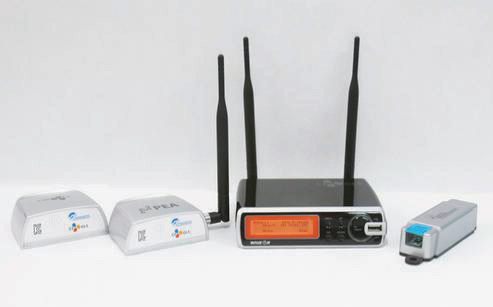
The smart cold chain management technology monitors temperatures/humidity in real-time by installing wireless sensors in vehicles and logistics facilities, collecting data from 50 sensors at the same time for location-specific management. Additional features can be easily installed as well. The application of the smart cold chain management is expected to improve the quality of logistics services and minimize the costs of the entire supply chain.

Industrialization: The smart cold chain management technology has been applied to a variety of sites in order to assess feasibility of industrialization. As to the food industry, temperature/humidity sensors were installed in a mushroom container, monitoring the inside of the container in real-time so as to analyze causes of product spoilage, which reduced annual average logistic costs and products loss by KRW 500 million. In the pharmaceutical industry, the smart cold chain system was applied to logistic warehouses so as to track temperatures of medicine, and application to hospitals has been verified as well through process analysis and test bed establishment, targeting four major hospitals in Korea.
In the apparel industry, the technology was applied to products sensitive to humidity such as leather with the purpose of preventing mold, which actually saved annual average product loss of KRW 26 million. In the CPG industry, the technology proved to be useful for preventing product damage and quality degradation during winter, lowering damage of CPG with high water content from 3% to 2%.

Problem-solving in industrialization: In Korea there are no regulations or regulatory systems on frozen or refrigerated food for the smart cold chain management and thus, internal standards of manufacturers or logistics services providers are applied voluntarily. There are no standardized regulations for handling perishable food either. As for livestock products, there are recommended expiry dates (24 months for frozen meat, 90 days cooled beef, and 45~55 days for cooled pork). Only the Livestock Products Sanitary Control Act stipulates that temperatures of transport vehicles should be maintained at 0~15℃.
Due to this lack of laws and regulations for mandatory temperature control of food, application of the smart cold chain management system was not easy but the company persuaded customers by highlighting that introduction of the system can prevent food spoilage or mold on clothing and improve quality of products through effective temperature/humidity control solutions applied to vehicles and storehouses.

Untitled-29.jpg

korean-electronics.com | Blog Magazine of korean electronics, brands and Goods

Proprietary technology of factory-integrated DMS

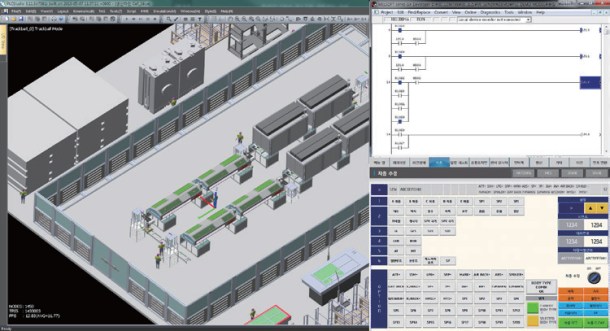
Technology overview: The technology of a digital factory and simulation realistically visualizes key elements of automatic manufacturing processes via 3D graphics so that a user can operate a virtual factory with the purpose of predicting and analyzing possible problems, performing design, verification, and correction of production methods in advance, and supporting optimized distribution of the factory’s resources, facilities, and human resources.https://korean-electronics.com//inquiry
More specifically, the technology establishes a virtual factory based on a general drawing and facilities control codes without building actual production lines. In addition, operation of facilities can be performed/verified/corrected in advance by applying control logic of facilities to a virtual factory. The company has also secured a technology for creating 3D models containing kinematic/electrical information and physical sensors and for high-speed processing of large-volume 3D graphic data.
Furthermore, they have succeeded in conversion and simplification of facility design data for 3D simulation, performance of a safety/equipment collision test, creation of an operator-friendly process chart, alignment of simulated production methods and mechanical movements with control programs, and application of a physical PLC controller and HMI in use.

Untitled-28.jpg

Industrialization: The 3D simulation technology was applied to thirty domestic/overseas new, modified, and mixed assembly lines of the Hyundai-Kia Automotive Group in order to verify their mechanical and electrical design, which reduced designed man-hour and improved the quality of control programs. Prior to actual set-up of a factory, virtual trial operation could minimize the period of the actual trial operation for preparing massproduction.
Furthermore, the technology could help to deal with frequent modification of production methods and mixed models, standardize PLC programs, and improve competitiveness compared with imported SW, and thus is being applied to the body, press, painting, and trim lines.
Currently, advancement of the technology is under way in response to requests of customers such as a phase shift circuit and monitoring. The technology has been applied to the standard PLC simulator of the global production technology training center of the Hyundai-Kia Automotive Group and to the integrated simulator and CPS simulator of the 3D virtual technology support center of the Korea Electronics Technology Institute.

Problem-solving in industrialization: Since domestic companies have introduced high-priced SW licenses, companywide application was not easy and customers had difficulty in using the virtual factory and simulator.
Requirements of customers were different depending on circumstances of each site, calling for continuous field tests to produce effective results. Thus, the company established a standardized template suitable for automobile manufacturing processes and achieved a virtual factory and simulation engineering services that match the site by up to 95%. These achievements were included in the regular process development procedures along with relevant services. The industrialization was largely divided into licenses and engineering services thereafter.
Based on the confidence that the smart factory technology is crucial to the future manufacturing industry, ceaseless R&D efforts were made in order to meet specific requirements of the site. The pilot and performance tests helped to reflect a customer’s know-how and specific production features of each industry. With the proprietary technology of the smart factory, the company offered effective management and standardization for control of old facilities and operation of processes.
The simulator was made more user-friendly while solutions for a simulator, controls design, operation, and monitoring as well as relevant training programs were offered to the global production technology training center of the customer.

korean-electronics.com | Blog Magazine of korean electronics, brands and Goods