GoLe Robotics

https://korean-electronics.com//inquiry

GoLe Robotics Presents Solutions to the Construction Industry in the AI Era

Winning three Innovation Awards
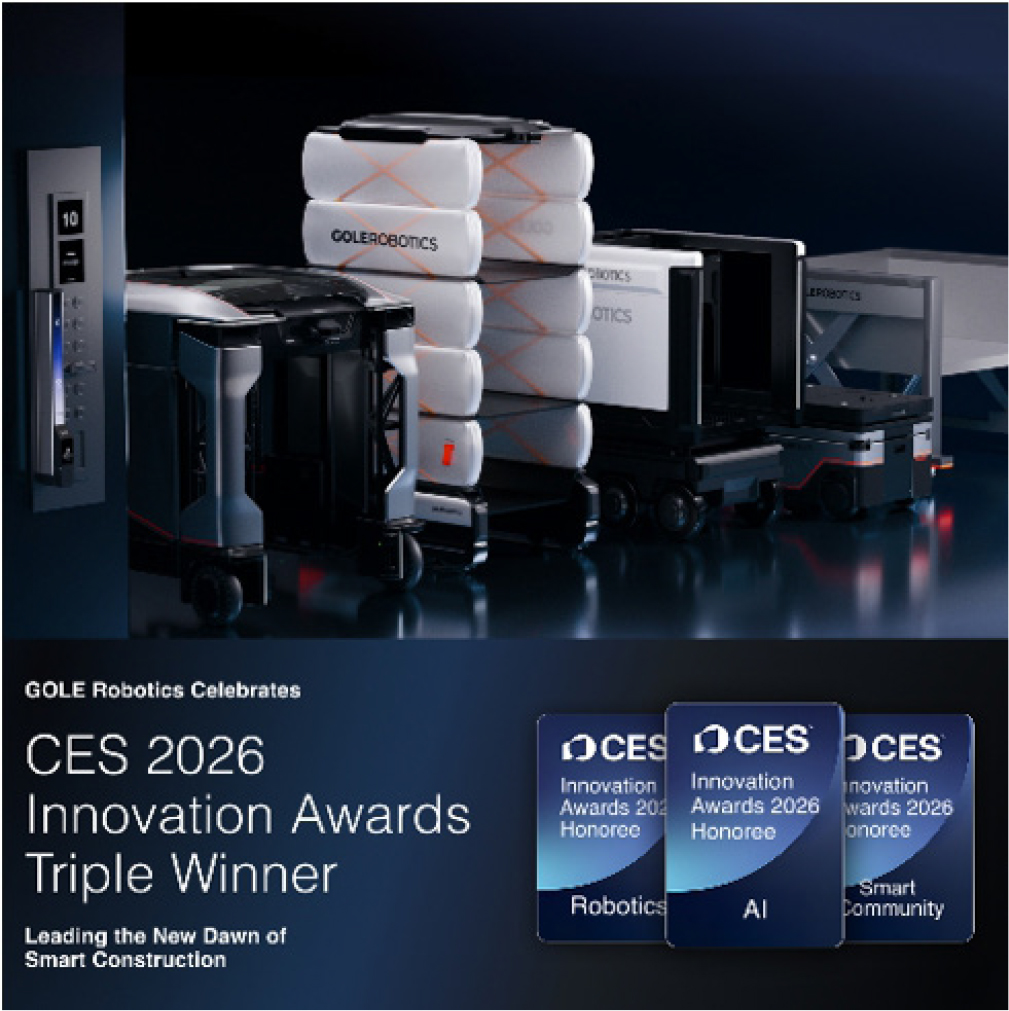
[INQ. NO. 2601E02] GoLe Robotics, a construction and residential environment automation solutions company, won three Innovation Awards at CES 2026, the world’s largest consumer electronics and IT exhibition. With these awards, GoLe Robotics’ AI and robotics technology has been officially recognized in the global market.
GoLe Robotics was honored with three CES Innovation Awards: the ND-3 in the artificial intelligence (AI) category; the AA-2 in the robotics category; and the EVW-1 in the smart communities category.
The ND-3, the winner in the AI category, is an AI-powered construction-site material transport and progress monitoring robot. The ND-3’s unique quadruped design allows it to lift directly within its frame and transport heavy materials.
Equipped with advanced physical AI, vision, and navigation AI, it recognizes complex terrain, avoids obstacles, and uploads real-time on-site data to monitor project progress.
The AA-2, the winner in the robotics category, is a last-mile autonomous delivery robot for premium residential complexes. It addresses the fatigue, safety risks, and elevator congestion associated with late-night deliveries in luxury apartments and complexes where security and convenience are paramount.
Using a pneumatic tube frame, it is extremely lightweight and energy-efficient. Flexible materials absorb shock, thus ensuring safe operation even at night. It can complete contactless deliveries to up to three homes in a single run, and after use, it deflates itself to minimize its volume for storage.
The EVW-1, the winner in the smart community category, is a universal elevator interface for robots. Its innovative technology allows existing elevators to be integrated with robots without modification.
Simply attaching the EVW-1 to a panel allows robots to freely use elevators, eliminating the need to convert tens of millions of existing elevators into smart elevators.
Compatible with all elevator systems, regardless of brand or model, the EVW-1 is a key technology that eliminates vertical mobility barriers for robots in applications ranging from construction sites to smart buildings and last-mile delivery.
A spokesperson for the company commented on the winning of the CES Innovation Awards, “Our receiving of three awards demonstrates recognition of our outstanding technology and creative mechanisms in global markets. Building on this achievement, we will further accelerate our advancement into construction automation. We will enter the U.S. construction market, where Korean companies are currently working, with an aim to address the severe labor shortages in the nation with our AI-based automation solutions.”


korean-electronics.com | Blog Magazine of korean electronics, brands and Goods
Korean Companies Lead Innovative Trends

https://korean-electronics.com//inquiry

Korean Companies Lead Innovative Trends in Consumer Electronics & IT

Winning the Largest Number of Innovation Awards at CES 2026
At CES 2026, the world’s largest consumer electronics and IT exhibition, Korean companies won 218 (59%) Innovation Awards, setting a record for the most awards won by any country.
Korea ranks in the No.1 position in the winning of the CES 2026 awards, followed by the United States and China, which came in second and third, with 52 (14.0%) and 39 (10.9%), respectively.
At CES 2025, Korean companies also won 208 Innovation Awards, nearly half of the total, setting a record for the most awards among participating countries.
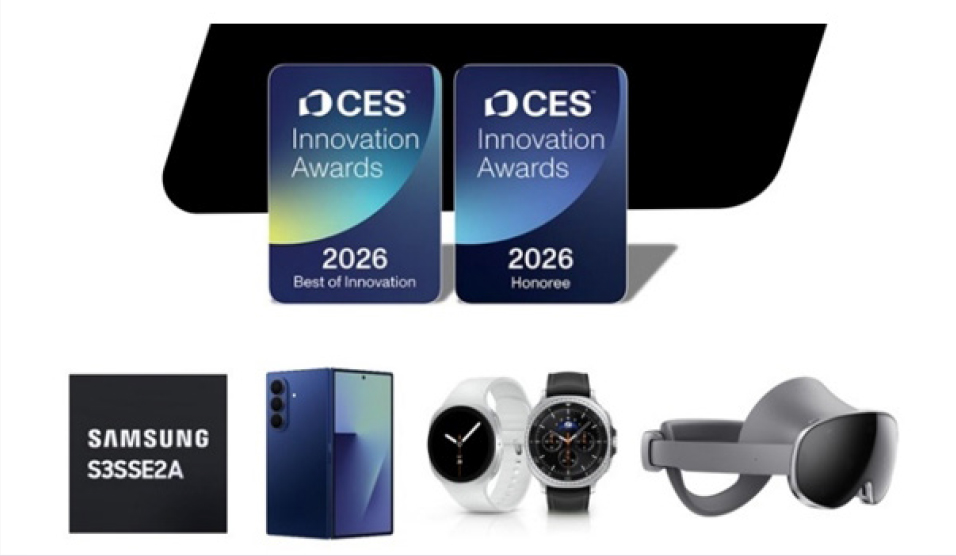
Notably, Korea swept 15 of the 30 Best of Innovation Awards, including three in AI, a key trend among the 36 categories at CES 2026.

CT5’s wearable AI interface, Zone HSS1, supporting large-scale multimodal models, and DeepFusion AI’s software-defined 360-degree perception solution, RAPA, won the Best of Innovation Award, respectively, in the category of AI.
The AI-based autonomous mobile robot system, Scan&Go, jointly developed by Doosan Robotics and Maple Advanced Robotics, also won the Best of Innovation Award in the category of AI.
Samsung Electronics’ U.S. subsidiary’s quantum security chip, S3SSE2A, won the Best of Innovation Award in the category of cybersecurity; while Samsung SDI’s ultra-high-power 18650 cylindrical battery; and SDI 25U-Power, won the Best of Innovation Award in the category of construction and industrial technology.
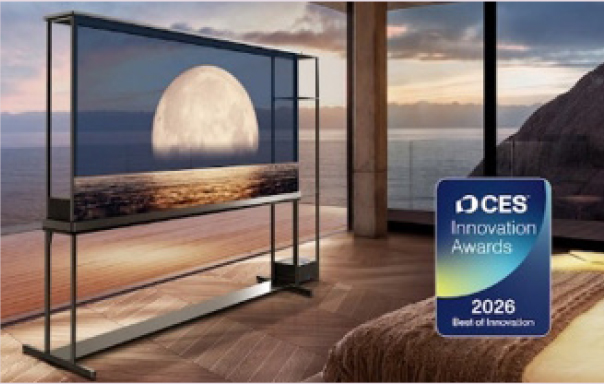
LG Electronics’ transparent and wireless TV, LG Signature OLED T, won the Best of Innovation Award in the category of imaging.
For this year’s CES, a total of 4,500 companies, similar to last year’s number, competed for next-generation technologies centered on AI.

Korea’s promising small and medium-sized enterprises (SMEs) also set up large-scale exhibition halls to showcase their latest technologies and innovative visions.
Studio Lab, an AI-based content creation company, won the Best of Innovation Award in the XR & spatial computing category.
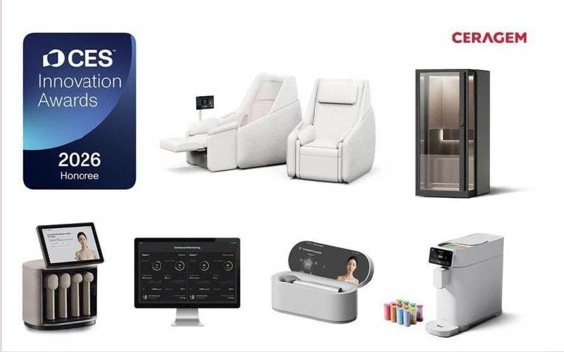
CERAGEM has won a total of 12 Innovation Awards at the 2026 CES. Starting with three Innovation Awards in 2024, the company’s first CES entry, the company has doubled its number of awards each year, with six in 2025 and twelve in 2026. CERAGEM’s winning Innovation Awards span six categories — AI, smart home, digital health, beauty tech, food tech, and home appliances.

 
korean-electronics.com | Blog Magazine of korean electronics, brands and Goods
Chipset

https://korean-electronics.com//inquiry

Dedicated for Video Intelligence

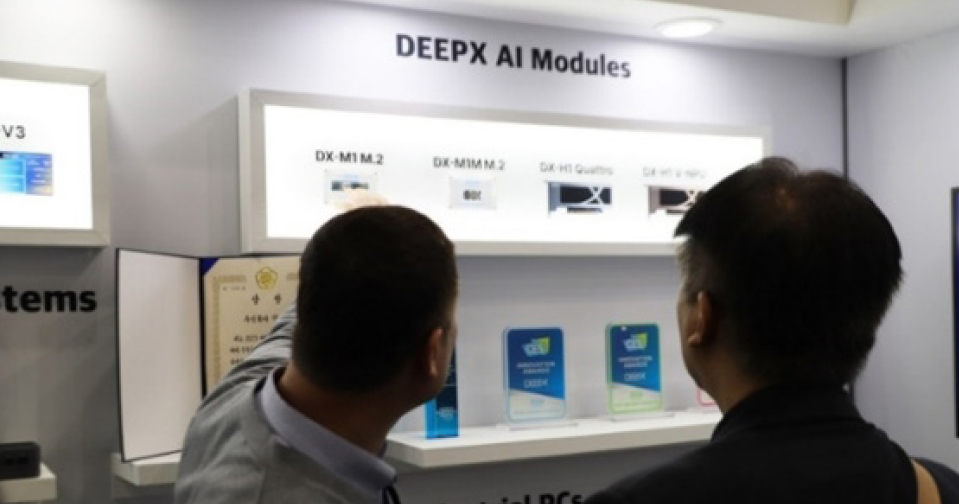
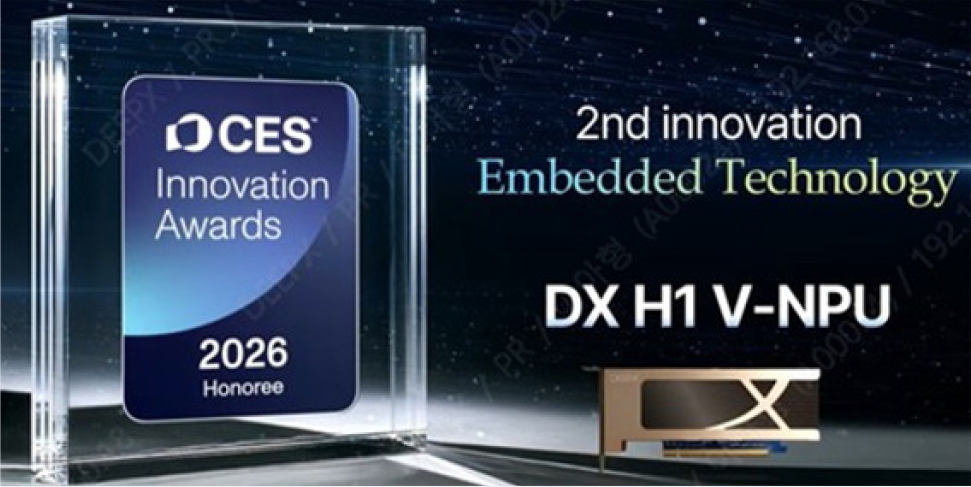
[INQ. NO. 2601E01] DEEPX Co., Ltd., an on-device artificial intelligence (AI) semiconductor company, recently launched its dedicated video intelligence chipset, DX-H1 V-NPU, which processes hundreds of channels of video AI analysis with as little as 30 watts (W).
This product integrates video input, compression, and AI inference processes, which previously separated across graphics processing unit (GPU) servers and separate codec equipment, into a single card — thereby reducing the power consumption, cost, and complexity of large-scale video AI processing.

By processing hundreds of channels at 30 watts (W), it reduces costs by approximately 80% and power consumption by approximately 85% compared to GPUs. It is considered an alternative to addressing the issues of data-center power shortages and the uncertainties of GPU supply and demand.
DEEPX emphasized that the DX-H1 V-NPU marks a turning point in shifting the basic unit of video AI infrastructure from GPUs to V-NPUs (Vision Neural Processing Units).
It is designed to integrate multi-channel decoding, encoding, and transcoding with a dedicated NPU on a single chip ― to seamlessly process real-time streams. It aims to be a platform that transforms large-scale video AI infrastructure ― such as smart cities, transportation, and industrial control ― into a V-NPU-centric structure.
This product maintains real-time inference performance around the clock, while reducing hardware costs by approximately 80% and power costs by approximately 85% compared to GPUs based on the same number of channels.
While GPUs boast general-purpose computing capabilities, they are not optimized for multi-channel video input/output and real-time streaming.

A spokesperson for the company explained, “Large-scale video AI will no longer rely on the spare computing power of general-purpose GPUs, but will instead operate on dedicated chipsets,” predicting “It will become an integral part of industries such as smart cities, traffic control centers, and national infrastructure.”

korean-electronics.com | Blog Magazine of korean electronics, brands and Goods
LG’s Home Appliances

https://korean-electronics.com//inquiry

LG’s Home Appliances Solidifies its No. 1 Position in the U.S. Market

Capturing 22.9% market share

LG Electronics ranked No. 1 in market share in the U.S. home appliances market last year. Recognized for its superior product performance and durability for two consecutive years, LG Electronics overtook Samsung Electronics, which claimed the crown until 2023. It plans to continue to put its utmost efforts into defending its title as the ‘No. 1 home appliance company’ in the new year, based on its cutting-edge technology.

According to the U.S. market research firm Traqline, LG Electronics secured a 22.9% market share in the U.S. market in the third quarter of last year based on the sales of six major appliances, ranking it as the No. 1 home appliance company. These six major appliances include refrigerators, washers, dryers, freestanding ranges, dishwashers, and microwave ovens.

Based on sales in 2024, LG Electronics recorded a 21.1% market share, surpassing Samsung Electronics (20.9%), taking the top spot in the U.S. home appliance market in 2023. LG Electronics maintained its No. 1 ranking in the U.S. home appliance market, recording a 21.2% market share in the first quarter of last year, 21.5% in the second quarter, and 22.9% in the third quarter. During the same period, Samsung Electronics ranked second, followed by GE and Whirlpool in third and fourth place, respectively.

 
korean-electronics.com | Blog Magazine of korean electronics, brands and Goods
Hanjin

https://korean-electronics.com//inquiry

Hanjin Opens a Logistics Hub in Amsterdam

Result achieved in just four years after reaching KRW 1 trillion
Annual sales expected to grow 43% this year
Production capacity to double within two years

Hanjin has established a logistics hub in the Netherlands to support the efforts of Korean brands, including K-beauty brands, to enter the European market.

Hanjin announced that it has recently opened its European fulfillment center in Amsterdam, the Netherlands. A fulfillment center is a centralized hub that handles the entire logistics process following online orders, from storage and packaging to delivery and returns. The center is conveniently located for air and marine transport connections, just 10 minutes by car from Schiphol Airport and an hour from the Port of Rotterdam.

Through this hub, Hanjin plans to provide integrated logistics services to K-brands preparing to enter the European market. Hanjin not only offers them packaging and labeling services tailored to the warehousing standards of global platforms like TikTok and Amazon, but also connects everything from B2C logistics, including own shopping mall’s order management, to last-mile delivery across Europe.
Hanjin will also handle complex issues related to customs clearance and value-added tax, which are major obstacles to entering the European market.


korean-electronics.com | Blog Magazine of korean electronics, brands and Goods

K-Chemicals

https://korean-electronics.com//inquiry

K-Chemicals Compete on High Value-Added Systems

The Korean government has presented a roadmap to elevate the petrochemical industry to a global top-four position through high value-added. Currently, Korea ranks fifth in the high value-added chemicals industry, following China, the USA, Japan, and Germany. The government aims to surpass Germany and rise to fourth position.

The Ministry of Trade, Industry and Energy announced the 2030 K-Chemical Next-Generation Technology Innovation Roadmap, which aims to achieve high value-added, eco-friendly, and strengthened compliance with global environmental regulations. This Roadmap outlines the following key objectives:
First, the government plans to increase the high value-added ratio of core materials in seven key industrial sectors. The plan is to increase the proportion from 30% this year to 40% by 2030 and 45% by 2035. As a priority, it will advance synthesis and processing technologies. To comply with global chemical regulations, it will also expedite the development of alternatives. The number of alternatives, currently developed at 12 this year, is expected to increase to 100 by 2030 and 150 by 2035.
Secondly, it will invest in eco-friendly transitions to reduce carbon emissions. The petrochemicals industry is expected to reduce greenhouse gas emissions by 270,000 tons this year through eco-friendly transitions. It plans to increase reduction of carbon emissions to 1,030,000 tons by 2030. To achieve this, investments will be made in technologies to convert biomass-based raw materials and recycle or reuse waste plastics.
The way in which it plans to achieve this goal is through the ‘chemical industry innovation alliance,’ formed by ‘anchor companies (leading companies)’ and major chemical companies. The alliance will be organized into nine sectors, namely: semiconductors; displays; future vehicles; secondary batteries; aerospace and defense; electronics and communications; advanced platform polymers; eco-friendliness, and regulatory response.

  
korean-electronics.com | Blog Magazine of korean electronics, brands and Goods
Samsung Electronics

https://korean-electronics.com//inquiry

Samsung Electronics Expands its Automotive Electronics Business

Acquires ZF in Germany, a key autonomous driving company through its subsidiary Harman

Samsung Electronics has acquired ZF’s advanced driver assistance systems (ADAS) business for 1.5 billion euros through its subsidiary, Harman.
ZF, founded in Germany in 1915, is a global total electronics company boasting over 100 years of history and technological prowess. It has wide business areas from ADAS, to transmissions, chassis, and even electric vehicle operating components. ZF’s ADAS business, which Harman is acquiring, is ranked No. 1 for its ADAS smart cameras. It already supplies products to numerous automakers through collaborations with various semiconductor companies, including Mobileye. This is expected to contribute to Harman’s future expansion of its sales network.

Automotive semiconductors (processors) are currently transitioning from a distributed structure to a domain-centric structure and even a centralized control structure.
According to industry sources, the ADAS and centralized controller market is projected to grow rapidly from US$ 42.2 billion in 2025 to US$ 65.7 billion in 2030 and more than US$ 127.6 billion in 2035.

Harman already has a strong portfolio of automotive electronics focused on the in-cabin experience (ICX), including in-vehicle infotainment (IVI), digital cockpits, car audio, and telematics. Harman is expanding into future growth areas by introducing new products focused on enhancing ICX.

korean-electronics.com | Blog Magazine of korean electronics, brands and Goods
Five Hiking Courses in Seoul

https://korean-electronics.com//inquiry

Five Hiking Courses in Seoul for All Skill Levels

Seoul isn’t just home to millions of people, it’s also home to many mountains both large and small. Everywhere you look, the skyline of Seoul’s tall buildings is backed by undulating mountain ridges. From the peaks of these mountains, you can see the whole of Seoul unfold before you.
The mountains around Seoul have an average height of 410 meters, making them quite low and easy for hikers of all skill levels. The mountains are also the perfect place to enjoy Korea’s changing seasons. Especially in summer, you can enjoy the cool breeze that blows through the shaded valleys. Another attraction of the mountains is how easily accessible they are via Seoul’s extensive public transit system, with most hiking paths starting just a short walk from subway station exits. To enjoy a bird’s-eye-view of Seoul while in peaceful nature, select one of the courses below, available in various difficulty levels.

Hanyangdoseong, Seoul City Wall (Naksan Section 2.1 km) | Walk through History
1396 to protect Hanseong, the then-capital city of Joseon. Currently, the old city wall in located in the middle of Seoul, and is divided into six sections. Among these, the Naksan Section is the easiest course, and offers stunning nightscape views, making it a popular choice. You can receive a commemorative badge if you walk all six sections of Hanyangdoseong and collect stamps at the designated spots.

Inwangsan Mountain (338.2 m) | Panoramic view of Seoul
Standing atop Inwangsan Mountain is like standing in the middle of Seoul due to its location in Jongno-gu, near the center of the city. The hiking trail even starts from the middle of the city, near Gyeongbokgung Station! The path is well maintained, and is short enough that even the most inexperienced hiker can reach the summit in no time. If you’re visiting with young children or someone who has walking difficulties, the Inwangsan Jarak Trail (2.5 km / 1 hr) that circles the mountain is a great choice.

Cheonggyesan Mountain (618 m) | Stairway to Heaven
Cheonggyesan Mountain is jokingly called “cheongaesan,” a Korean play on words in reference to the thousand (“cheon gae”) stairs you must climb to reach the summit. While there aren’t actually one thousand stairs, the mountain does seem to have an endless supply of them.
Kkalddakgogae Pass in particular was named for the sharp sound of breathing you’ll produce after climbing up the steep staircase here. But if you can make it past that section, the summit will be just before you. During the summer months when it rains often, the sound of water babbling in the valley brook will keep you company.

Gwanaksan Mountain (632 m) | Path of many ups and downs
Gwanaksan Mountain isn’t that large in the grand scale of mountains, but it is quite a strenuous hike, requiring adequate warm-up before starting out. You’ll also want to be equipped with proper hiking boots. The trail begins with a rather flat walk, but quickly leads to repeated ups and downs as you follow the ridge line of this rocky mountain. Preparing gloves or hiking sticks can make your walk easier. If you enjoy an active lifestyle, you may even come to enjoy the roller-coaster-like walk.

Dobongsan Mountain (740 m) | Beautiful stone peaks
Dobongsan Mountain is located on Seoul’s northern side, bordering Uijeongbu and Yangju in Gyeonggi-do. The mountain stands out for its many rocky peaks, ranging from softly rounded to sharp points. While the mountain is smaller than Bukhansan Mountain, the rocky terrain makes it a much more difficult hike. Despite this, hikers often say the hardships at reaching the summit are all but forgotten when they take in the view from the majestic rocky peaks.

korean-electronics.com | Blog Magazine of korean electronics, brands and Goods

Korea’s November Exports

https://korean-electronics.com//inquiry

Korea’s November Exports Increase 8.4%:
On the Verge of Reaching US$700 Billion Annually

Last month, Korea’s exports increased by 8.4% year-on-year, setting a record for the highest-ever exports for the month of November. With the continued strong trend in exports, led by semiconductors, it is expected that the nation’s annual exports will top $700 billion by the end of the year.
According to the recent ‘November 2025 Export and Import Trends’ released by the Ministry of Trade, Industry and Energy (MOTIE), Korea’s exports last month reached $61.04 billion, an 8.4% increase year-on-year. Assuming December exports remain at the same level as last year ($61.359 billion), exports this year are expected to easily surpass $700 billion.

A spokesperson for MOTIE commented, “We are approximately $59.8 billion away from achieving annual exports of $700 billion. While there is a risk because some products, such as steel and petrochemicals, are experiencing continuing sluggish sales, we still expect to achieve positive results.”
Despite the uncertainties stemming from the U.S. tariffs, semiconductors were a major factor in this year’s improved export performance. Last month, semiconductor exports increased 38.6% year-on-year to $17.26 billion. This is the result of increased demand for high-value-added memory, particularly for data centers, driving up prices. Cumulative semiconductor exports from January to November reached $152.6 billion, already surpassing last year’s previous annual record of $141.9 billion.
Automobile exports also recorded robust performance, rising 13.7% year-on-year. Exports of wireless communication devices and secondary batteries also improved by 1.6% and 2.2%, respectively, during the same period. However, petroleum products (-10.3%) and petrochemicals (-14.1%) continued their double-digit declines.
By country, exports increased in five of the nine major export regions, including China (6.9%), ASEAN (6.3%), and the Middle East (33.1%). However, exports to the United States decreased by 0.2% year-on-year. Imports increased by 1.2% over the same period, reaching $51.3 billion, resulting in a trade surplus for Korea of $9.73 billion.

korean-electronics.com | Blog Magazine of korean electronics, brands and Goods
Korean Exhibitions

https://korean-electronics.com//inquiry

Korean Exhibitions: Platforms for Opening the Future of Industrial Innovation

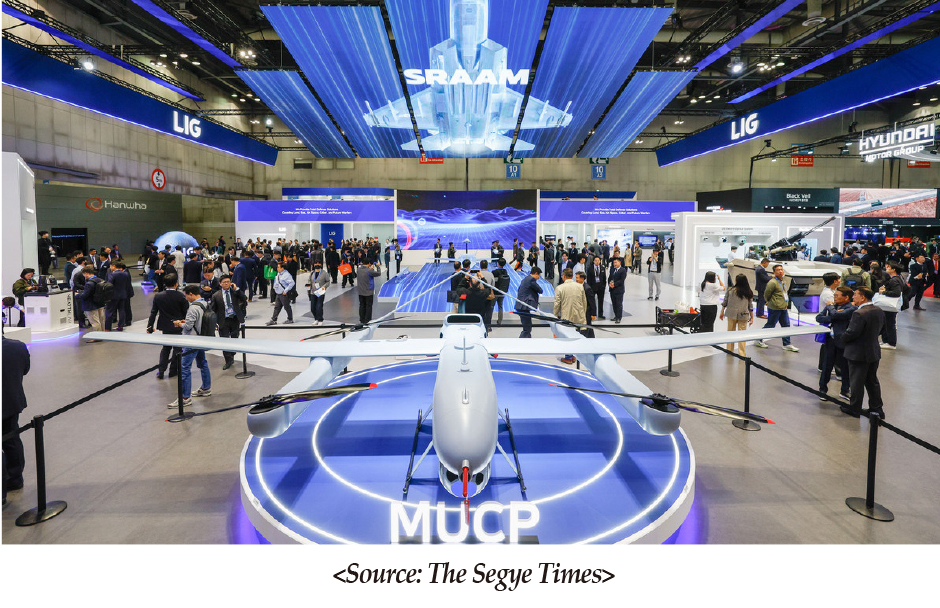
The exhibition industry is a key business platform that first introduces innovations from each country and connects companies and markets. For over 20 years, the Korean government has provided support for entities to hold exhibitions through the Domestic Exhibition Support Project for Hosting, (“the Project”) and by developing exhibitions as a strategic tool for expanding exports and enhancing national trade competitiveness.
In particular, the Project supports the holding of exhibitions to strengthen industrial growth and connections with global markets, focusing on the following three key pillars:

Fostering Exhibitions by Stage of Growth
The Project categorizes the exhibitions into three growing stages: ‘New,’‘Promising,’ and ‘Global Top,’ and systematically supports the necessary capabilities for each stage.
For the New Exhibitions, the Project provides comprehensive support for attracting small and medium-sized enterprises (SMEs), and for promotional costs to secure a stable growth foundation in the domestic market.
For the Promising Exhibitions, laying the foundation for entering the global market is important, so the Project actively supports the attraction of overseas buyers, international promotion, and hosting side events to help Korean companies to advance onto the international stage.
As international exhibitions, the Global Top exhibitions are a stage that requires the advancement of their platforms. Support is provided primarily through expanding the global networks, such as attracting overseas guests and foreign journalists.
As such, Korean exhibitions, grown through such step-by-step support, are strengthening their role as a global industry platform through innovative exhibitions that lead industry trends.

Promoting Exhibitions Centered on Strategic Industries
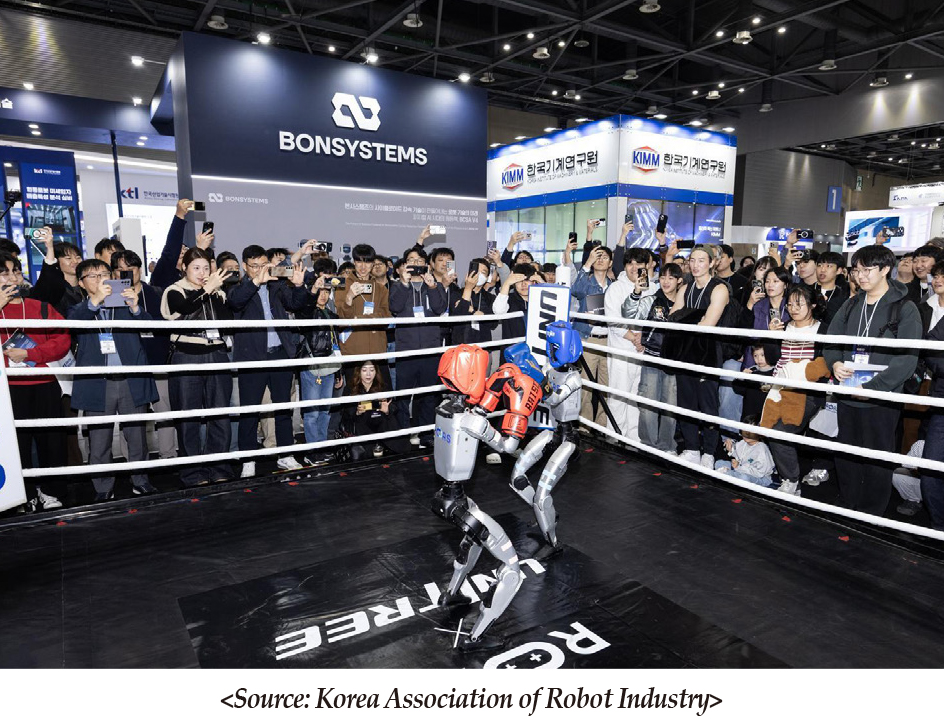
The Korean government has designated key industries — such as semiconductors, secondary batteries, biotechnology, and robotics — as strategic industries that are crucial for the national economy, and is thus encouraging exhibitions in these fields to strengthen the nation’s industrial competitiveness.
The Project comprehensively supports the development of core capabilities of strategic exhibitions that showcase new technologies and connect global partnerships across industries, leading the expansion of the industrial ecosystem.
It is expected that these strategic industry exhibitions will grow into specialized platforms for policy announcements and technology sharing, and advance to become Global Top stages for industrial innovation at prestigious international events such as the Consumer Electronics Show (CES), Hannover MESSE, and the Mobile World Congress (MWC).

Strengthening the Foundation for Fostering Regional Exhibitions
Since 2013, the government’s efforts to foster regional exhibitions have intensified as regional exhibitions have been included in the targets of the Domestic Exhibition Support Project for Hosting. Recently, support has been focused on exhibitions linked to local industries, underlining the fact that regional exhibitions serve as key venues for showcasing regional characteristics and strengths.
In this way, regional exhibitions promote local industrial growth, support local SMEs in securing business opportunities and markets, and promote relationships for mutual growth. These changes are restoring the balance of the existing exhibition industry structure, which is concentrated in the Seoul metropolitan area, and laying the foundation for strengthening regional industrial competitiveness through growing into global-level exhibitions.
Automechanika Frankfurt, a representative global brand exhibition, has expanded its exhibition franchise model to countries like China, Turkiye, Malaysia, and the UAE — establishing itself as an international business platform that aims to connect the global supply chains into a coordinated network. Similarly, some domestically organized exhibitions that have grown under the Korean government’s systematic support are actively seeking overseas market expansion and expanding their global networks.
If more exhibitions join this trend and receive continued support at the national level, domestic exhibitions are expected to grow as global brand exhibitions for each industry, securing leading positions in the global market.

korean-electronics.com | Blog Magazine of korean electronics, brands and Goods