LG Elec to incorporate IoT in every home appliance next year

https://korean-electronics.com//inquiry LG Electronics Inc. readies to incorporate the Internet of Things (IoT) technology into its every home appliance from next year, jumping on the IoT bandwagon as part of efforts to stay competitive in the fast changing and growing IoT industry.

According to the electronics industry Tuesday, the firm plans to enable Wi-Fi access and voice and image recognition based on artificial intelligence (AI) technology in its home gadgets to be launched next year.

The company has already set up a new unit solely dedicated to AI within its Home Appliance & Air Solution (H&A) department. It has also relocated H&A Smart Solution business division in charge of the IoT solution from its headquarters to Gasan Research & Development (R&D) center in western Seoul to foster more efficient communication and cooperation between its IoT unit and home appliance R&D team.

A company official at LG explained that the company hopes that its latest decision to reinforce its home appliances with the IoT technology helps it to win the lead in the burgeoning IoT market. He added that every appliance to be rolled out next year would be controlled by a smartphone.

A WiFi-enabled home appliance to be controlled by a smartphone will not only be convenient to use but also slicker and simpler in design, as a large screen or operation panel packed with many buttons, switches and dials would be eliminated.

LG is also reviewing a plan to develop AI-powered robots that would complement its connected home services. Its H&A department announced in a statement in September that it was preparing to set up a robot development team and working to introduce AIpowered robots.

In a move to accelerate such efforts, the Korean electronics giant has been reforming the company’s organization to allow its IoT units such as a cloud center and intelligent research center to work closely for the project.

Shares of LG on Wednesday ended at 47,400 won ($41.22), up 0.11 percent, or 50 won, from the previous session.

201612ee_page_63_03

korean-electronics.com | Blog Magazine of korean electronics, brands and Goods

Samsung Elec to ramp up production from 14nm, 10nm fabs

https://korean-electronics.com//inquiry The world’s top chipmaker Samsung Electronics Co.

announced that it would be ramping up output from fourth-generation 14-nanometer (nm) process (14LPU) and the third-generation 10nm process (10LPU), a move that will help the company maintain unrivalled lead in the chip industry with rising demand for highperformance chips for mobile and smart consumer devices.

Samsung Electronics has begun mass-producing chips using 14-nanometer fine technology last year and further raised the bar by becoming in October the first to employ 10-nanometer, which previously had been considered the manufacturing end for the silicon.
Nanometer technology is synonym for chip generation.
The smaller the number, the more transistors could fit on the chip and making it more powerful.

The company held the Samsung Foundry Forum for its semiconductor consignment production clients and partners at its Device Solutions America headquarters in the U.S. on Thursday (local time) and announced that it was expanding production from its next-generation fabs that would allow greater yield of power-saving high-performance chips.

Process design kits for 14LPU and 10LPU process technologies will be available in the second quarter of next year.

The fourth-generation14LPU delivers higher performance at the same power and design compared to the previous third-generation 14nm process (14LPC), and it is suitable for devices requiring highperformance and compute-intensive applications. The third-generation 10LPU offers the same performance level as the previous generations 10LPE and 10LPP while using smaller area. Samsung Electronics shares closed Thursday at 1,616,000 won, down 27,000 won or 1.64 percent from the previous session.

201612ee_page_62_03

korean-electronics.com | Blog Magazine of korean electronics, brands and Goods

Korean economy losing growth engine amid premature senility

Untitled-71.jpgThe Korean economy is losing its growth engine amid signs of “premature old age,” with its size remaining that of a middle power but its structure changed to that of an advanced country. “Over the past six years, the Korean economy has grown slower than the global average,” said a Hyundai Research Institute report recently. “The gap in growth tempo between Korean and the global economy is likely to widen further.” To rectify this trend, the nation should help its businesses strengthen competitiveness and create new industrial fronts with high added value, it said.
As the most noticeable sign of premature senility, the report cites the declining contribution of exports to economic growth and the rising contribution of domestic consumption. Large and open economies among advanced countries, such as the U.S. and the European Union, have economic structures bolstered by domestic consumption because they also have strong per capita purchasing power and huge domestic markets, the report said.
In Korea, exports have made an absolutely large contribution to economic growth in the past but domestic consumption is increasingly making up for the slump in shipments overseas. “This is an optical illusion of sorts, however, in which the prolonged sluggishness of exports makes domestic consumption appear to be relatively vigorous,” the report said. “It’s not that domestic demand really has grown enough to increase its contribution to economic growth.” Also problematic is the private sector’s low growth rate.
According to the report, Korea’s growth rate in the first half of this year was 2.8 percent, but the private sector’s growth rate was 1.8 percent. The gap indicates that the private sector’s growth rate has failed to keep up with that of the public sector, the report said.
Contributing further to the economic instability is the government’s policy of low interest rates and liquidity expansion, which have not led to technological investment or new employment by businesses but ended up swelling household debt, the report points out. “Although the global economy and overseas environment are not very good, the nation should continue its efforts to recover exports by creating industrial sectors with high added value and investing in research and development instead of relying on domestic consumption,” said Ju Won, chief of the institute’s economic research department.
The government should not try to take the initiative in reinvigorating the economy, but allow private businesses to play that role by offering sufficient incentives for investment, he said.

< Source: KITA>


korean-electronics.com | Blog Magazine of korean electronics, brands and Goods

S. Korea to ease regulations on drones, self-driving cars, biotech

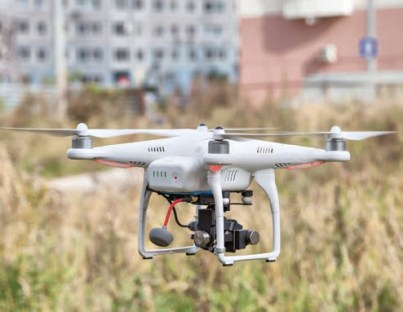
South Korea will ease regulations on drones, self-driving vehicles https://korean-electronics.com//inquiryand the biotech sector in a move to seek new industries that could help fuel new economic growth.
At a recent meeting presided by President Park Geun-hye, a panel composed of senior offi cials in charge of deregulation fi nalized a plan to ease regulations on drones, self-driving cars, the Internet of Things (IoT), and clouding as well as biotech and healthcare industries. Under the plan, parcel delivery services using drones and driving autonomous vehicles in downtown areas would be possible in Korea within this year. It was the government’s fi fth round of top-level deregulation meeting after the fi rst meeting was held in March 2014 as part of eff orts to revitalize the economy.
The government has decided to lift regulations on these sectors similar to or looser than the rules in advanced countries such as the United States and the European Union.
In particular, the Korean government would allow all types of drone-related businesses unless it sees such businesses threatening to the safety and security of the people.

This means that parcel delivery services, entertainment performances, advertisements and a wide range of services using drone technology would be legal in the country. The same rule will be applied to the self-driving car, Untitled-1allowing its test runs on most roads across the nation unless it harms public safety. Should ultra-small electric vehicles like the Twizy of Renault Samsung Motors Co. meet the safety requirements of foreign countries, they would be allowed to run on local roads.
The government also plans to raise the electromagnetic wave standard by 20 times from the current level to establish the world’s fi rst nationwide network reserved for IoT services earlier than expected and revise regulations on physical server-network separation to expand cloud services to the private sector. Rules on the use of satellite-based location data will be eased, too. In addition, the government plans to form a special team that could foster the development of bio healthcare products.

<Source: KITA>


korean-electronics.com | Blog Magazine of korean electronics, brands and Goods

Steel industry eyes Mexico

The nation’s steel giants, POSCO Group and Hyundai Steel, have chosen Mexico as a strategic nation to expand their presence in the global market. A gateway for Latin America, directly south of the U.S., the world’s largest auto market, Mexico has been considered to be an optimal production base for coldrolled steel plates for automobile production.https://korean-electronics.com//inquiry
According to officials at POSCO and the Financial Supervisory Service, POSCO-America, the group’s affiliate in the U.S., acquired a local steel distributor and a human resources company in Mexico City last December. Both companies’ assets were estimated at 55.7 billion ($48 million) and 79 million won, respectively. Such a move is believed to be part of
POSCO’s efforts to boost the group’s growth.
Since the group’s chairman Kwon Oh-joon was appointed to the post in March 2014, the group has undergone largescale reconstruction to improve its finances. The group sold a total of 34 affiliates at home and abroad last year and is expected to sell more of its remaining 35 units this year.
In the meantime, POSCO has opened four coldrolled steel plants in Mexico over the last ten year. The annual production of the four plants combined now reaches 560,000 tons annually, and global auto makers such as Nissan, Honda, Mazda, Volkswagen and Ford are POSCO’s major clients.
“A series of reconstructions and concentration on the cold-rolled steel operation in Mexico are part of the group’s effort to maximize profitability and normalize its finances,” said a POSCO official.

“Mexico is considered to be an ideal location for us because it is close to the U.S., the world’s largest auto market. POSCO will continue reconstructing lowprofit affiliates and focus on its operations in Mexico.” Hyundai Steel, an affiliate of Hyundai Motor Group, is also taking a similar approach in Mexico.

Untitled-29.jpg

The company recently completed construction of its steel service center (SSC) in the northeastern Mexican city of Monterrey, gearing up for entering the Latin America market. After weeks of preparations, the SSC will start operations from the end of this month.
The operation of the SSC in Monterrey is part of Hyundai Motor Group’s moves to expand its overseas production lines. The new SSC will enhance the group’s auto production in Mexico. The SSC in Mexico is expected to produce cold-rolled steel plates for around 400,000 cars every year.
Hyundai Steel invested a total of 53 billion won to build the SCC. “The SCC in Mexico will supplement domestic production of cold-rolled steel plates that will make up half of the auto production in Korea,” said a Hyundai Steel official.

<Source:KITA>


korean-electronics.com | Blog Magazine of korean electronics, brands and Goods

Shipments of 8K televisions

The shipments of 8K televisions are expected to reach close to the one million mark within five years. HIS Technology, recently, said that about 2,700 8K TVs are expected to come into the global market this year but the number would increase to 911,000 units by 2019. Once trial broadcasting of Japan starts in time for the 2020 Tokyo Olympics, demand for these TVs would surge.

The research firm predicted that the fate of the 8K TV market would entirely hinge on how much the large screen TV market would grow. TV resolution has evolved from HD with 1,366×768 resolution, to FHD with 1,920×1, 080, UHD with 3,840×2, 160, and 8K with 7,680x 4,320.

DisplaySearch forecasts that 8K display panels will be introduced in the industry in full swing in 2018. Resolution grades typically have six-year cycles with HD from 2000 to 2006, FHD from 2006 to 2012, UHD from 2012 to 2018 and 8K starting from 2018. Thanks to the beginning of the era of 8K TVs, Korea’s display panel makers, including Samsung display and LG display, with strength in large screen production, would see new opportunities in a fresh market.


korean-electronics.com | Blog Magazine of korean electronics, brands and Goods

S. Korea’s potential growth cut

South Korea’s potential growth is projected to be cut by more than 0.5 percentage points, due to the economy’s recent sharp loss of growth momentum. “Potential growth” refers to the extent to which an economy could raise gross domestic product using labor, capital and technology without causing inflation.

With the population aging, the working population has fallen and working hours have also contracted. On top of that, the pace of capital increase, on which production capacity hinges, has slowed and productivity has sharply declined. According to the Bank of Korea(BOK) and a host of think tanks recently, the nation’s potential growth dropped more than 0.5 percentage points compared to the initial estimate. The potential growth was estimated at 3.6 to 3.7 percent in 2013 but several research institutes including the central bank and t h e Korea Development Institute (KDI) have been cutting the estimates one after another. The KDI is said to have recently lowered the estimate of potential growth to around three percent.

The BOK has also been considering reducing the estimate of the potential growth, from the existing 3.6 percent level to a level between three percent and 3.5 percent.

The National Assembly Budget Office, an economic research institute under the National Assembly, and the Hyundai Research Institute, a private research center, predict the potential growth at between three percent and 3.5 percent. A researcher in the LG Economic Research Institute, explained, “As labor input has rapidly declined and productivity of the construction and manufacturing industries, which have thus far led the growth, has declined, far lower potential growth is inevitable.”.


korean-electronics.com | Blog Magazine of korean electronics, brands and Goods

Hanwha plans to build the nation’s largest photovoltaic cell plant

Hanwha Group recently announced its decision to building the nation’s largest photovoltaic cell plant. Hanwha Q CELLS Korea will invest 350 billion won ($314 million) to build a 1.5- gigawatt photovoltaic cell plant in Jincheon, North Chungcheong Province.

The Jincheon plant, which is due for completion by late this year, will be the largest in the country. The photovoltaic cells produced at the plant will supply solar energy to the entire 2.5 million population of Daegu. The company said “the cell production plant will mark a cornerstone for Hanwha to branch out into the plant producing cells by shifting its focus from the downstream operations of the photovoltaic sector (photovoltaic power plant design, construction, operation ). ”

Meanwhile, Hanwha Q Cells, another unit of Hanwha Group, also recently released its plans to add a module plant with a 250 megawatts (MW) capacity in Eumsung, North Chungcheong Province, which will begin commercial production within this month. With an additional 250 MW plant, it will operate a total of 500 MW plants.


korean-electronics.com | Blog Magazine of korean electronics, brands and Goods

Korea to launch massive economic cooperation with India

Korea decided to expand large-scale bilateral economic cooperation with India after Indian Prime Minister Narendra Modi visited Korea recently.

Korean President Park Geun-hye and the Indian premier recently had a summit meeting in Cheong Wa Dae and decided to elevate the bilateral relationship to a ‘special strategic partnership.’ The two countries entered into negotiations to improve their free trade agreement, the Comprehensive Economic Partnership Agreement (CEPA), which has been cited as an obstacle for trade due to lower tariff cuts between the two nations than those with rival countries like Japan.

Above all, Korea would provide a fi nancial package worth $10 billion for the ‘Made in India’ drive by the Indian prime minister to attract enormous investments and nurture the manufacturing industry.

The prime minister, who was in China before coming to Korea, promised investments worth $20 billion in various sectors including railroad construction, irrigation technology support and tourism cultural exchange.

The construction plans for infrastructure in India released by the presidential office on the day include the construction of 100 smart cities (a total of $15 billion with an average of $150 million by city), Delhi -Mumbai industrial corridor ($90 billion) and the construction of infrastructure for a high-speed railway ($140 billion over the next five years). The value of orders alone would amount to $200 billion. In particular, the Indian prime minister sincerely asked the Korean government and companies to construct a shipyard to build an LNG- carrier vessel during the summit with President Park.


korean-electronics.com | Blog Magazine of korean electronics, brands and Goods

LG Electronics take the 1st place in ‘telematics’ for three consecutive years

LG Electronics, South Korea’s No. 2 electronics company, became a company that took the No. 1 position in the global market share of ‘telematics,’ an essential component of autonomous vehicles, for three consecutive years.

Telematics is a component that uses a kind of communicat ions t echnology and faci l itates communication with the outside as it is installed inside vehicles. The part provides several services such as an automatic vehicle location system, vehicle remote diagnosis and traffi c information, with the 4G Long-Term Evolution (LTE) platform featuring Internet access functionality in vehicles are gett ing the limelight as a key component of Connected Cars in the future.

The company took competitive advantage of its vehicle components division as telematics in its first quarter (Q1) report recently released. According to SA, a market research institution, its market share in the telematics global market came to 30.1 percent and 30.3 percent in 2013 and 2014, respectively. The figures place it in the No. 1 position in the global market.

Since the launch of the vehicle components division in July 2013, the company released the market share of telematics for the first time. The company was followed by U.S.-based Harman with 15 percent and Japan-base Denso with 10 percent in 2014. The market share of LG Electronics was estimated at 26.2 percent in Q1 this year in the global telematics market.


korean-electronics.com | Blog Magazine of korean electronics, brands and Goods