
[INQ. NO. 2505E06] 3D printers can print electronic circuits, and even manufacture artificial organs and biosensors.
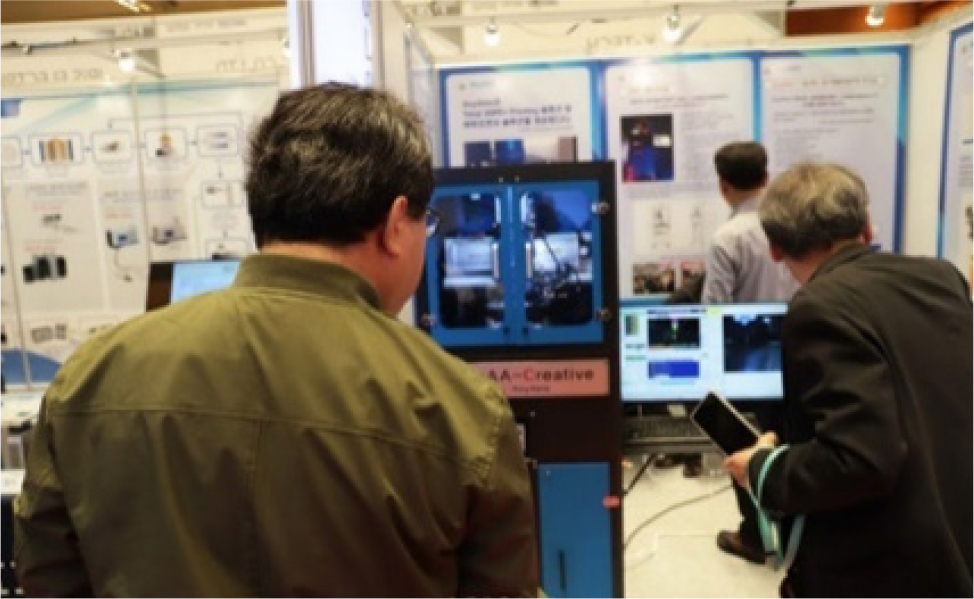
AnyAble recently introduced a 3D printer that applies 3DPE technology at a local exhibition.
3DPE is a compound word of 3D printing and printed electronics (PE). It features technology that manufactures electrical and electronic products using electrical, magnetic, and optical functional materials as ink for a 3D printer. While existing 3D printing technology focuses on printing specific shapes, 3DPE manufactures functional outputs.
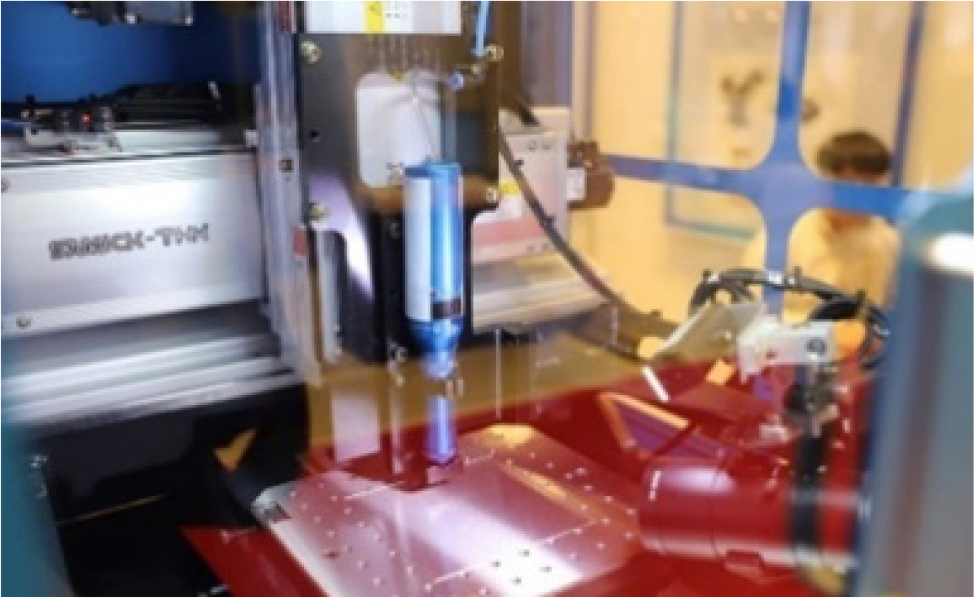
AnyAble’s 3DPE printer can change the amount of material discharged during operation, plus printing speed, and pressure. The company explains that it is especially useful in research fields. It has improved the limitations of the existing method of having to wait until the 3D printer’s output is finished in order to check the results.
In particular, this product is very useful in the micro-electromechanical systems (MEMS) and biosensor fields. MEMS is an ultra-small complex system that integrates electronic circuits and mechanical structures in a single chip. An electronic circuit pattern of less than 100μm (micrometers), thinner than a hair, can be printed with a 3DPE printer.
In biosensors, it is used to implement microfluidics. A biosensor is a device that can be used to diagnose diseases and develop new drugs by reading the type of protein. Pregnancy test kits and COVID-19 test kits are representative ‘label-type’ biosensors.
When material containing antibodies or antigens is flowed into a microchannel and conductive ink is applied, an electrical signal change occurs. By analyzing this change and reading the type of protein, it is thus possible to identify the pathogen.
Labeled biosensors are devices that only check whether a specific pathogen is present, while AnyAble utilizes the 3DPE printer that it recently introduced ― in order to develop an unlabeled biosensor that can detect various items.
AnyAble is currently developing an unlabeled biosensor chip by combining 3DPE, microprinting, and power semiconductor technologies. AnyAble is a research institute company that was founded by transferring technology from the Korea Electrotechnology Research Institute (KERI).
A spokesperson for the company commented, “The key is the nozzle manufacturing technology that can output less than 100μm and various ink materials such as 3DPE and bio.” He went on to predict, “We expect that demand will increase in the field of making customized equipment for specific processes and sectors.”
korean-electronics.com | Blog Magazine of korean electronics, brands and Goods


 and test and evaluation for control boxes and wire harnesses in semiconductor production related equipment, chip mounter, and machine tools and all kinds of test equipment, production inspect equipment, and wire harnesses in the defense industry.


 Korean-Electronics.com