Samsung Display and LG Display Boost R&D of of Next-Generation Technologies Challenging Chinese and Japanese Dominance in OLEDoS
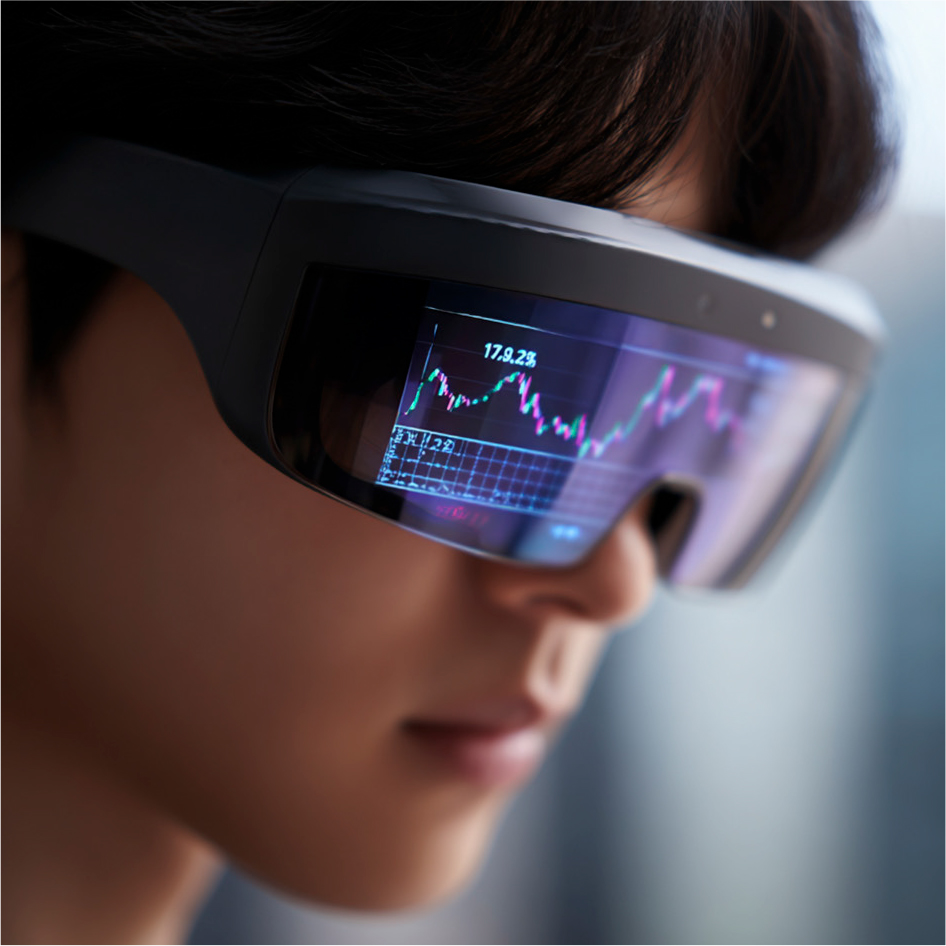
Led by Meta’s augmented reality (AR) glasses, the AR eyewear market is moving beyond its nascent stage and entering a period of growth. Glasses that display information directly in the user’s field of view, eliminating the need to look down at a smartphone screen, are gaining attention as a potential next-generation mobile platform.
According to market research firm TrendForce, global AR glasses shipments are projected to increase from 620,000 units in 2025 to 1.31 million units in 2026. Riding on the success of its Ray-Ban Display glasses, Meta is expected to account for approximately 20% of total shipments. Four other brands—China’s XREAL, Rokid and RayNeo, along with Germany’s Even Realities—are projected to collectively capture 53.2% of the market.
Despite the market’s expansion, South Korean display panel manufacturers have yet to enter Meta’s key supply chain. Meta’s Ray-Ban Display glasses use liquid crystal on silicon (LCoS) technology supplied by U.S.-based OmniVision. LCoS produces images by reflecting light from a separate light source off a liquid crystal layer. Meta’s AR prototype, Orion, incorporates LED on silicon (LEDoS) technology based on micro-LEDs from China’s JBD, while some XREAL products use micro-OLED displays supplied by Japan’s Sony.
Chinese and Japanese manufacturers are also ahead in the OLEDoS (OLED on Silicon) market, a technology currently under development by South Korean companies. According to Omdia, companies from China and Japan are expected to account for more than 90% of this market this year.
South Korean companies are also accelerating development of next-generation display panels. Samsung Display is developing RGB (red, green and blue) OLEDoS technology for AR glasses. At this year’s Augmented World Expo (AWE) in the United States, the company demonstrated smart glasses equipped with an RGB OLEDoS prototype, showcasing real-time translation and interpretation, navigation and weather information services. RGB technology generates colors without the need for color filters, offering advantages in both light efficiency and color reproduction.
LG Display unveiled a 0.42-inch OLEDoS display for AR glasses in 2023. In 2024, the company achieved a brightness of 10,000 nits in its OLEDoS research for virtual reality (VR) applications by incorporating a microlens array (MLA). LG Display continues to advance high-brightness OLEDoS technology designed to meet the requirements of AR and VR devices.
korean-electronics.com | Blog Magazine of korean electronics, brands and Goods