[INQ. NO. 2611E07] TROUND Inc. recently showcased its non-wearable hearing-assistive chair, SoundXR Chair. Designed to support the daily listening environments of the elderly, the product delivers both sound and vibration to the user while they are seated, thereby eliminating the need for traditional, ear-worn hearing aids.
Under the slogan ‘A chair, where people can feel technology,’ TROUND develops sensory-delivery technology that integrates auditory and tactile experiences. The company has focused on transforming the chair—a piece of furniture where people spend significant amounts of time—into an interface that transmits sound and vibration from digital content directly to the user’s body. During this year, the company locally prioritized its non-wearable hearing-assistive solution, tailored for everyday scenarios such as watching television or engaging in daily conversations.
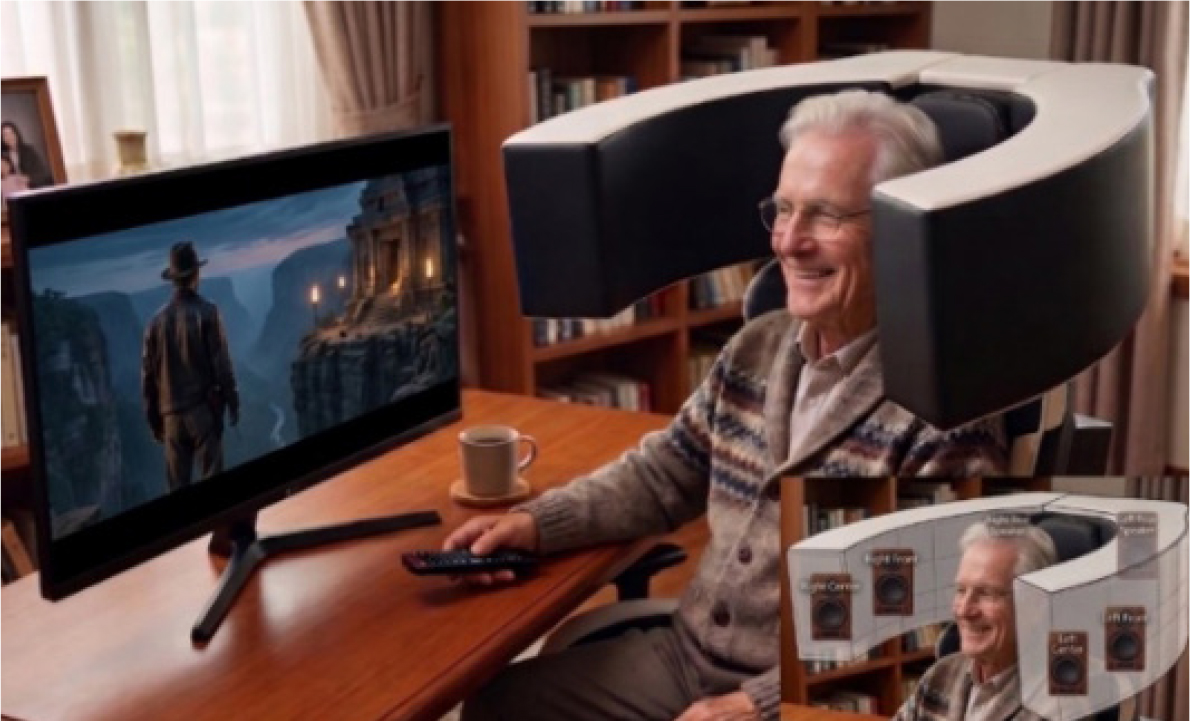
The most distinctive feature of the SoundXR Chair is its C-shaped, curved-speaker frame, which wraps around the user’s head. Multi-channel speakers are integrated into a structure that extends from the headrest toward the front and sides, designed to deliver direct sound from a distance of approximately 30 centimeters from the user’s ears.
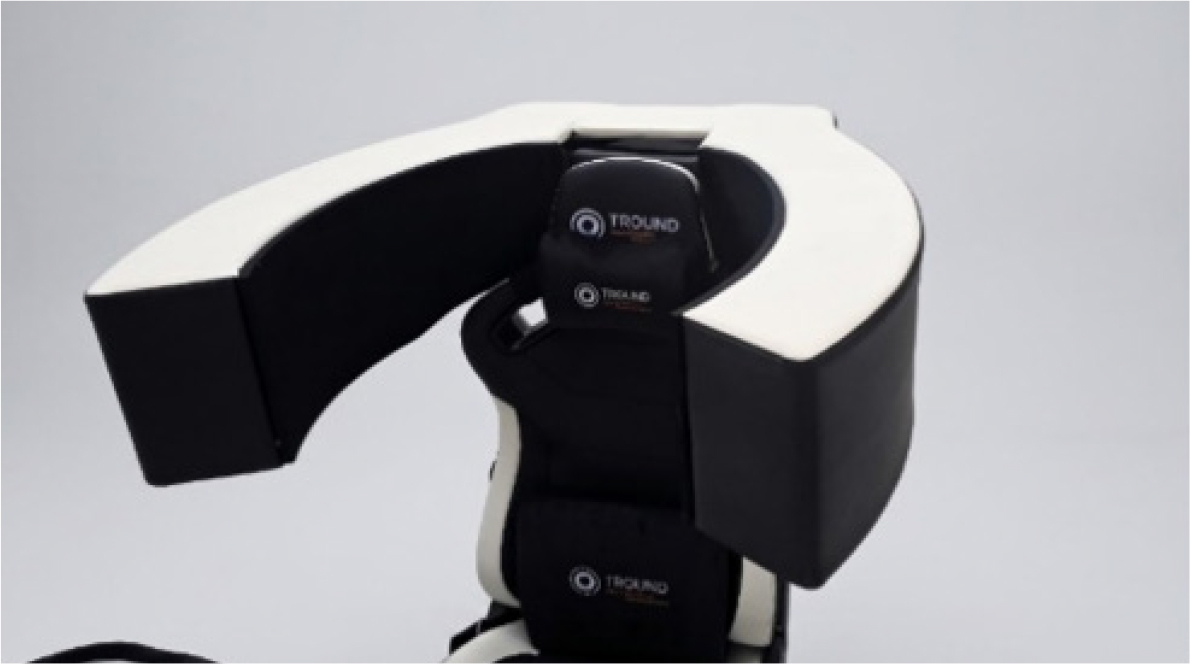
According to the company, the design aims to minimize the impact of reflected sound and reverberation from indoor walls or ceilings, thus ensuring that speech remains clear even at relatively low volumes. Furthermore, the technology is engineered to limit the dispersion of sound into surrounding spaces, making it suitable for use in shared living areas, such as living rooms or multi-occupancy rooms. By allowing users to watch TV or converse without the need for wearable hearing aids, the product specifically targets elderly individuals who sometimes find the insertion of devices into their ears uncomfortable.
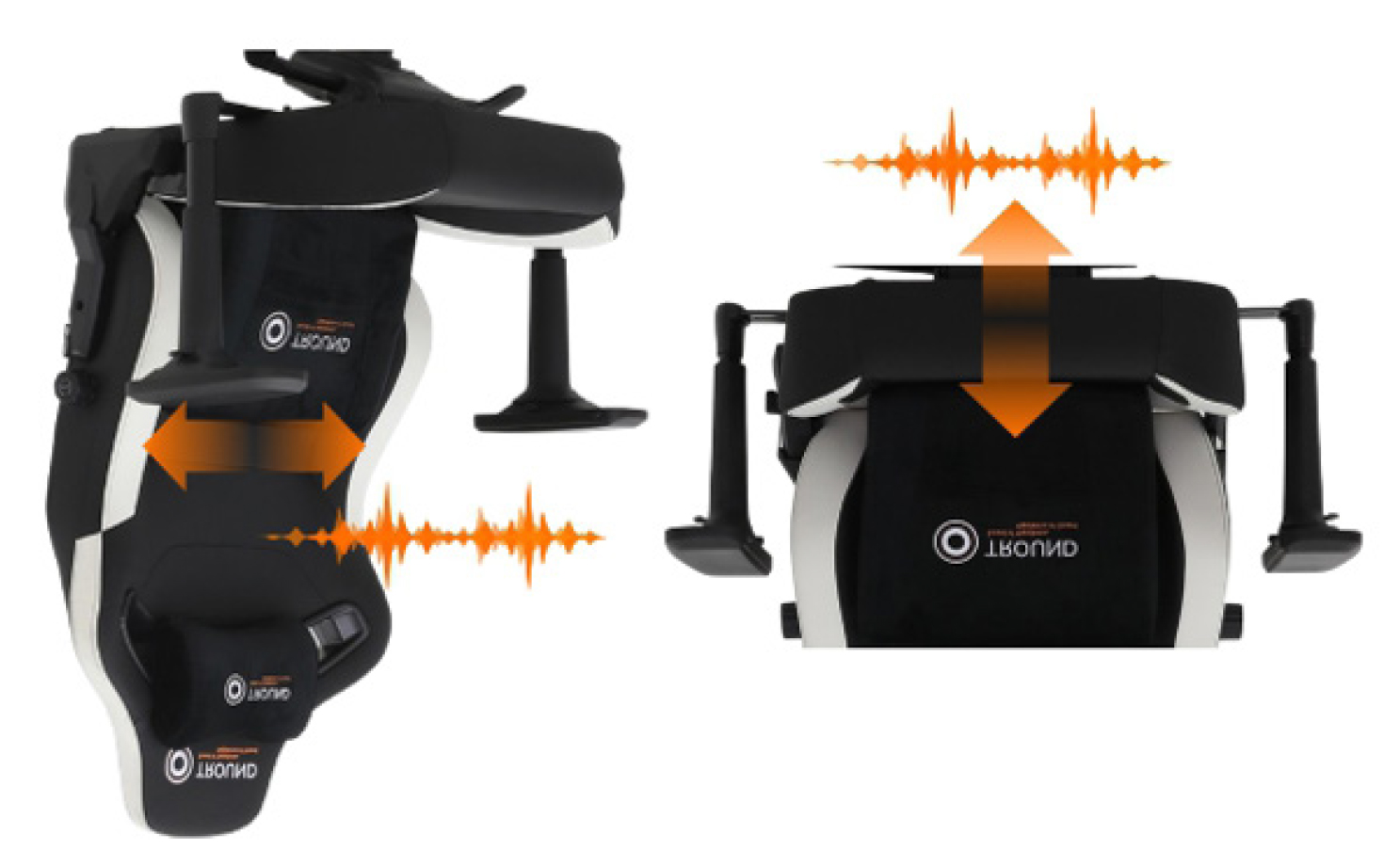
Another key technology highlighted by TROUND is S2T (Sound to Tactile). This system converts portions of an audio signal into physical vibrations in real time, delivering them to the user’s body via vibration transducers embedded in the chair’s backrest and seat. The core of this technology lies in providing both auditory information and tactile stimulation—rather than simply increasing the volume—thereby allowing users to perceive the rhythm of sounds or variations in speech in a more multidimensional, immersive way.
During product development, TROUND also focused on the inconveniences of existing wearable hearing aids—such as the discomfort or pressure felt when wearing devices in the ears for long periods, as well as the burden of managing and operating such equipment. By integrating the auditory assistance function directly into a chair, the system allows users to access support simply by sitting down. The company is targeting not only private households but also senior care facilities, including nursing hospitals, day care centers, and senior living communities.
TROUND is also actively securing intellectual property rights to protect its technology. The company has obtained 30 patents—both domestically and internationally—covering aspects such as the placement of speakers and vibration modules within the chair, as well as its acoustic structure. Of these, 18 patents have been registered abroad, including in the United States, Japan, and China. In collaboration with a Contract Research Organization (CRO) specializing in medical devices, TROUND is pursuing the necessary regulatory approval processes in order to enter both the South Korean market—under the Ministry of Food and Drug Safety (MFDS)—and the U.S. market.
Internationally, TROUND has identified the United States and Japan as its primary target markets. In Japan, it is actively seeking business partners, focusing on residential and care facilities for the elderly. In the United States, it is preparing to respond to regulations and build a distribution network for its advance into the hearing-assistance market. Looking ahead, TROUND plans to expand its business scope beyond chair-based hardware to include healthcare services integrated with biosignal-sensing technology.
“We wanted to move away from traditional, wearable, in-ear devices by transforming the very chair a user sits on in their daily life into an interface that delivers auditory and tactile information,” remarked a spokesperson for the company.
korean-electronics.com | Blog Magazine of korean electronics, brands and Goods