Green IT solution

[INQ. NO. 1406E08] https://korean-electronics.com//inquiry Transform your computer room or data center with HANKYUNG I-NET’s smart cooling server/network rack (smart cooling rack) and smart power distribution unit (SPDU) total green IT solution.

Turn off the inefficient high energy consuming and traditionally unreliable air conditioner to cool your computer center. Operators don’t have to cool the entire room just to keep the servers cool. Reduce energy consumption, lower your company’s carbon footprint, and save on your electric bill by cooling only what needs to be cooled, the servers.

The smart cooling rack is a completely enclosed selfcooling server rack with a built in air conditioner that automatically regulates the temperature and humidity levels inside the rack as the server demands rise and fall throughout the day.

1406E08

With the LCD user interface touch screen on the front door panel, operator can adjust and set temperature ranges, fan speeds, humidity levels. User can also make the same adjustments from anywhere at any time using the web remote user interface via computer or handheld smart devices and phones.

The internally mounted smart power distribution unit inside the rack monitors and records power usage and carbon emission of everything plugged into it and receiving power through it in real time via the web user interface. All power usage is stored every minute for an entire year. With the data, users can generate power consumption and carbon emission reports.

In the event of a sudden increase in temperature, the smart rack will go into emergency operation mode to compensate and quickly reduce the heat. An alarm is set off and an alert message is sent to designated users via phone or email. For quick and easy maintenance, the A/C unit simply slides out from the bottom of the rack and can be repaired or replaced for repairs elsewhere.

Consuming only 800W of power to cool, this provider’s self-contained smart cooling rack is a completely unique stand-alone mobile green IT solution that eliminates the need for additional energy wasting external cooling equipment and raised floors.


korean-electronics.com | Blog Magazine of korean electronics, brands and Goods

Wooden mobile phone protection cases

[INQ. NO. 1406E07] https://korean-electronics.com//inquiry Established in 1996, INMOK has been supplying high quality veneer for furniture, instrument and interior components of vehicles with prompt lead time to its valued customers. So far, the company has ceaselessly endeavored to develop environmentally friendly veneers to be more widely used in everyday life.

1406E07_1

INMOK is committed to becoming a leading company not only in Korea but also globally and is trying to make humankind and wood coexist in harmony. INMOK has launched a natural wood mobile phone case following a strong and continuous R & D process.

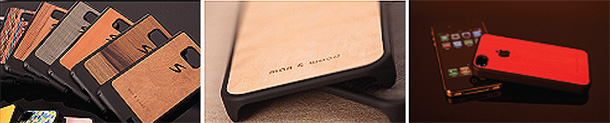
These wood mobile phone cases have higher quality, designed texture than plastic goods, covering cellular model of Galaxy S2, iPhone 4, with the brand name of “man & wood”.

1406E07_2

Although smartphones offer many conveniences and benefits, they are easily damaged by various impacts, so INMOK has developed another new wooden mobile phone protection case with highest quality, which is made of wood and special material displaying high performance in absorbing impact, to significantly prevent these risks of damage.

1406E07_3

Emotional deign that meets customers need and preference

Currently most mobile phone cases are made of plastic and artificial leather.

Making various types of goods with plastic is easy, but most customers can’t feel the real texture and satisfaction of natural wood.

The company is currently capable of meeting various customers’ needs, with over 400 kinds of real wood colors and patterns. INMOK further plans to maintain its strategic endeavor of developing practical and highly designed wooden mobile case, in an attempt to increase its products’ value and broaden its global presence on a large scale.


korean-electronics.com | Blog Magazine of korean electronics, brands and Goods
STB platforms

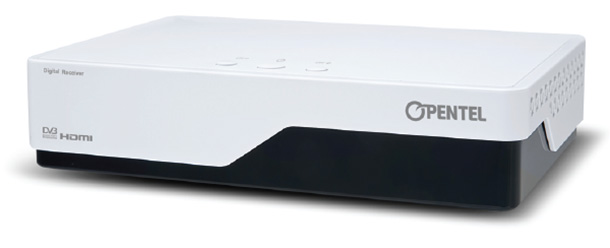
[INQ. NO. 1406E06]https://korean-electronics.com//inquiry Founded in 1996, OPENTECH has grown into one of the nation’s leading set top box manufacturers. In 2001, OPENTECH has started digital set top box business, while advancing into the development of key digital broadcasting technologies with its dedicated efforts.

The successive achievement of various and distinctive STB platforms – such as CAS, PVR, MPEG-4 SD/HD, MHEG, openTV and hybrid IP STB(HbbTV), has rendered OPENTECH a domestic leading STB manufacturer serving clients in over 50 countries worldwide with undisputable quality. The MPEG-4 HD PVR is at the forefront of the company’s export market development this year.

Featuring MPEG-2 and H.264 (MPEG-4 Part 10) decoding for SDTV and HDTV, DVB compliant, available for embedded CAS – nagravision, viaccess, conax, and irdeto, USB 2.0 host, and available video resolution of 1080i, 720p, 480p/576p, 480i/576i, etc., the globally competitive STB platform is expected to provide many operational benefits for its global clients.

1406E06

Through its own factory in Korea, all of its products are carefully controlled and monitored in all stages of the process, from product planning to designing, manufacturing, and quality assurance and after-sales service under the business slogan of “Total Quality Control Management.”

The Seoul-based venture is maintaining its strategic overseas branch offices in Germany and Dubai, so as to effectively capturing the European regions and the Middle East, respectively.


korean-electronics.com | Blog Magazine of korean electronics, brands and Goods

New concept of DID system

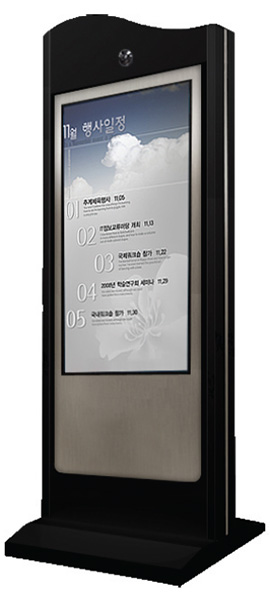
[INQ. NO. 1406E05] https://korean-electronics.com//inquiryElivision’s latest version of digital information display (DID) “Kiosk” is expected to again catch a bulk of attention through promotions in global potential markets. This product automatically adjusts the height of its touch screen to the optimal level for users considering users’ personal height, technologically measuring the specific height of users who approach it by utilizing multiple sensors installed on it. 1406E05

In doing so, the new Kiosk system economically and effectively addresses the sensitive matter of installing additional separate DID systems for meeting the requirements of users of various heights. In addition, for the additional fine adjustment of height of the touch screen for the convenience of users, a manual adjustment function is also available.

The system offers operators significant savings in costs and space, compared to the competitors’ models, thus allowing the user to take considerable managerial control. Thanks to its advantageous feature of taking into account the inconvenience of those who have no standard heights in their specific ages, the latest version of its DID has value enough to be widely promoted worldwide, especially in advanced countries where user-friendliness is highly emphasized.

Company president An Deuk-geun said, “We are currently further broadening our technological territory into the area of customized-DID systems, strengthening the leadership of our cutting-edge digital information display in global markets. We will significantly boost the share of overseas sales from the current 10 percent of our total sales to 30 percent as part of our continuing
endeavors toward globalleading DID players.

In response to a question about whether its existing DID models still maintain their competitiveness in the market or not, the innovative president reacted optimistically by adding his remarks about the overall features of its existing flagship models: “Our existing HD Embedded DID systems, which are highly durable and easy to operate, need no additional DVD player or VTR as a storage medium is embedded in the systems.

Automatic and repeat playback of pictures and video are available without any special operation, once the power is supplied. The built-in timer turns the system on and off at specific preset times. Both a remote controller and wireless/wired network are available for the monitoring as well as control of the system. Not only the main administrator of the system but any on-site manager can revise or upgrade their music, information and video of their system, as the systems share the server.” “Our competitive wide range of DID systems helps reduce the cost of ownership thanks to its Linux OS, while conventional DID is too large and more expensive for the cost, as it has a built-in PC and requires Windows OS,” he added.


korean-electronics.com | Blog Magazine of korean electronics, brands and Goods
Module-typed converter

[INQ. NO. 1406E04] https://korean-electronics.com//inquiry Ever since its founding in 1998, Sollae Systems has engaged in developing and offering embedded TCP/IP communication and remote control solutions for serial devices with the leading-edge technology ‘MIC Real-Time OS’.

The MIC technology is marketed under the brand name ‘ezTCP’. The ezTCP hardware, comprised of Ethernet/WLAN/PPP converters and remote I/O controllers, has won popular recognition for its proven
high-quality and stability in operation among the global users – more than 4,000 companies have preferred Sollae System’s products over the past 16 years.

1406E04_1 ezTCP connects user’s devices to the Internet such as LAN, ADSL, etc., thus facilitating remote control and monitoring within a short time. To share information through the network, the data should be compliant with international data handling protocol, TCP/IP, and ezTCP implements data communication as a serial to TCP/IP converter. Therefore, connecting ezTCP enables equipment to transmit and receive data over the Internet, which has been used to exchange information with serial communication devices.

WLAN converter series of ezTCP is wireless LAN converter for serial devices that help simply add wireless network connectivity to users’ equipment without changing software. By applying them, the user not only can reduce installation/maintenance cost and risk, but also shorten development time as well to add the network capability in the user’s system.

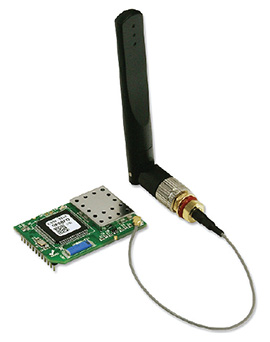
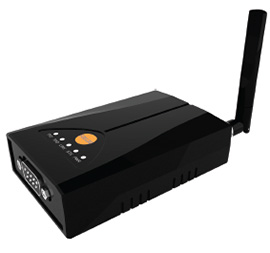
1406E04_2 WLAN converter series consists of an external-typed converter, CSW-H80 CSW-H85K, and module-typed converter, CSW-M83, CSW-M85 and CSW-B85, which are easy to apply to users’ devices due to its compact size and strength combined with lightness.

Especially CSW-M85K, a module type converter with RalinkRT 3070 WLAN, is embedded with not only a chip antenna but also a socket for an external antenna, so it is easy to be used in various wireless network environments.

Sollae System makes every effort to respond to the needs of its customers both domestically and abroad on a real time-basis by using various methods, which help with the development of new products that ensure certainly progressed qualities in functions toward becoming a more customers-oriented company, leading the market trends in technology as well.


korean-electronics.com | Blog Magazine of korean electronics, brands and Goods
Digital wireless communication solution (transceiver)

[INQ. NO. 1406E03] https://korean-electronics.com//inquirySeyoung Information & Telecommunication recently began promoting its latest hot item model WIWI(SH-320). It is a 2.4GHz digital transceiver for wireless communication. Simultaneous two-way voice communication is supported.

Four-channel use is available for concurrent communication among three persons in maximum per channel and the audio receiving is possible by adding another 255persons.It only weighs 39g, and it has comparative advantages in carrying over similar to those of competitor companies. This can be used while being carried. And in addition to providing voice and audio data communication, it even supports high-security communication.
1406E03

Designed to be linked with audio devices including TV, PC, MP3, Speaker, etc., WIWI’s application territories are now extending into various fields including tour guide, industrial field, broadcasting, riding horse, business meetings, etc.

This product ensures at least 8~12 hours of operation time, only requiring 2hours of charging time.

An option product Dongle(UD-110) is also ready for seeking users all over the world, with some impressive features including support of bi-directional audio function when it is connected to other multimedia with USB cable. The acoustic source is audible from multimedia via SH-320, and its voice inputs to the computer via SH-320 mic.

Since it was spun off from the Network Business Unit of Samsung Electronics in 1998, the company has steadily expanded its business area as a professional repairing company. The repairing area has now grown to cover highspeed terminals and CDMA vase station equipment based on its repairing technique in the exchanger area.

Seyoung aggressively copes with demand of the future and keeps pace with rapidly changing technology and customers’ requirements, based on the complete quality management, innovative management and experienced experts.


korean-electronics.com | Blog Magazine of korean electronics, brands and Goods
High-quality optical components

[INQ. NO. 1406E01] Since 1997, Korea Optron Corporation, as an ISO9001/ISO14001,TL-9000 and UL approved company, has been a market leader in the field of fiber optics.

This optical component specialist has the most advanced facilities and production lines to provide high-quality optical components such as field assembly optical connectors, MPO products optical
patch cords, optical attenuators, PLC splitters, parallel VCSEL transceivers, optical coupler, WDM, and so on. KOC’s excellent FAOC and Optical Attenuators have been recognized as “Korean World-
Class Products” by the Korean government.
https://korean-electronics.com//inquiryIn addition, it has been supplying FAOCs and attenuators to Korea Telecom, SK Broadband and Samsung Fiber Optic as their first vendors and exporting all over the world.

Based on KOC’s rich resources of human knowledge and experience, it has developed new MPO products with Korea Telecom and continue to make efforts to satisfy our customers with high value-added products in the field of fiber optics.

1406E01_1

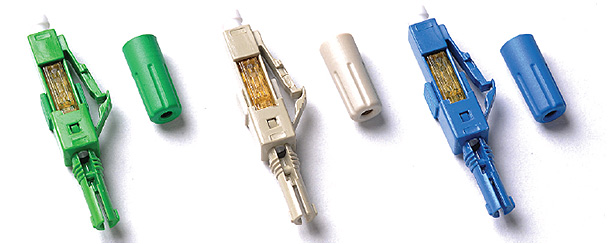
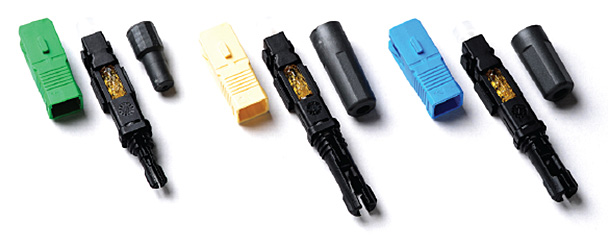
Korea Optron’s Field Assembly Optical Connector (FAOC) is the most widely used fiber optic connector in FTTx that does not need epoxy or polishing.

An SC-type FAOC is the most widely used fiber optic connector in FTTx that does not need epoxy or polishing.

It enables fast and on-site installation of 250μm, 900μm, 3.0mm and 2.0mm x 3.0mm cable type connectors even when the user has no access to power.

An LC type FAOC is a pre-polished and pre-assembled connector that holds a fiber in place and can be installed within two minutes. The LC type is a small design with great details and high technology.

All the parts are made from Ultem material to withstand high temperature and external shocks. It is available in several configurations to fit many different applications for single-mode, multi-mode and APC applications.

1406E01_2

The APC connector is designed to provide superior return loss without sacrificing insertion loss.

An ST type FAOC is the most widely used fi ber optic connector in FTTx that does not need epoxy or polishing. The preassemble and factory terminated connectors can be installed within 2 minutes using simple tools and can be recycled several times.

The ST type is a small design with great details and high technology. All the parts are made from Ultem material to withstand high temperature and external shocks.

It is available in several confi gurations to fit many different applications for singlemode, multimode and APC applications. The APC connector is designed to provide superior return loss without sacrificing insertion loss.

The company’s fiber optic attenuator is used to weaken optical power at a certain level and it is an ideal solution for regulating the power. In addition to variable attenuators, KOC provides plug, in-line and patch cord type attenuators for fixed attenuators.

For the plug type, there are SC, FC, LC, ST and MU packages which can be used directly to the fiber patch cord with adapters the other side. The attenuated patch cords have been provided as SC, ST, FC, LC, MU and hybrid types that can replace the conventional fixed attenuator combinations.


korean-electronics.com | Blog Magazine of korean electronics, brands and Goods
SEMI Reports 2013 Global Semiconductor Equipment Sales of $31.6 Billion

SEMI, the global industry association for companies that supply manufacturing technology and materials to the world’s chip makers, recently reported that worldwide sales of semiconductor manufacturing equipment totaled $31.58 billion in 2013, representing a year-over-year decrease of 14 percent. The data is available in the Worldwide Semiconductor Equipment Market Statistics (SEMS) Report, now available from SEMI.

Compiled from data submitted by members of SEMI and the Semiconductor Equipment Association of Japan (SEAJ), the Worldwide SEMS Report is a summary of the monthly billings and bookings figures for the global semiconductor equipment industry.

The report, which includes data for seven major semiconductor producing regions and 24 product categories, shows worldwide billings totaled $31.58 billion in 2013, compared to $36.93 billion in sales posted in 2012. Categories cover wafer processing, assembly and packaging, test, and other front-end equipment. Other front-end includes mask/reticle manufacturing, wafer manufacturing, and fab facilities equipment.

Spending rates declined for all the regions tracked in the WWSEMS report, except for China and Taiwan. For the second year in a row Taiwan remained the region with the highest amount of spending with $10.57 billion in equipment sales. The North American market surpassed South Korea to claim the second place with $5.26 billion in sales; South Korea fell to the third position with a regional decrease of 41 percent.

The global other front end equipment segment decreased 34 percent; the assembly and packaging segment decreased 26 percent; total test equipment sales decreased 24 percent; and the wafer processing equipment market segment decreased 11 percent.

pyo


korean-electronics.com | Blog Magazine of korean electronics, brands and Goods

A New Competitive Race for Smartwatch

According to recent industry reports, competition for dominance of the smart devices market has shifted to smartwatches. LG Electronics recently announced that it plans to release its first smartwatch powered by Android Wear, Google’s wearables platform, in the second quarter of this year. While the company did not cast a hint about the release date, it will likely be launched in June.

The “G Watch” is an outcome of close collaboration between Google and LG Electronics from the initial stage of development. For the product, the stressed point is on how to elevate the hardware functions to the perfect level, which is optimized for the Android platform. The device is compatible with Android-powered smartphones and users will also be able to access all kinds of information using the “OK Google” command.

A representative, who heads the company’s mobile business, said this collaboration with Google is an opportunity for LG to promote its design and engineering capacity in the wearable market.

The noticeable thing about the G Watch is that Google’s core services have been transferred to a wristwatch. Recent reports have suggested that the watch will be built around “Google Now,” the company’s context-driven personal assistant software. The watch’s powerful voice recognition function is expected to allow the wearer to initiate voice commands to find the remaining flight time, game score, send messages, set alarm or track fitness activity by simply speaking “OK Google.”


S. Korea’s PV Industry to See Growth again

South Korea’s second largest polysilicon producer Hankook Silicon with its annual polysilicon production capacity of 15,000 tons resumed its operations in February. The maker has stopped the whole operations since December 2012 when the international polysilicon prices dropped to $15 per kg.

Meanwhile, Hanwha Chemical finished construction of a 10,000-ton-capacity polysilicon plant in Yeosu late last year and is scheduled to begin commercial production within the first half of this year. Another polysilicon producer Samsung Fine Chemicals is building 10,000-ton-capacity plant in Ulsan and will likely set foot in the market within this year.

The nation’s photovoltaic(PV) industry has been turning around since late last year after being mired in the prolonged slump for over two years. Polysilicon prices climbed for six consecutive weeks after the second week of December to $20.71 per kg as of January 15, according to the PV industry market researcher PV Insight. It marks the first time for the prices to hover above $20 in 16 months since September 2012.

The photovoltaic manufactures which use polysilicon products are also boosting their operating ratios. The nation’s ingot and wafer manufacturer Nexolon is running the entire production lines from late last year while cell manufacturer Hanwha Q.CELLS and module manufacturer Hanwha SolarOne also increased their operating ratios up to 90 percent.

The photovoltaic industry’s return to the path of growth largely came as the demand has picked up speed in the US, China and Japan while expansion of new facilities shrank over the last two years.

The global PV installations hit 35gigawatt(GW) last year, but the number will likely grow to 42 and 50 GW at the maximum level this year.


S. Koran Gov’t to Inject $190mn into Semiconductor, display panel R&D

The South Korean government is set to invest 203 billion won($188million) this year in semiconductor and display research&development(R&D)activities. The plan aims to give a further boost to the nation’s semiconductor industry which outpaced its Japanese counterpart to gain the world’s second biggest semiconductor market share after the US. In addition, the government is to widen the gap between other rivals from neighboring nations like China.

The Ministry of Trade, Industry and Energy recently announced its plan through a recent business briefing held at the Korea Semiconductor Industry Association in Pangyo, Gyeonggi-do that it would spend 203 billion won in R&D work for the semiconductor and display industry. The amount is up four percent from a year ago. 120.9 billion won was earmarked for the semiconductor industry, display panel industry 73.3 billion won and short-term R&D efforts 8.9 billion won.

The nation outpaced Japan last year to grab the second largest global semiconductor market share for the first time.

Korea’s semiconductor industry, however, has so far centered only on memory chips and is weak in equipment and materials. Thereupon, Korea needs to build stronger momentum to address this problem, the government believed. Korea commands an overwhelming 52.4 percent share in the global memory chip market, but takes a mere 5.8 percent share in system semiconductor and 12.5 percent in relevant equipment.

Korea’s display panel industry which has remained top dog for 11 consecutive years in the world saw its global market share edge down from 46.4 percent in 2011 to 45.9percent last year.

So, the government as a measure against this problematic situation allocated 68.2billion won to develop new semiconductor/display panel equipment and materials. Additionally, 49.1 billion won and 18.6 billion won will be used to localize system semiconductor and expand workforce/infrastructure of semiconductors and displays panels, each.


Electronics Industry Faces Sluggish Sales of Mobiles, TVs, and PCs

The global sales of PCs fell 11.1 percent year-on-year(yoy) to $194.9billion last year from $219.2 billion of 2012, and the sales are projected to decline another 5.3 percent to $184.5 billion this year, according to market consultancy IHS.

The sales of mobile devices increased 22.0 percent yoy to $310.1billion last year from $254.1billion a year ago, but the sales are expected to rise only 9.5 percent to $339.4billion.

Even the market of mobile devices such as smartphones, which sparked the second boom in the IT sector, has matured earlier than expected and further growth will be limited, according to analysis.

In response to such change, Samsung Electronics tightened management at the company-wide level by lowering unit cost of parts supplied by subsidiaries and subcontractors and cutting operation and marketing expenses. And LG Electronics, which once lost the very timing for itself to do smartphone business in 209 and thus has been struggling for five years, is also stepping up emergency management.


korean-electronics.com | Blog Magazine of korean electronics, brands and Goods
FTA Negotiations between Korea and Canada Successfully Concluded after Nine Years

The FTA negotiations between South Korea and Canada have finally concluded after nearly nine years of negotiation between the two parties. The two countries’ presidents announced the conclusion of the FTA negotiations following a summit held last month in Korea and further exchanged opinions over issues worthy of cooperation between the two nations, as well as the Northeast Asian regional situation.

A spokesperson of the Ministry of Trade Industry and Energy (MOTIE) said Canada will have to remove tariffs on 93.2% of imported Korean-made products within three years while Korea also must eliminate tariff for 86.1% of imported Canadian-made items in the same period according to the agreement.

For the FTA, in Korea, the automotive sector is expected to see the greatest benefit as export tariffs (6.1%) to Canada will be wholly removed after 24 months from the effectuation of the FTA. The current 6~7% level of tariffs in the areas of automotive components, tires, textiles, etc. would mostly be removed within three years.

However, Korean beef and pork farmers are expected to face more competition as tariff removals of Canadian beef and pork will have to be carried out in 15 years and 13 years, respectively. Korea’s president made her expectation over the FTA by saying, “We expect stronger economic cooperation between the two nations through the South Korea-Canada FTA. Now we officially ask for the sincere support from the Canadian government in the our nation’s participation of the Trans-Pacific Partnership (TPP) based on the fact that Korea’sparticipation in the pact is forecast to facilitate greater trade and investment between Korea and Canada.”
 
 
Significance and Results of the Korea-U.S. FTA

In the past two years since the implementation of the Korea-U.S. (Korus) FTA, exports to the United States and U.S. investment in South Korea have increased, stimulating the Korean economy.

Korea’s exports to the United States have surged and U.S. investment into Korea has been stimulated since the Korea-U.S. FTA took effect two years ago. The United States accounts for 22.5% ($16.2 trillion in 2013) of the global GDP (IMF). It is the world’s largest market, and Korea’s third-largest trading partner.
Since the FTA took office, both exports and imports of products that benefited under the pact have increased and U.S. investment in Korea have surged, stimulating Korea’s economy.

Korea-U.S. trade volume rose by 4.1% ($197.4B- >$205.4B) following the implementation of the KORUS FTA. In the second year of the FTA, the trade volume of the products that benefited under the pact rose by 13.0% ($41.7B->$47.1B), but the trade volume of the products that were excluded from the agreement was down by 8.6%.

Since the FTA took effect, Korea’s exports to the United States have grown faster than total exports, which have meant that the agreement has served as a sustaining pillar for exporters here. Exports of products included in the FTA grew for two consecutive years (1st year 1.6%->2nd year 5.4%), with continuous growth in automobile parts (11.5- >8.3%) and petroleum products (36.1->5.9%).

However, the growth rate in those sectors dropped sharply due to falling export prices and the extension of overseas oil refinery facilities. Exports of excluded items decreased (-3.5%) during the first year of the FTA, but went up in the second year (5.7%). Exports of wireless communication devices plunged during the first year of the FTA (-34.1%) only to go up again during the second year (31.3%), thanks largely to a boom in the LTE market.

Exports of automobiles rose (16.5->14.7%) over the two years, due to improved quality and brand awareness.

Over the two years since the FTA went into effect, imports of U.S. goods increased(10.1%), mostly in products included in the pact, which partially offset the decrease in the import of products excluded from the pact (-23.8%). Imports of items included in the pact such as prime mover and pumps (-4.4->9.7%) and agricultural chemicals and medicine & medical supplies (15.9->13.4%) were steadily increased (5.3- >4.5%), while imports of excluded items fell (-20.7->-3.7%) for two straight years due to weak imports in the semiconductor (-1.3-.-6.1%) and aircraft & parts (-16.3->-12.9%) sectors. The use ratio of the Korus FTA in exports during the second year stood at 75.7%, up from the first year.


korean-electronics.com | Blog Magazine of korean electronics, brands and Goods