Company 100’s Valuable Insight on the Benefits of Participation in Global Joint R&D Programs

[INQ. NO. 1406E10] The following vivid story of Company 100, Inc. shows us very well how it was able to upgrade the awareness of its brand as a specialist developer of parallel web browsers in the global market by proactively developing the specific advanced technologies. It succeeded in applying and commercializing these technologies to global market-leading IT products
through a government-led global joint R&D program based on the rich experience of development and commercialization of web browsers it accumulated since its establishment.

https://korean-electronics.com//inquiry In addition, the case of Company 100 regarding participation in many highly useful global joint R&D programs provides us with valuable insights. And the remarkable growth in practical sales volume it recently recorded in absolutely the shortest business period compared with normal standards truly presents a considerable persuasive power in participation in many globally competitive joint R&D programs.
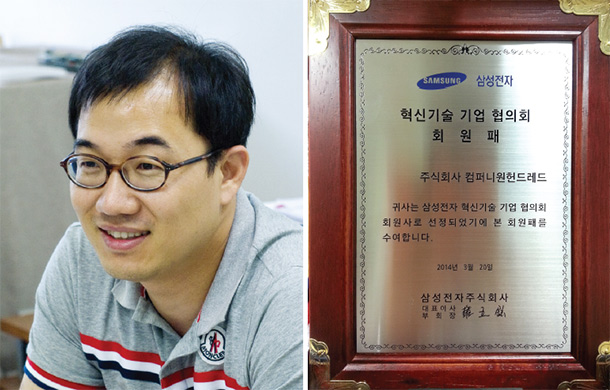
President-Jin-Cheon-Kim  ▲ President Jin-Cheon Kim

 
Extraordinarily talented people

After being established in 2008, Company 100 has only focused on computer technologies to be able to set up 100 different businesses with 100 different computing innovations. Just by focusing on embedded systems alone, Company 100 was able to achieve world-class level, with its web browser technology, and it is now one of the few companies working on browser technology within South Korea on world-class level.

 
Working on embedded systems with experienced members

An embedded system environment is often unstable and harder to implement than other solutions. Company 100’s team has extensive experience with embedded systems as its solutions have been commercially implemented and deployed in most of the major embedded system markets several times, which includes smart TVs, satellite navigations, car infotainment systems and many more. Company 100’s developers have also contributed to the webkit community by upstreaming and maintaining part of its core technology. From day one, Company 100’s chief executive officer Jin-Cheon Kim had the idea of creating a parallel web browser, so Company 100 was able to create CanvasGL, but however this was only a small part of his plan. Company 100 did not have foundation technology such as a parallel compiler, which consequently caused delays in its development of PRS (Parallel Rendering Suite).

 
New opportunities through the global joint R&D program

While developing a mobile parallel browser for multi-core smartphones, Company 100 has realized that if it could acquire more knowledge about parallel compiler technology, its entire research and development would be a lot easier and more effective. While its primary researcher Jin-Cheon Kim was studying at MIT, he was able to establish a personal relationship with Dr. David. I. August, an expert in parallel compilers. So, to get help from Dr. August’s professional team, Jin-Cheon Kim did not hesitate to contact him again and fortunately he could set-up a research project with Parakinetics in a timely manner. The global joint R&D program even provided financial support for the program. For a start-up company like Company 100, the kind of financial support was critical to complete the global R&D program it jointly successfully carried out.

Company-100-family

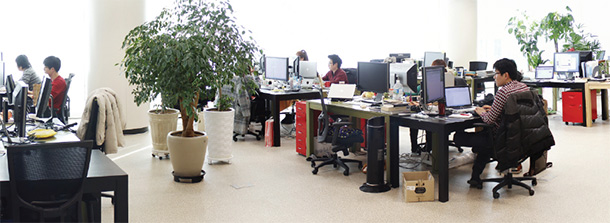
Company-100-Inc_2The government-led global joint R&D program helped the company to get funds in a timely manner when urgenty needed, and so it could complete its research without further trouble. By successfully carrying out its joint R&D program, Company 100 and Partner Company Parakinetics jointly achieved great results, which included five patents along with eight paper publications.

 
PRS (Parallel Rendering Suite)

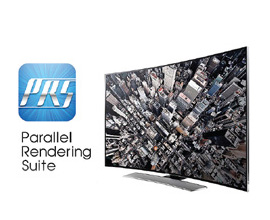
Company 100’s PRS is an advanced webkitrendering engine solution that delivers superior performance on mainstream platforms such as smart TVs, STBs, smartphones and a lot more. PRS utilizes multi-core CPU and GPUs to allow more complex and richer web-based contents. It consists of three key technologies (Parallel CanvasGL, Threaded Compositor, and GPU Process) and can be implemented flexibly based on a customer’s specific requirements. PRS fully supports open standards such as HTML5 and CSS3.

– Parallel CanvasGL: Parallel CanvasGL uses multicore CPU along with GPU, HTML5 canvas implementation integrated into webkits to create smoother HTML5 canvas animation. It directly uses OpenGL ES 2.0 API to render canvas animation, minimizes draw calls, by gathering as many drawing calls as it can and batches all the drawing calls when webkit finally need to display the page.

– Threaded Compositor: It uses dedicated thread for compositing and animating jobs to improve overall performance of rich HTML5 application. It also sets the UI process free from GPU operation, so even if any GPU related problem occurs, it strictly does not affect the UI process, so through this any client application’s stability will be guaranteed.

– GPU Process: It creates a dedicated process for GPU commands and is designed to have the following benefits: security, robustness, uniformity and parallelism.

 
Commercialization to samsung smart TVs & significant growth in sales volume

In the initial stages, Company 100 sought ways to develop a web browser for multi-core smartphones, but technology growth speed was faster than it realized previously. So, Company 100 had to seek another target to commercialize. By the 3rd year of the joint R&D program in 2013, Company 100 could fortunately apply and commercialize a technology of PRS to the year version of Samsung Smart TVs. But, actually, in the year, Company 100 only has provided one key technology to Samsung.

And finally this year Company 100 is able to fully commercialize all three key technologies of PRS to Samsung’s smart TVs contributing to the considerably increased web browser performance of Samsung smart TVs. And also Company 100 could have released NDA in cooperation with some global advanced partners including ImgTec, Espial, etc.

PRS has also been shown to the public at a number of international exhibitions such as CES, MWC and ETC. By succeeding in commercializing the three key technologies of PRS, Company 100 has made a profit of KRW 2 billion so far, and as a result of this, it was able to employ 11 more talented developers.

 
Global ambitions

We are happy with what we have achieved so far, but we know that we can do better by extending this technology still further. In the future we are hoping to expand this solution to RDK, Tizen and Smart Car market also, expecting to make KRW 5 billion in 2014 and KRW 8 billion in 2015, said Jin-Cheon Kim, President of Company 100, in a confident tone.

Within the computing innovation world, there are many industry giants who are leading the innovation and most other companies are way too busy to catch up with what those giants are doing and willing to do in the future. However, we believe this kind of action may only make us a runner-up in the end, definitely not the winner of this complicated world. We call ourselves innovators and pioneers who are willing to stand in front of this world and find out what could be the most innovative way of doing same tasks. The result may be the same but we value how we get to the result.

Sometimes it could be tougher than what it actually looks, but by taking this tougher path, we believe that we can find the way to make things better. It may only be a small step that we are taking now but, who knows what it could be in the end.
Company-100-Inc_3 This kind of global joint R&D program is such a great opportunity for start-up companies and we feel grateful to the Korean government supporting us doing it, but to be able to develop technologies armed with competitiveness, we hope the government will support projects which are bigger than this one we have been supporting. Running a larger project will definitely bring more competitiveness to Korea and help its technologies expand, he concluded, as a developmental proposal.


korean-electronics.com | Blog Magazine of korean electronics, brands and Goods
S. Korea’s exports to China slow down this year

South Korea’s exports to China amounted to US$42 billion from January 1 to April 20, according to the Ministry of Trade, Industry and Energy (MOTIE). The figure grew merely 1.5 percent from the same period a year ago.

The growth rate is slower than an 8.7 percent yearon-year (YOY) jump. The portion of China-bound exports out of Korea’s total exports recorded 24.9 percent this year, down from 25.1 percent last year. The ratio was the highest of 26.1 percent last year.

Korea’s exports to China expanded at 2.4 percent in April (estimated figure). This contrasts with those to the United States and ASEAN which recorded a 19.3 percent and 17.0 percent rise, each. This is attributable to China’s sluggish exports and economic growth. China’s exports for the first quarter contracted 3.4 percent while its economy grew 7.4 percent in the first quarter, falling short of its annual growth target of 7.5 percent.


korean-electronics.com | Blog Magazine of korean electronics, brands and Goods

S. Korea: Export & Import Trends for April 2014

Korea exported US$ 50.3 billion, with year-onyear growth of 9.0 percent and imported US$ 45.9 billion, with year-on-year growth of 5.0 percent in April 2014, recording a trade surplus of US$4.5 billion (surplus for 27 consecutive months).

trade-news The export growth rate is increasing, prompted by demand recovery in the United States and ASEAN countries, and monthly exports exceeded US$50 billion for the second time in history from October 2013.

Exports of most export items grew, and exports to the United States and ASEAN countries rapidly increased. Exports of semiconductors (price hike for DRAM and growing exports of system memory),
mobile devices (launch of Galaxy S5 and increasing demand for entry-level smartphones), ships (deliveries of value-added ships including three units of drill ships) and automotive (growing exports of new vehicles including Genesis and Soul) rapidly increased, and the items which showed poor export performance in 2013, including steel and oil products, recorded a robust turnaround.

Exports to ASEAN countries (growing exports of capital goods) and exports to the United States (rapidly growing exports of durable goods including mobile devices, automotive and home appliances) showed a double-digit growth rate. Exports to Japan also grew for two months in a row, thanks to the base effect and growing exports of mobile devices and automotive parts.

Meanwhile, from among the top five raw materials, imports of crude oil (oil price hike) and steel (growing domestic demand for steel in the automotive sector) grew, while imports of oil products and coal declined.


korean-electronics.com | Blog Magazine of korean electronics, brands and Goods
S. Korea- Turkey FTA records one-year passage of effectuation with 31% trade increase

According to the Korea Customs Service, the trade volume between S. Korea and Turkey has increased by almost 31 percent within one year after the S. Korea- Turkey FTA (Free Trade Agreement) came into effect.

The trade volume between the two nations is estimated to have increased to $6.76 billion, a volume of 30.8% up since May 1, last year, compared to the comparable previous period (estimated $5.17billion). This record outnumbers the average trade increase rate (1.7%) with all trade partners in the same period.

FTA-news The agency said the export to Turkey came to $6.06 billion, up 33.6% than last year while import from the nation reached at $0.7 billion (up 11.1%), consequently S. Korea’s trade surplus made at $5.36 billion(up 37.2% than last year).

The agency analyzed that the export growth rate (35.0%) of beneficiary items from the pact surpassed that(30.4%)of unbeneficial items from it and so the pact contributed to the nation’s trade
growth to the Turkey.

While the import of unbeneficial items by the FTA from Turkey significantly increased to $200 mil. from $60 mil in the last year, the import of beneficiary items from the partner country rather
decreased (12.3%).

The export of synthetic resins, steels, petrochemical raw materials, TV parts, textiles and clothing products, for which tariffs were eliminated upon effectuation of FTA, is founded to have
noticeably increased compared to the same period of the previous year.

The import of machinery parts (valves, bearings), transformers, and clothing also increased. Korean export companies’ usage rate of the FTA with the Turkey recorded 71.4%, a number surpassing that (70.2%) of FTA with the USA.


korean-electronics.com | Blog Magazine of korean electronics, brands and Goods
Portable Broadcasting Transport System (PBTS)

[INQ. NO. 1406E14] Oticom has been designing and manufacturing a variety of digital video/audio/data fiber optic transmission products for the security & surveillance markets since 2001.

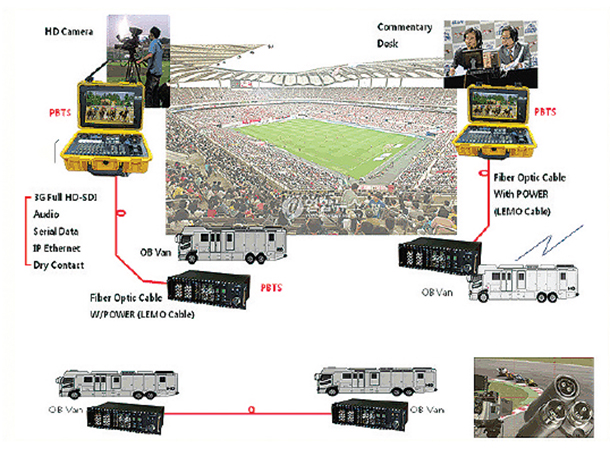
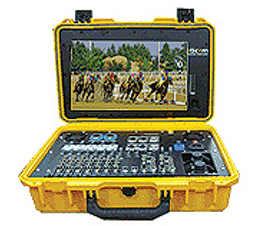
https://korean-electronics.com//inquiry For abroad marketing this year, Oticom arranged its newest portable broadcasting transport system (PBTS) model named PBTS-2300L that converts various signals being handled at an outside broadcasting venue into digital data and transmits it via optical fiber cables.

1406E014

1406E013_3This model is made for live entertainment and sports broadcasting which need high definition signal and portable size. With monitoring systems of 12-inch LED monitor, audio level meter, it presents its full monitoring capacity. It supports up to 10km of transmission distance. And this features ambient operating temperature ranged from 20 through 70°C.

This company is expanding the business area into system integration and engineering for various solutions like telecom broadcasting convergence solutions, security & safety solutions and ICT
solutions.


korean-electronics.com | Blog Magazine of korean electronics, brands and Goods
Super bright on-camera monitor

[INQ. NO. 1406E13] BON Electronics specializes in developing and manufacturing high quality broadcast and multimedia products based on superior R&D and manufacturing technology.

1406E013_1https://korean-electronics.com//inquiry At this time when HD Technology has dominated multimedia and professional video markets, BON has been concentrating on developing and manufacturing broadcast monitors, field monitors and other multimedia products.

BON Electronics’ super bright field monitor FM-072SCH is an 1100 cd/m2 super bright on-camera monitor which is greatly viewable in any angle. It comes with new features such as auto luminance
control, H/V level meter, and auto color adjustment on temperature change. Also, an extra external display can be connected via an HDMI-to-SDI converter.

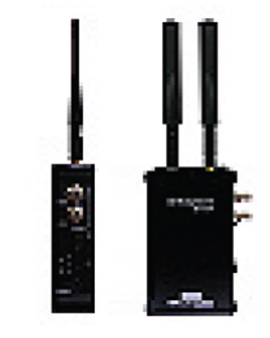
1406E013_2 BW-100ST and BW-100SR are HDMI&HD-SDI wireless transmitter and receiver using H.264 Codec. They can be used in various film/studio
production industries. Such noticeable points as up to 50Mbps encoding bit rate, very low latency(20ms), real time-based transmitter selection, bi-directional data link at 11Kbps, low power consumption(10W), automatic encoding rate adjustment for RF condition, etc., are available.


korean-electronics.com | Blog Magazine of korean electronics, brands and Goods

DNS-embedded pro audio processor

[INQ. NO. 1406E12] RADSONE was founded in 2010 and it has a specialty in sound signal processing. Via a proprietary algorithm Digital Noise Suppression™ (formerly Museflow) which
minimizes digital noise in digital sound itself, RADSONE derives the original sound, that is, the sound that allows one to feel the sense of realism on the live music scene during live performance from digital sound sources.

https://korean-electronics.com//inquiryAccordingly, it is harder to get right sounds in digital age. Moreover, most of the digital sound correction equipment such as compressors, digital effectors are difficult to handle due to complex menu structures and parameter settings. In contrast, MF 501S works by just simply connecting input signal with output one and input selection.

The moment you connect MF 501S with existing systems, a totally different dimension of sound is revealed to the user.

1406E012_1As the playback environment is transitioned to digital, performance improves, but it is more important to understand functions and limitations of pro digital equipment.

Accordingly, it is harder to get right sounds in digital age. Moreover, most of the digital sound correction equipment such as compressors, digital effectors are difficult to handle due to complex menu structures and parameter settings. In contrast, MF 501S works by just simply connecting input signal with output one and input selection.

The moment you connect MF 501S with existing systems, a totally different dimension of sound is revealed to the user.

The MF 501S is a kind of hardware processor that targets more diverse pro audio environment and broadcasting stations. It provides clean and natural sound by minimizing noise from low quality and stuffy sound sources such as MP3, AAC, and streaming contents.

Differentiating itself in dimension compared to existing simple sound effects such as surround, bass boost, noise reduction, reverb, or eq control, it provides much more naturalness and lifelike
appearance even at higher resolution sound sources than CD.

1406E012_2And it produces the best sound suitable for contents and playback environments by simple mode selections (SPEECH / Hi-Fi / LIVE) without complex controls. The 19-inch, rack-type elegant and stylish design is suitable for broadcasting stations and also personal hi-fi audio system use.

The digital input/output (3 EA) and analog input/output (XLR) enable flexible interfacing with existing equipment. It also supports sampling frequency of up to 192kHz / bit resolution 24bit. It
can be used as a high-end DDC or DAC which is capable by proper interface selections. For customers’ convenience, it is designed with audio dedicated SHARCTM DSP and high-end audio components.


korean-electronics.com | Blog Magazine of korean electronics, brands and Goods

EUREKA Becomes the Source of Strong New Growth Engine of GMT

[INQ. NO. 1406E09] Many of the reliable and practical successes achieved through EUREKA among Korean companies can undoubtedly be witnessed through many joint R&D projects. GMT’s strategic partnership with EUREKA made it possible for the company to stand shoulder-toshoulder with global topprofile partners and even competitors and enabled it to enjoy noteworthy performance in global markets. The following story of GMT not only tells us about the dynamic journey with EUREKA, but testifies to the successful performance through it as well.

President-Lee-Gwon-seokhttps://korean-electronics.com//inquiry


◀ President Lee Gwon-seok

 
R&D-driven company

Established in 2002, GMT has exclusively developed and supplied products related to vessel monitoring /sailing, and maritime communications in the maritime safety & security fields. GMT has maintained its steady efforts to develop vessel-related advanced IT technologies and supplied a wide variety of maritime communication equipment-related technologies and products including AIS (Automatic Identification System)-based monitoring systems, voyage terminals to governments, vessel companies, etc. and won praise for continuous reliability from them.

R&D-driven-company GMT’s dedicated efforts to contribute to the localization of basic technologies are noteworthy in light of the fact that although Korea’s shipbuilding industry has undoubtedly led the global market, the IT technologies and equipment used in the nation’s shipbuilding industry could have been obtained from foreign manufacturers by the early 2000s. Moreover, the awareness of necessity of technologies related to harbor monitoring and vessels monitoring-related products rarely existed in the local market before GMT began its business.

 
Self-leadership in creating newer business opportunities

The initial engagement of GMT in this area started by its actively seizing opportunities to develop technology and supply of product-related AIS. GMT has successfully managed to develop technologies and manufacture new products and gained recognition for reliability from client companies, despite its late delivery time and insufficient overall experience in these areas, by solely focusing on how to resolve these obstacles and meet the needs of customers.

Since then, GMT has grown into a company that follows a procedure of continuously verifying selfdeveloped products to market and reflects voices of the clients in order to apply them to the R&D process and to ultimately win customers’ satisfaction. Recognizing at an early stage the importance of original technology, GMT established its R&D institute as soon as it launched its business. Such a series of effective approaches made it possible for the company to develop technologies necessary in monitoring and sailing such as processing technology of electronic marine chart, marine communication technology, controlling application technology, and embedded system-related technology.

 
Toward the global market

In the initial stage of its efforts to develop technologies meeting international standards and discover new foreign business and global partners, GMT had to suffer from the downsizing of its maritime safety & security business, following the financial crisis sparked by the Lehman Brothers collapse in 2008. This led the company to realize that it should seek newer methods to shorten the cycle from design, to manufacturing and supply products satisfying clients in the global market.

smart-sensors In order to overcome this situation, GMT decided to make a request a Swedish company in 2009 it has ben partnering with in the area of AIS to carry out a test on how many advantages the sailing terminals manufactured by GMT have over those of competitors. Surprisingly, GMT received favorable responses from the technology partner. So, luckily, GMT could export 3,000 units of sailing terminals to Turkey.

This led to greater confidence for GMT to pioneer potential new markets, enough to attempt an international bid to participate in a project to build a vessel-monitoring center in Singapore harbor and unbelievably succeeded in receiving an order for the project, beating rival bidders. However, soon it regrettably recognized the reality that without a process of systematizing technologies and products enough to cover many obstacles in foreign markets, such kinds of business ventures in the overseas markets would likely lead to deficits.

Just then, GMT heard the news that EUREKA business, the joint R&D program with European advanced companies, had started its growth in Korea. So, GMT tried to form partnerships with some leading
European companies including Turkey’s Aselsan and France’s Thales, with the aim to obtain advanced knowhow, elevate its level of technologies, and create opportunities to encourage researchers to shorten the cycle of technology development.

In fact, GMT was fully ready to meet the conditions to attempt the EUREKA business. In 2011, GMT, without any delay, applied to participate in the EUREKA program with ample understanding of it. The very project was called “RECONSURVE (Reconfigurable Surveillance System with Communicating Smart Sensors) Cluster,” the largest scale among EUREKA projects.

RECONSURVE is called the “multipurpose maritime surveillance system” and is designed to supply monitoring information concerning safety and security to final users on a real-time basis by using a technology of situation recognition on information collected by utilizing technologies of connecting and integrating a variety of sensors, real time-based middleware technology, and technology of connecting wireless communications networks.

GMT, in a sense, was a joint developer of the system with the European partner companies when judging from the perspective that it actively participated in forming the concept of the system by taking the professional role of elevating the level of technological service on the section of AIS to the next level (including upgrading a process of navigation pattern analysis to help final users to make a decision more effectively at the very right time before the occurrence of emergency situation). Through the EUREKA program, GMT was able to develop intelligent monitoring solutions with a variety of sensors that were worthy of becoming a main business of the company, in cooperation with 11 companies from three nations.

gmt

 
New business opportunities through the concept of e-navigation

Recently, the term “E-Navigation” has been drawing renewed attention among various circles of the industry, in line with the development of information technology and the rising flow of ICT convergence. It is a concept of a next-generation intelligent maritime integral safety maintenance system designed to preemptively cope with maritime traffic environments in an increasingly larger and complex world. It can supply information on safety and decision-making to drastically decrease vessel accidents that may lead to mega-scale disasters. And for GMT, the E-Navigation
sector is emerging as a strong growth engine, enough to fully lead the front line in extending the presence of the company.

The attention toward E-Navigation from countries around the world led by IMO (International Maritime Organization) is highly noticeable. IMO was already determined to apply the law step-by-step by compulsorily legislating the E-Navigation-related technology and system. As a leader in the ENavigation field, GMT is now said to be fortunately in a situation when it can take advantage of the very best possible opportunities to develop the existing models of its product into upgraded ones in terms of practical functions, not only to help preemptively prevent the occurrence of such kinds of tragic disasters, but to advance into the global market again as well.

gmt-3

 
The definite change of growth in sales scale after EUREKA business

gmt-2 “Without any doubt, we faced a sluggish growth pattern for a considerable time across the overall businesses, but since witnessing the practical effects of EUREKA in our joint projects (including the development of a series of global market competitive technologies) and thereafter accelerated creation of new business, our sales scale reached a level beyond our previous expectations, recording a whopping KRW 12.4 billion in 2013. In 2014, we are also expected to see sales scale on the rise. In three or four years, the sales scale from the direct effect of EUREKA is expected to be at a level at least double that of last year, “confidently predicted Lee Gweon-seok, CEO of the company.


korean-electronics.com | Blog Magazine of korean electronics, brands and Goods

New Competition among companies of S. Korea and Japan in NAND flash memory

In areas of DRAM for PCs and DRAM for mobile DRAM, so far, Samsung Electronics and SK Hynix retained their dominant leadership by a wide margin in the global markets. But for NAND flash memory, the two giants’ paths are difficult to predict.

NAND-flash-memory NAND flash is mainly used in smartphones, MP3 players, and digital cameras and can be available even when the power is turned off. In a recent, the global NAND flash memory makers started mass-production of it in anticipation of 30~40% growth in demand caused by rapid market growth of SSD. As a most noticeable movement, Toshiba, with market share of 32.3%, takes the No. 2 position following Samsung Electronics (37.5%), widening the gap of global market share against Micron (16.6%) and SK Hynix (13.6%).

According to industry sources, Toshiba could have seized an opportunity to chase after Samsung Electronics as the availability of NAND flash memory, which so far only applied at smartphones, MP3 players, expanded into larger storage space, the so-called “Solid State Drive (SSD) for private and corporation. The strategic partnership with Sandisk, a global leading maker of SSD with market share of 13%) boosts its path in the global market.

According to U.S.-based market researcher iSuppli, it is expected that the SSD market could double from US$7.018bil. in 2012 to US$15.96 bil. in 2015. Samsung Electronics started mass-production of 3D V NAND flash memory in the Chinese market in May in a hurry to preemptively meet the growing demand. Samsung Electronics leads the market by widening the technology gap against competitors along with the initiative in the mass-production of 3D V NAND flash memory.

With its No. 1 market share of SSD, NAND flash memory, and mass-production capability, Samsung Electronics enjoys an overwhelming advantage over its competitors. However, suitable profits are not being created despite its overwhelming technology advantage and market share. So the leading maker’s agony is increasingly deepened.

The price of NAND flash memory chip was 7.6% down in the first-quarter of this year compared to the previous quarter, making projections that by the end of this year, the price would drop to even under $1, caused by massive over-supply by each competitor in the second-quarter.

SK Hynix rechanged the M12 line in Cheongju into NAND flash memory line due to a fire accident of its Chinese factory, the initially planned line for the product. The U.S. Micron is scheduled to change the role of its Singapore-based factory to produce NAND flash memory chip.

SK Hynix aims to complete the development of 3D NAND product by June and is set to start the massproduction of it at the end of this year at the earliest.


korean-electronics.com | Blog Magazine of korean electronics, brands and Goods

S. Korean Companies to Reaffirm Their Competitive-Edge Status at CommunicAsia 2014

S. Korean Companies to Reaffirm Their Competitive-Edge Status at CommunicAsia 2014

The upcoming CommunicAsia 2013, the largest-scale integrated ICT exhibition in the Southeast Asian region, will be a challenging venue, especially for South Korean companies.

The leadership of Korean ICT companies is growing in the global market, led by Samsung Electronics and LG Electronics, the nation’s premier ICT makers mainly focused on areas of communications, networking, information technology, digital media, mobile contents, etc. They are scheduled to display their flagship solutions, aiming to reaffirm their current status and competitive edge in the region.

coverstory

There will be significant business outcomes for Korean companies – regardless of their sizes. Korean ICT companies have sought to find new growth engines by applying their existing sectors of strengths. Small but high-tech companies are trying to maintain their competitiveness in the niche areas, overcoming challenges from their larger competitors overseas.

Among small-sized but highly anticipated Korean solution providers, Hankyung I-NET is expected to make inroads with its flagship item of smart cooling racks as an extremely competitive green IT solution again following its promotion last year. Dasan Networks has also arranged several highly noticeable FTTx solutions including mobile backhaul pre-service aggregation router.

Some medium-sized but global top-level ICT-related companies including Moneual are successfully presenting big performance in the global markets – with preemptive release of market-leading products and creative approach strategies for the global market. In fact, Moneual after a considerable time of unique approaches – including avoiding “red ocean” areas that global ICT giants already had in the grip of hegemony could emerge as one of the three largest ICT companies that represent the Korean market.

With the recent most notable news of ICT-related market gains, especially in the area of TVs, Korean makers’ global market share in terms of sales volume is approaching 50 percent. Especially for the areas of large-sized TVs and UHD TVs, the areas where Korean companies overwhelm competitors’ market share level.

U.S. market researcher DisplaySearch recently said in a report that excluding cathode-ray tubes, Samsung Electronics accounted for 29.6 percent of the global flat TV market in the first three months of the year, marking an alltime high for any quarter. The South Korean tech giant also retained its No. 1 place in the global TV market for 33 consecutive quarters since 2006. LG Electronics recorded a market share of 16.9 percent. The combined market share of the two companies was 46.5 percent, meaning that almost one of every two flat-screen TVs in the world is
manufactured by Samsung or LG.


▶High-quality optical components
▶FTTx and mobile backhaul solutions
▶Digital wireless communication solution (transceiver)
▶Module-typed converter
▶New concept of DID system
▶STB platforms
▶Wooden mobile phone protection cases
▶Green IT solution


korean-electronics.com | Blog Magazine of korean electronics, brands and Goods