SK Hynix to Accelerate HBM Production

https://korean-electronics.com//inquiry

Decided to introduce ASML’s EUV scanners

Actively responding to demand for AI memory

SK Hynix is speeding up its memory semiconductor production capacity by introducing extreme ultraviolet (EUV) equipment worth KRW 12 trillion. The EUV used for the production of advanced DRAM, is expected to be deployed in key lines, including the semiconductor cluster currently under construction in Yongin, Gyeonggi-do, and is also expected to accelerate the transition to SK Hynix’s advanced 6th-generation (1c) process.
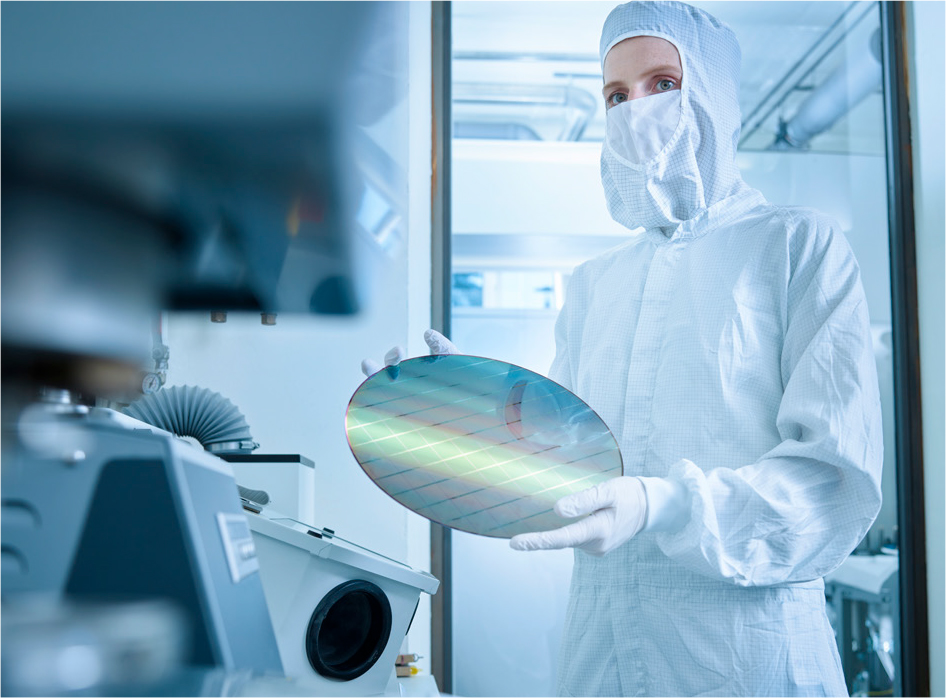
The company recently disclosed that it had decided to acquire EUV scanners from ASML, a Dutch equipment manufacturer. The total acquisition cost is approximately KRW 11.9496 trillion, equivalent to 9.97% of its total assets as of the end of 2024. The procurement will take place over approximately two years through December next year and includes installation and modification costs.
Although the company did not disclose the exact number of EUV units it is introducing, industry estimates suggest it may acquire more than 20 machines, given that each unit costs between KRW 300 billion and KRW 500 billion. With around 20 EUV systems already in operation, it more than doubles its EUV line.
The EUV to be introduced in large quantities this time will be deployed at Cheongju M15X plant, while a significant portion is also expected to be allocated to the first fab (Y1) at the Yongin cluster, scheduled to begin operations next year. The rapid introduction of EUV is intended to expand production capacity across the entire Yongin cluster, where wafer production is expected to increase to between 380,000 and 400,000 wafers per month in the future.
According to SK Hynix, the investment is aimed at addressing growing demand for AI memory including HBM, and expanding demand for general-purpose DRAM. The company is trying to expand its production capacity to stabilize supply following the increasing demand for general-purpose memory in the front industry including servers and mobile.

korean-electronics.com | Blog Magazine of korean electronics, brands and Goods

New Competition among companies of S. Korea and Japan in NAND flash memory

In areas of DRAM for PCs and DRAM for mobile DRAM, so far, Samsung Electronics and SK Hynix retained their dominant leadership by a wide margin in the global markets. But for NAND flash memory, the two giants’ paths are difficult to predict.

NAND-flash-memory NAND flash is mainly used in smartphones, MP3 players, and digital cameras and can be available even when the power is turned off. In a recent, the global NAND flash memory makers started mass-production of it in anticipation of 30~40% growth in demand caused by rapid market growth of SSD. As a most noticeable movement, Toshiba, with market share of 32.3%, takes the No. 2 position following Samsung Electronics (37.5%), widening the gap of global market share against Micron (16.6%) and SK Hynix (13.6%).

According to industry sources, Toshiba could have seized an opportunity to chase after Samsung Electronics as the availability of NAND flash memory, which so far only applied at smartphones, MP3 players, expanded into larger storage space, the so-called “Solid State Drive (SSD) for private and corporation. The strategic partnership with Sandisk, a global leading maker of SSD with market share of 13%) boosts its path in the global market.

According to U.S.-based market researcher iSuppli, it is expected that the SSD market could double from US$7.018bil. in 2012 to US$15.96 bil. in 2015. Samsung Electronics started mass-production of 3D V NAND flash memory in the Chinese market in May in a hurry to preemptively meet the growing demand. Samsung Electronics leads the market by widening the technology gap against competitors along with the initiative in the mass-production of 3D V NAND flash memory.

With its No. 1 market share of SSD, NAND flash memory, and mass-production capability, Samsung Electronics enjoys an overwhelming advantage over its competitors. However, suitable profits are not being created despite its overwhelming technology advantage and market share. So the leading maker’s agony is increasingly deepened.

The price of NAND flash memory chip was 7.6% down in the first-quarter of this year compared to the previous quarter, making projections that by the end of this year, the price would drop to even under $1, caused by massive over-supply by each competitor in the second-quarter.

SK Hynix rechanged the M12 line in Cheongju into NAND flash memory line due to a fire accident of its Chinese factory, the initially planned line for the product. The U.S. Micron is scheduled to change the role of its Singapore-based factory to produce NAND flash memory chip.

SK Hynix aims to complete the development of 3D NAND product by June and is set to start the massproduction of it at the end of this year at the earliest.


korean-electronics.com | Blog Magazine of korean electronics, brands and Goods
SK Hynix Develops 8Gb Mobile DRAM for First Time

SK Hynix, the world’s second largest DRAM manufacturer, recently successfully developed 8 gigabit(Gb), low power double data rate(DDR) 3 mobile DRAM. SK Hynix has become the first company to develop a 8 Gb DRAM, following Samsung Electronics, which started mass-producing 4Gb mobile DRAM in April this year.

Mobile DRAM, which is mostly embedded in smartphones and tablet PCs, is burgeoning amid rapidly growing mobile market. The development of the 8 Gb chip signals SK Hynix has challenged Samsung Electronics, the top global DRAM maker, further heating up the competition in the mobile DRAM market.

SK Hynix used the up-to-date 25 nano technology to develop the 8 Gb mobile DRAM, and plans to massproduce the chip by late this year at the earliest. The Korea-based chip maker sent prototypes to mobile phone manufacturers that employ Android operating system(OS) such as LG Electronics, Pantech, and Chinese companies.

If some of them choose SK Hynix’s 8 Gb chip, it is projected to be embedded in their smartphones due to be released early next year. Using four units of the 8Gb chip, smartphone makers can manufacture a slimmer, high-capacity smartphone with a capacity of 32 Gb, or 4 gigabytes(GB), said SK Hynix.


By Kim Min-su : Here