Successful development of original technolgies of glasses-free 3D displays

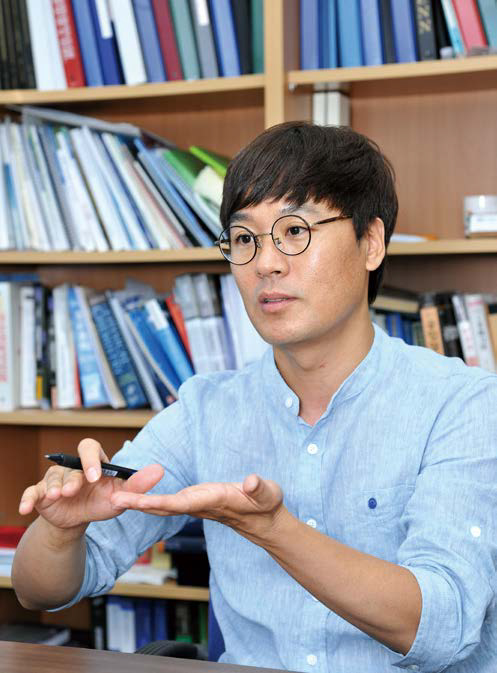
KIST(Sung-kyu Kim, Senior Researcher of Imaging Media R&D Team)

In 2009, the famous 3D movie “Avatar” enjoyed huge popularity and motivated the display industry to develop 3D display technologies and promote commercialization. https://korean-electronics.com//inquiryHowever, 3D displays failed to be a major trend due to the need to wear special glasses. Still, there is a reasonable prospect that 3D display, close to reality, will become a trend in the future, which calls for glasses-free 3D display technologies with improved convenience. In such circumstances, the Imaging Media R&D Team led by Dr. Sung-Kyu Kim, KIST (Korea Institute of Science and Technology), has succeeded in developing original technologies allowing viewers to enjoy 3D displays without wearing special glasses and compromising resolution.

Development of technologies that can minimize the key
matters happening in glasses-free 3D displays

The 3D movie “Avatar,” which enjoyed huge global popularity when released, drew people’s attention to 3D display and this, in turn, motivated major companies in the area to develop 3D display technologies and to promote commercialization using special glasses. As a result, the market introduced advanced TVs offering 3D features during the World Cup in June 2010.
In three years, however, 3D TVs failed to become a major trend, instead remaining merely as an additional feature due to inconvenience caused by the need to wear glasses. Still, there is a reasonable prospect that 3D display close to reality will become a trend in the future along with media development, which calls for glasses-free 3D display technologies with improved convenience.

Untitled-4.jpg

Thus, major companies in the market have intensified their efforts to develop glasses-free 3D display including those in Korea. But such 3D displays present a few problems including optical noise of 3D image, low resolution, and limited field of view, and so forth, presenting an obstacle to commercialization.
In such circumstances, Imaging Media R&D Team, KIST, led by Dr. Sung-Kyu Kim, has developed original technologies which can minimize the three major problems found in glasses-free 3D displays, laying the foundation for commercialization of the technology, while proving Korea’s strong presence in the display industry.

Precious fruit of 15-year R&D efforts

Dr. Sung-Kyu Kim, who led the project, began to work on and classify such problems of glasses-free 3D displays even 15 years ago, predicting considerable inconvenience of special 3D glasses when he first started his study on 3D technologies. In particular, the team tested two approaches in order to overcome and minimize the three major problems at once.
“The first approach is to detect the eyes of a viewer in real time with a camera and use 3D coordinates of the eyes,” said Dr. Kim. “We have developed methods and demonstration systems for optical 3D image and resolution, comparable to that of the previous glasses-based method, and expanded field of view in the real-time tracked area. Compared with the existing display products of a global Japanese manufacturer, the technology proved to remain competitive through qualitative and quantitative 3D optical characteristics measurements.”
Untitled-5.jpg“Furthermore, even the non-tracking method without using information on the face of a viewer could not only reduce optical noise in 3D images but also expand the field of view,” added Dr. Kim. “These two approaches can be applied to future commercialization of glasses-free 3D displays. As to the tracking approach, the practicability of the technology has been already proved, compared to major brands in the market, and thus is expected to contribute to growth of personal glasses-free 3D display market upon completion of the technology. The nontracking method can be commercialized in limited areas such as advertising, simulation, and the medical industry. Part of these original technologies has been transferred to global enterprises, which will speed up future industrialization.”
In fact, experts say that a new market will be created based on the glasses-free 3D display when the new technologies are successfully applied to IT devices such as smartphones, laptop computers, tablet PCs, monitors, and so forth. In terms of technological completeness, the newly developed technologies are more competitive than similar ones and thus are expected to  gain the upper hand in the market upon full-scale commercialization and industrialization.

Technological completeness need for early commercialization

“Because of limited resources in the lab, it’s difficult to carry out a single project in depth for a long time,” explained Dr. Kim. “Above all, while there was lack of precedent studies on problems of glasses-free 3D displays and of equipment for measuring characteristics of 3D displays, we had to develop measuring instruments to analyze 3D images. In the process, we even provided support to companies who requested assistance with measurements. In addition to this rewarding experience, our team tried to apply for patents for solutions, through which we could develop optical design of 3D display and performance simulation tools. As a result, we could develop a complex patent that can deal with the major problems of glasses-free 3D display simultaneously.”Untitled-6.jpg
“Regarding the tracking method, the performance of the system was superior to that of the existing products in the market but there should be additional efforts to improve the demonstration system, related to the accuracy of viewer tracking and with methods to handle various conditions for application of tracked information,” explained Dr. Kim. “Furthermore, we have an original technology for the non-tracking method, which improves optical 3D image resolution, and the verification has been almost completed. Yet, we need to develop parts and systems for commercialization of the technology, which is currently under way. Completion of these processes will contribute to full-scale commercialization.”

korean-electronics.com | Blog Magazine of korean electronics, brands and Goods

Secure of advanced future battery technology

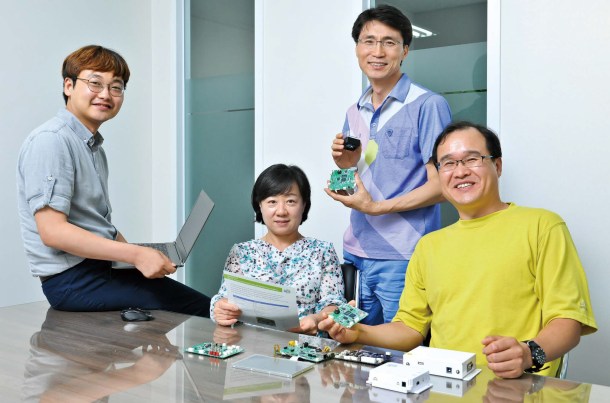
KETI(Ji-sang Yu, Senior Researcher)
https://korean-electronics.com//inquiryThe Korea Electronics Technology Institute (KETI), an affiliate of the Ministry of Trade, Industry and Energy, has specialized in R&D on electronics and IT over the past 24 years since its establishment in 1991. It has provided technological support to small and medium-sized businesses so that they can have sufficient competitiveness in the country’s focus areas and new industries. The R&D efforts of KETI are based on the actual demand of industries, creativity and convergence, effectively assisting enterprises with their technological innovation. In particular, the next-generation battery research team has carried out an R&D project on lithium ion batteries in close cooperation with small and medium-sized businesses, to develop the proprietary technology for post Li-ion batteries.

Identification of the cause of the deterioration in the nickel
cathode materials develpment of technology for improving

Mobile devices such as smartphones, etc. and electric vehicles need a battery with high energy density in order to increase usage time or mileage. At present, cathode materials used for a lithium ion battery have capacity of 150~160mAh/g, including LiCoO2, LiNi1/3Co1/3Mn1/3O2. Many developers attempt to apply higher nickel content to lithium ion batteries in order to increase the capacity to 170mAh/g or more.
There are a lot of studies and commercialization efforts on the development of nickel-based cathode materials with capacity of 170mAh/g or more, in which nickel accounts for 60% of transition metals or more, but gas-generation and performancedeterioration at high temperatures make it difficult to commercialize the materials. Analysis of deterioration behaviors at high temperatures or high voltage, identification of problems based on the analysis, and development of solutions should take precedence so as to use high-nickel cathode materials for batteries.

Untitled-1.jpg

Ji-sang Yu, Senior Researcher

Hence, this project has discovered a deterioration-inhibiting factor by identifying the causes of deterioration, relating to the surface of active materials and bulk characteristics, based on the analysis of deterioration behaviors of high-nickel cathode materials. The newly discovered factor was used for a fundamental solution to deterioration. Using the solution, nickelbased cathode materials can be applied to lithium ion batteries for mobile IT devices and electric cars. In particular, this study is expected to improve significantly the technical understanding of commercial lithium secondary batteries by establishing various methods to identify the relevant problems of the batteries such as analysis of high-nickel cathode materials, interpretation of deterioration behaviors, and so forth.
“Initially, we had considerable difficulties as there was no effective system for coordination and technological cooperation while a large number of institutes participated in the project without systematic analysis on deterioration mechanism, which was needed to apply nickel-based cathode materials to batteries,” said Ji-Sang Yu, senior researcher at KETI (Korea Electronics Technology Institute), who has participated in the project with a number of universities and enterprises specializing in the materials. “But from the 2nd project year, our roles became clearer and interchange smoother, which has led to successful development of the solution to the deterioration of nickel cathode materials.”

Carried out by the division and cooperation of research
works from a number of research institutes

The existing commercial layered cathode materials used for lithium ion batteries, which are mainly cobalt-based materials, are rapidly being replaced by nickel and, it is expected that nickel will account for 40% or more of the total cathode materials by early 2016. Therefore, the technology developed by this project has high value in analyzing and assessing materials, especially in understanding deterioration of lithium ion batteries. In particular, the technology allows researchers to identify if causes of deterioration are from the inside of active materials or from the surface in order to suggest various measures to inhibit deterioration for enterprises specializing in materials and batteries.
This project has been carried out by various institutes such as KETI (Korea Electronics Technology Institute) as well as ECOPRO and PANAX ETEC through cooperation and division of work. The team analyzed real-time transformation of materials using a transmission electron microscope and synchrotron radiation so as to identify the fundamental causes of deterioration in nickelbased cathode materials at high temperatures when applied to batteries. In addition, theoretical simulation of the structural instability of active materials was carried out through ab initio quantum chemistry methods, whose results were compared to those of actual analysis, which helped to clarify the reasons for the instability. Based on these achievements, the team performed analysis and assessment on changes in bulk and surface characteristics of active materials when applied to batteries containing nickel-based cathode materials.
Over the repeated charge/discharge cycle, the internal structure of nickel-based active materials is maintained well without signifi cant changes, but a fi ne crack in the grain boundary keeps growing, which eventually lowers mechanical strength of the materials and then causes deterioration. In addition to this finding, the team developed a surface treatment technology that can prevent residual lithium (which remains from heat treatment) from generating electrolytes and side reaction within a battery.
Application of the technology signifi cantly reduced the residual lithium, and the team could develop electrolyte additives which can inhibit gas generation at high temperatures during storage of batteries. “We’re planning to apply the technology to Li-rich or high-voltage 5V spinel nickel-manganic acid lithium materials with the purpose of realizing higher capacity of 240~260mAh/g,” said Ji-Sang Yu, senior researcher at KETI.

Contributing to the increse of sales of major battery manufacturers

As to the status of lithium ion batteries using nickel-based cathode materials in 2007 LG Chem applied its proprietary high-nickel (50%) cathode materials to 2,200mAh 18650 cylindrical cells for the fi rst time in the Korean market, succeeded in developing high-nickel materials. After 2010, LiNi1/3Co1/3Mn1/3O2, with 33% nickel content began to replace LiCoO2 because of competitive prices (but the discharge capacity of LiNi1/3Co1/3Mn1/3O2 is 155mAh/g, not higher than that of LiCoO2).
Afterward, the success of cathode materials that have 50% nickel content and 165mAh/g discharge capacity has motivated domestic manufacturers (e.g. Umicore Korea, LANDF) to develop new high-nickel (60% or above) materials with 175mAh/g capacity. Such new materials (60% nickel content) meet the requirements of battery manufacturers and buyers in terms of basic performance but swelling and deterioration at high temperatures should be solved.
Accordingly, ECOPRO and PANAX ETEC, specializing in cathode materials and electrolytes, respectively, joined the project in order to develop solutions to the problems. Based on the newly developed technology, ECOPRO has enhanced its cathode materials and is supplying to Panasonic (No. 1 battery manufacturer in Japan) and Samsung SDI (No. 1 in the world) nearly 30t per month with good sales prospects. The Korean market for electrolytes for lithium ion batteries using nickel-based cathode materials is expected to be KRW 31 billion by 2016 and to grow by 6.2% annually on average. Also, the additives developed by PANAX ETEC are expected to increase greatly sales of in the global market.


korean-electronics.com | Blog Magazine of korean electronics, brands and Goods

To become the best company in Asia in the cloud data center optimization business

Untitled-36.jpgCEO Young C. Cho

PIOLINK was first founded in 2000 when the domestic network market was
predominated by global large companies. It daringly challenged the advanced and
intellectualized application networking market. In 2006, it released successful web
firewall, which helped it expand its business range to security, and now it has
become the only and the best application and networking security company with
technological power to produce itself H/Ws and S/Ws.

We kindly ask you to introduce your company essentially and generally

https://korean-electronics.com//inquiry

PIOLINK is a specialty company in the cloud data center optimization, providing products and services that assure the best application availability, performance and security in the industry. PIOLINK, first established in 2000 when the domestic network market had been predominated by global large companies, daringly challenged the application networking market that was advanced and intellectualized. PIOLINK concentrated its efforts in one of network domains from the early stage of its business, and as a result of consistently investing in R&Ds, different from other companies, it could be able to have competitiveness relatively fast in the industry.
Due to successfully releasing a web firewall in 2006, it could be able to extend its business to security domain, and finally it has become an application-networking security company best in Korea, having technological power for developing H/Ws and S/Ws itself. With this, it was listed in KOSDAQ via IPO in 2013. After then, it aimed at becoming a cloud data center optimization specialty company, extending its business range to developing and manufacturing network/security products, and even to DCIM(Data Center Infrastructure Management) Services and managed security services, providing client-customized solutions.

Please explain us about your company’s core technologies and products

The main products from PIOLINK can be divided into network, security, and service domains. For the network domain, the representative products include Application Delivery Controller, which model names is PAS-K, and SDN Switch (Software-Defined Networking Switch), which model name is TiFLOW. PAS-K is a core product of the data center, which enables sending an application, which a user wants, in a stable and optimized state under the web, mobile or cloud environment. It performs load-balancing, off-loading, acceleration and security to ensure uninterrupted service. Currently, it is a leading product in the market, which occupies a third of the domestic market share. It holds global competitiveness in terms of performance or completeness enough to be included in the Gartner Magic Quadrant report as a top ADC vendor in Korea. TiFLOW is a switch, applied by the next generation SDN technology, which focuses on software and is led by users. It is a basic product in building the next generation data center, or SDDC (Software-Defined Data Center), and is attracting much attention. It is possible to quickly and flexibly configure a network, and is good at high performance flow
processing. With regard to security domain, Web Application Firewall, which model name is WEBFRONT-K, and Access Security Switch, which model name is TiFRONT, are the representative products. PIOLINK joined the web application firewall-related R&D project led by the Ministry of Trade, Industry and Energy in 2013. It produced good outcome and was awarded the best prize in the commercialization technology area of the ‘this month’s industrial technology award’. WEBFRONT-K protects web services against various hackings, and is responsible for security of a high performance platform for processing application networking, which is the representative technology of PIOLINK. PIOLINK succeeded in commercializing high performance web firewall, and currently is one of the representative brands of the domestic high performance web-firewall market.

TiFRONT, an access security switch, shuts off various harmful traffics generated in a user’s terminal, such as PCs, laptop computers and smart devices, to assure a clean network. It also intercepts the attacks of stealing account data and overhearing calls, and controls accesses to a network to assure a safe inner network. As it enables to easily identify where L2 layer has a failure and its cause, which is hard to manage, it contributes to enhancing a network’s transparency. As per the service domain, PIOLINK runs and manages itself the
IDC (Internet Data Center), at the same time, providing the security managed service. Although many companies separate and manage IDC and security service, PIOLINK does both at the same time, creating synergies to develop a solution for optimizing a data center.

Please tell us about the most impressive outcome of the R&Ds your company conducted

PIOLINK has been developing high performance firewall since 2005, successfully commercializing it in 2006. It advanced Layer7 proxing technology based in its high performance application processing platform, and it released a high performance web security solution. It released a giga-class web-firewall, which had been rarely seen in Korea at the time, and the product was adopted as a security solution of a large website, and due to its performances such as product delivery to three primary telecommunication companies in Korea and to the primary financial world, it has become the representative brand in the high performance webfirewall area. At the time of releasing its product in 2006, the representative security products for a data center were network fire-wall or IPS, and the products from PIOLINK could intercept malicious cyber attacks such as XSS(Cross-site scripting), and could overcome vulnerabilities in the SQL injection, certification and session-management, which had been not possible in the past. By curbing sensitive information leakage such as credit card and bank account data, which is getting increased nowadays, the economic loss of a company can be prevented.

Untitled-38Due to the success of the project, PIOLINK could
expand its business from the existing network domain to the security market, and could grown to a competitive company with good technological power over both network and security domains, solely in Korea.
As each country has different security certification and policies, PIOLINK started exporting its web firewall products somewhat later than other products. Currently, it has penetrated into huge markets such as China and the Southeast Asia, with its sales consistently growing every year.

Please tell us about the future plan and vision of your company

PIOLINK is providing various IT infrastructure products and solutions, including data center operation and security control service, and helping maximize a range of industrial clients’ business, such as telecommunication, finance, public service and enterprise. PIOLINK will concentrate its efforts in providing stable service, high quality service and security, and quick and flexible management, toward a concept of data center optimization’, ultimately seeking for becoming no. 1 specialty company in Asia in the cloud data center optimization area. “Cloud service is essentially growing, and the network environment is also having a new paradigm. The next generation network paradigm is being spread, which focuses on software, including SDN (Software-Defined Networking) and NFV (Network Function Virtualization). PIOLINK will help companies realize business innovation using its various optimized solutions to help the companies easily adapt to such a new shift and correctly make decisions as per value.”

korean-electronics.com | Blog Magazine of korean electronics, brands and Goods

Success of high-efficiency electro-thermal sheet development through self-developed technology

Kukil Paper Co., Ltd. (Sun-young Shon, CEO)

Thinking outside the box has influenced a large part of human development in various forms: innovation, creation, and invention.https://korean-electronics.com//inquiry
‘Paper’, invented by Chaeryoon in the Later Han in A.D. 105, was also the result of thinking outside the box, and this great result is rated as having enormous value as a barometer of cultural transmission and cultural development beyond the value of a simple
tool for writing.
And now, centuries after, there is a movement again to do away with the stereotype of paper, and Kukil Paper’s unusual performance in that movement raises high expectations. Beyond the concept and limitation of paper that we know Kukil Paper has reconsolidated its position as the nation’s best industrial paper and special paper manufacturer, and now they have succeeded in the technical development of electro-thermal sheet and paper thread in total heat exchanger in the result of challenging whatever they can do with paper. They are thus expected to score another innovation and creation.

The nation’s best paper manufacturer specialized for special/ industrial papers

Kukil Paper is different manufacturer from other large paper companies in Korea. While woodfree paper most commonly used in notebooks or as copy papers is the main product of large paper companies, the main products of Kukil Paper are special papers or industrial papers such as cigarette filter sheet, steel sheet protective paper, and food paper. One may question that ‘Are they all paper in the end?’ But papers produced by Kukil Paper are functional paper differ from regular white paper, and they can be essential industrial materials. Therefore Kukil Paper is a distinctive paper company producing undoubtedly differentiated papers.

Untitled-20.jpg

Moreover, they have ‘future strategy team’ which can not befound even in large paper companies and shows Kukil Paper’s unusual effort to find future growth power. Such effort became a good stepping stone to develop ‘electro-thermal sheet’ with their own technology which has been entirely reliant on import from Japan.
Also, the success of developing electro-thermal sheet through collaboration work with Incheon National University and education foundation Clean Air Nano Tech is a model case of academicindustrial- research collaboration that has been highlighted repeatedly, which is enough to receive a favorable evaluation as a speedy responding and constitutional improvement in ever intensifying sale environment of paper companies.
In this context, CEO Sun-young Shon said that “Kukil Paper selected the niche market of special paper and industrial paper as it main business area, because the market has higher value added and more marketability sustainable as an industrial material than regular paper market like wood-free paper dominated by large paper companies. For special thin paper, we have the nation’s best technical power, even comparable in global market.”

High functional electro-thermal sheet development, great
import substitution effect

While energy-saving has been highlighted all over the world since the oil shock of the early 1970s, the structures of houses have been changed to highly sealed, highly insulated enclosed styles. But, various diseases caused by contamination of indoor air and sick building syndrome from such structure changes became a social issue, and ventilation unit entered the scene to catch two hares of energy-saving and air purification at the same time.

Ventilation units are devices that discharge contaminated indoor air to the outside, and consist of two fans, one to discharge indoor air and the other to flow in outdoor air, and a total heat exchanger that collects energy from discharging air and converts it to it to inflow air. In such processing, the most core component is the total heat exchanger.
While ventilation units are produced by some of large companies and dozens of small companies within the country, most of total heat exchangers, core component that collects heat and moisture from discharging air and deliver them to inflow air, are imported from Japan.

On this occasion, Kukil Paper succeeded in developing paper electro-thermal film for air-conditioning that is another critical component in total heat exchangers, a core component of ventilation units, and also being entirely imported from Japanese Mitsubishi Paper or Lintec. The product is praised for having excellent functions including antibiosis, fire retardance and processability as well as heat and moisture transmitting feature, which is comparable to Japanese products.

For this, Dong-hoon Kim, executive director, said that “Electro- thermal film in total heat exchanger has to have good feature for heat and moisture transmission, but metals that have good heat transmission cannot transmit moisture, whereas nonmetal polymer membranes that have outstanding moisture transmission such as Goretex, XMP, and Celgard are too expensive to be used as a material in air-conditioning total heat exchanger. Thus we decided to use paper, which is low price and has quite good heat and moisture transmission feature. But the texture should ne be high density because the heat conductivity of paper is worse than metal, and discharging air and external inflow air should not mixed through the electro-thermal film. Also, some processes are required to make the paper contains a substance having high heat conductivity or to impregnate the paper with moisture absorbent such as lithium chloride and calcium chloride, so as to remove any obstacles against moisture transmission when the texture is compact. At the same time we also need to add some functionalities including antibiosis, fire retardant, and processability. As results, we can have what Japanese companies have monopolized all the while through our company’s successful development”.

Untitled-21.jpg
But, despite Kukil Paper’s efforts they still have not delivered great results yet, as market-growth scale was nothing like what they estimated in the beginning of electro-thermal sheet development. In the development planning stage, it was estimated that ventilation unit would have considerable marketability, because of vigorous government moves to improve indoor air quality, such as obligation and legislation of indoor air quality notification.
So, it was expected that installation obligations of installing ventilation units would be continued for new buildings, and actually a few large and medium companies started to produce ventilation units around that time. Against the expectations, however, the obligation of installing ventilation units for new buildings is not more than a recommendation. Furthermore persistent economic recession in the construction business and lack of user’s precise recognition on product usage cycle made ventilation unit market be at a standstill. But, Kukil Paper recorded 1 trillion won sales every year even in such market stalemate, and they developed various special papers and industrial papers
through whatever they can to with papers as well as developing more efficient electro-thermal sheet based on technical power obtained from the development course, in order to achieve the goal of being truly the nation’s best special /industrial paper manufacturer.

Creating a new paradigm for paper

This drastic development of business of Kukil Paper in such market situation comes from their unusual philosophy for paper. “Most people associate paper with pulp, and consider that paper tears easily and its function is only writing something. However, such limited thought for the type and functions of paper is a stereotype, and this stereotype for paper restricts all we can do with paper” said CEO Shon, and he highlighted that “Whatever is flat, I consider it as paper. That is why we start developing electrothermal sheet. Although we cannot get a big profit, we are proud of our successful development. Having future strategic team in the company to seek new growth power and attempting to realize all the idea about what we can do with paper through convergence between industries, all of them started from new definition of paper, thinking outside the box.”
Indeed, Kukil Paper’s such unusual concept and view for paper enabled them to develop, in addition to electro-thermal sheet, fine thread with paper to make something like clothes of ramie cloth, and furthermore, pushed them to move forward developing special paper that can be used as a membrane in fuel cell. Therefore, for Kukil Paper which is creating a new paradigm for paper through challenges that not just anybody can take on, the expectations of the company will be much higher in future.

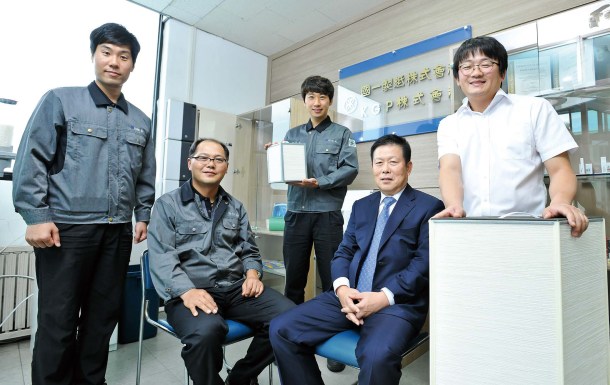
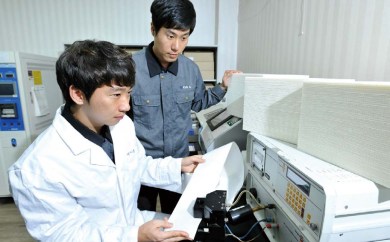
<Left: Kukil Paper’s electro-thermal sheet developed by self technology has perfect quality and function comparable to Japanese products.>

<Right: Ventilation unit and total heat exchanger electro-thermal sheet developed by Kukil Paper through academic-industrialresearch collaboration.>

korean-electronics.com | Blog Magazine of korean electronics, brands and Goods

Development of transparent/ opaque adjustable nextgeneration smart window

Q-sys Co., Ltd. (Jon-hoo Hong, CEO)

Korean nano technical power takes 4th place in the world, but new market and new business creation effects using this technique are insignificant. Accordingly, the Ministry of Trade, Industry and Energy introduced the ‘Nano-fusion 2020 Project’ in order to induce early industrialization by connecting existing research performance in the Nano-fusion field to industrial demand, and to support new market and new business creation. As a result, many innovative market leading products have been produced so far
through this project. Among these products, the ‘polymer dispersed liquid crystal smart window’ developed by Q-sys is capturing attention as a world-class PDLC smart window product, and growth as a global hidden champion using this product is highly expected.


Realizing ideas through the Nano-Fusion 2020 project

When start-ups https://korean-electronics.com//inquiryof venture businesses were booming, Jin-hoo Hong, CEO of Q-sys, which was established in 2000 was a biochemistry polymer engineering professor in active service in the engineering college of Chosun University. He selected the company name of Q-sys that stands for ‘Cure System’ containing the meaning of ‘hardening’ and ‘healing’ in ‘Cure’, and guided Q-sys as a technical innovative small company that leads light technology. Q-sys is manufacturing and producing various functional UV coating agents, UV adhesives, and their application products used in LCD optical film, electronic materials, and coating industry, including polymer dispersed liquid crystal applied for display industry. Especially, Q-sys’ ‘polymer dispersed liquid crystal smart window’ developed through Nano-fusion 2020 Project receives attention as this product is truly the result of much R&D and made through Q-sys’ perspiration and passion.

Untitled-18.jpg

In this context, CEO Hong said that “When we started the company in 2000, it was hard to industrialize smart windows even though we had the technical skills. First, the product price was so expensive that the market is not formed, and most of all technical skills we had were seriously insufficient compared to the USA and Japan. Due to the critical situation that the idea would have died out after all, we combined electrode material technology owned by the Korea Institute of Industrial Technology and liquid crystal technology we owned and could gradually see the way out. On that occasion, the Nano-fusion 2020 Project provided a big impetus, and finally enabled us to succeed in world-class smart window development.”

Developing next-generation smart window film that can substitute for ITO film

The price of ITO-PET film used in smart windows so far was so high that it accounted for 60% of total raw material costs of the product, and its sheet resistance wad so high, 150Ω or higher, that driving voltage is higher than 100V. And because the resistance was increasing when it was exposed to the air, the product commercialization was difficult due to long-term stability issue. Moreover, it had limit to apply existing ITO-PET film to next generation smart window film that is characterized by high efficiency, low driving voltage, color adjust function, and ultraviolet blocking function, therefore developing and applying were required for substitutive electrodes made of transparent electrode material that has superior mechanical resistance against external bending as well as better electric & optical features than ITO-PET film.
In this sense, polymer dispersed liquid crystal smart window technology developed by Q-sys will bring a new sensation to the smart window market.
For this, Yang-bae Kim, chief of Q-sys optical material & surface treatment research center said that “If we apply high transparency and low price ZITO transparent electrode film developed by Q-sys instead of existing ITO transparent electrode film to smart window, ITO substrate that consumes too much indium, a rare earth element, can be replaced and we can achieve price reducing and improvement in droving voltage and efficiency. Especially, there is energy saving function because infrared and ultraviolet wavelength blocking is possible depending on metal oxide structure adjustment and the type and the thickness of inserted metal to be applied to transparent electrode film. Therefore we have higher technical skills compared to rival Japanese and Chinese products, and secured about 3~5 years of technical gap with late starters.”
Likewise, as Q-sys secured the world best level of smart window technology, it started the commercialization of Smart fitting product, and starting trial production in February 2014,
concluded 6 billion won of export contracts with the USA and Japan. Further sales increases are also highly anticipated.

Targeting automobile market, striving to be a globalleading company.

Smart windows, which is also a niche market, are being sold as fittings for buildings, with expanding markets being created across the world; billboards, although the volume is small; and display optical shutters. When the automobile smart window market that is predicted to be worth about 2-trillion won is open in full-scale soon or later, the position of Q-sys will be much different from now.
Indeed, Q-sys is focusing on transparent display optical shutter and smart window for automobile sunroof for which market expansion is expected. Q-sys is finding a way to become the world number 1 company worthy of its name by targeting the automobile smart window market. CEO Hong said, “This company secured technical competitiveness for world-class PDLC smart window.
Based on that we will secure superior position in automobile smart window market that is expected to grow, and at the same time we will aggressively involve new product development for the next generation special glass that is high value added and competitive product including color changeable glass, energy-saving thermalefficiency glass, and hybrid products with solar cell. We also plan to dominate the market along with new market creation, furthermore to seek smart window market exploitation for small domestic appliances and household appliances.”
Above all, however, the biggest competitive power of Q-sys can be found in true academic-industrial-research collaboration. Because strong competitive power as a united body can ultimately be secured by overcoming the limit of weak capital strength of small business and solving technical difficulties through research institutes and universities. CEO Hong also said, “Like a relief pitcher emerging from a critical situation where we would go down even before start, the Korea Institute of Industrial Technology introduced relevant substitute material technologies and Nano-fusion 2020 Project supported our research through ‘product idea industrialization support.’ Therefore we could achieve our current valuable performance.” and “We will keep investing in R&D and secure independent liquid crystal/polymer formulation and design technology and UV crosslinking production process technology to gradually expand the market share. We hope that our technology is applied to other domestic industries and contributes to creating new markets and new business.”
Also, CEO Hong explained, “Cure in the Q-sys company name means hardening of the treatment process developed by us as well as implying the spirit of customer satisfaction to cure and solve problems due to the production process. Furthermore, as shown in the management philosophy that all of the company members build a beautiful and fertile future through spiritual and practical changes and practical changes, although the market is small because it is a niche market, all of our staff and executives will do their best for a better future and to make Q-sys a small but strong company that can hold the first ranking for a long time. Also we will keep continue our efforts to take the position of a global leading company that leads the relevant markets.”

korean-electronics.com | Blog Magazine of korean electronics, brands and Goods

User-created robot that allows users to make their own robots

ROBOTIS Inc. (Byoungsoo Kim, CEO)

ROBOTIS was established in 1999 and has a remarkable history of 16 years in domestic robot industry when no one could even predict the successful commercialization of robot industries. Japan used to dominate the actuator markets before but ROBOTIS also had its success in developing the actuators of own. Starting from that, ROBOTIS now leads the market with 80 employees by providing robot parts, platforms, educational robots and actuators.

https://korean-electronics.com//inquiry

Developing a solution that allows users to create robots easily

In Korea, most of the robot parts are used for training aids and majority of them are imitations that are developed repetitively just like the one made for Line Tracer competition. Also, most of them have exposed PCB which is not suitable for the nonprofessional users to develop robots. Most local companies provide application solutions that is more or less like a programming for the robot operation sold by the company and there is none that can support various robot components.

Although there is no case that supports the compatibility among components, big companies like Lego, Fischertechnik and Meccano have developed the solutions. Lego Digital Designer, for instance, allows robot to assemble using the parts sold by Lego within its SW. When the robot assembly is completed, it generates the number, type, price of parts and even the sequence of assembly. It can then pass the data to other users which make things easy to distribute the contents.

That is why we need to develop not only HW and SW solutions that can create robots that user want (User Created Robot: UCR) with a minimum effort, but also solutions to disseminate the usermade contents.
If we look past, we can find advances in the PC industry largely attributed to the industrial atmosphere that allows creating a PC by assembling whatever is required from various parts in a given system. Similarly, if a system is established for robot parts and solutions that allow users to create robots easily using such systematic parts were developed and provided, it will create an atmosphere like UCC (User Created Contents) where users can apply and create directly by themselves and provide a foundation for the creation of much higher levels of robot than contemporary robots. Robot industry can be developed more quickly only when such an industrial atmosphere is created. This is what ROBOTIS attempts to create from this research task such as developing solutions associated with HW, SW, Infra, contents and minimalism based UCR (User creating own robot) technology utilizing such solutions.

Untitled-14.jpg

Expand business area by commercializing the technology

Technology developed by ROBOTIS through the research task of ‘Minimalism-based UCR Technology Development’ is a solution that can integrate and utilize various HW and SW related to UCR. Such technology can be seen through the developments such as digitalized data for UCR parts and virtual robot assembling SW. In order to assemble various robot parts in a virtual environment, a solution is required where various information including the features of each part and electric connection are digitalized and saved. SW should also be easy for nonprofessionals to assemble robots using such parts in a virtual environment. It is easy for users to share created UCR with others online as the assembling SW not only allows users to know the type and the quantity of used parts but also able to retrace the assembling sequence.
As long as the integrated system constructed by UCR is followed, it is possible to utilize all parts regardless where they were manufactured. HW (controller) and programming SW are
developed which can generate codes called “Intermediate Language (IL)” through various programming tools and run the codes by downloading to a controller called Virtual Machine (VM). This is similar to the concept of program written by Java which can be operated anywhere as long as the Java virtual machine is installed regardless of platforms.
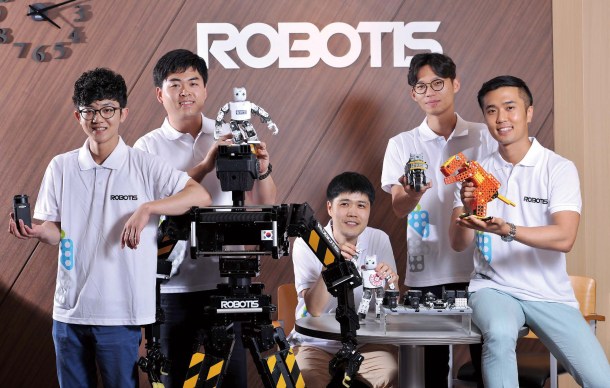
Moreover, an application solution has also been developed which creates robot motion in a virtual space using digitalized UCR contents and this enables users to use the contents they have created. SW for robot motion editing is designed to be synced with the virtual and real robot. Byoungsoo Kim (ROBOTIS, CEO) said, “We plan to focus on developing the mobile solutions of UCR due to the high demand of smart phones and enhance the connectivity between each application solutions to provide true integrated solutions”. He also added that, “We will also keep enhancing user convenience for users to easily create higher quality contents and adding the functions to exchange user created contents.”

Entering global market through technical skills and commercialization

ROBOTIS’ educational robots which utilized UCR design solution are suitable from toddlers to high schools students and these are prepared to use as teaching materials in science activities including after school classes and competitions. PC based open source humanoid platforms and new smart actuators for robots are sold to local/ international universities and labs. ROBOTIS has established its US office in California since 2009 when the research project has started and managed to export new developed products to overseas. (50% of its yearly sales is from the export and won 5 million dollar export Top Award in 2013).
Since the company has applied integrated system and solutions developed in UCR, it has managed to achieve 20% of sales growth in average, overall 15 billion won sales in 2014. Moreover, it supplied PC based open source robot platform to Virginia Tech in US and other local/international universities and labs. R&D center is also utilizing its robot platform. In addition, ROBOTIS also introduced SW educational robot for elementary and middle school students during SW oriented business fair in 2014. Smart actuator called “Dynamixel” is an “all in one actuator” that consists of motor, reduction gear, controller and communication. It was launched in 2005 and exported to more than 40 countries including USA, Japan, Europe and other parts of world. 39 out of 40 participated teams at RoboCup have used ROBOTIS products and it was well recognized for its good performance. “Jimmy” robot, introduced by Intel in 2014, has also used Dynamixel motors. Users can build various types of robots easily as Dynamixel can easily be connected through the mechanic and electrics, just like building the block toys. ROBOTIS KidsLab is an educational robotic brand that provides various teachings from kindergarten to engineer levels through professional instructors. ROBOTIS has over 120 KidsLab agencies in Korea. The concept of a recently released toy robot, ROBOTIS PLAY is “Robot making with Dad” and this reflects to Byoungsoo Kim’s philosophy to get closer to everyone without a knowledge of robots. ROBOTIS is selected as a service provider for Excellent Technology Research Centers (ATC) by the Ministry of Trade, Industry and Energy in 2013 and was also recognized for its technical competitiveness and potential growth by being awarded for “Jeong Yak Yong’s award” for patent technology sponsored by Korean Intellectual Property Office in 2014 and few more in 2015.

korean-electronics.com | Blog Magazine of korean electronics, brands and Goods

The first development of weaving structure flexible solar cell

Korea Electrotechnology Research Institute (Dong-yoon Lee, Principal Researcher)

https://korean-electronics.com//inquiry

Korea Electrotechnology Research Institute (KERI) established in 1976 under the name of Electric Device Test Research Center is a government-funded research center specialized for electricity governed by the National Science & Technology Research Society in the Ministry of Science, ICT and Future Planning. Taking the first ranking for research productivity among government-funded science and engineering research center, and the
second ranking for research performance technical transfer to realize creative economics, it is a representative funded research institute in electricity, science, and technology fields. KERI developed technology for the first time in the world to weave solar cell like weaving fabric on a loom that can generate electricity modeled after photosynthesis.

The first fabric solar cell, utilizable in various areas including wearable devices

Recently, wearable devices are taking center stage as a nextgeneration core technology and business including Google’s ‘Google glass’ and Fitbit’s ‘Health care smart band’, Samsung,
Sony, Qualcomm are making competition, presenting watch type and band type devices. The utilization range of wearable technology are expending not just to wearable devices including smart glasses, smart watch, smart bracelet, and smart shoes, but also for special purpose fields, such as military and firefighting, and even for life aid, health care, infotainment, human ability improvement, and so forth. Therefore, developing an effective power source to supply power to these wearable devices is also getting attention. It is essential that the power for wearable devices needs to be flexible, light, and highly impact resistant. There is no solar cell having such features in the market other than the one using amorphous silicon. But this solar cell cannot be used commonly either except some special military purposes, because it is vulnerable to bending or moisture.

Untitled-12.jpg

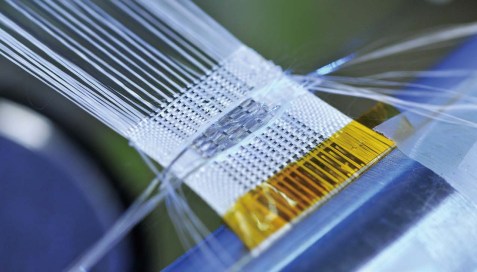
Alternatively, fabric style solar cell development is attempted competitively in advanced countries. But, producing actual fabric in former method is practically impossible, because tension (pulling force) and friction which happen inevitably in the weaving process were not considered. On this occasion, KERI produced the electrodes of solar cell with weaving process and applied screen printing process to manufacture solar cell using a loom, through this research task. Developing fabric weaving style solar cell, practically wearable solar cell that can be used in various environments, is the first time in the world. The developed solar cell is so flexible to fold and the first fabric solar cell with high durability, it receives a lot of attention from global outdoor, leisure, smart home, and mobile electronic device manufacturers. Hence early commercialization, if a success, would create new global markets in these fields.

Contributing to enhancement of IT-based life convenience

Centralized weaving dye-sensitized solar cell developed in this research is fabric style solar cell made by weaving electrode (anode and cathode) structure in solar cell with a loom using metal and ceramic fiber like weaving fabric, and printing optical electrode and dye in the screen printing process. Metal weaving technology, a core technology of solar cell, has not been developed in any other country over the world, and this core technology produces high density metal fabric electrode using metal fiber only. To do this, the development team developed a new loom independently and successfully produced various fabric patterns suitable for solar cell. Also, the team developed technology mixing metal fiber, ceramic fiber, and natural fiber to create various types of solar cell. The developed fabric weaving dye-sensitized solar cell is basically composed of three layers: optical electrode, electrolyte, and counter electrode. To produce such 3-layer conformation solar cell, the team developed 3D weaving technology that can weave metal fiber and ceramic fiber in 3-layer at one time.
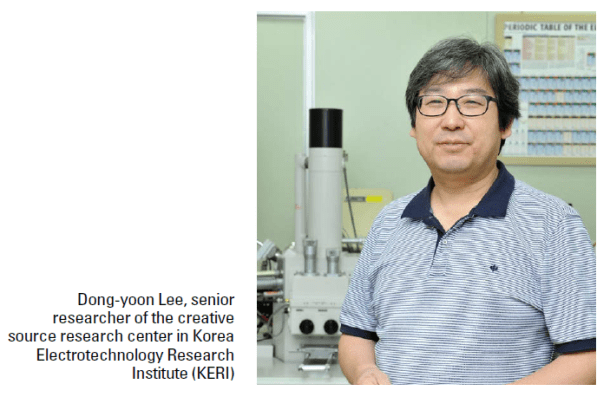
In this context, Dong-yoon Lee, senior researcher in KERI and general manager of this research task said about the hardest difficulty in the technical development was “Because we tried fabric solar cell development for the first time in the world, we could not find useful equipment or material from existing technologies, but had to develop all of them by ourselves.

Untitled-13.jpg

Especially for metal fabric loom, we designed and made it with new weaving algorism because of unusual weaving patterns, which involved a lot of time and costs.”
Fabric solar cell developed by overcoming such difficulties is flexible and soft like a textile and can be cut or sewn. Also, many kinds of pattern are available depending on usage environment and application subject. Especially, you can make solar cell in various forms: sew electrode (attaching type) made from the weaving process on existing fabric, such as cotton, silk, and pelt; insert electrode (fabric inserting type) when you make a cloth; or weave them all (weaving type), therefore its application scope and possibility are rated as high. Currently the performance of fabric weaving type solar cell shows 6% of efficiency, 0.4cm of bending radius (solar cell is working even the fabric is folded), and can maintain 80% or more efficiency even after 2000 or more 90 degree bending tests.
Such technology is expected to greatly contribute to enhancing IT-based life convenience. It can be applied to wearable devices, such as Samsung’s Gear and Fitbit’s Smart band; battery-free tent or backpack to be used in camping, the most popular leisure activity; built-in solar cell in building and curtain at home. Potential for military application is also high. Applying weaving type flexible solar cell technology to military barracks, combat backpacks and military caps allows us to generate and use electricity in the military field.

After core technical development, move to its commercialization

Fabric weaving solar cell can be utilized in various areas including wearable devices, military, leisure, health care, and household (blinder). In order to industrialize this main technology, KERI introduces the technology through domestic and foreign symposiums and conferences, and also maintains close mutual cooperation with Gyeongsangnam-do Province. In this context, Dong-yoon Lee senior researcher in KERI who started the research to develop a structure having outstanding durability and superior flexibility in flexible solar cell and flexible cell fields, forecasted that “Currently, with given core technology we developed, it may take about 3 years for relevant commercialization depending on the application area.”

Now, in the commercialization consortium that received the technology from KERI, development is on going targeting for the 1st products including smart home solar cell blinder, smart band solar cell, smartphone charging solar cell, and health care solar cell. Because some products get attention from many global companies, no big trouble is expected to form a market for commercialized products Although prediction for the market is difficult because no product was developed for sale yet, minimum 100 billion won of sales are estimated per year because these products are independent without any rival. And trillions of global market would be available if application of wearable devices is
successful.
Seng-il Cha, senior researcher in KERI who participated in this research task said that “It is the world’s first development for solar cell that properly utilized weaving structure. Although there are tasks to be solved before commercialization, such as sealing technique, electrolyte technique, and efficiency optimization, but because we succeeded the very core weaving solar cell structure development, remained technical issues can be associated with application scope and developed accordingly” and “First of all, application for military and leisure seems to possible, and further application in various fields would be possible, as the wearable market is being formed in full-scale and requests for built-in solar cell. increasing.”

2016-03-14 11;38;26.PNG

korean-electronics.com | Blog Magazine of korean electronics, brands and Goods

Developing new concept fuel cell anode material that can use hydrocarbon series fuel directly

UNIST Academy-Industry Research Corporation (Guntae Kim, Prof. of School of Energy & Chemical Engineering)

https://korean-electronics.com//inquiry

Facing the situation that existing power plants using fossil fuel threaten even the survival of the human race, causing global warming and destroying the ecosystem, the whole world is striving for new & renewable energy research to substitute these plants. Moreover, as the anti-nuclear power movement is spreading due to stability issues for nuclear facilities, interest in new & renewable energy is increasing gradually; and solid oxide fuel cell (hereafter, SOFC, Solid Oxide Fuel Cell) is capturing attention as a next-generation electric power generation system while various new & renewable energy technologies are being introduced one after the other. However, enlarging the base of SOFC is still fraught with difficulties, due to many weakness of hydrogen and anode substance used as fuel. On this occasion, Prof. Guntae Kim’s team in UNIST Academy-Industry Research Corporation succeeded in developing new conceptual nano electrode for SOFC equipped with excellent performance and stability that can use existing hydrocarbon series fuel directly, which is expected to enhance the position of Korean fuel cell technology as well as SOFC base expansion.

Untitled-9.jpg

Overcoming the limitations of existing anode material

Since the first operation in 1937, countries advanced in the development of fuel cell technology, such as the United States and Japan, have intensively researched SOFC, called the thirdgeneration fuel cell, aiming for commercialization in the early 21st century, but the commercialization is making slow progress. This is because of high prices for making hydrogen that will be used as a fuel from hydrocarbon and difficulty in preserve, although SOFC is the most ideal environment friendly energy source that reacts hydrogen or hydrocarbon fuel with the air to create electricity and water. Moreover, Nickel Cermet that is commonly used for the anode of SOFC, has an advantage of high catalyst act in oxidizing the fuel but it cannot make full oxidization when hydrocarbon fuel, such as natural gas, methane, propane, and butane, is used, thus there is carbon deposition on anode surface, and problems to cause electrode damage due to the poisoning of sulfur impurities included in the fuel and to degrade long-tem stability in fuel cell operation due to such damage.
On this account, the need of developing is raised for SOFC anode material that can guarantee long time stability in output performance when various hydrocarbon fuels are used, and relevant researches were actively progressed accordingly.

Prof. Kim said that “Our research team started to develop anode substance that has strong tolerance against carbon deposition and sulfur poisoning created when existing hydrocarbon fuels like natural gas and LPG are directly used, and that can effectively solve performance and stability problems simultaneously”, and that “As a result, we developed double layered perovskite equipped with excellent performance and outstanding stability and applied it to new anode, which allows us to solve problems in existing anode materials, such as carbon
deposition and sulfur poisoning created when hydrocarbon is used, and to secure outstanding output performance successfully.”

Develop double layer perovskite, and achieve world-best performance

Prof. Kim’s team developed double perovskite perovskite where praseodymium (Pr) and barium (Ba) are crossing each other on perovskite, and utilize it to anode.

Therefore, carbon deposition on electrode surface and degrading fuel cell performance and stability due to the poisoning of sulfur impurities happened when using hydrocarbon directly as fuel with existing anode substance – Nickel Cermet – did not happen with double perovskite.

Untitled-10.jpg

<Prof. Gun-tae Kim and his research is focusing on R&D based on the belief that SOFC will
become an essential energy source in future.>

Indeed, Prof. Kim’s team tested the performance of new electrode material. The world best performance were recorded in the results. There was no carbon deposition when propane is used in 700℃, and there was no voltage or current drop at all when operating fuel cell longer than 500 hours, but constant performance was maintained. Also, anode material developed from the research showed 1.7W/㎠ of output when hydrogen was used in 850℃, and 1.3W/㎠ of output when propane was used, which is more than 7 times higher performance and stability than Cu-ceria series anode electrode that showed 0.18W/㎠ of output. Therefore, it is confirmed that hydrocarbon series fuels like natural gas and LPG
can be used directly with new anode material. In this context, Prof. Kim said that “The world famous researchers have worked on using hydrocarbon directly without fuel reformer for sold oxide fuel cell. And there was a report in ‘Science’ in 2006 that 0.43W/㎠ of output was recorded from fuel cell operation with methane using anode substances developed through such researches. The anode material we developed showed 32% improved performance than above. For another anode substance reported in ‘Advanced Materials’ in 2012, 0.93W/㎠ of output was recorded with propane, whereas anode material we developed, showed 40% improved result, 1.3W/㎠ of output. Therefore, we can dare say that our development is the world best among anode substances that can use hydrocarbon series fuel directly”.

Paving the way to lead the world fuel cell industry: High expectations for its commercialization

Currently, Germany and some European countries possess the highest technology in the SOFC field, and closely followed by the USA and Japan. On the other hand, we have a technical gap of about 12% compared to the highest technical countries in Europe. To secure technical power equivalent to Europe countries, much more investment in technical development is urgent.
For material development, especially, the most important part in fuel cell development, Prof. Kim team’s research development would be an important momentum that reduces production cost for SOFC given that there are vigorous researches recently to reduce production cost for SOFC around advanced countries, and it can be highly appreciated for establishing a chance for our country to lead the world’s fuel cell industry.

Prof. Kim explained, “Our future goal is applying anode substance developed through this research to solid oxide fuel cell stack, producing fuel cells, and advancing into commercialized fuel cell era”, and he added that “When fuel cell using this anode substance becomes commercialized, each household may install compact SOFCs instead of boilers, get natural gas through already installed urban gas pipes, generate electric power, and use the waste heat created from the power generation for warm water supply; households can have self generation system. This self generation can reduce the utility cost by half, which may allow us to avoid a power crisis we are worrying about every
summer.”
However, there are too many issues to be solved before what Prof. Kim dreams of comes true. In particular, nuclear power oriented energy policy and misunderstanding on fuel cell are being pointed as the tasks need to be solved first. But, Prof. Kim highlighted that “I believe that if you have faith for what you are doing, you can get good results”, and “Although fuel cell get less attention then the energy generation and storage system for secondary battery or solar cell, if you keep concentrating on the research with a belief that it is an essential energy source in future, you will be finally compensated some time or other, and such sense of duty was a big driving force to succeed this research development.” As if composing a massive symphony, Prof. Kim’s research & development passion for fuel cells is literally hotter than the heat that comes from solid oxide using fuel cell. It is expected that such effort and passion will remove persistent obstacles and clear a new path to fuel cell power generation.

Untitled-11.jpg

<Guntae Kim, Prof. of School of Energy & Chemical Engineering>

korean-electronics.com | Blog Magazine of korean electronics, brands and Goods

Development of core communication module in EV charging standardcombined charging system

GloQuad Co., Ltd. (Ki soo Chang, CEO)

Through this research task, the V2G (Vehicle to Grid) communication module solution for EV DC fast charging station was developed and localized in accordance with international standards for the first time in the country, and compatibility matching tests based on that solution with GM Spark EV, BMW i3, and VW (Volkswagen) e-Golf were completed successfully.https://korean-electronics.com//inquiry
A communication module developed by GloQuad was designed in accordance with ISO/IEC15118, the new international standards for CCS (Combined Charging System) method DC fast charging. Its features include supporting connection methods through Internet protocol with electric vehicle and smart grid and using both AC and DC with combined socket. In particular, it is noteworthy that this local company secured a foundation technique in the DC fast charging field that is spreading recently as a electric vehicle charging standard in North America and Europe. This localization of a DC fast charging communication module paved the way for constructing domestic charging infrastructure to expand supplying electric vehicles, and it is expected to help domestic electric vehicle DC fast charging station manufacturers to expand their business abroad.

Untitled-4.jpg

Go global market beyond the domestic market

Vehicles with internal-combustion engines that use gasoline or diesel have an internal tank filled with fuel, while electric vehicles are equipped with a battery to provide electricity. In other words, as internal-combustion engine cars include fuel using an oil feeder at gasoline station, electric vehicles charge the battery using an electric vehicle charger in the same way as charging a mobile phone. In the same way that unleaded gasoline and diesel are separated at a gasoline station, there are various connection cable types for electric vehicles. And making connections between electric vehicles and chargers with suitable cables will trigger charging automatically. However, complicated information exchange is required between electric vehicles that receive the power and electric vehicle chargers that transmit the power for safety, because electricity needs to be transmitted to charge an electric vehicle. 

In order to allow simple charging procedures for electric vehicles like with refueling for existing internal-combustion engine vehicles, it is necessary to simplify such complicated
information exchanged and various types of connection cable for charging worldwide.
Therefore, the International Standards Organization (ISO) and International Electrotechnical Commission (IEC) discussed and prepared unified standards, ISO/IEC15118 Hereupon, GloQuad developed a communication board that allows charging by applying information exchange between electric vehicles and EVSE in accordance with international standards, and completed all of compatibility matching tests with global automobile companies in Korea, Europe, and North America to enhance the product integrity. Furthermore, GloQuad developed a technique that can provide a way to get the charged power backward from an electric vehicle to use in power shortage.

For communication standard currently installed in vehicles, there are two standards: one is DIN70121 standards published by Deutsches Institut fur Normung (DIN) to support DC fast charging communication only using ISO/IEC15118 DIS standards, and the other is SAE J2847/2 published by Society of Automotive Engineers (SAE) to follow DIN70121 standards. But, it is expected that ISO/ IEC15118 standards will be used together when the standards is
being prepared with publication.
Ki-soo Chang, CEO of GloQuad and the person in charge of this research task, proposed the direction of additional future development as “With the view to propose solutions for electric vehicle charging infrastructure in apartment homes, the most common dwelling pattern in Korea, we plan to develop management and control solutions for chargers to be installed in apartment houses by expanding existing techniques for AC chargers and applying international standards (OCPP) to contribute to spread electric vehicle supply, at the same time, we also plan to develop techniques in order to apply them to new application fields including aviation control that comes to the fore as a power line communication application.”

Product competitiveness keeping up with global companies

There are not many commercialized EVSE products for which communication standards like ISO/IEC15118/DIN70121 are applied all over the world. Compared to European EVSE manufacturers who developed the EVSE in parallel from the early stage of electric vehicle development, one may say that GloQuad is on a technically equivalent level with European companies−considering the situation that the EVSE where GloQuad’s products are equipped are being installed in Europe and North America. Indeed, all of exported DC fast charger made by domestic manufacturers are equipped with GloQuad products. The products were also applied in domestic EV changing infrastructure information system project managed by the KECO(Korea Eenvironmental Corporation) in 2014 and 2015. Also,
the products have been fitted to all exported DC fast chargers from 2015, so sales increases can be expected, and such activities are expected to contribute to early establishment of the domestic EV charging infrastructure.
In particular, early technical development for V2G communication will provide new economical services including energy saving, remote EV inspection, and infotainment to consumers who bought electric vehicles (EV), which may expedite the spread of EV. Charging infrastructure installation required for such early EV spreading will be increased in parallel, which may create new businesses like charging service providers who manage the installed infrastructure. Therefore, expansion of relevant business will create decent jobs and make a large contribution to solving youth unemployment and senior unemployment.

In this context, CEO Chang showed confidence in the product competiveness as “GloQuad is unmatched in the domestic market for relevant parts, as GloQuad development products are used by domestic manufacturers who will compete with famous foreign EV charger manufacturer such as ABB and Schneider.” and “We already developed not just hardware but also software and secured the products, thus we are expecting such matchless structure would be continued for a while.

korean-electronics.com | Blog Magazine of korean electronics, brands and Goods

Technical development for the world’s top-class dye-sensitized solar cell high-efficiency organic dyes

Technical development for the world’s top-class dye-sensitized solar cell high-efficiency organic dyes

DGIST (Daegu Gyeongbuk Institute of Science & Technology)
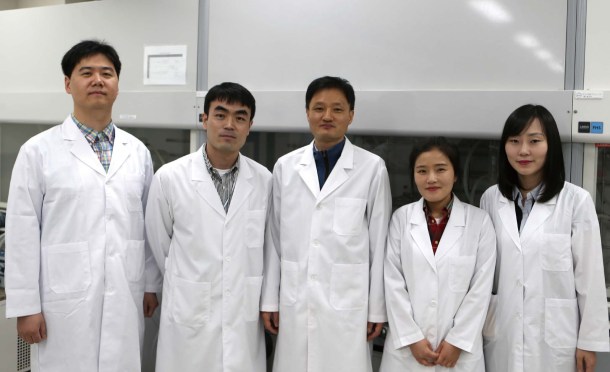
(Jin-Kyu Kang, Convergence Research Center for Solar Energy)

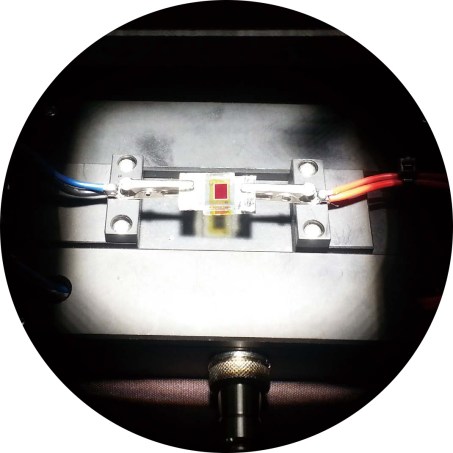
Commercialization of solar cells can be successful only when you https://korean-electronics.com//inquirycan achieve both high efficiency and moderate prices. Therefore, there have been intense researches conducted to achieve both goals at the same time in and out of the country. Meanwhile, a domestic research team succeeded in raising the efficiency of dye-sensitized solar cells, the so-called next-generation solar cell, to world-class level, which has become a topic of conversation. This is the high-efficiency organic dye developed by the team led by Jin-Kyu Kang Ph.D. from the Convergence Research Center for Solar Energy at the DGIST (Daegu Gyeongbuk Institute of Science & Technology).

Advancing the realization of high-efficiency and low-priced dye-sensitized solar cell commercialization

Since the first commercialization of solar cells in the 1950s, the research and development for solar cells has focused on developing solar cells with higher conversion efficiency and lower production cost. Because solar cells can be commercialized and the market can be stabilized only when more then 20% of conversion efficiency can be achieved under the given context that regular solar energy that can be converted from sunlight to electric energy is just about 50%; and when high production cost caused by high price of silicon, a main ingredient of the most commonly used crystalline structure silicon solar cell, can be reduced.

Untitled-1.jpg

Therefore, the development of “expended technology in the optical absorption area for dye-sensitized solar cell organic dyes” done by the team led by Jin-Kyu Kang Ph.D. is expected to significantly accelerate the commercialization of dye-sensitized solar cells, because it allows a low price advantage using organic dyes along with achieving high efficiency by extending the light abortion wavelength of dye-sensitized solar cells called the 3rd-generation solar cell, beyond the 1st-generation solar cell, crystalline structure silicon solar cell, and the 2nd-generation solar cell, thin film type solar cell whose technical development and researches are being progressed even now.
Furthermore, the development implements RGB color with organic dyes which paves the way to widen the sphere of application, expecting even the expansion of the dyesensitized
solar cell market.

Success in developing organic dyes having world-class level photoelectric conversion efficiency

Dye-sensitized solar cells were first developed by Gratzel in Switzerland in 1991. That is photo-electrochemical solar cell using oxide semiconductor made of TiO2, light sensitive dye molecules and nano-particles, which is considered as a leading solar cell of the 3rd generation solar cells, because of its lower price due to a simpler manufacturing process compared to existing silicon solar cells, no restriction in material supply, and the advantage of being an environmentally friendly product. Dr. Kang explains that “dye-sensitized solar cell has 33% high marginal conversion efficiency theoretically, moderate manufacturing cost, and no restriction in supplying the raw materials. Also, it is taking the center stage of environmentally friendly energy sources because of neither using high temperature nor high-degree vacuum processes and low discharge of environmental contaminants. It has advantages that allow coloring of solar cells through diversification in dye structure”, and “But, the actual photoelectric conversion of dye-sensitized solar cells is still low and its commercialization has some difficulties, so this technical development seems to play a role as a big launch pad for dye-sensitized solar cell research, technical development, and commercialization in the situation where securing high efficient dyes is required”. Indeed, the main hindrance in the commercialization of dye-sensitized solar cell is its core material, dye. It is because the high prices of the currently used ruthenic dyes.

Untitled-2.jpg
Therefore, to improve efficiency and for lower price, the need for developing organic dyes that can substitute for organometallic dye comes to the fore. On this occasion, the success of raising the level of photoelectric conversion efficiency to the world’s highest level of 11.2% done by Dr. Kang’s team who designed and composed phenothiazine based new organic dye that has extended optical absorption to absorb light in widened wavelength area through their own technical development DGIST a world-class research center that leads dyesensitized solar cell research field and serves as a momentum.
Meanwhile, Dr. Kang mentioned the difficulties they faced in this development, explaining, “Organic dye can create various colors according to chromosphoric type and count and is easy for molecular design, differ from commercialized ruthenium dyes, while its complex compounding method to integrate chromospheres into molecular through numerous synthesis to absorb broadband wavelength was the biggest difficulty in this technical development process.” and “But we, differ from other research groups, applied various functionalities that can allow the dye rather than the chromosphere playing a proper role on oxides in order to make commercializable high-efficiency organic dye and eventually produced high efficiency broadband absorption dye.

Expecting to lead the market penetration by accelerating commercialization researches

As world-class new dye and original process technology can be secured, Dr.Kang’s team won a contract for phase 2 of the ongoing core material source technical development project, and is working on the research to advance commercialization along with domestic leading companies in dye-sensitized solar cell development. Furthermore, they are expected to dominate the future dye-sensitized solar cell market.
Such expectations come from the fact that not just nextgeneration solar cells such as dye-sensitized solar cells have superiority in its using materials without requiring high temperature or vacuum processes in the manufacturing process, but also lightening the element is possible as well as a drastic cut in module price is possible with high-speed manufacturing by printing technology. Also, aesthetic dye-sensitized solar cell development through colorful solar cells becomes a key issue, and new solar cell market will be formed based on this dye-sensitized solar cell.

In addition, the technical nature of dye-sensitized solar cells is similar to that of the display industry. Thus our country which has the best display techniques, having advanced front and back industries and possessing very big growth potential in that industry through early value chain setup, is expected to have strong power of influence on market domination as well as easy market access.

For the BIPV market, in particular, that seems to account for about 50% of dye-sensitized solar cell market, it is expected that the technology developed by Dr. Kang’s team will play a great role in holding the market along with the accompanied growth through convergence with construction industry.

Untitled-3.jpg
Dr. Kang who said, “Like the proverb of the greatest honor is not to never fail but to regain
yourself whenever you fail, only person who never dread failure but always make a new trial can live successful life”, also mentioned about his future plans as “DGIST possesses excellent solar cell related research staff, original technology, and many original patents, based on which, DGIST would play an important role as an outpost to commercialize the developed technology. And we will continue researches to develop the world’s most efficient solar cell instead of merely being satisfied with the current results.”

korean-electronics.com | Blog Magazine of korean electronics, brands and Goods