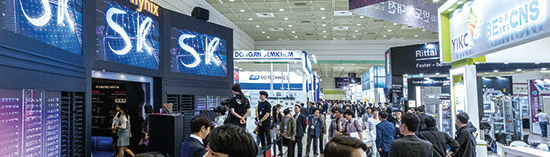
 Samsung Group’s flagship Samsung Electronics on Wednesday pledged 180 trillion won ($160.7 billion) in capital expenditure – including 130 trillion won in Korea – in its mainstay semiconductor operation as well as new growths of artificial intelligence, automated and connected technologies, and bioengineering over the next three years to help create 700,000 jobs.
The ambitious plan including direct hiring of 40,000 comes as facility investment this year has been in the longest slump in 18 years while job additions are at their worst in a decade to prompt the liberal government known to be hostile toward chaebols to ask for more hiring and investment from the country’s richest and one of the world’s biggest technology companies.
“We have decided to boost new investment and hiring to help revitalize the economy and promote new industries,” the company said in a statement.
Of the total investment, 72 percent or 130 trillion won will be spent in the country, which will have the effect of creating up to 700,000 new jobs.
The spending would amount to 43 trillion won annually, about the same level of Samsung Electronics’ record 43.4 trillion won spending last year – which was the largest-ever annual spending for any publicly trading company in 2017 – after finishing its best-ever year due to the memory chip boom.
The bulk will go to uphold its competitive edge in chips and displays. About 25 trillion won will be spent on new growth areas of artificial intelligence, 5G connection, biopharmaceutical, and automotive electronics.
It will increase payroll by 40,000 over the next three years, nearly doubling from the original plan of 20,000 to 25,000.
The company also pledged to help create a socalled innovative ecosystem by sharing innovative capacity through training opportunities to 10,000 young job seekers over the next five years. It will sponsor 500 venture projects.
Samsung also plans to create a 110 billion won fund with the Ministry of SMEs and Startups over the next five years to help transform manufacturing facilities of 2,500 small and mid-size companies into smart ones and help them advance into other markets at home and abroad. This plan will help create about 15,000 new jobs.
korean-electronics.com | Blog Magazine of korean electronics, brands and Goods
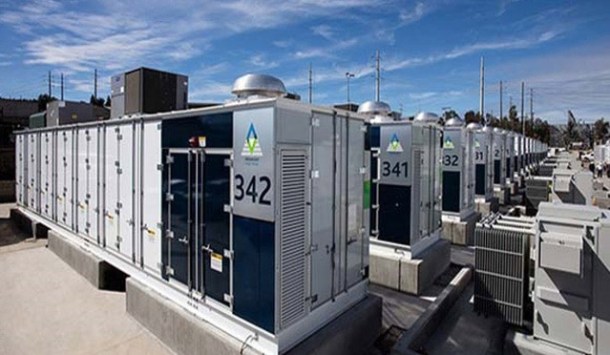
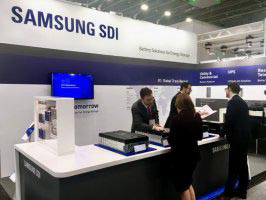 peak-control ESS market or the ESS market linked with renewable energy.
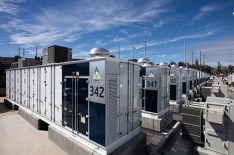 rate system. Among them, most of the markets are those where the companies with high electric power demand invest directly in their own funds. However, in the future, it is expected that PEF will be able to contribute to market expansion through investment in the commercial buildings, etc., based on the profitability of ESS so far.
 Successive 5G technology developments of wired communications equipment makers should be preceded by advancement of infrastructure for 5G communications at the wired network stage. Construction of 5G communications facilities is concentrated on wireless communications equipment such as base stations and repeaters. However, unless supported by a wired network, 5G services such as ultra-high-speed and ultra-low latency are virtually impossible. This means that it is essential to replace and upgrade the wired network equipment to process large amounts of data quickly.
 generation facilities based on the economy of scale and the long-term power purchase contracts remains stable while the market continues to grow.
 between F/2.4 and F/1.5, which allows taking brighter pictures in the dark, and dedicated DRAM, thereby providing a super-slow-motion mode that can shoot videos at 960fps (previously at 240fps).