Korea’s Exports in August Reach $57.9 Bn

https://korean-electronics.com//inquiry

Recording 11th consecutive month of positive growth
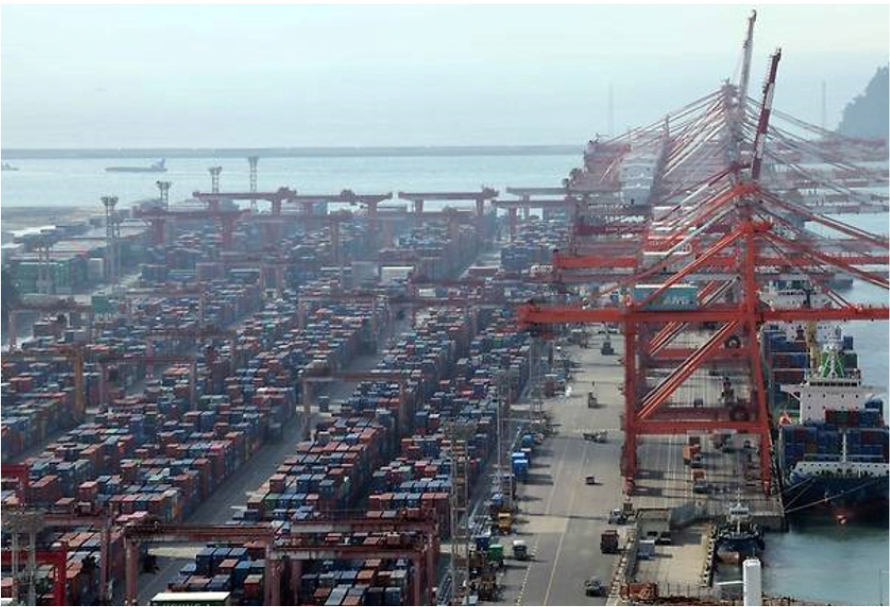
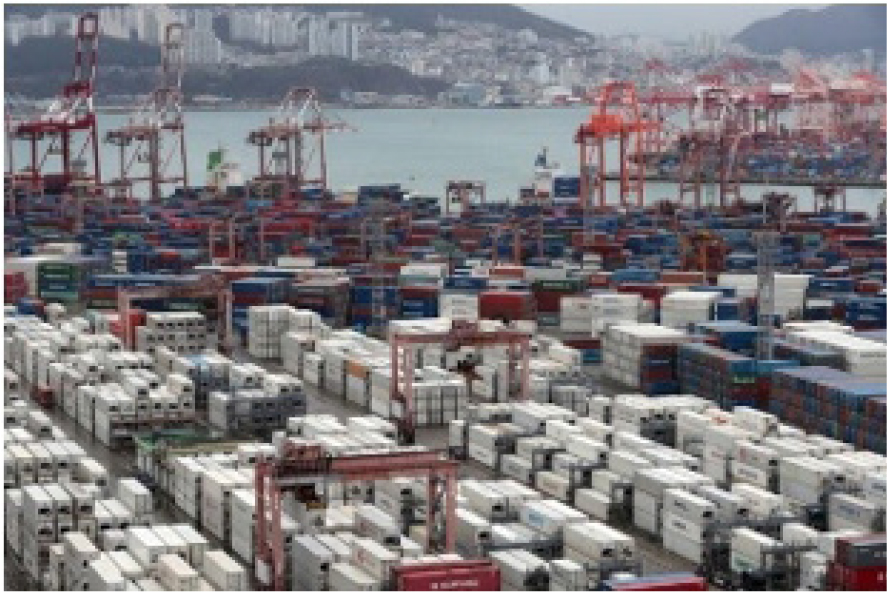
Last month’s exports by Korea reached US$57.9 billion, continuing an 11-month upward trend. In particular, semiconductor exports achieved the highest performance ever in August, adding to the momentum. Cumulative exports to China surpassed those to the United States for the first time this year, becoming the largest export destination again.
Recently, the Ministry of Trade, Industry and Energy (MOTIE) announced that exports last month increased 11.4% year-on-year to $57.9 billion, while imports increased 6% to $54.07 billion. The positive trade balance thus reached $3.83 billion, continuing to show a surplus for 15 consecutive months.
By sector, semiconductor exports increased 38.8% year-on-year to $11.9 billion, showing a positive trend for the 4th consecutive month of over $11 billion. Computer exports increased 183% to $1.5 billion, a triple-digit increase. Wireless communication device exports also increased by 54% to $1.8 billion.

owever, due to the modernization of some companies’ production lines and the decrease in operating rates due to wage and group negotiations ― but ship exports increased by 80% to $2.8 billion, turning positive for the first time in three months.
By region, eight out of nine major markets showed favorable trends. The region with the largest exports by Korea was China, which recorded $11.4 billion ― up 7.9% due to the improved business conditions in the information and communication technology (IT) industry.
Exports to China reached $86.2 billion from January to August this year, surpassing exports to the United States during the same period, emerging as the largest export country.
Exports to the USA increased by 15.5% to $84.7 billion due to favorable market trends in IT items such as semiconductors and computers.

 korean-electronics.com | Blog Magazine of korean electronics, brands and Goods

Uptrend of Korea’s Exports

https://korean-electronics.com//inquiry

Continuing to see growth of exports to global markets

Korea’s exports in June increased by 5.1% compared to the same period last year, showing an uptrend for the ninth consecutive month.
By item, exports of six out of 15 major export items increased in June, and exports of all IT items (semiconductors, displays, computers, and wireless communication devices) showed an increase for the fourth consecutive month.
In particular, semiconductor exports, the largest export item, increased by 50.9% compared to the same period last year, recording the highest performance ever at $13.42 billion.
Exports of petroleum products increased by 8.4% compared to the same period last year at $3.63 billion, while exports of petrochemical products increased by 4.8% compared to the same period last year, at $3.72 billion.

However, exports of automobiles, Korea’s 2nd-largest export item, recorded $6.2 billion, a 0.4% decrease from the same period last year due to the decrease in operating days (1.5 days).
There were also sharp decreases in exports of steel (-24.3%) and secondary batteries (-20.5%), while general machinery (-8.1%) saw a fall in exports compared to the same period last year due to the slowdown of global demand.
By country, exports to the United States increased by 14.7% from the same period last year to $11.02 billion, the highest ever for June. Exports to the USA have been breaking monthly records for 11 consecutive months since August last year.
In this regard, the Ministry of Trade, Industry and Energy (MOTIE) explained, “While automobile exports, the largest export item, continued to show a favorable trend, semiconductors and computers related to AI server investment also recorded high export growth rates.”
Exports to China, which increased by 1.8% from the same period last year, recorded $10.7 billion, showing a four-month consecutive increase.

korean-electronics.com | Blog Magazine of korean electronics, brands and Goods

Exports

https://korean-electronics.com//inquiry

Exports’ Contribute 86% to Korea’s Total Economic Growth

Last year, Korea’s exports played a key role in the nation’s overall economic growth, contributing significantly to production, added value, and employment induction.
According to the Korea International Trade Association (KITA), the contribution of exports to Korea’s economic growth last year was 1.17%p, and it was analyzed that exports led to 86.1% of Korea’s economic growth rate (1.36%) in 2023. The share of exports in real gross domestic product (GDP) also reached 35.7%, the highest since the 2020s.
The production inducement amount of Korea’s exports is estimated to have increased by an annual average of 7.4% since 2020, reaching US$1.2 trillion last year. The production inducement ratio calculated as the production inducement amount compared to the total export amount in 2023 reached 1.94 times, the highest since 2020.

In particular, the production inducement amount of automobile exports was US$231.3 billion, up 21.7% from 2022, and the production inducement ratio was also 2.5 times, significantly exceeding the average (1.9 times).
The value-added rate, which indicates the extent to which total exports create domestic added value, was 64.6%, up 0.4%p from 2022. The top item in value-added inducement in Korea in 2022 was semiconductors, but last year, the added value inducement amount of automobiles (US$65.9 billion) exceeded that of semiconductors (US$62.2 billion).


korean-electronics.com | Blog Magazine of korean electronics, brands and Goods
Korea’s Exports Increase for Seven Months

https://korean-electronics.com//inquiry

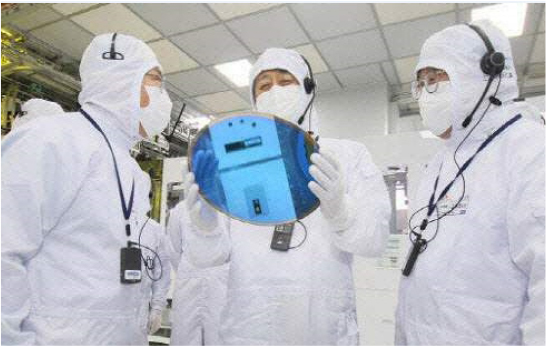
The nation’s exports in April recorded a double-digit increase. It has been ‘export-plus’ for seven months. This is thanks to the increase in exports of key items such as semiconductors, automobiles, etc.

In particular, semiconductor exports surged 56% compared to the same month last year. By country, exports to the United States reached an all-time high. The trade balance has also been in surplus for 11 consecutive months since June of last year.
The Ministry of Trade, Industry and Energy (MOTIE) recently announced that exports in April amounted to US$56.26 billion (about KRW 78 trillion), a 13.8% increase compared to the same month last year. Imports increased 5.4% over the same period to $54.73 billion. The trade balance, which subtracts imports from exports, was $1.53 billion.
In April, exports of 13 of the 15 major export items increased. This is the largest number of item exports this year.
Information and communication-related items such as semiconductors, displays, computers, and wireless communication devices recorded positive scores for all items for two consecutive months. Combined exports also achieved the highest growth rate of 46.6% this year and continued to increase for six consecutive months.
Semiconductor exports, the largest export item, recorded $9.96 billion, the second highest ever in April. It increased by 56.1% compared to the same month last year, recording positive exports for six consecutive months.

 Display exports increased by 16.3% compared to the same month last year, to $1.43 billion, recording the highest performance of the year and increasing for nine consecutive months. Exports of computer SSDs (76.2%) and wireless communication devices (11.4%) also recorded the highest growth rates this year, increasing for four and two consecutive months, respectively.
Automobile exports increased by 10.3% compared to the same month last year, breaking a record-high export amount. It recorded $6.79 billion in exports, surpassing the previous biggest record of exports in November last year ($6.53 billion).
Exports of general machinery turned positive in just one month, reaching an all-time high of $4.68 billion (1.5%) as of April. Ship exports also increased by 5.6%, showing positive growth for nine consecutive months.
Biohealth exports recorded a double-digit growth rate (21.3%) for the first time this year. Exports are positive for six consecutive months. Petroleum products (19.0%) increased for two consecutive months.
Exports increased in seven of the nine major export regions. In particular, exports to the United States recorded $11.4 billion, showing a 24.3% increase compared to the same month last year, the highest export amount ever, breaking the record in December last year ($11.3 billion) in four months.
Exports to China recorded $10.5 billion, a 9.9% increase compared to the same month last year. Exports to the nation increased for two consecutive months, exceeding $10 billion, following $10.5 billion last March.
Exports to Central and South America (38.2%) showed the highest growth rate among the nine major regions, recording a positive figure for four consecutive months. Exports to ASEAN (10.5%), Japan (18.4%), India (18.0%), and the Middle East (1.0%) also increased compared to the same month last year.
Imports in April amounted to $54.73 billion, up 5.4% from the same month last year, as both energy and non-energy imports increased. It has increased for the first time in 14 months since February 2023.
Imports of energy amounted to $12.5 billion, showing a total increase of 14.6% due to increased imports of crude oil (17.8%) and gas (21.9%). Import volume increased by 12% for crude oil and 37% for gas due to the increase in refinery operation rates and increased demand for gas for power-generation and industrial purposes. Imports of non-energy recorded $42.23 billion, up 2.9%.


korean-electronics.com | Blog Magazine of korean electronics, brands and Goods
Korea’s March Exports Rise to $56.6 bn,Giving a Trade Balance Surplus of $4.3 bn

https://korean-electronics.com//inquiry

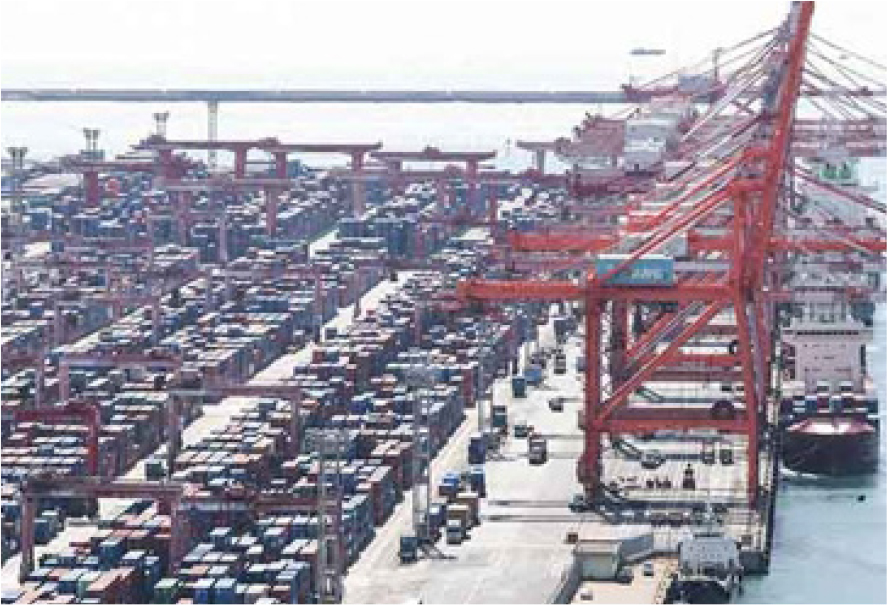
Korea’s exports in March recorded $56.56 bn, a 3.1% increase compared to the same month of last year. The trade balance, which subtracts imports from exports, was calculated to be a surplus of $4.28 bn.
According to the export trends for March 2024 announced by the Ministry of Trade, Industry and Energy (MOTIE), exports in March increased by $1.44 bn compared to the same month of last year, continuing an increase for six consecutive months. MOTIE found it encouraging that exports continued to increase in spite of poor conditions, including reduced working days.
By item, exports of seven out of 15 major export items increased. In particular, IT items (semiconductors, displays, computers, and wireless communication devices) all recorded positive figures for the first time in 24 months since March 2022.
Semiconductor exports (+35.7%), the largest export item, recorded $11.7 bn, the highest performance in 21 months since June 2022 ($12.3 bn). Display (+16.2%) and computer SSD (+24.5%) exports also increased for eight and three consecutive months, respectively. Exports of wireless communication devices (+5.5%) broke the negative trend that had lasted for three months and turned positive.

Ship exports increased by 102.1%, continuing a positive trend for eight consecutive months. The future outlook for the shipbuilding industry is bright as exports of high-value-added vessels such as container ships and LNG carriers are showing strong growth, and exports of offshore plants are also continuing. Bio-health exports also increased by 10%, continuing a positive trend for five consecutive months.
On the other hand, there was a decline in exports of automobiles (-5.0%) and general machinery (-10.0%), which are directly affected by the number of operating days.
By region, exports increased in three regions: the United States, China, and Central & South America. Export amounts to the United States amounted to $10.91 bn, ranking first among all March records. Exports to the United States continued to increase for eight consecutive months.
Exports to China amounted to $10.52 bn, an increase of 0.4% compared to the same month of last year.
The trade balance in March recorded a surplus of $4.28 bn, maintaining a surplus for 10 consecutive months. Exports in the first quarter amounted to $163.7 bn, an increase of 8.3% compared to the same period of last year. However, it did not exceed the export amount of $173.4 bn recorded in 2022.


korean-electronics.com | Blog Magazine of korean electronics, brands and Goods
Korea’s Drone Companies Achieve KRW 14.4 billion in Exports

https://korean-electronics.com//inquiry

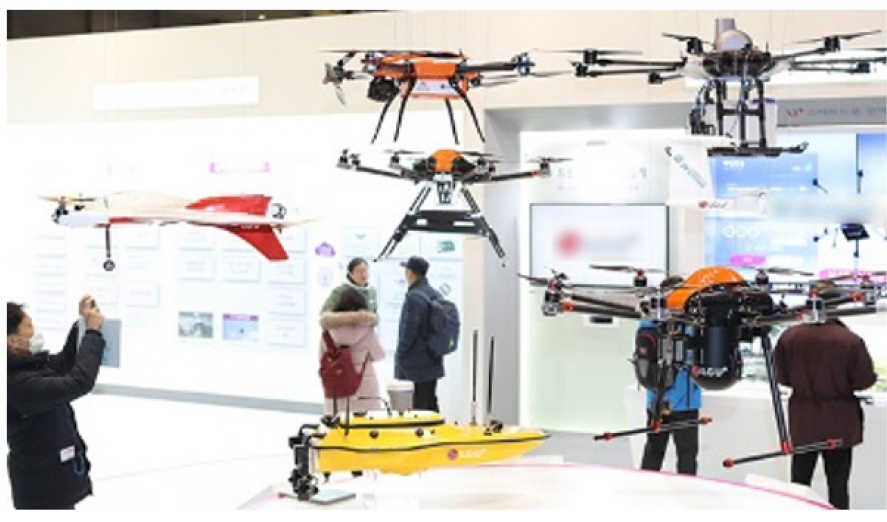
The excellence of K-drone technology is currently being proven on the world stage. The Ministry of Land, Infrastructure and Transport (MOLIT), and the Korea Institute of Aviation Safety Technology (KIAST), recently announced that exports by Korean drone companies in 2023 reached KRW14.4 billion. Major export destinations are advanced drone countries such as the United States, Canada, Japan, the United Kingdom, and France.
Export items include not only aircraft, parts, and software such as drone aircraft for light shows, solar surveillance services, construction site management systems, drone stations and data platforms, and drone soccer equipment — but also drone utilization services. Drone aircraft accounted for the majority at 80%, followed by hardware such as parts (8%), software (1%), and services (11%).

The achievements and significance of Korean companies are attributable to their long years of steady efforts in developing new technologies by taking on the challenges of new industrial fields. MOLIT has been supporting excellent companies through drone technology commercialization support projects, and overseas expansion support projects. In 2023, MOLIT has held four overseas drone road shows with drone companies, and formed a K-drone delegation to help them participate in the world-class U.S. drone exhibition.
A spokesperson for MOLIT explained, “We plan to invite a wide range of overseas guests to the Korea Drone Expo so that overseas exports can further expand next year,” adding, “We will work to ensure that through overseas drone road shows, Korea’s drone products and services can be sold globally, and excellent K-drone products can be exported.”


korean-electronics.com | Blog Magazine of korean electronics, brands and Goods

Exports increase by 7% in November

https://korean-electronics.com//inquiry

Semiconductor exports also rise

Exports increased in November this year compared to last year, continuing the ‘export plus’ trend for two consecutive months. Exports of semiconductors, Korea’s main product, also turned to growth for the first time in the 16 months since August last year. With export recovery becoming increasingly evident, the trade balance also remained in surplus for six consecutive months. Exports in November amounted to US$55.8 billion, up 7.8% from the same month last year.

Korea’s monthly exports had decreased for 12 consecutive months from October of last year to last September due to the sluggish exports of semiconductors and falling exports to China. However, after exports turned to an increase in October 2023, the recovery appears to have become more evident in November 2023.
This year’s total export volume is also on a steady upward trend. Exports, which fell to $46.3 billion last January, have trended upward and reached the highest level of the year in November.
By item, exports of 12 of the 15 major export items increased, showing the largest increase this year.
Semiconductor exports, which were a key factor in Korea’s overall export slump, were also beginning to recover in November, increasing by 12.9% to $9.5 billion.
The rising export trend of automobiles (21.5%), general machinery (14.1%), home appliances (14.1%), and ships (38.5%) continued, and in November, exports of petrochemicals (5.9%) and biohealth (18.8%), and secondary batteries (23.4%) ‒ all of which had recently been sluggish ‒ also increased.
By region, there were increased exports to six of Korea’s nine major export markets. Exports to the United States recorded $10.9 billion, increasing compared to the same month last year for four consecutive months ‒ while exports to ASEAN and the European Union (EU) also increased.
Exports to China, the largest export market, decreased by 0.2%, falling slightly short of an upward trend. However, exports in November recorded $11.4 billion, continuing to exceed $10 billion for four consecutive months, showing signs of recovery since last summer.
Korea’s imports in November amounted to $52 billion, down 11.6% from the same month last year. The decline in energy import prices had a significant impact, with total energy imports decreasing by 22.2%, with gas and coal imports decreasing by 45% and 40%, respectively.

As a result, the trade balance in November showed a surplus of $3.8 billion. It has been in surplus for six consecutive months since last June. November’s trade surplus is the largest in 26 months since September 2021.
 
 
korean-electronics.com | Blog Magazine of korean electronics, brands and Goods

Korea-Philippines FTA Officially Signed

https://korean-electronics.com//inquiry

Korea-Philippines FTA Officially Signed

  • Liberalization of trade with the Philippines, one of Korea’s top three export destinations in ASEAN
  • Tariff-free export of Korean cars and eco-friendly cars
  • Completion of FTA network with major ASEAN trading partners

Korea and the Philippines recently officially signed a free trade agreement (hereinafter referred to as ‘FTA’).


For the Korea-Philippines FTA, the two nations declared an agreement in principle on the basic framework focusing on the concession level in October 2021. Thereafter, several rounds of intensive negotiations were held between the two sides on the detailed schedule for tariffelimination and reduction, agricultural product safeguard implementation procedures, and regulations on the operation of the product committee. In June 2022, a final agreement on all aspects of the Korea-Philippines FTA was reached.
With this signing, Korea has concluded 22 FTAs with 59 countries around the world. The Philippines is a contracting party to multilateral FTAs such as the Regional Comprehensive Economic Partnership (RCEP) and the ASEAN Free Trade Area, and Korea is the second bilateral FTA after the Philippines-Japan Economic Partnership Agreement (EPA), which came into effect in 2008.


Korea has been expanding its FTA network with ASEAN’s major individual trading partners along with multilateral FTAs in which all ASEAN countries participate, such as the Korea-ASEAN FTA and the Regional Comprehensive Economic Partnership (RCEP).
In addition to Singapore, Vietnam, Cambodia, and Indonesia, Korea’s FTA agreement with the Philippines thus recorded a total of five FTA relationships with ASEAN countries. Korea’s trade volume with these five countries amounts to 91% of the total trade volume with ASEAN as of 2022.


korean-electronics.com | Blog Magazine of korean electronics, brands and Goods
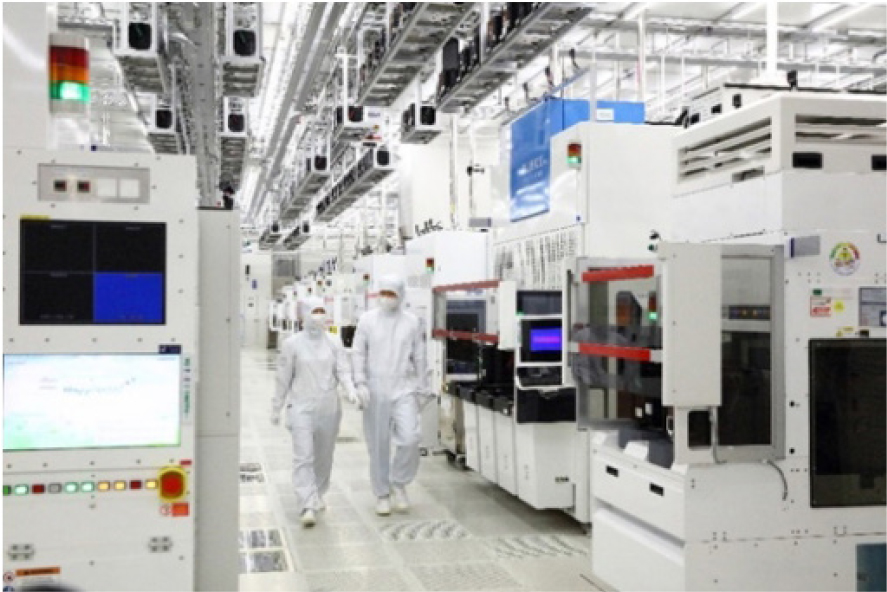
Increased Exports of Automobiles and SecondaryBattery Materials Despite Overall Sluggish Statusof Korea’s Exports

https://korean-electronics.com//inquiry

Korea’s exports decreased for seven months in a row until April in the aftermath of the prolonged economic slump in the semiconductor sector, which produces the nation’s main export product.
Exports of automobiles also increased in April, but failed to make up for the slump in semiconductors, petrochemicals, and displays.
The Ministry of Trade, Industry and Energy (MOTIE) recently announced that the total amount of Korea’s exports in April was calculated at US$49.62 billion, which was a 14.2% decrease from April 2022.
As a result, the monthly export volume decreased from the same period last year for seven consecutive months from October 2022. In addition, the export scale in April was down from March 2023 ($55.1 billion).
After bottoming out at $46.4 billion in January this year, exports increased to $50.1 billion in February and to $55.1 billion in March before starting to decline again in April.
Looking at each item — despite the increase in exports of automobiles and secondary battery materials in April —semiconductors, the largest export product, remained sluggish, leading to a decrease in overall exports.
Exports of automobiles recorded $6.16 billion in April, becoming the second largest export item after semiconductors. Compared to April 2022, automobile exports increased by 40.3%, and continued to do so for 10 consecutive months.
On the other hand, semiconductor exports fell to $638,000 in April 2023, a huge 41.0% decrease from a year ago, falling for the ninth month in a row.

By item, there were increased exports of ships (59.2%) and general machinery (8.1%), while there were decreases in information technology (IT) items such as displays (-29.3%), petroleum products (-27.3%), petrochemicals (-23.8%), and steel (-10.7%) and so on.
Looking at Korea’s export status by region in April, there were decreased exports to China (-26.5%) and ASEAN (-26.3%), which have a high share of semiconductor exports.
On the other hand, exports to the European Union (9.9%) and the Middle East (30.7%), which are related to increased automobile exports and infrastructure investment, increased during the same period.
Imports in April dropped to $52.23 billion, down 13.3% from a year earlier, due to a decline in energy imports amid falling energy prices. As a result, the April trade balance continued to lose $2.62 billion.
Korea’s monthly trade balance has been in deficit for 14 consecutive months since March 2022. This is the longest level since the trade deficit occurred for 29 consecutive months from January 1995 to May 1997.


korean-electronics.com | Blog Magazine of korean electronics, brands and Goods
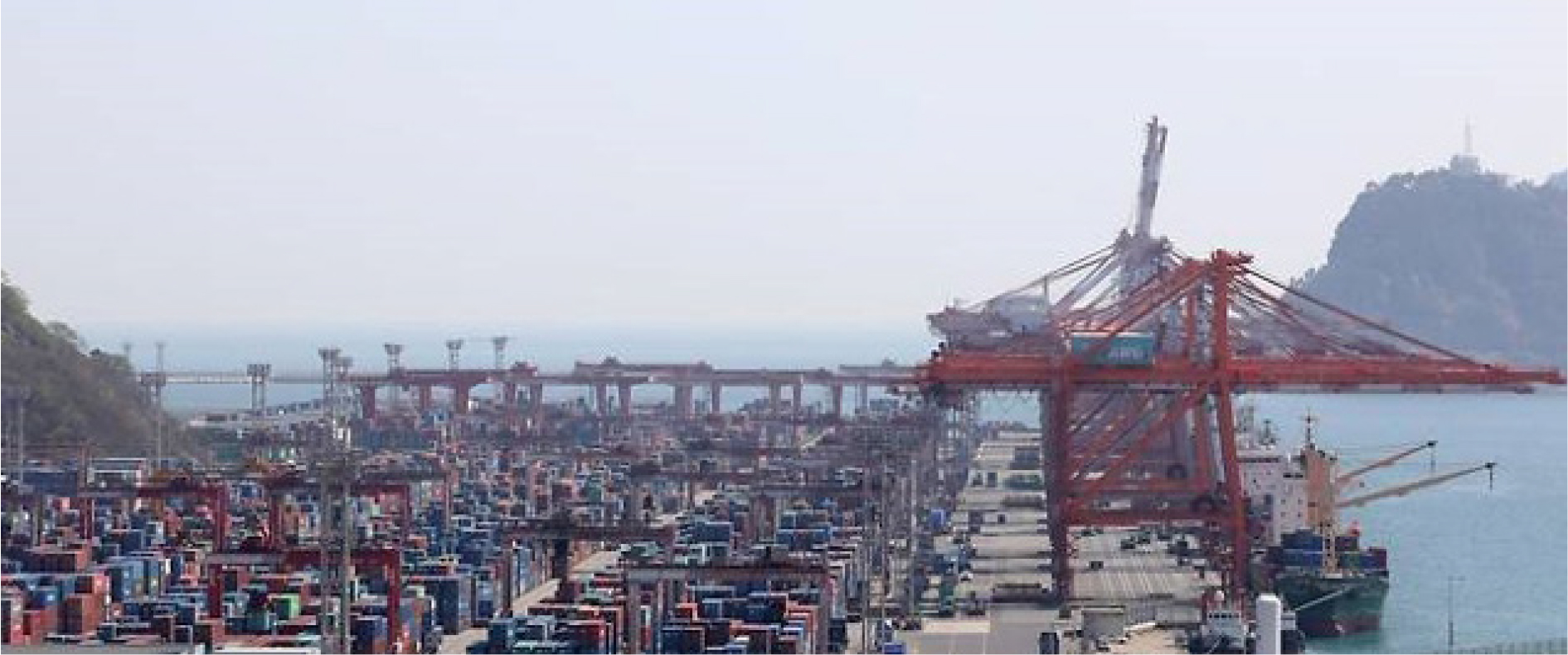
FOEX Trade Center Emerging as a Leader in a NewConcept of Trade Methods

https://korean-electronics.com//inquiry

Acting as a bridge between state agencies and businesses

Creation of the world’s first semi-public private enterprise
FOEX Trade Center was established in 2017 with the awareness of the need for a company to create a business in the middle ground between state institutions and companies amid intensifying competitions within each group in modern times.
FOEX Trade Center is creating business between government agencies and companies by proposing mutual trade, cultural and sports exchanges, and educational exchanges through import and export consultations — to government agencies, public institutions, and state-owned companies located in
China.

Promotion of a new concept trade market in the FTA era
Kim Seung-su, chairman of FOEX Trade Center, invented a new term called Trade Direct Dealing (TDD), a new concept trade method that transforms individual marketing into integrated marketing for small and medium-sized manufacturers.
Chairman Kim explained, “The FOEX Trade Center will gradually expand its business scope into global supply chains as the first step in September this year through the role of the purchasing agency by exhibiting samples such as building materials, furniture, etc. – in collaboration with the city of Fuoshan, China. The Republic of Korea has the largest economic territory in the world with FTAs in place with 59 countries around the world, including Indonesia, which was added from January 2, 2023, and it is thus necessary to attract foreign capital based on this.”

Building of the world’s first offline export/import network for industrial goods
The chairman added, “In the concept of a trade market, the operation of a permanent trade center that enables regular buyer matching and import/ export consultations is important, rather than just being limited to an event-type trade fair.”
FOEX Trade Center plans to build a global supply chain centered on purchasing agency in Saemangeum by linking up small and medium-sized manufacturing companies in the world with integrated marketing, which is weak in marketing, through utilizing offline platforms such as O2O, B2B, and B2B2C for industrial goods, which are impossible for export and import in B2B in Alibaba and B2B2C in Amazon.

Promotion of MCN Special Economic Zone in Saemangeum
He suggested the socalled Saemangeum MCN Special Economic Zone for the establishment of a strategic export and import base for young people’s entrepreneurship and employment while first using the term Multi Channel Network (MCN) in the 2022 presidential election pledge proposal, and thus to create a youth digital economic city in Saemangeum.


korean-electronics.com | Blog Magazine of korean electronics, brands and Goods