Discovering the Diverse Coastlines of South Korea
The Korean Peninsula is bordered by the East Sea, the Yellow Sea, and the South Sea, and holds more than 280 officially designated public beaches spread across 2,413 kilometers of coastline.
Coastal tourism in Korea has moved beyond simple summer swimming into a year-round experience, blending urban waterfronts, youth-driven leisure culture, intertidal eco-tourism, and living maritime heritage in isolated fishing villages and volcanic islands.
The East Coast
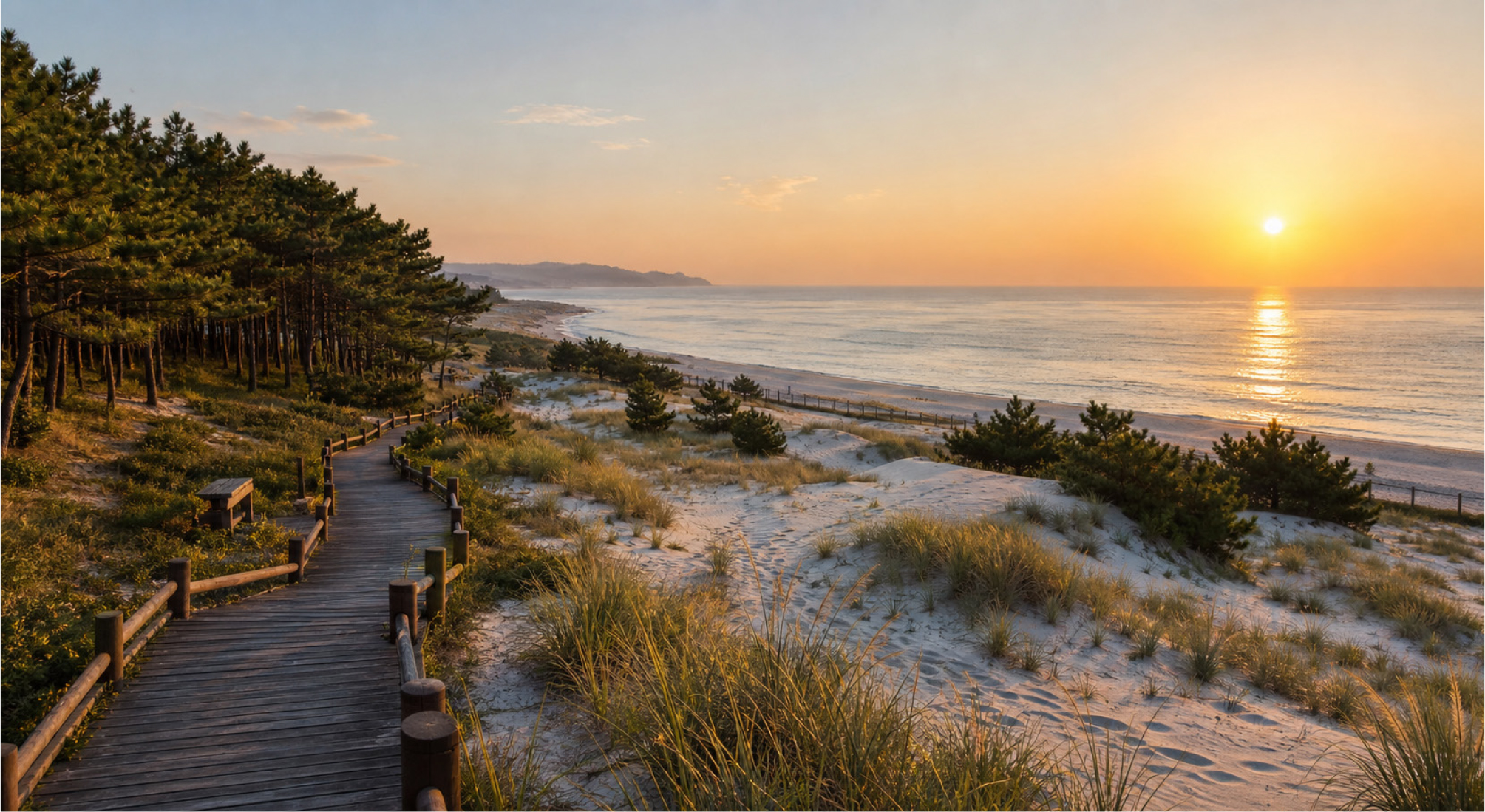
The East Coast features a steep sea floor, high wave energy, deep blue waters, and sand dunes backed by pine forests known as haesong, making it Korea’s hub for sunrise tourism and water sports.
Pine groves along beaches such as Gyeongpo and Naksan once served as windbreaks against storms. Today, municipalities have turned these areas into wooden boardwalk trails for forest bathing beside the surf.
The KTX Gangneung High-Speed Rail line has reduced travel time from Seoul to under two hours, helping fuel weekend resort activity along the coastline of Gangwon State.
The West Coast
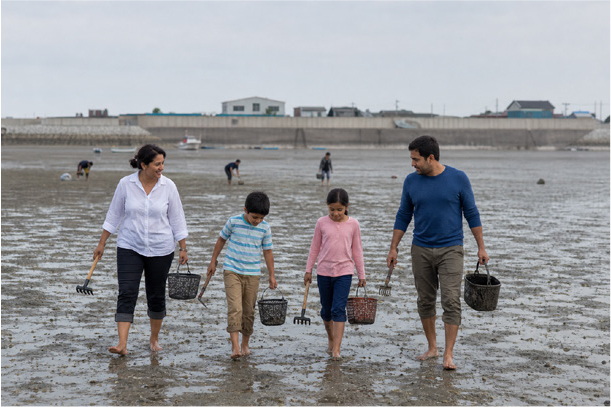
The West Coast has a shallow, gently sloping seabed with extreme tidal ranges, forming vast intertidal mudflats called getbol, some recognized by UNESCO as World Natural Heritage sites.
These mudflats support tourism centered on environmental education, seasonal shellfish gathering, and mud therapy. Beaches like Daecheon in Boryeong and Jebudo in Hwaseong transform twice daily as tides expose wide stretches of wet silt.
West Coast culture also emphasizes sunset appreciation, seasonal seafood dining in coastal markets, and family-oriented intertidal harvesting.
The South Coast
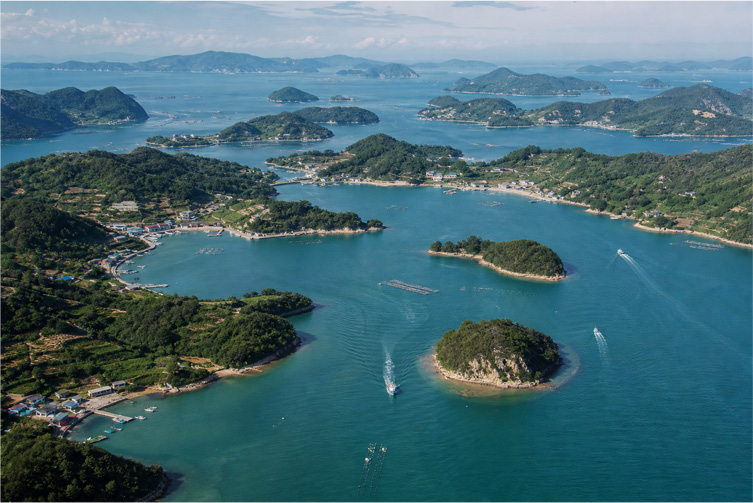
The South Coast presents a rias coastline shaped by thousands of islands, jagged peninsulas, and sheltered bays, with calm, warm waters protected from ocean swells by the surrounding archipelago.
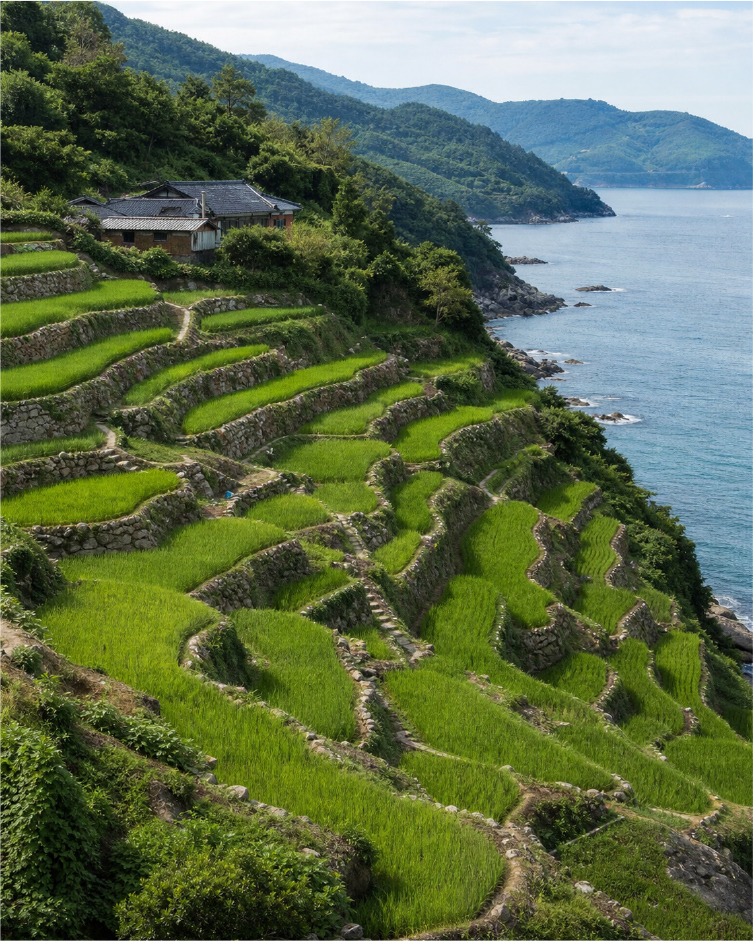
Tourism here blends maritime leisure with rural heritage, exemplified by Namhae Island, where terraced rice paddies known as Daraengi descend steep coastal cliffs directly to the water’s edge.
Jeju Island
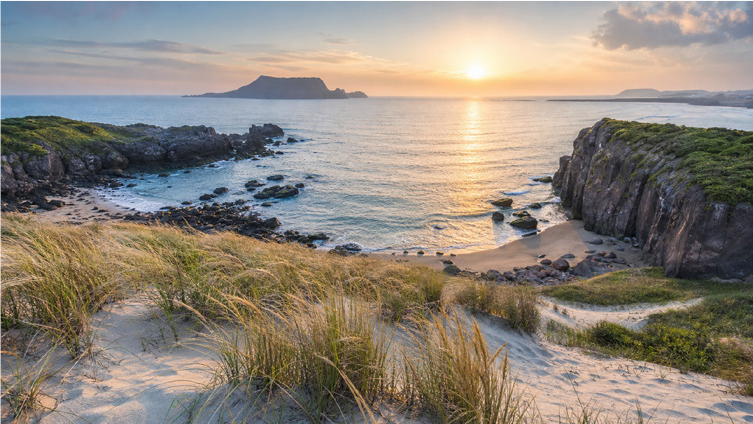
Jeju Island is a volcanic province shaped by lava flows and cinder cones called oreum, featuring dark basalt formations, turquoise lagoons, and rare sands such as the red rhodolith deposits on Udo Island’s Sanho Beach.
Jeju’s coastal identity is also defined by the Haenyeo, traditional female free-divers who harvest seafood without oxygen equipment. Their culture is recognized on UNESCO’s Representative List of Intangible Cultural Heritage of Humanity.
Urban Waterfronts and Quiet Villages
South Korea’s coastal tourism shows a clear divide between hyper-developed urban waterfronts and preserved rural fishing villages, each offering a distinctly different way of experiencing the sea.
In Busan, Gwangalli Beach functions as a high-density entertainment district framed by the Gwangandaegyo Suspension Bridge, hosting weekly drone light shows alongside stand-up paddleboard zones and cafe districts.
Haeundae Beach combines its shoreline with the Haeundae Blueline Park, a repurposed railway featuring retro Sky Capsule cabins and the panoramic Beach Train, alongside the towering Busan X the Sky observatory.
In contrast, Korea’s quiet coastal villages focus on micro-tourism and slow travel. In Pohang, the township of Guryongpo preserves a historic street lined with over twenty Japanese-style wooden houses from the 1920s.
This restored neighborhood became a filming location for the drama When the Camellia Blooms, while the local economy still relies on winter gwamegi processing and snow crab harvesting tied to the working docks.
In Uljin County, Hujeong Beach favors low-impact tourism through the Ocean Observatory along Ocean Road 393, letting visitors walk seven meters below the surface in a dry chamber paired with the Jukbyeon Coast Sky Rail.
Getting There
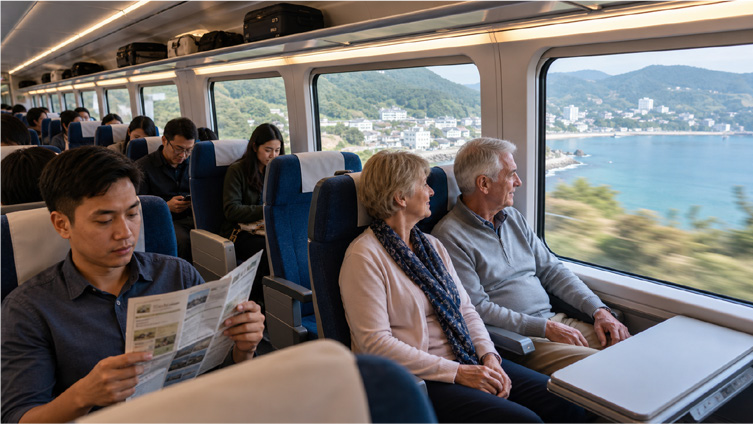
Access to Korea’s coasts relies on an expanding high-speed rail network. The KTX Gangneung Line connects Seoul to Gangneung in under two hours, while the KTX Gyeongbu Line links Seoul to Busan in about two and a half hours. From smart urban waterfronts to quiet fishing villages, South Korea’s coastline offers travelers a wide range of experiences that continue throughout the year, balancing heritage, ecology, and modern infrastructure across three surrounding seas.
korean-electronics.com | Blog Magazine of korean electronics, brands and Goods