Views of Daegu

Dalseongtoseong earthen fortification

The Dalseongtoseong Earthen Fortification (Historic Site No. 62) is a defense facility from the Three Kingdoms Period (57 BCE – 668) built around low hills in the west of the middle reaches of Dalseocheon Stream. As suggested by the name Dalseong (“circular fortress”), the fortress has long had great significance in representing the area of today’s Daegu. The remaining traces of the earthen wall show that the fortification was 380 meters long east to west, 470 meters long north to south, and 1,300 meters long in its circumference. The wall is 20 meters wide at the base and 6 meters tall, and all together features a roughly five-sided circle.

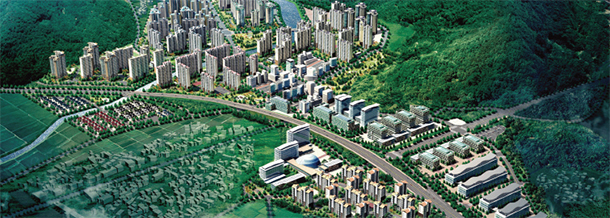
Dalseongtoseong-earthen-fortification The fortress site contains many popular attractions including the Local Folk Museum, Gwanpungnu Gate, the statue of Choe Je-u who founded Donghak, or the Eastern Learning Movement, the monument of the widely admired patriotic poet Yi Sang-hwa, and the entrance gate to the site which is famous for the hanging plaque containing the inscription of its name, “Citizens’ Gate,” handwritten by the late former president Park Chung-hee. A spacious public lawn, age-old trees, relaxation facilities, and the significant historic background also make the site one of the most popular destinations among outside visitors as well as the citizens of Daegu.

Gyeongsang gamyeong and old alleys

It was in 1601, the 34th year of King Seonjo’s reign, that today’s Daegu was appointed as the seat of the provincial administrative office (Gamyeong) of Gyeongsang-do, laying the foundation for the development of the city for the future. Located in the city’s old downtown area, the historic administrative office site contains Seonhwadang (Tangible Cultural Heritage of Daegu No. 1) which was the governor’s office, and Jingcheonggak (Tangible Cultural Heritage of Daegu No. 2) which was his official residence. The site is enclosed by a complex network of old roads called Saseong-ro, now containing many tool shops and herbal shops whose history began in 1658 when the medicine market first opened.

Gyeongsang-gamyeong-and-old-alleys A recently developed tour program named Daegu Old Alley Tour now guides tourists through the old alleys of Jongno, Jin-golmok and Samirundong-gil. The area also contains many historic sites and buildings such as the missionary residences on Cheongna Hill, Gyesan Catholic Church, which is Daegu’s first Gothic building, the birthplace of Yi Sang-hwa who wrote many patriotic poems, the home of Go Sang-don who organized the historic National Debt Repayment Movement, Seongbak Alley, Jeil Church and Yeommae Market. (Source: english daegu.go.kr)


korean-electronics.com | Blog Magazine of korean electronics, brands and Goods
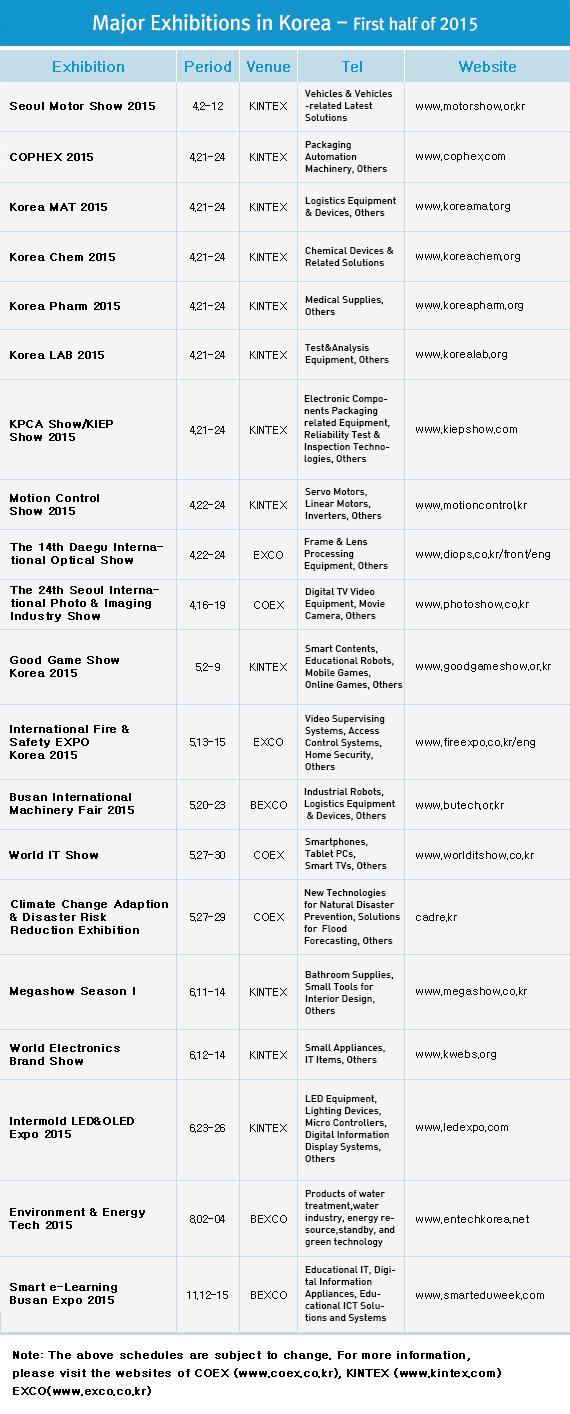
Major Exhibitions in Korea

Exhibition


korean-electronics.com | Blog Magazine of korean electronics, brands and Goods

Samsung Techwin develops autonomous unmanned vehicle

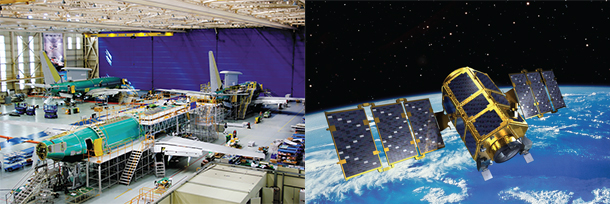
Samsung Techwin has succeeded in developing an autonomous unmanned vehicle, which can drive on it own on roads and even on mountainous territory and plains. It also firstly made a drone with a folding wing in a sign to spur efforts to build new technology.

Autonomous unmanned vehicles and drones are noteworthy as they fall into the future technology sector, into which global giants including Google, Amazon and Alibaba are energetically leaping, to gain predominant positions early by securing new technology and releasing pilot products.

An industry source said recently that Samsung Techwin developed its autonomous unmanned vehicle ‘Star-M’ in cooperation with around 80 researchers with masters and doctors degrees in robot and video analysis.

Autonomous unmanned vehicles (AUVs) have competitive functions of automatically driving on ordinary roads and even bumpy ones as well. Unmanned vehicles by car makers and Google need drivers, while Star-M can move automatically without drivers. Samsung Techwin recently said an AUV equipped with total solutions in unmanned robot system including robot and video analysis, Star-M can reach the destination while driving on its own in mountainous areas, unlike Google and car makers’ basic function of driving on the road.


korean-electronics.com | Blog Magazine of korean electronics, brands and Goods
Korea’s firms vie for top place in global UHD TV market

Korea’s TV makers are positioned No. 1 in the world’s UHD TV market. As of 2013, Korean firms were behind their Chinese and Japanese counterparts to remain in third spot. However, Korean firms have achieved ‘triple crowns’ in the HD TV, FHD TV and UHD TV market.

Market research firm Display Search recently said that Korean TV makers including Samsung Electronics and LG Electronics captured a combined 48.1 percent market share to retain the top share. Their market share reached at 19.7 percent in 2013. Meanwhile, Chinese TV makers, which had the highest 51.9 percent market share, saw their position slide to second place with 30.6 percent. Japanese makers had a 16.0 percent of market share last year, down from 16 percent in 2013.

Korea’s TVs dominated higher market share with higher resolution, Last year, Korea firms posted 38.1 percent market share in HD TV market, 43.9 percent in FHD TV market and 48.1 percent in UHD TV market. HD displays contain one million pixels, FHD two million pixels and UHD eight million pixels. In other words, Korean TVs are leading the premium TV market.


korean-electronics.com | Blog Magazine of korean electronics, brands and Goods

Samsung Electronics sees the rebirth of system semiconductors as a money-making player

Boosted by excellent performance of three major parts of system semiconductors, Samsung Electronics’ system LSI business is positioning itself as a moneymaking division, from a money-losing body. Last year, System LSI recorded around one trillion won ($881million) deficit, but this year it is expected to post at least 500 billion won profit.

An electronics industry source recently said that the major contributor to the revival is the Application Processor (AP), the core part of smartphones. As it again signed a cooperation deal with Apple and released the 14-nano FinFET AP, Samsung is expected to generate higher AP revenue from the first half of this year. The global electronics giant has succeeded in mass-producing mobile AP using 14-nm FinFET. Apple plans to incorporate the 14-nano FinFET technology in its iPhone7, scheduled to be released in October.

The abovementioned 14-nm refers to the 14 of one billion-thick meter semiconductor circuit. FinFET is the technology that accelerates the speed of the information process by making semiconductor devices a thirddimension structure. No others can compare with Samsung in this technology, placing it in the dominant position in the world. Qualcomm last year pulled in more than half of the sales in the global market worth $5.7 billion, with Samsung Electronics’ share accounting for 4.2 percent, according to a market research firm SA.


korean-electronics.com | Blog Magazine of korean electronics, brands and Goods

LG’s plans to inject record high US$5.6bn into R&D

LG Group plans to spend a record high amount on research and development (R&D) this year in order to develop new technologies that will help the conglomerate lead the market.

In 2015, the company group expanded its number of researchers and technical advisers (executive levels) to the highest level. It recently said that it will invest 6.3 trillion won ($5.6 billion) in R&D projects this year. This is the first time for the company group to put aside over six trillion won worth of annual R&D budget, equivalent to 39.4 percent of LG’s total investment for 2015 of 16 trillion won.

The allocation of the total investment on a group level also hit an all-time high. The group set aside 37.1 percent or 5.9 trillion won of the total 15.9 trillion won investment last year. Such ever-high aggressive investment on R&D will be focused on three major areas of electronics, chemicals and telecommunication, service. In particular, more than two-thirds of the entire investment or 4.2 trillion won will be used for the electronics area, which is scheduled to be carried out by LG Electronics and LG Display.

In the electronics sector, focus on technologies of next-generation mobile and display will be at the center of the investment. In the communications and services sector, the investment focus will be the 5G mobile communication network technology and big data processing technologies.

In addition to three areas of electronics, chemical and telecommunication, LG’s investment will also be created for R&D for technological development of new growth engines including the convergence industry.


korean-electronics.com | Blog Magazine of korean electronics, brands and Goods
Korean items rank first in global export market share

-The number has slightly increased for two consecutive years from 61 in 2011 and 63 in 2012-

There were as many as 65 Korean export items that ranked first in global export market share in 2013, increasing slightly from 63 items in 2012 and 61 in 2011 which all boosted the country into the 12th place from 14th in 2012 and 15th in 2011.

According to a report titled “Korea’s Exports Competitiveness Reviewed through Global Exports Market Number One Items” issued by the Institute for International Trade (Kim Keuk-soo, http://iit.kita.net) of Korea International Trade Association on February 5, as of 2013, China took the first place with 1,538 first ranked Chinese items in the export market. It was followed by Germany (733 items) ranking second, the United States. (550 items) ranking third, and Italy (216 items) ranking fourth. China had 63 more number one items than the previous year while 44 Japanese items disappeared from the top of the list.

For two consecutive years from 2012, the number of Korean items that maintained the first place in their global export market share was 44, including memory semiconductors, auto parts, and tankers. The number of new items to rank first in 2013 was 21, which came mostly from chemical products and textile goods such as ethylene, polycarbonate, and apparel accessories. In contrast, 19 items including steel and agricultural and marine products stepped down in 2013 from the number one list of 2012.

By item, Korea has generated plenty of number one export market share products from chemical products (21 items), to steel (11 items), and textile products (8 items), etc. Over the past six years, the number of chemical products that took first place in export market share has increased while those of transportation machinery, electronic machinery and agriculture and fisheries have shown downward trends.

Among Korea’s 65 number one items, 37 items are in competition with China (20 items), the United States (10 items) and Japan (7), whose items ranked second in export market share. In particular, 14 items, including memory semiconductor, China is closely trailing Korea as the gap of export market share between the two countries is less than 5 percent. Meanwhile, those three countries stood first with 124 items and Korean products are competing with them by ranking second or third.

In terms of the major export destinations, the number of Korea’s number one export items in China and the United States were 372 and 84, respectively in 2013, and ranked 5th and 9th in those countries that were the same as the previous year. Especially, the number of items with the largest export market share in China rose significantly (37 items) and eight more items ranked first in the U.S. market, as well. On the other hand, the number of Korean products that held the first place in export market share in Germany in 2013 increased to 20, which was 1 more than the previous year, and Korea stood 15th(except EU countries).

Moon Byung-ki, a senior researcher at KITA mentioned “The number of Korean export items that ranked first in global export market share in 2013 has grown for two consecutive years since 2011 and Korea stepped into 12th”. He stressed “Korea needs to focus on the items that are competing with China, Japan and the United States for the first place in global market share in order to secure the competitiveness in technology and quality through innovation. At the same time, the measures to foster the expansion of number one items are required at governmental level”. (Source: KITA)


korean-electronics.com | Blog Magazine of korean electronics, brands and Goods

Coxem: A global leader of all-in-one SEM-EDS system

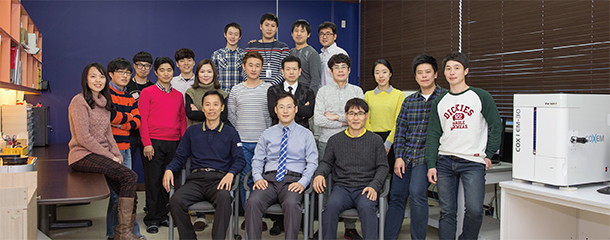
[INQ. NO. 1504E18] As a professional company possessing nano-measuring technology, Coxem has been leading the global market of all-in-one SEM-EDS based on its specialized technology background of manufacturing of scanning electron microscope (SEM) developed in 2008 by the company. With such market leadership, countless creative moves are being made by the company. The following contents are based on an interview with the company’s CEO Lee Jun-hee and will help people who are interested to know more about the company’s remarkable achievement in the global market and to understand the secrets behind its successful growth.

https://korean-electronics.com//inquiry Coxem is a specialized company of nano-measuring technology. It was established in 2007 as a technologyindustrialized company of a national research institution in Daedeok Valley, based on technology of Scanning Electron Microscope (SEM) developed by the Korea Research Institute of Standards and Science (KRISS) over more than six years.

Coxem has succeed in releasing of the first edition of ‘CX-100’, a console type of normal SEM in June, 2008 by utilizing its own technologies, making South Korea the world’s fifth country to commercially manufacture electron microscope, following Germany, the U.S.A, the Czech Republic, and Japan.

Coxem While selling normal type SEMs, Coxem released an allin-one SEM-EDS, an integrated type of EDS (Energy Dispersive X-ray Spectroscope) that analyzes the material components demanded by customers. Accordingly, the company applied to acquire patents for the product and succeeded in registering the patent. However, it soon realized it had to gain technologies to develop and commercialize the so-called integrated SEM-EDS products in overseas markets.

Coxtem could thus take an opportunity to initiate an international joint R&D project with the U.S.-based Princeton Gamma Technology (PGT) in 2012, boosted by support from the Korean government.

However, PGT was, one year after the start of cooperation with Coxem, merged and acquired by the global No. 1 research equipment and analytical equipment company, Thermo, in 2012. After the M&A, Coxem had to conclude a contract for the project again with Thermo and consequently successfully carried out the project. During the project, for the development of the integrated scan system of SEM and EDS, Thermo was responsible for the development of the small-sized EDS for the integration, while Coxem took charge of the development of the integrated operating software by installing the product in the SEM. After completion of two years of product development, Coxem commercially released and started selling the EM-30AX model, the world’s first product with the integration system of EDS and SEM.

Coxem_1 Coxem has enjoyed significant sales growth by satisfying customers’ requirements, with the commercialized all-in-one SEM-EDS product by joint development resulting in nearly 20 percent price reduction. Through the cooperation, Coxem could acquire the development know-how and procedures from the advanced company, and could thus accumulate the capacity to independently develop advanced analytic equipment.

With the release of the integrated form of SEM and EDS, Coxem could exert market leadership more than ever in a favorable way for itself thanks to the increased level of the product’s maturity through the cooperation with Thermo. For example, until that time, customer companies had to buy the tabletop type SEM and the EDS separately, but, with the integrated product, customers could enjoy the benefits that each of the two previous items provided at the same time with integrated form. Actually, the sales ratio of the integrated product increased from the existing 9 percent to 45 percent and this trend is being maintained.

Coxem has gained multiple intellectual property rights by registering a local patent, applying a PCT, and applying for foreign patents (the USA, Japan, and Europe). In particular, through a patent applied for PCT – Combined Apparatus for Scanning Electron Microscope and Energy Dispersive X-ray Sepectroscopy, Coxem could enter such advanced markets as the USA, Japan, and Europe, taking an opportunity to take the lead in competition with enterprises in advanced countries.

With the successful result of the international joint R&D project, Coxem has received high recognition among industrial circles for the jointly created technology that dramatically lowers the production cost while elevating the performance and the accuracy of the microscope. In August 2014, Coxem succeeded in acquiring NET (New Excellent Technology) certification from the Ministry of Trade, Industry and Energy (MOTIE), proving its advanced technology again.

Based on this advanced technology, Coxem’s sales reached 3 billion won ($2.8 mil.) in 2012, 4.4 billion won ($4 mil.) in 2013, and 4 billion won ($3.7 mil.). For the year of 2015, Coxem planned to boost sales to 8 billion won ($7.4 mil.) and plans to lift its sales to 20 billion won ($18.5 mil.) by 2017 by increasing the number of overseas partner countries to more than 20 nations. Through this, Coxem aims to become one of the global top-six companies manufacturing electron microscope.

Products selected by Gyeongsangnam-do

Realize your dreams! The best investment is in Gyeongsangnam-do where the perfect infrastructure awaits you

The best investment location

Gyeongsangnam-do consists of eight cities and ten counties, with an area of 10,537.32km2 that comprises 10.51% of the total territory of the Republic of Korea. It is currently considered one of the highest-level locations in wide-area municipalities nationwide to be invested by foreign investors.

The-best-investment-location Some key factors are leading the municipality’s attractiveness to investors – airports(Gimhae International Airport and Sacheon Airport), traffic networks (seven stations in expressway and two stations in KTX (Korea Train Express), economic zones (two economic zones, two foreign investment zones, and one free trade zone), international ports (Busan Port, Gwangyang Port and Masan Port), and industrial complexes(4,874 companies residing in seven national industrial complexes and 158 general industrial complexes).

The best investment location

In particular, some major industrial complexes are worthy to be globally known. Located in Changwon with an area of 134, 532m2 (71,368m2 and additional 63,164m2), Changwon Nammun Foreign Investment Zone within the Busan Jinhae Free Economic Zone targets residing industries of mechatronics, automobile components, shipbuilding materials industry, machinery, only permitting foreign-invested companies (currently 200 companies, 28,762 employees, US$ 34.999 billion of production, and export of US$724 million. The total export volume amounts to US$ 20.724 billion.)

Global-leading-industrial-complexes The remaining leading complexes include Gimhae Techno Valley General Industrial Complex (located in Gimhae with the area of 1,522,000m2, focusing on industries of medicines, metal processing, electronic components, computers, media electronic equipment, others), Changyeong General Industrial Complex (located in Changyeong-gun with the area of 647,696m2 in the fields of metal, machinery, automobile, electricity, etc.), and Galsa Bay Shipbuilding Industrial Complex / within the Free Economic Zone in Gwangyang Bay Region (located in Changyeong-gun with the size of 647,696m2 on the industries of metal, machinery, automobile, electricity, others.)

Global-leading-industrial-complexes_1

The nation’s third highest province in GRDP

Thanks to favorable business backgrounds including such factors, it recorded KRW 95.63 trillion in Gross Regional Domestic Product (GRDP) as of 2012, taking 6.9 percent of Gross Domestic Product(GDP) of the Republic of Korea and the 3rd highest GRDP among all provinces across the nation.

The-nation’s-third-highest-province-in-GRDP


korean-electronics.com | Blog Magazine of korean electronics, brands and Goods
Automotive inductor

Products selected by Gyeongsangnam-do

[INQ. NO. 1504E17] Established in 1975, Hoe Sung Coil Parts has been developing RF inductors and transformers and power-related products through operating manufacturing plants in South Korea and China. It maintains business partnerships with Samsung Electronics, LG Innotek, Hyundai Mobis, Tyco, Alps, etc., growing into a company that plays an important role in the development of the regional economy.

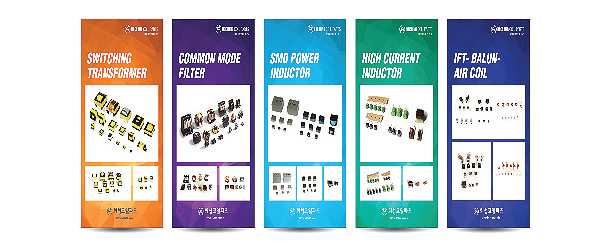
https://korean-electronics.com//inquiry Currently, Hoe Sung Coil Parts makes several major inductors and filters – AECQ 200 automotive inductor, SMPS low-cost inductor, LED SMD type line filter, and high current inductor. Such products are designed to withstand even extreme heat. All of them meet the stringent quality standards of AEC-Q200 and are suitable for use in the harsh automotive environment.

Automotive-inductor Among them, the first is at the top of the list that the company is considering as its most representative item, leading the moves by the company for 2015 overseas market. Its popularity based on its competitiveness regarding vibration, high temperature, low temperature, humidity, thermal shock, etc. The maker can supply customers the inductor products designed to withstand various adverse conditions. The company develops various kinds of products RF and power-related products.
Starting next year, it will add EMI filter for manufacture, with competitive prices and quality service.


korean-electronics.com | Blog Magazine of korean electronics, brands and Goods