[INQ. NO. 1608E03] Neo Reflection’s world-first 3D  wireless finger mouse is being actively marketed under the brand of “Neo Mouse,” boosted by last year’s aggressive promotions including IFA 2013 in Germany.
The 1600CPI supersensitive laser mouse offers double the supersensitivity of the mouse movement. It can even be operated for 24 hours without changing the battery. As it is designed as an ultra-slim wireless device, it is strongly preferred by laptop users. For MS PowerPoint, it basically supports back/forward/pen functions. It provides various more competitive functions than rivals’ ones based on its originally and creatively designed finger motions.
 With the support of the function as pen, it offers strong advantages for presentations anywhere and anytime. As a complete customer-oriented item, it fully relieves any inconvenience, especially in Internet surfing. It is again expected that this solution provider will draw even stronger attention than those at last year’s Fair. In particular, seekers who prefer a smarter mouse with multifunction in presentation will find it especially useful.
Thus, the global market presence of this product will be climbing higher than ever. And Neo Reflection has developed and started commercializing ergonomic input/ output devices, sensor networks, wireless communications, and ubiquitous equipment – based on advanced IT technologies.
korean-electronics.com | Blog Magazine of korean electronics, brands and Goods
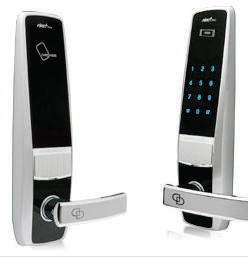 Since its founding, the company has been specializing in production of digital door lock systems, which has been awarded the certification of ‘World-Class Product.’
 Awarded the certification of ‘World-class Product’ by the Ministry of Trade, Industry & Energy, Gate Technologies has incorporated the latest touch technologies. The optical touch modules utilize camera sensor, infrared LED, and reflective sheet that are manufactured to offer the highest quality performance at minimum power consumption. In addition, the modules have been structured with simplicity and affordability in mind. With adjustable displays from 21.5” to 120”, the optical touch module offers an optimized solution for both education and business purposes With many features including four digital cameras (slit lens), embedded controller board, 60FPS of response speed, four-point touch support, easy calibration on PC, high resolution, competitive prices, etc., Gate Technologies’s optical touchscreen is now used for classroom, conference, hospital, auditorium, academy, studio, broadcasting, and more. Gate Technologies has been actively expanding in overseas markets of e-learning and smart boards through intensive investment in R&D and product competitiveness.
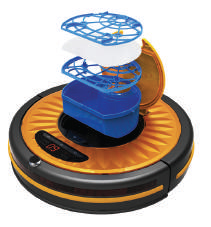 Pporo has a rotary brush for carpet cleaning with an auto mop function. With a more powerful suction system, Pporo K7 was announced as a handheld vacuum cleaner with an automated charging station. The Pporo K7 automatically returns to the docking station for selfrecharging when it completes a task or low on battery.

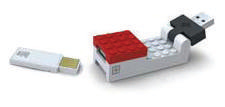 Compatible for all memory storage devices which use USB port in a PC, for example USB external hard disk and USB memory stick. Without having an another new memory storage device, it is possible to use an existing one by simply connecting it to S-Gender.
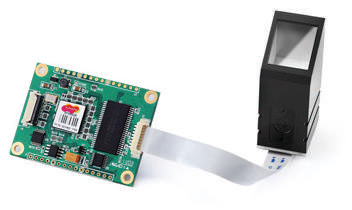 Suprema’s latest fingerprint embedded module ‘SFM 5020-OP’ is the world’s leading fingerprint authentication algorithm and is ranked No. 1 in multiple international awards including FVC (Fingerprint Verification Competition). The product series features powerful
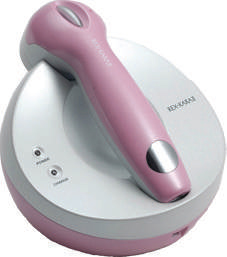 We have managed to expand our business with wide coverage from domestic to overseas markets amidst stiff competition with other companies during the rapidly changing domestic and international economic conditions over the past 10 years,” said Kim Jin-gug, head of the company when he was asked what kinds of driving forces existed behind such an impressive business performance within a comparatively short time.
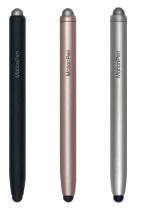 These simple features make sketching on your iPad engaging and natural. An additional feature is “Palm Rejection”. Palm-rest enables you to rest your palm on the screen as you would when writing on paper. It’s truly grab and go.
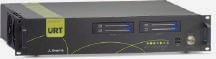 That model supports all common Navigation as well as Broadcast Radio protocols. It easily adapts to new and ever-changing protocols, eliminating need for new instruments. It generates real-time signals for long-running lifecycle tests like HALT and HASS. It allows synchronization of units to support multiple channels. It is equipped with easy-to-use interface to generate signals quickly and intuitively. It also has complete API for automating remote control of the instrument. Front-access hot-swappable hard-disk drives is prepared for maximum convenience