Digital optic link product development for highdefinition image and highcapacity data transmission

Opticis Co.,Ltd. (Hyeon-gook Shin, CEO)
Until Opticis started this research task,https://korean-electronics.com//inquiry a Japanese company monopolized the CWDM module used in optical link products for image transmission. Therefore, the research of CWDM modules for image transmission was progressed aiming to be a leading company (I company in Japan), and secured relevant implementation technology and the product. Moreover, Opticis presented the best specifications faster than the leading Japanese company in terms of transmission speed, and the creativity and superiority of this development were recognized internationally, and won the Lightwave Innovation Award (Optical component section) in 2015.

Securing optical transmission technology for 4K image
transmission

Current display data transmission standards are being developed requiring high-speed bandwidth in accordance with digital broadcasting conversion and evolution toward nextgeneration high-definition TV like UHD class TV and 3D TV. For existing copper wire transmission, available image transmission distance is within 5m for 4K UHD class image transmission.
Because of such limitations in distance and transmission speed, interface development using optical features is required.
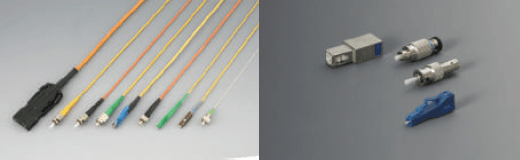
In this context, Opticis secured optical transmission technology that allows 4K image transmission through this research task, and based on which, the company developed digital optical link products and concentrated on making the product a core product in next-generation UHD TV•monitor. Also, because reducing the number of fibers by using CWDM method that can transmit multiple optical signal with one fiber along with high-speed transmission, and securing a detachable method using receptacles are essential elements to have marketability, development was progressed for CWDM OSA that can be mounted in digital optical link and digital optical link product where CWDM OSA is mounted.

Untitled-12.jpg
In this way, this technical development was progressed in consideration of the market situation, future competitive technology, and product competitiveness; and finally the relevant products could be launched in the market after the completion of successful development. Hyeon-gook Shin, CEO of Opticis, who led this research task, said that “this technical development is for the product for which there is no applicable existing component because of different basic concept and approaching method to implement performance from existing optical modules. Therefore we did not just design and develop parts that compose optical devices and optical systems but also we have developed equipment required in processes for the element of respective newly developed technologies with our own manpower.” He added, “So, we encountered many difficulties without external help in every stage but we could overcome such difficulties with endless will for development and support from our executives and staff.” In addition, he mentioned that “Because we developed not only CWDM mode optical transmission technology but also designed and manufactured high speed optical device with various wavelengths which is the most important element in optical transmission, we have core technologies from devices to modules. Thus, flexible and initiative responding would be possible in future product development.”

Simultaneous real-time transmission of multiple signals
through one optical fiber

The goals of this technical development were: developing OSA that can input and transmit light source (VCSEL) and photo detector (PD), having different wavelengths, into one optical fiber using CWDM mode; and developing digital optical link product for high-definition image and high-capacity data transmission responding to 4K UHD TV using the developed OAS. CWDM mode implemented in this technology inserts respective light source into one optical fiber with multiple lenses, passes it again through wavelength selective filter in receiving unit, branch off respective signals to corresponding channel, and extract information with photo detector. Through such process, CWDM mode can transmit multiple signals simultaneously in real time to one optical fiber.
Current image information is converted from analog to digital and the image information is transmitted through basically four types of signals (Red, Green, Blue, Clock). That is, four signal transmission lines were required before, but this technology combines these lines into one and can transmit all required signals with one transmission line. This also provides the advantage of easy detachment between optical fi ber and module along with reduction in the number of existing transmission lines.
As a result, the goal was to successfully complement and develop a digital optical link product where optical module that can transmit many individual signals to one optical fi ber is mounted and that transmits the high-capacity image information of 4K class UHD TV. Moreover, other than CWDM implementation and image transmission technologies, developing optical devices that can work in high speed showing different wavelength light
were progressed together in OSA and optical link product development, so related core technologies can also be secured autonomously.
CEO Shin, who mentioned that products developed currently through this technology can respond to 4K UHD image transmission, explained that “ We will keep improving transmission speed per channel and continue developing digital optical link for 8K UHD image transmission, so as to respond to transmission capacity that will be increased through feature improvement of optical devices and the optimization of optical systems in future.” and “Additional researches are on going to enhance the original manufacturing technology of high-speed optical devices secured from such development course and to apply it to various modules.”
“We developed technology that can accomplish image observation area expansion simultaneously. These two types of technologies are reaching to the level of commercialization for future glassless mode 3D display. As mentioned earlier, the superiority of relevant tracking method was demonstrated compared to the commercial products of foreign global companies.
Thus, when the integrity improvement of commercialization technology is accomplished in future, our products are expected to contribute to form a market for personal glassless 3D display market. Furthermore, in case of non-tracking glassless 3D display, commercialization would be possible in limited areas such as advertisement, simulation, and medical, and industrialization in global companies is also expected as technical transfer is completed for some of original technologies.”
Indeed, there are expectations that a new market will be established for glassless 3D display technology, if technologies developed by Dr. Kim’s research team are applied to IT devices, such as smartphones, laptops, tablet PCs, and monitors. According to the view of professionals, the technology is superior to other countries in terms of technical completeness, so it will hold a dominant position, when its commercialization or its industrialization is initiated in full-scale.

Untitled-13.jpg
Promising business feasibility with globally competitive
product

So far, a Japanese company monopolized CWDM modules that can be used in optical link products for image transmission in the market, but now Opticis has secured the relevant implementation technology and products through this development. In addition, the transmission speed of fi nal outputs (OSA, optical link) from this development exceeds the performance of existing product made by a Japanese company, and can respond to current real 4K UHD TV. Especially, as Opticis secures optical device manufacturing technology, one of core technologies for optical link product, and image signal conversion technology, the company is rated as being in a favorable position in subsequent competition.
Indeed, among products launched through this development, demand for digital optical link for images is increasing persistently. However, because high-defi nition images like current 4K UHD image are mainly used in specialized areas only such as broadcasting devices and medical devices, it is hard to estimate domestic and overseas market share. Nevertheless, the 4K UHD market for general consumers over the world is being developed
constantly, and this developed product can provide consumers long-distance, high-speed transmission according to future market demand, therefore, its business feasibility is promising according to the market development.
Meanwhile, Mr. Shin, who listed the company on the Korea Exchange KOSDAQ in July 2011, said that “As the fi rst company that commercialized optical link in the world, we are leading the optical link industry that connects high-defi nition image equipment. We will do our best to provide compact optical link having excellent price competitiveness and high transmission quality through constant technical innovation so that optical link can be used easily at home and in all industrial sites throughout the world.”

korean-electronics.com | Blog Magazine of korean electronics, brands and Goods
Development of a high-efficiency solar-light generation system

Garam E&C Co., Ltd. (Sung-soo Kim, CEO)
The most important https://korean-electronics.com//inquirypart in solar energy generation is improving direct efficiency of the solar battery. The efficiency of the solar battery has been improved 2~3% due to the efforts over the past five years but the improving speed of efficiency has gradually slowed down. Also, increase of associated costs tends to rise, so it is true that the expanding speed of the solar-light generation market has slowed to that extent. Accordingly, the needs of the market to systematically reform or improve the efficiency of the solar battery to supplement such disadvantages has been continuously increasing and Garam E&C Co., Ltd. has succeeded in developing the high-efficiency solar-light generation system market by using the Switching Method, adding bright prospects for the solar-light generation market.

Maximizing efficiency by reducing losses when
converting DC to AC

Last year, countries all over the world boosted efforts to reduce greenhouse gases with the Post-2020 Climate Change Regime established by the Paris Climate Change Convention as a momentum. And it is likely that efforts to research and develop technology using so-called green energy and generating method using this, moving on from the generating methods using fossil fuels, will be accelerated.
Under such circumstances, for solar-light generation, one of the main green energies and generation methods, diverse researching and technology developing efforts to maximize efficiency have been exerted and especially, the solar photovoltaic system which generates electricity using solar energy has gained a lot of attention as it is a technology that can systematically improve the low efficiency of the solar battery.

Untitled-9.jpg

Therefore, the high-efficiency solar photovoltaic system of Garam E&C Co., Ltd. is uncommon since it has technical distinctiveness in efficiency improvement and maintenance, the most popular topic in the solar light system field.
First, to reduce a frequently occurring phenomena that an inverter converting DC generated in a solar battery to AC is turned off because insolation during sunrise and sunup is insufficient so a necessary voltage range for an inverter to operate is not met and re-turned on when a voltage range is met again and to lessen a decline of generation efficiency occurring because an inverter is not re-operated for a minimum 300 seconds to protect an inverter once it is turned off, when it drops under the set voltage value, it is detected through the sensing module by applying the “Switching Method” and it makes a voltage input into an inverter increase by connecting module groups 1+1 according to a logic of a switching controller.
Because a voltage satisfying the starting voltage of an inverter is input, it prevents an inverter from being turned off, and it improves generation efficiency as well since the generation time generating electricity increases. CEO Sung-soo Kim, in this regard, explains “Our company’s high-efficiency solar photovoltaic system is a product developed to solve a generation efficiency problem on a system level, not on a solar battery and inverter level which is the primary production and conversion device, as a method to improve generation efficiency. We could have distinctiveness from the same business field since we secure technology that maintains a voltage by combining module groups as we remedies a part that an inverter is turned off when a voltage drops due to insufficient insolation during sunrise and sunset and is not re-operated for minimum 300 seconds to protect an inverter after shut-off.”
He also added “Our company’s high-efficiency solar photovoltaic system realizes a structure by using a high voltage relay so that it can maintain a voltage through combining and separating a high voltage, which is changing from DC 700V to 900V according to a seasonal change, as it is designed with a maximum capacity. And it is designed in such a way that this is delivered to a module controller and switching controller through the developed Switching Method algorithm and controlled and monitored according to a set value. In this way, our company presents quite different distinctive technical skills.

Nurturing a hope with distinctive outstanding technical skills

The solar light market is gradually expanding its realm.
However, it is commonly known that sales and scales of the solar light related industry are still not huge or stable when compared to the market size. Therefore, constant researching and developing efforts and distinctive technical skills are needed to overcome this situation.
In that respect, Garam E&C’s success in developing technology will be very helpful in various respects. First, for the direct effect, it has reached sales of about 10 billion won with products manufactured through technical development up to the present since technical development. It also brought employment for about 10 people by establishing a product line and employing researchers.
However, the most significant fruition is the establishment of foundation that enables Garam E&C to grow into a leading company in the solar system field. In this respect, CEO Kim explains, “Technical development is essential for growth of small- and medium-sized companies and Garam E&C, through the foundation for the primary growth, has advanced as a leading company in the field of solar light systems, while creating job opportunities at this point when a social employment problem comes to the fore. Sales did not increase a lot last year because of the tough solar light market. However, we forecast that we can make a leap again this year.”
This forecast is based on the outstanding technology of a product that resulted from technical development success and the fact that the flow of market demand was properly predicted. CEO Kim explains, “In fact, as a result of a research to find out and reflect opinions of managers in actual demanding companies through the sales department in the process of conducting pre-technical investigation and market research on developing technology, there were managers who want to apply technology even though it is not yet fully developed along with the response saying that ‘there is no reason not to use if its technology is distinctive from other companies and development efficiency is improved.’ Because we could check requests for not only the new market but also existing market, for example ‘Can it be installed in a new site only? It would be good if it can be installed in an existing site too,’ we could make very good prospect about commercialization from an early stage of technology development.”

Expecting to grow into a leading company in the solarlight
system field

The road to success in technology development is a long and winding one. It is particularly true when it is hard to find a solution to a variable and a problem occurring in the process of developing technology. But when finding a solution under an unexpected circumstance or in an unexpected place, difficulties and emotional burdens vanish. The same was true for Garam E&C Co., Ltd.
According to CEO Kim, “We tried to develop a method maintaining a voltage by combining solar battery module groups. It was frequent that a relay couldn’t endure or a circuit diagram exploded when combining or separating a high voltage changing from DC 700V to 900V according to a seasonal change by designing with a maximum permissible capacity.” He explained, “It is because PCB and elements manufactured with the knowledge used when designing electronic circuits of 5~24V couldn’t bear changing from DC 700V to 900V. While we were running in place because we could not find a cause that we should vary a design of used elements and PCB, we diverted our thoughts with a word ‘high voltage relay’ mentioned in a meeting with the construction and field team and could solve a problem based on things that a DC voltage is used from circuit designs, used elements and PCB artwork.”
Regarding future plans, CEO Kim explains “We are verifying idea planning and technology for a follow-up model of a previously developed product and preparing to release an advanced product with a cheaper unit cost and more stability than a current product by proceeding technical development.” He also mentioned that “the company is operating with a young passion with an image of the young company composed of members in their 20s to 40s from the beginning stage of establishment, and as we got current results as such the passion lead to challenges toward new business and new technology, we will try our best to be a leading company in the field of solar light system with unfaltering initiative and young passion.”

korean-electronics.com | Blog Magazine of korean electronics, brands and Goods

Real-time provision of movie subtitles/voice for foreigners/the disabled

CAC Entertainment Co., Ltd. (Chang-hee Lee, CEO)
‘The digital fingerprinting https://korean-electronics.com//inquirytechnology-based barrier-free movie subtitles platform’ developed by CAC Entertainment Co., Ltd. through this research project provides subtitles and voice describing movie screens in real-time through a smartphone so that sight and hearing impaired people or foreigners can easily watch movies in a theatre. A sight impaired person can listen to descriptions of movie screens by plugging in earphones to a smartphone and a hearing-impaired person can see subtitles and descriptions. With the barrier-free movie subtitles platform, both the disabled and foreigners can enjoy a movie together in a theatre only with a smartphone.

Overcoming the limits of enclosed-type barrier-free movie service

Sight/hearing-impaired people held a demonstration in front of the red carpet of the 2010 Grand Bell Award. An outcry by them, “Let us watch Korean movies,” led to the revision of ‘the Motion Pictures and Video Products Act’ and has resulted in a mandatory screening of domestic movies. However, as featured movies is serviced after adding sound called subtitles and screen descriptions into an original movie, it caused a lot of controversies such as a problem of the copyright on a movie due to damage (modification) on an original, a problem of high cost when making a film (KRW15 million for domestic film, KRW 12 million for foreign film) and a problem of reverse discrimination against the disabled as the proper meaning of barrier free that the disabled and the non-disabled live together corrupted due to the operation of exclusive theaters for the disabled. Actually, film screening for the disabled was implemented using an exclusive theatre for the disabled during the Busan International Film Festival but the association of the disabled rather insisted that operating an exclusive theatre is reverse discrimination.
In these circumstances, the voice recognition-based barrier-free movie subtitles platform service which is developed through this research project can overcome the limits of closed-type barrierfree movie service in Korea. It also can start a ripple effect such as production related subtitles and creation of a supplementary industry of technology industry through formation of the barrierfree content market.
Regarding technology development, Chang-hee Lee, CEO of CAC Entertainment, Co., Ltd., mentioned, “I got the idea for the digital fingerprinting technology-based barrier-free movie screen platform from digital audio fingerprinting of Shazam (Naver music search), mobile service searching music being played in the street. I thought that ACR (Auto Content Recognition) service, playing screen descriptions and subtitles which are the aiding content for the sight/hearing-impaired people by synchronizing at the relevant time, will be available if technology recognizing playback time (time code) is additionally applied.”

Untitled-7.jpg

Supplying environ ment Where people can enjoy

together watching movie image beyond

the physical•language barrier


The digital fingerprinting technology-based barrier-free movie image platform developed through this research project overcomes the disabled/non-disabled and language limits as a user (a foreigner and a disabled person) synchronizes the screen describing subtitles or multilingual subtitles (native language) using a mobile device in the field of movie screening service. In this way, it eliminates the cultural gap and provides various platform services for a more convenient and fair movie watching environment. It also provides a movie image watching environment that anyone can enjoy in the same time/place beyond the physical and language barrier. Furthermore, it can foster infrastructures that can secure the disabled people’s right to enjoy culture by improving the movie watching environment of the disabled in accordance with the Disability Discrimination Act (Article 11522, the Law on Disability Discrimination and Remedy for Violation of Rights). In addition, it can contribute to vitalization of culture and tourism in Busan through Korean wave content (movie), maximization of industrial ripple effects and creation and invigoration of new film and video industries such as subtitles, translation, screen description, mastering, etc.
CEO Lee who explained that he had difficulties in securing development manpower and with lack of technology developing funds but he was in the most difficult situation when finding a market that he cannot but run into when commercializing said, “I could solve a lot of parts such as finding a market and collecting information necessary for technology development through exhibitions, expositions, seminars, etc. and received a great help especially from Busan’s film and video organizations.”

Growing into the global entertainment in global

movie industry mecca of Busan


CAC Entertainment Co., Ltd. tried to accumulate solution (SDK) making based technology by employing technology manpower in the multimedia field and researching digital fingerprinting (signal processing) in the static field for the past two years in the aspect of technology and research to develop the digital fingerprinting technology-based barrier-free film and video platform. For this, an infrastructure called Busan where the head office is located was very helpful. Busan has a weighty presence as the center of the movie industry in Asia such as creation of international image content valley (Special Act on Asia Image Center City Creation), Asia film center city designated by UNESCO, relocation of government agencies such as the Korean Film Commission and the Korean Film Classification Commission and Busan International Film Festival. Based on these infrastructures, CAC Entertainment Co., Ltd. could promote business successfully by cooperating with associated institutions and companies. Based on this, PC-based DNA extractor and upload and the function extracting DNA from voice data input through a microphone could be realized. Also, PETA SyNC, the systematic DNA management module through realization of objects of DNA Class and DNA Manager Class, could be realized. PETA SyNC is the world’s first DNA automatic matching system through sound recognition. It finds and matches, in real time, a movie showing now by processing big data of sound DNA extracted from a movie. There is a service such as Shazam that finds music playing now but it is restricted to music. For the service finding in real time which movie is currently playing, PETA SyNC is the first and only one in the world. Based on its success in PETA SyNC, CAC Entertainment Co., Ltd. could develop the barrier-free mobile application (APP) after the barrier-free DNA extractor and the barrier-free content management system.
Explaining, “We will be the center of the movie industry that builds and leads the content industry system with the long-term discernment and by consistently investing and producing with a vision of hardening Busan’s status as a hub city of culture and image not only in Korea but also in Asia and the world,” CEO Lee showed confidence by adding “We will introduce various art cinema theatre exhibitions with Busan International Film Festival which built know-how and networks to develop the Korean movie industry and infrastructures and become the center of global entertainment by producing jointly with Asian countries such as Japan, China, etc. and with Hollywood.”

Untitled-8.jpg

korean-electronics.com | Blog Magazine of korean electronics, brands and Goods

Successful development of original technolgies of glasses-free 3D displays

KIST(Sung-kyu Kim, Senior Researcher of Imaging Media R&D Team)

In 2009, the famous 3D movie “Avatar” enjoyed huge popularity and motivated the display industry to develop 3D display technologies and promote commercialization. https://korean-electronics.com//inquiryHowever, 3D displays failed to be a major trend due to the need to wear special glasses. Still, there is a reasonable prospect that 3D display, close to reality, will become a trend in the future, which calls for glasses-free 3D display technologies with improved convenience. In such circumstances, the Imaging Media R&D Team led by Dr. Sung-Kyu Kim, KIST (Korea Institute of Science and Technology), has succeeded in developing original technologies allowing viewers to enjoy 3D displays without wearing special glasses and compromising resolution.

Development of technologies that can minimize the key
matters happening in glasses-free 3D displays

The 3D movie “Avatar,” which enjoyed huge global popularity when released, drew people’s attention to 3D display and this, in turn, motivated major companies in the area to develop 3D display technologies and to promote commercialization using special glasses. As a result, the market introduced advanced TVs offering 3D features during the World Cup in June 2010.
In three years, however, 3D TVs failed to become a major trend, instead remaining merely as an additional feature due to inconvenience caused by the need to wear glasses. Still, there is a reasonable prospect that 3D display close to reality will become a trend in the future along with media development, which calls for glasses-free 3D display technologies with improved convenience.

Untitled-4.jpg

Thus, major companies in the market have intensified their efforts to develop glasses-free 3D display including those in Korea. But such 3D displays present a few problems including optical noise of 3D image, low resolution, and limited field of view, and so forth, presenting an obstacle to commercialization.
In such circumstances, Imaging Media R&D Team, KIST, led by Dr. Sung-Kyu Kim, has developed original technologies which can minimize the three major problems found in glasses-free 3D displays, laying the foundation for commercialization of the technology, while proving Korea’s strong presence in the display industry.

Precious fruit of 15-year R&D efforts

Dr. Sung-Kyu Kim, who led the project, began to work on and classify such problems of glasses-free 3D displays even 15 years ago, predicting considerable inconvenience of special 3D glasses when he first started his study on 3D technologies. In particular, the team tested two approaches in order to overcome and minimize the three major problems at once.
“The first approach is to detect the eyes of a viewer in real time with a camera and use 3D coordinates of the eyes,” said Dr. Kim. “We have developed methods and demonstration systems for optical 3D image and resolution, comparable to that of the previous glasses-based method, and expanded field of view in the real-time tracked area. Compared with the existing display products of a global Japanese manufacturer, the technology proved to remain competitive through qualitative and quantitative 3D optical characteristics measurements.”

Untitled-5.jpg“Furthermore, even the non-tracking method without using information on the face of a viewer could not only reduce optical noise in 3D images but also expand the field of view,” added Dr. Kim. “These two approaches can be applied to future commercialization of glasses-free 3D displays. As to the tracking approach, the practicability of the technology has been already proved, compared to major brands in the market, and thus is expected to contribute to growth of personal glasses-free 3D display market upon completion of the technology. The nontracking method can be commercialized in limited areas such as advertising, simulation, and the medical industry. Part of these original technologies has been transferred to global enterprises, which will speed up future industrialization.”
In fact, experts say that a new market will be created based on the glasses-free 3D display when the new technologies are successfully applied to IT devices such as smartphones, laptop computers, tablet PCs, monitors, and so forth. In terms of technological completeness, the newly developed technologies are more competitive than similar ones and thus are expected to  gain the upper hand in the market upon full-scale commercialization and industrialization.

Technological completeness need for early commercialization

“Because of limited resources in the lab, it’s difficult to carry out a single project in depth for a long time,” explained Dr. Kim. “Above all, while there was lack of precedent studies on problems of glasses-free 3D displays and of equipment for measuring characteristics of 3D displays, we had to develop measuring instruments to analyze 3D images. In the process, we even provided support to companies who requested assistance with measurements. In addition to this rewarding experience, our team tried to apply for patents for solutions, through which we could develop optical design of 3D display and performance simulation tools. As a result, we could develop a complex patent that can deal with the major problems of glasses-free 3D display simultaneously.”Untitled-6.jpg
“Regarding the tracking method, the performance of the system was superior to that of the existing products in the market but there should be additional efforts to improve the demonstration system, related to the accuracy of viewer tracking and with methods to handle various conditions for application of tracked information,” explained Dr. Kim. “Furthermore, we have an original technology for the non-tracking method, which improves optical 3D image resolution, and the verification has been almost completed. Yet, we need to develop parts and systems for commercialization of the technology, which is currently under way. Completion of these processes will contribute to full-scale commercialization.”

korean-electronics.com | Blog Magazine of korean electronics, brands and Goods

Secure of advanced future battery technology

KETI(Ji-sang Yu, Senior Researcher)
https://korean-electronics.com//inquiryThe Korea Electronics Technology Institute (KETI), an affiliate of the Ministry of Trade, Industry and Energy, has specialized in R&D on electronics and IT over the past 24 years since its establishment in 1991. It has provided technological support to small and medium-sized businesses so that they can have sufficient competitiveness in the country’s focus areas and new industries. The R&D efforts of KETI are based on the actual demand of industries, creativity and convergence, effectively assisting enterprises with their technological innovation. In particular, the next-generation battery research team has carried out an R&D project on lithium ion batteries in close cooperation with small and medium-sized businesses, to develop the proprietary technology for post Li-ion batteries.

Identification of the cause of the deterioration in the nickel
cathode materials develpment of technology for improving

Mobile devices such as smartphones, etc. and electric vehicles need a battery with high energy density in order to increase usage time or mileage. At present, cathode materials used for a lithium ion battery have capacity of 150~160mAh/g, including LiCoO2, LiNi1/3Co1/3Mn1/3O2. Many developers attempt to apply higher nickel content to lithium ion batteries in order to increase the capacity to 170mAh/g or more.
There are a lot of studies and commercialization efforts on the development of nickel-based cathode materials with capacity of 170mAh/g or more, in which nickel accounts for 60% of transition metals or more, but gas-generation and performancedeterioration at high temperatures make it difficult to commercialize the materials. Analysis of deterioration behaviors at high temperatures or high voltage, identification of problems based on the analysis, and development of solutions should take precedence so as to use high-nickel cathode materials for batteries.

Untitled-1.jpg

Ji-sang Yu, Senior Researcher

Hence, this project has discovered a deterioration-inhibiting factor by identifying the causes of deterioration, relating to the surface of active materials and bulk characteristics, based on the analysis of deterioration behaviors of high-nickel cathode materials. The newly discovered factor was used for a fundamental solution to deterioration. Using the solution, nickelbased cathode materials can be applied to lithium ion batteries for mobile IT devices and electric cars. In particular, this study is expected to improve significantly the technical understanding of commercial lithium secondary batteries by establishing various methods to identify the relevant problems of the batteries such as analysis of high-nickel cathode materials, interpretation of deterioration behaviors, and so forth.
“Initially, we had considerable difficulties as there was no effective system for coordination and technological cooperation while a large number of institutes participated in the project without systematic analysis on deterioration mechanism, which was needed to apply nickel-based cathode materials to batteries,” said Ji-Sang Yu, senior researcher at KETI (Korea Electronics Technology Institute), who has participated in the project with a number of universities and enterprises specializing in the materials. “But from the 2nd project year, our roles became clearer and interchange smoother, which has led to successful development of the solution to the deterioration of nickel cathode materials.”

Carried out by the division and cooperation of research
works from a number of research institutes

The existing commercial layered cathode materials used for lithium ion batteries, which are mainly cobalt-based materials, are rapidly being replaced by nickel and, it is expected that nickel will account for 40% or more of the total cathode materials by early 2016. Therefore, the technology developed by this project has high value in analyzing and assessing materials, especially in understanding deterioration of lithium ion batteries. In particular, the technology allows researchers to identify if causes of deterioration are from the inside of active materials or from the surface in order to suggest various measures to inhibit deterioration for enterprises specializing in materials and batteries.
This project has been carried out by various institutes such as KETI (Korea Electronics Technology Institute) as well as ECOPRO and PANAX ETEC through cooperation and division of work. The team analyzed real-time transformation of materials using a transmission electron microscope and synchrotron radiation so as to identify the fundamental causes of deterioration in nickelbased cathode materials at high temperatures when applied to batteries. In addition, theoretical simulation of the structural instability of active materials was carried out through ab initio quantum chemistry methods, whose results were compared to those of actual analysis, which helped to clarify the reasons for the instability. Based on these achievements, the team performed analysis and assessment on changes in bulk and surface characteristics of active materials when applied to batteries containing nickel-based cathode materials.
Over the repeated charge/discharge cycle, the internal structure of nickel-based active materials is maintained well without signifi cant changes, but a fi ne crack in the grain boundary keeps growing, which eventually lowers mechanical strength of the materials and then causes deterioration. In addition to this finding, the team developed a surface treatment technology that can prevent residual lithium (which remains from heat treatment) from generating electrolytes and side reaction within a battery.
Application of the technology signifi cantly reduced the residual lithium, and the team could develop electrolyte additives which can inhibit gas generation at high temperatures during storage of batteries. “We’re planning to apply the technology to Li-rich or high-voltage 5V spinel nickel-manganic acid lithium materials with the purpose of realizing higher capacity of 240~260mAh/g,” said Ji-Sang Yu, senior researcher at KETI.

Contributing to the increse of sales of major battery manufacturers

As to the status of lithium ion batteries using nickel-based cathode materials in 2007 LG Chem applied its proprietary high-nickel (50%) cathode materials to 2,200mAh 18650 cylindrical cells for the fi rst time in the Korean market, succeeded in developing high-nickel materials. After 2010, LiNi1/3Co1/3Mn1/3O2, with 33% nickel content began to replace LiCoO2 because of competitive prices (but the discharge capacity of LiNi1/3Co1/3Mn1/3O2 is 155mAh/g, not higher than that of LiCoO2).
Afterward, the success of cathode materials that have 50% nickel content and 165mAh/g discharge capacity has motivated domestic manufacturers (e.g. Umicore Korea, LANDF) to develop new high-nickel (60% or above) materials with 175mAh/g capacity. Such new materials (60% nickel content) meet the requirements of battery manufacturers and buyers in terms of basic performance but swelling and deterioration at high temperatures should be solved.
Accordingly, ECOPRO and PANAX ETEC, specializing in cathode materials and electrolytes, respectively, joined the project in order to develop solutions to the problems. Based on the newly developed technology, ECOPRO has enhanced its cathode materials and is supplying to Panasonic (No. 1 battery manufacturer in Japan) and Samsung SDI (No. 1 in the world) nearly 30t per month with good sales prospects. The Korean market for electrolytes for lithium ion batteries using nickel-based cathode materials is expected to be KRW 31 billion by 2016 and to grow by 6.2% annually on average. Also, the additives developed by PANAX ETEC are expected to increase greatly sales of in the global market.


korean-electronics.com | Blog Magazine of korean electronics, brands and Goods

Seoul Forest

Seoul Forest is the metropolitan government’s answer to Central Park in New York City. Based on its plan to create a forest in the Ttukseom area, the metropolitan government worked for one year to open the vast, artificially formed forest to the public in June 2005.
The forest covers some 1.15 million m2 of land, with a total of 420,000 trees of 104 different species were transplanted here to emphasize the ecofriendly image of the forest. The trees are about 20 meters tall and 30 to 40 centimeters in diameter. Oak, hornbeam and cherry trees are most common here, most of which are of Korean origin.

Untitled-41

The forest consists of five areas under different themes. The first themed land is called “TtukSeom Culture and Art Park,” which includes a plaza, outdoor stage, an artificial pond, an atelier and a gateball court. The second one is “TtukSeom Ecology Forest, a grand ecological forest which is home to such wild species as the Formosan deer, Chinese water deer, squirrels and fallow deer (they were released into the forest when it opened) (a guided tour is available).
The area is connected to Hangang Waterside Park via a 472-meter -long bridge. “Wetlands Ecological Field”, the third area, features a bird observatory, an eco-friendly playground and Jeongsu botanical garden. The fourth area, “Hands-on Nature Learning Center,” is a place where visitors can gain hands-on knowledge and see examples of various plants. This area also features Gallery Garden, a greenhouse and a flower garden made from the water purifying facilities which had long been used here. The fifth area is Hangang Waterside Park which includes a cycle trail and a boat terminal.

Location: 273, Ttukseom-ro, Seongdong-gu, Seoul

korean-electronics.com | Blog Magazine of korean electronics, brands and Goods

A Vital Agency Aiding Korea’s Economic Development

Korea’s remarkable economic growth over the past several decades has been accompanied by an equally https://korean-electronics.com//inquirystunning expansion of Korean exports to global markets, which has been the major growth engine driving the nation’s prosperity. At the vanguard of Korea’s export economy is the Korea Trade-Investment Promotion Corporation (KOTRA), charged with promoting the country’s trade, attracting foreign investment, and forming cooperative technological and industrial partnerships with leading global corporations and organizations.
Founded in 1962 as the Korea Trade Promotion Corporation, the establishment of the national trade promotion organization coincided with the birth of Korea’s industrialization and economic expansion. Exports led the development of the national economy, aided by a variety of trade promotion initiatives overseen by KOTRA. The organization helps Korean firms analyze foreign markets, provides administrative support, and links potential overseas buyers with Korean companies seeking markets for their products. In 1995, the name of the organization was changed to the Korea Trade-Investment Promotion Agency in order to reflect the role of KOTRA in a new global age, as foreign companies increasingly sought to invest directly in Korea.

2016-05-10 10;14;38.PNG
KOTRA’s main responsibilities include the facilitation of international trade, promoting foreign investment in Korea, providing information and data to both Korean companies and foreign buyers, and operating a network of branch offices called Korea Business Centers around the world to gather information, establish contracts, and aid Korean companies operating in foreign markets. KOTRA’s overseas network includes 99 Korea Business Centers in 72 countries.
The organization supports the export activities of Korean companies through business matchmaking that aims to link foreign buyers with the right products made by Korean companies. KOTRA holds trade shows, exhibitions, seminars and business meetings to help foreign companies seeking new products or partners in Korea. As part of these efforts, KOTRA also provides support for Korean companies participating in international exhibitions and conferences by setting up “Korea Pavilions” designed to promote Korean industries and increase awareness.
In addition to promoting Korean companies and products and assisting in international commercial activities, KOTRA’s “Invest KOREA” investment promotion agency provides foreign companies with the administrative, policy and procedural assistance for investing in the Korean market. The agency is staffed by experts from related government ministries and organizations, and provides services, including investment consultation, market research, and advice on legal and tax matters related to doing business in Korea.

The IT era has created new challenges as well as roles for KOTRA. The agency has responded to the growth of ecommerce and web-based business activity by opening interactive Internet portal sites, including Invest KOREA Online and BuyKorea.org. The agency also operates a Cyber Business Center, which enables overseas buyers to conduct online business meetings with Korean companies as well as providing a wide range of online and digital services.
As one of Korea’s most prominent government organizations, KOTRA has assisted the nation’s economic development. The organization has adapted to changing market conditions, by creating new support systems for investment in Korea as well as responding to new demand for Korean cultural contents, such as movies, TV dramas and computer games, in markets around the world.

2016-05-10 10;15;26.PNG

korean-electronics.com | Blog Magazine of korean electronics, brands and Goods

26th Korea International Broadcast, Audio & Lighting Equipment Show

The 26th edition of the Korean International Broadcast, Audio and Lighting Show, will be held over a period of four days at COEX (Convention and Exhibition Center) in Seoul, Korea, on May 24-27, 2016.
https://korean-electronics.com//inquiryFor the upcoming KOBA 2016, we expect an even better response with the exhibition area of 27,997sqm covering three halls(COEX A, C, and D). The KOBA Show has grown continuously with Korea’s broadcasting, audio and lighting equipment industry and it has become a hub exhibition of Asia. Over 950 companies from 35 nations including South Korea (189 manufacturers), the U.S., Germany, the UK, Japan, China, Taiwan, and France are expected to exhibit and demonstrate cutting-edge technologies and equipment at KOBA 2016. More than 50,000 visitors including professional buyers are expected to visit.

Untitled-35.jpg
Participants in this year’s KOBA exhibition will include the best of 950 companies from 35 countries all over the world including terrestrial, the broadcasting companies of KBS, MBC, SBS, EBS, CBS and as well as the sound companies Sony, Panasonic, Canon, FOR-A, Tektronix, AbleTech, Dong Yang Digital, Blackmagic Design, SanAm Technology, YoungDo
B&C, etc., and lighting companies like Tongsuh Technology.
In addition to inviting the broadcasting organizations and powerful buyers from Southeast Asia there will be parallel marketing seminars and consultations for the export market and opportunities for the international buyers price support program, stations industry tours and other markets from domestic manufacturers using a variety of other programs to attract the buyers.
If you have any queries concerning the Exhibition at any time, please do not hesitate to contact the organizer’s office.
Date: May 24th (Tue) ~ 27th (Fri), 2016 (4days)
Venue: COEX, Seoul (Convention & Exhibition Center)

korean-electronics.com | Blog Magazine of korean electronics, brands and Goods

Korean ICT Industry

Korean ICT production reached $260.9 billion in 2008 and $347.8 billion in 2010. The ICT production in 2014 was $381.6 billion, up 1.8% from the previous year, and growing at an annual rate of 5.6% since 2008.
In 2014, ICT services increased 2.6% from 2013, ICT equipment was up 1.5%, and SW was up 2.4%. Profits and market shares are as follows : ICT services totaled $62.3 billion and comprised 16.3% of the ICT market, ICT equipment(including applied infrastructure devices) totaled $287.6 billion or 75.4% of the market, and SW totaled $31.7 billion, or 8.3% of the market.

https://korean-electronics.com//inquiry

In 2014, the production of small ICT companies totaled $121 billion, up 3.6% from the previous year, and their share was 31.7% of the total ICT industry. By item, ICT equipment sales were $89 billion, down 1.0% from the previous year; SW sales were $18.2 billion, up 38.9%; ICT services sales were $13.9 billion, down 0.2%.
In 2014, exports of ICT totaled $173.9 billion, up 2.6% from 2013. Meanwhile, imports totaled $87.6 billion, up 8.3% from 2013. Thus, the trade surplus was $86.3 billion, down 2.6% from 2013.
In 2014, Korean SW exports totaled $5.33 billion, up 27.1% from the previous year. Among them, SW package exports totaled $2.64 billion, up 25.4%; IT service exports totaled $2.69, up 28.8%. In 2014, the IT export share of SW packages was 49.5%, while IT services 50.5%. Meanwhile, the compound annual growth rate(CAGR) of SW exports was as high as 39.1% between 2009 ($1.02 billion) and 2014.
In 2014, the exports by small ICT companies was $27.4 billion, down 1.8% from last year, covering 15.8% of total ICT exports. Its CAGR from 2008 till 2014 was 9.6%.
In 2013, the number of Korean ICT companies was 19,664, up 0.6% from last year. By item, the number of companies producing ICT equipment was 9,058, covering 46.1% of total; SW(package SW, IT service) companies were 7,103, covering 36.1%; ICT service companies were 3,503, covering 17.8%.
In 2014, workers in the ICT industry numbered 1,639,000, or 9.5% of all industrial workers. Of these, 871,000 were specialty workers within the ICT industry, 217,000 were workers in ICT-related industries, while 551,000 were ICT workers in other industries.

Untitled-34.jpg

<Source : 2015 Annual Report on the Promotion of the Korean ICT Industry by Ministry of Science, ICT and Future Planning>

korean-electronics.com | Blog Magazine of korean electronics, brands and Goods

The Leading Mobile Exhibition & Business Meeting Event!

GMV2016 offers a great opportunity to broaden your business horizons.

Global Mobile Vision 2016, the leading mobile exhibition & business meeting event in South Korea, will be held at Korea International Exhibition Center [KINTEX] in Gyeonggi-do on October 6-8, 2016.
https://korean-electronics.com//inquirySince 2008, GMV has played a crucial role in the Korean mobile industry as a global marketplace. Also, it contributes to the increase of mobile and IT enterprises’ sales in both domestic and international markets.
The Global Mobile Vision consists of a number of local IT companies and visitors that hold innovative mobile technology and devices. You will discover newly created IT technology and products at GMV2016.
Join GMV 2016 and take this great opportunity to find out yourn ew business partners in Korea.

Untitled-30.jpg
• GMV 2016 Outline
Title: Global Mobile Vision 2016 (GMV 2016)
Dates: 6th (Thu) ~ 8th (Sat), October, 2016 / 10:00 ~ 17:00
Venue: KINTEX Exhibition Center II
Scale: 500 Exhibitors, 500 Overseas Buyers
Programs: 1:1 Business Meeting, Technical & Marketing Forum, Startup Zone, IR Session
Host: Ministry of Science, ICT and Future Planning, Ministry of Trade, Industry & Energy
Organizer: KOTRA (Korea Trade-Investment Promotion Agency), KINTEX

• Overseas Buyer Benefits
– Pre-matched 1:1 B2B meetings with local companies
– Accommodation for 3 nights
– Transportation (to hotels, to the exhibition hall)
– Interpreter for 1:1 B2B meetings

• Final Report of GMV 2015

2016-05-10 10;10;25.PNG

korean-electronics.com | Blog Magazine of korean electronics, brands and Goods