 Global fab equipment spending promises to rebound from its 2019 downturn and see a modest recovery this year before a sharp uptick drives record investments in 2021, SEMI reported recently in the latest update of its World Fab Forecast report.
The report shows a slow recovery in 2020 – 3% year-on-year (YoY) growth to US$57.8 billion – owing in large part to an 18% expected slump in the first half of 2020, compared with the second half of 2019.
The Coronavirus (COVID-19) outbreak has eroded fab equipment spending in China in 2020, prompting downward revisions to the World Fab Forecast report published in November 2019. Despite continuing headwinds from the virus, China equipment spending will grow about 5% YoY to over US$12 billion this year and surge 22% YoY, or to US$15 billion, in 2021. Investments by Samsung, SK Hynix, SMIC and YMTC will drive the growth.
Powered by TSMC and Micron investments, Taiwan will be the top region in spending in 2020 with nearly US$14 billion in equipment investments – but drop to third place in 2021, with over US$13 billion in spending, a 5% decline. In 2020, Korea will rank second in fab equipment spending based on the strength of investments by Samsung and SK Hynix, logging 31% growth, to US$13 billion, before jumping to the top with a 26% advance, to US$17 billion, in 2021. Southeast Asia (mainly Singapore) will also register robust growth (33% YoY, to US$2.2 billion) in 2020 and 26% in 2021.
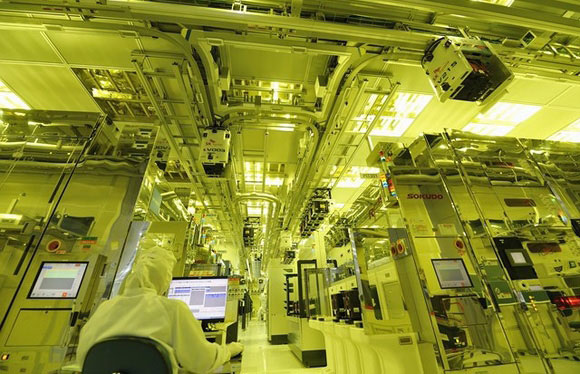
Of all regions, Europe/Middle East will show the strongest equipment spending growth with a surge of more than 50%, to US$3.7 billion in 2020, and is expected to match that gain in 2021 on the back of investments by Intel, STMicroelectronics and Infineon.
In Japan, fab equipment spending growth will be negligible at almost 2 percent in 2020 and bump up to nearly 4% in 2021, with investments by Kioxia/Western Digital, Sony and Micron leading the way.
Lagging the pack, the Americas will spend less in 2020 than in 2019, with fab equipment investments plunging 24% to US$6.2 billion, and extend the downturn with a 4% decline in 2021.
The latest update of the World Fab Forecast report, published in late February 2020, covers quarterly spending for construction and equipment from 2019 to 2021. The report lists 1,339 fabs and lines and 111 facilities (including low probability) expected to start volume production in 2020 or later. The forecast also provides quarterly totals for capacities, technology nodes, 3D layers, product types and wafer sizes. <Source:SEMI>
korean-electronics.com | Blog Magazine of korean electronics, brands and Goods

 semiconductor encapsulants. BCMB is a flameretardant, lightweight polymer material for electronic materials that is growing in the global market.

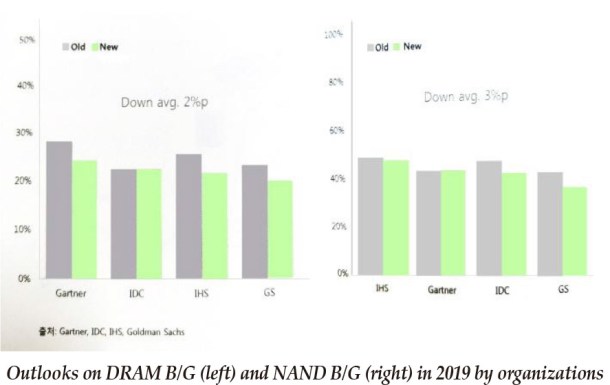
 advantages of reduced licensing period as a small site is utilized within the photovoltaic development site and there are almost no civil complaints.”
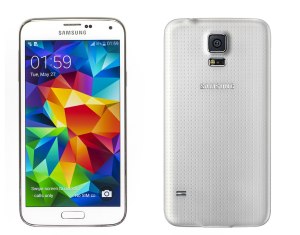 Samsung’s plan is based on the phenomenon that the premium smartphone market remains sluggish, such as the prolonged flagship model replacement cycle, while the demand for mid-range and low-end phones is growing, particularly in emerging markets. In addition, it seems that Samsung has a willingness to pre-empt the Chinese makers, such as Huawei, Xiaomi, Oppo, Vivo, etc., from expanding their positions in the market of mid-range and low-end phones.
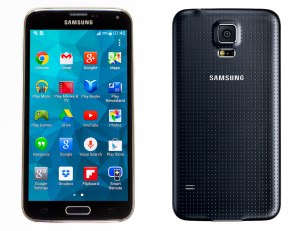 In addition to modifying its mid-range and low-end phone strategy, Samsung Electronics has also made clear its target customers. President Koh said, “The strategy organization for mid-range and low-end smartphones will have a positive impact on targeting the millennium generation (the generation born in the 1980s to early 2000s).
 CNBC and other foreign media evaluated that Samsung Electronics revised its mid-range and low-end phone strategy in order to cope with the sluggish global smartphone market.

 Korean-Electronics.com