 [INQ. NO. 1809E01] A pioneer in OLED technology, TVLogic brought the world’s first AMOLED broadcast monitor to market in 2010. At NAB 2018, the manufacturer highlighted the latest model in its OLED range.
LEM-550R – 55-inch UHD OLED Monitor for HDR Monitoring
LEM-550R is a QC-Grade HDR monitor for broadcast and post production with a 55-inch OLED panel with UHD resolution of 3840 × 2160. The OLED panel can reproduce a peak luminance of up to 750 nits. The LEM-550R supports various HDR standards such as SMPTE 2084PQ, Hybrid-Log Gamma (HLG), and others. It also supports multiple color gamuts including Rec.709, DCI, and Rec.2020. Signal I/O includes 3G/6G/12G-SDI input via one, two, or four SDI connections as well as HDMI (ver.2.0).

High-End LCD
TVLogic’s LVM series offers superior picture quality, wide viewing angles, professional broadcast functionality and low power consumption in slim, single-piece integrated designs. At NAB 2018, the company expanded its range with two models.
LVM-171S – 16.5-inch High-End LCD
 The new LVM-171S is TVLogic’s top QC-Grade 17-inch model with a 16.5 inch IPS LCD panel with 1920×1080 native resolution, wide-gamut reproduction (up to DCI-P3) enhanced contrast ratio and wide viewing angle all unmatched by other LCD monitors. A completely redesigned video processing unit provides powerful dual-channel performance and artifact-free image reproduction.
The LVM-171S provides HDR emulation function with HDR EOTFs of PQ, HLG and SLog3, support for 3D LUTs and various cinema camera log-to-linear LUTs, easy field upgradability and a full array of image processing features are standard.
LVM-241S – 24-inch High-End LCD
 The new LVM-241S is TVLogic’s top QC-Grade 24” model with a 24-inch IPS LCD panel with 1920×1200 resolution. This monitor incorporates the same desirable features as its 17” counterpart, including wide-gamut reproduction (up to DCI-P3), enhanced contrast ratio and wide viewing angle all unmatched by other LCD monitors. A completely redesigned video processing unit provides powerful dual-channel performance and artifact-free image reproduction.
The LVM-241S provides HDR emulation function with HDR EOTFs of PQ, HLG and SLog3, support for 3D LUTs and various cinema camera log-to-linear LUTs, easy field upgradability and a full array of image processing features are standard.
korean-electronics.com | Blog Magazine of korean electronics, brands and Goods
 In addition, the ‘Five-stage fine dust blocking system’ was applied to prevent dust from being discharged, blocking 99.9% of ultrafine dust up to PM 2.5. This product is the world’s first robotic vacuum cleaner that was certified by the German International Accredited Testing Institute (SLG) and the British Allergy Foundation (BAF) respectively for blocking fine dust and removing allergenic substances.


 In addition, the application of a 3.1x (3.2~10mm) electric varifocal lens allows viewing angles to be freely adjusted. An application for optimal viewing angles is thus available for each location to allow broader and more precise monitoring. And thanks to the infrared (IR) light function, the cameras are also highly effective even at night to recognize objects up to 30 meters away.
 The removal of the dome means quicker installation since attachment-detachment process can now be eliminated. And the efficient adjustment of monitoring direction even in a fixed state means significantly better management and operation of both cameras.


 diodes (LEDs).
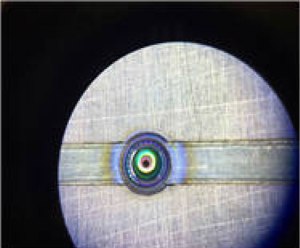
 Mr. Jong-gyun Kim, President and CEO of UNIVE Co., commented, “The demand for active optical cable will increase as the market for devices and contents related to the display of ultra-high resolution is growing at a rapid pace. We have participated in the exhibition in order to introduce AOC solution based on our accumulated development and mass-production technologies.”
 angles. The previously released four-channel multi-directional camera (PNM-9081VQ) has received considerable positive feedback for its ability to monitor in 360 degrees. The recently launched two-channel camera (PNM-7000VD) allows the users to select and install two lenses from a lineup of four lenses based on the necessary view angle of the installation environment, allowing precise monitoring without any blind spots.