Day Trip to Euljiro, a Rising Hotspot in Seoul

https://korean-electronics.com//inquiry

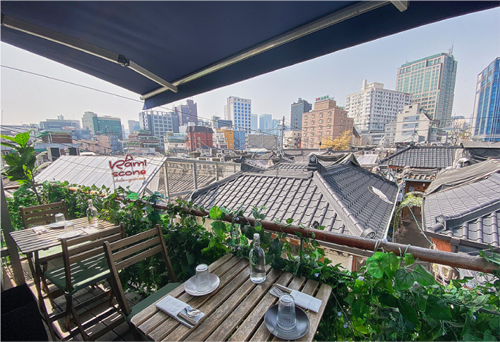
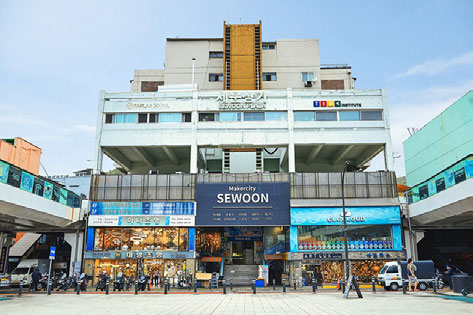
The area of Euljiro is full of history and trendy locations right in the heart of Seoul. The area is centered around Sewoon Plaza, a large commercial building built in the 1970s. As unique and trendy shops began opening alongside the old printing factory, lighting, and tool stores, this hot place received the name “hipjiro,” a combination of the words hip and Euljiro. Here is a charming tour course perfect for a day trip to Euljiro.

10:00 AM Euljiro Alley Tour
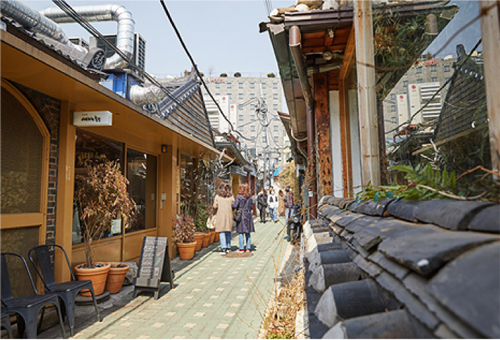
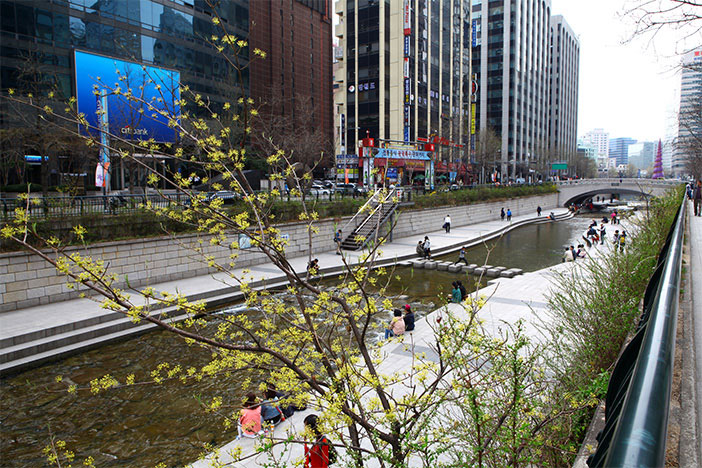
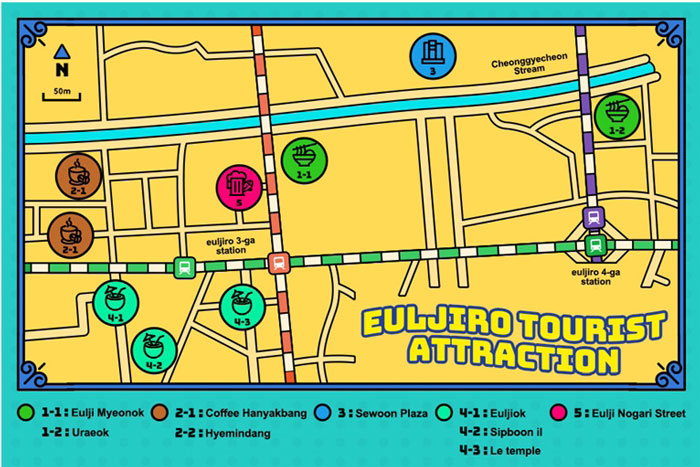
The Euljiro tour can start from any station connecting to Cheonggyecheon Stream on the Seoul Subway Line: Eujiro 3(Sam)-ga Station, Euljiro 4(sa)-ga Station, and Jongno 3(sam)-ga Station. Wherever the trip begins, visitors can reach all the major spots of Euljiro by following the countless alleys. The Euljiro area has an ironwork alley, lighting alley, and nogari (dried pollack) alley, making for a great sightseeing trip. Another method is by entering any alley and shop to each liking.

10:00 AM Euljiro Alley Tour

12:00 PM Bowl of Pyeongyang Naengmyeon
The area of Euljiro is also famous for its countless Pyeongyang naengmyeon (cold buckwheat noodles) restaurants. The cold and unique flavor of the soup is a special trait of Pyeongyang naengmyeon. The noodles go especially well with meat. Each store has a variety of selections from bulgogi to suyuk (boiled beef slices), pyeonyuk (boiled pork slices), and much more.

12:00 PM Bowl of Pyeongyang Naengmyeon

14:00 PM Cup of Coffee in a Nostalgic Cafe
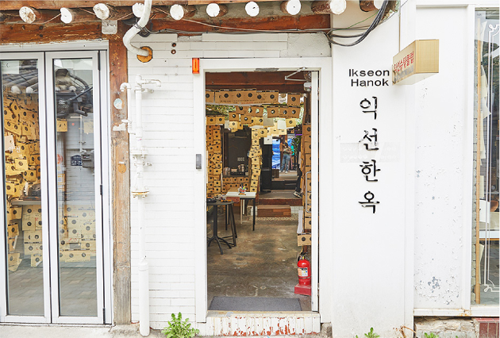
Fragrant coffee and sweet dessert are a must during travels. The Euljiro area has common coffee shops as well as unique cafés with a different vibe. In particular, Coffee Hanyakbang is popular among not only locals, but also tourists. This café specializes in pour over coffee. Just like its name Hanyakbang, which refers to an old-fashioned pharmacy dealing with medicinal herbs, the interior of the café is decorated with old cabinets inlaid with mother-of-pearl, vintage record players, and antiques giving it a unique retro look.
Across the street from Coffee Hanyakbang is a bakery shop that specializes in cake and chocolates. Hyemindang used to be the location of a medical facility called Hyeminseo during the Joseon period. The antique interior design from that period is the biggest characteristic of this shop.

14:00 PM Cup of Coffee in a Nostalgic Cafe

16:00 PM Look around Sewoon Plaza
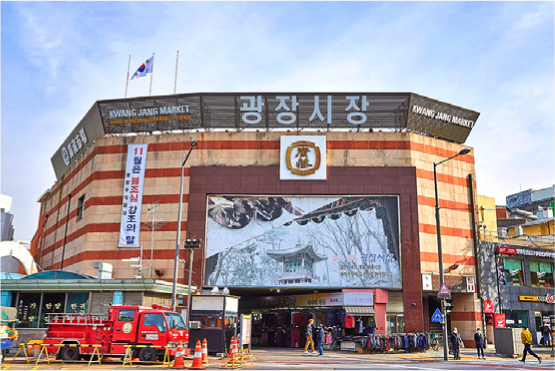
Sewoon Plaza is Korea’s first mixed-use commercial building and used to be a popular electronics department store. The building has Sewoon Electronics Department Store, Cheonggye Arcade, Daerim Arcade, Dasisewoon Plaza, and more. The building is famous for being the filming location for Korean dramas “Vincenzo (2021)” and “Guardian: The Lonely and Great God (2016). In particular, Cheonggye Arcade and Daerim Arcade have cafés, bookstores, and restaurants that are popular on social media. At Geumjiokyeop, visitors can find posters, books, and goods from old popular films. Horangyi is a recommended coffee shop with old school vibes.

16:00 PM Look around Sewoon Plaza

18:00 PM Wrap up the Day at a Wine Bar
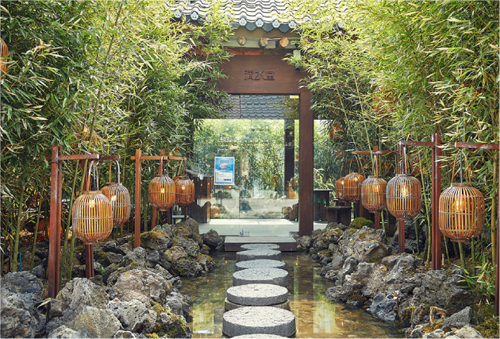
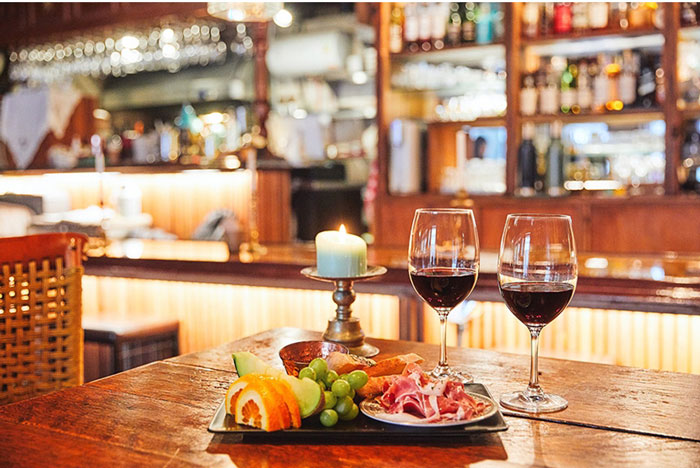
To wrap up the Euljiro tour, how about spending some time at a charming wine bar or pub. The wine bars in Euljiro have retro entrances but the interior design is completely different. Each bar has its own characteristic. There is one wine bar named Le temple that serves delicious dishes made with Jamόn, cheese, and fruits. Some have LP bars playing the classics, like at Pky and The Edge, and some, such as eulijiok and Le temple, have live DJ performances.
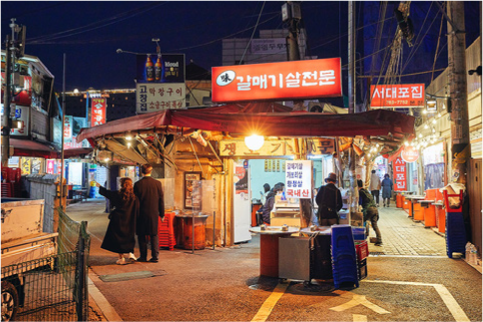
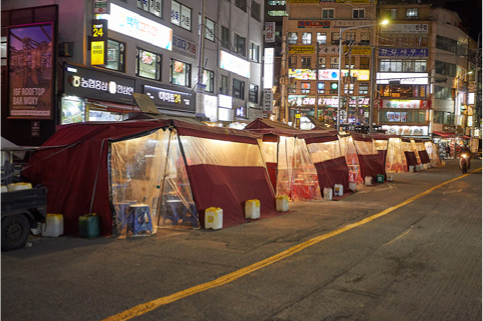
Euljiro Nogari Street is perfect for beer lovers who want to enjoy beer and nogari at an affordable price. People sit on tables along the alley and enjoy the summer night.

  • Some stores subject to closure due to social distancing.
18:00 PM Wrap up the Day at a Wine Bar

The above article is courtesy of VisitKorea, the official website of the Korea Tourism Organization (www.visitkorea.or.kr)
 
korean-electronics.com | Blog Magazine of korean electronics, brands and Goods
Suncheonman Bay, Nature’s Gifts of Garden & Sunset

https://korean-electronics.com//inquiry

Every November, the expansive field of reeds at Suncheonman Bay takes on a golden hue. Suncheonman Bay Wetland Reserve is home to the largest colony of reeds in Korea, and it is yet another perfect way to enjoy autumn and early winter by taking leisurely romantic strolls around the park. In addition, Korea’s first national garden, Suncheonman Bay National Garden is nearby, drawing in an overwhelming number of tourists. With an epithet “garden from heaven,” experience the unique nature and beauty of Korea’s most outstanding eco-system and protected wetland – Suncheonman Bay!

Suncheonman Bay, Nature’s Gifts of Garden & Sunset

Gardens from around the world gathered as one, Suncheon Bay National Garden

Suncheon Bay National Garden, opened for the international Suncheon Bay Garden Expo, is the first National Garden in Korea. A wide variety of themed gardens can be found meticulously lined up at the garden. Autumn in particular is lively, with thousands of chrysanthemums in every shade, mirroring the field of reeds in the bay.
There are two entrances found at the east and west sides of the garden. The East Gate leads to Suncheon Lake Garden, World Garden and Metasequoia Path while the West Gate brings visitors to the Korean Traditional Garden, Suncheonman Bay International Wetland Center and other nearby attractions. Visitors may choose to start their excursion from either entrance. As the park is fairly large and spacious, visitors can board the sightseeing bus (adults 3,000 won) that operates around the park.

Suncheon Bay National Garden – Suncheon Lake Garden
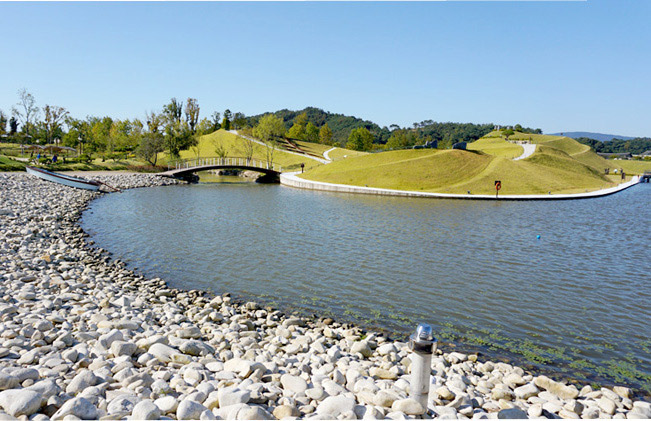
Suncheon Lake Garden was designed by world famous landscape designer Charles Jencks during his stay in Suncheon. This garden displays the city in miniature size, including replicas of the mountains surrounding the city made into smaller hills. In a reversal of elements, the lake in the center of these hills serves as the city of Suncheon, while the wooden deck above represents Dongcheon Stream winding its way through the city. Visitors can stroll along the boardwalk or climb up the hills; the view of Suncheon Lake Garden from the hill peaks is quite stunning.

Suncheon Bay National Garden – Suncheon Lake Garden

Suncheon Bay National Garden – World Garden
The World Garden is made up of garden styles from various countries, including Thailand, Japan, Great Britain, Italy, Turkey, Spain, the United States, the Netherlands, Germany, France, and China. It is an interesting experience to compare and appreciate different aesthetics presented by each nation. The Chinese Garden features a pond and pavilions, while the Turkey Garden represents the culture of the Middle East. The Dutch Garden and French Garden have models of their famous windmills and Palace of Versailles, respectively. Walking through each garden will offer visitors a chance to experience the visual differences in cultures from around the world.

Suncheon Bay National Garden - World Garden

Suncheon Bay National Garden – Metasequoia Path & Participation Garden
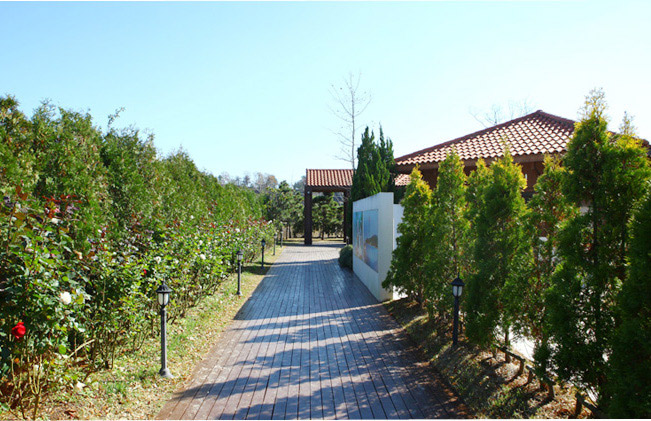
The Metasequoia Path is the most popular trail at the garden among couples. The trees were originally slated to be cut down in order to expand the highway system, but were moved to the garden to live out the rest of their lives.
The Participation Garden displays artworks designed and created by various cities, companies, and individuals in Korea, creating a feeling of visiting an art gallery. The recycling garden features aluminum cans hanging on a fence, being repurposed to hold flowers instead of drinks. The seed bank also showcases many plants, symbolic of the International Seed Bank, where seeds of every type are saved in order to replant the world should an extreme disaster take place.

Suncheon Bay National Garden – Metasequoia Path & Participation Garden

Dream Bridge
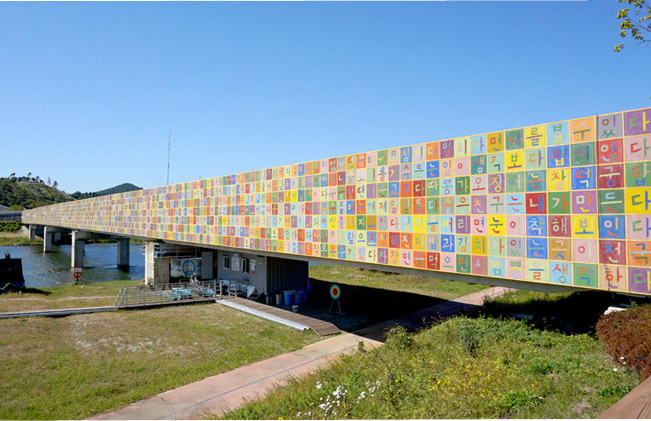
The Dream Bridge, designed by installation artist Kang Ik-joong, was created by reusing 30 container boxes. The walls of the bridge are decorated with more than 140,000 vivid paintings created by children from around the world. All those who cross the bridge can feel a strong desire to protect Suncheonman Bay and the world’s natural environment.

Dream Bridge

Korean Traditional Garden
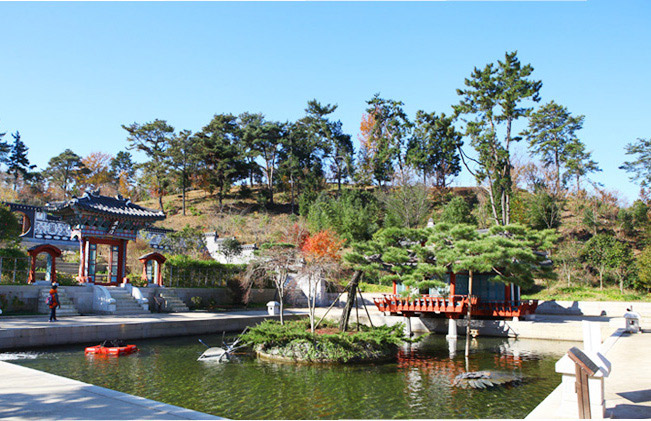
Korean Traditional Garden’s palace garden reproduces the elegant and beautiful Huwon areas of Changdeokgung Palace and Gyeongbokgung Palace. The noblemen’s garden shows a glimpse of the atmosphere in which ancient noblemen relaxed and studied with nature by their side. Lastly, the garden of hope focuses on a motif of folk beliefs. One can see many stone towers, created with the tradition of stacking a stone while making a wish in order for the wish to come true.

Korean Traditional Garden

Lungs of the Earth – Suncheonman Bay Wetland Reserve
Suncheonman Bay is one of the world’s top five coastal wetlands, and is by far Korea’s most beautiful natural landscape. The seemingly endless field of reeds surrounded on three sides by mountains and open to the sea on the fourth is something not easily seen in the world. Moreover, Suncheonman Bay was registered with the Ramsar Convention on Wetlands in January 2006. The wetland serves as home to an array of migratory birds including species like hooded crane, Saunders’s gull and more.

Lungs of the Earth - Suncheonman Bay Wetland Reserve

Enjoying Suncheonman Bay in autumn
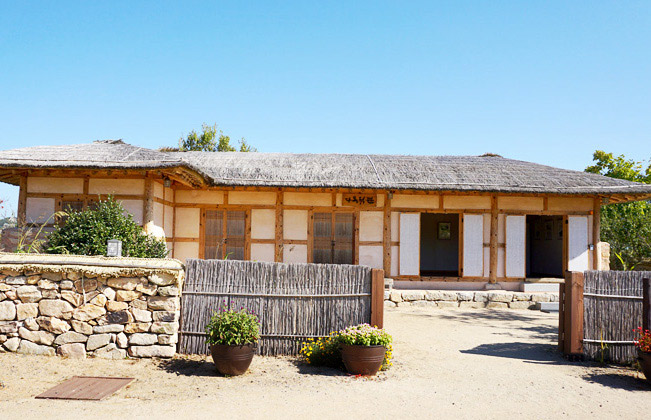
The Suncheon Literature Hall features the works of authors Kim Seungok and Jeong Chae-bong, both from Suncheon. Handwritten manuscripts, books, and daily living items from both writers are on display. The building was constructed as a traditional thatch-roofed house, harmonizing with the nature of Suncheonman Bay.
As soon as you enter the main gate of Suncheonman Bay Wetland Reserve, green lawns and ponds greet you before reaching the reed fields. As soon as you cross Mujingyo Bridge, your journey through the dancing fields of reeds begins. It takes approximately 40 minutes to walk along the path until you reach Yongsan Observatory. Relaxing views of vast fields and picturesque landscapes accompany you throughout your journey.
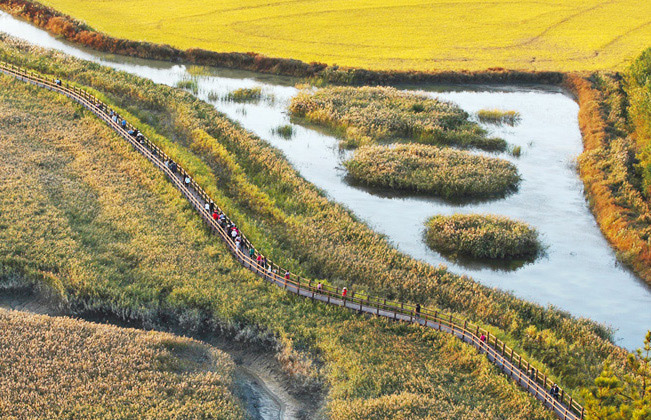
Visitors can comfortably stay above the mudflat where the reeds grow by walking on the wooden deck that threads its way across and around the bay. The field of reeds are beautiful in the day time but be sure to head up to the observatory before the sun sets, as you won’t want to miss out on the spectacular view over the plain’s horizon.

Enjoying Suncheonman Bay in autumn

The above article is courtesy of VisitKorea, the official website of the Korea Tourism Organization (www.visitkorea.or.kr)


korean-electronics.com | Blog Magazine of korean electronics, brands and Goods

Five Ways to Enjoy Seoul Forest

https://korean-electronics.com//inquiry

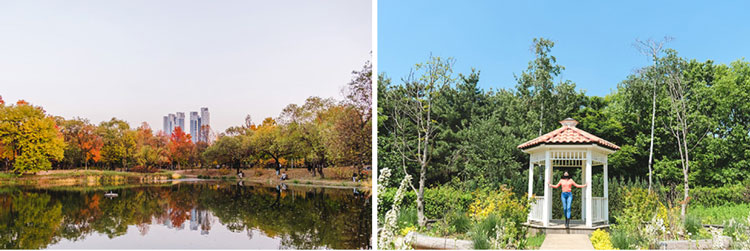
Seoul Forest, located in the middle of the metropolis, is a natural space where you can enjoy the charms of both a forest and the Hangang River. Originally the royal hunting grounds during the Joseon period, the land was used for a golf course and horse race track before being converted into the current park in 2005. The park offers many ways to enjoy a relaxing time here through all four seasons!

Seoul Forest is beautiful in all four seasons, with cherry blossoms and tulips in spring, hydrangeas and poppies in summer, and cosmos in fall!
The most popular photo spots during spring and summer are the Metasequoia road, and area around the lake in the park.

Enjoy a picnic
On nice days, a picnic in the park is perfect! Just pick a tree to spread out your picnic map to enjoy a relaxing afternoon in Seoul’s central park.

Five Ways to Enjoy Seoul Forest

Go for a bike ride
The fastest way to get around Seoul Forest is by renting Ddareungi, a public bike rental offered by Seoul Metropolitan Government. You can even ride all the way to the nearby Hangang Park if you want!

Five Ways to Enjoy Seoul Forest

Relax in a cafe
The first thing you’ll see upon exiting Seoul Forest Station on the Suin-Bundang Line are blue shipping containers! These big boxes make up UNDER STAND AVENUE, a popular attraction around Seoul Forest. The containers have been converted into all kinds of shops, from cafés to design products and even clothing. The street space often serves as the venue for concerts by indie bands.
Another great place to go for coffee in the area is Seongsu-dong Café Street. The area is filled with famous coffee shops, from Korea’s first Blue Bottle Coffee to Center Coffee and Halff Coffee, operated by skilled baristas.

Five Ways to Enjoy Seoul Forest

Hike up Eungbongsan Mountain
Located just a short walk from Seoul Forest, Eungbongsan Mountain is the perfect place to look out over the Hangang River and downtown Seoul. Despite its name, Eungbongsan is more of a hill than a mountain, making for an easy trek up. The mountain is most popular in spring, when the slopes seem to glow with bright yellow forsythia.

Five Ways to Enjoy Seoul Forest

The above article is courtesy of VisitKorea, the official website of the Korea Tourism Organization (www.visitkorea.or.kr)


korean-electronics.com | Blog Magazine of korean electronics, brands and Goods
Fresh buckwheat aroma at Lee Hyo-seok Culture Village

https://korean-electronics.com//inquiry

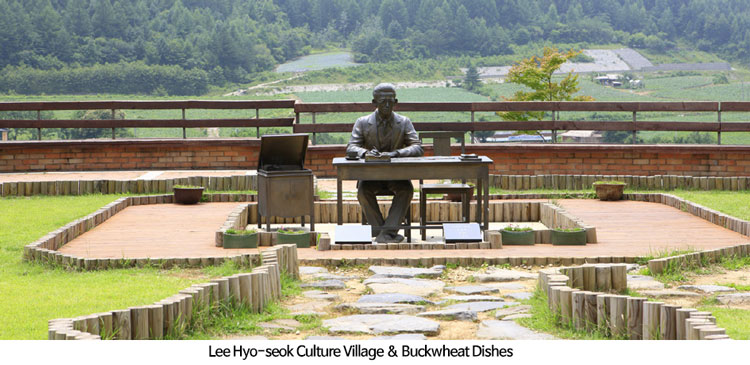
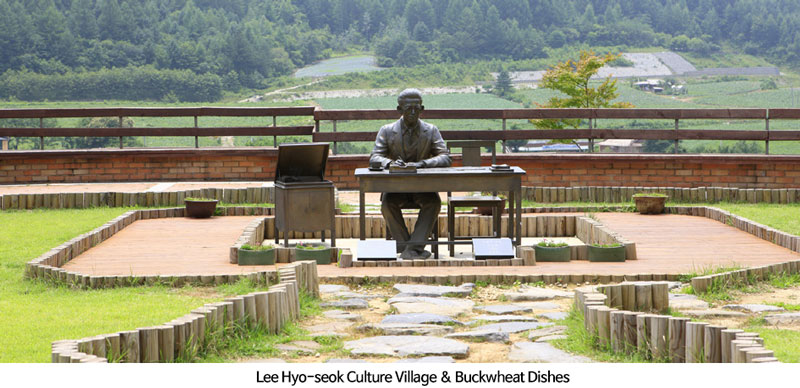
Every autumn, buckwheat flowers blossom throughout Bongpyeong-myeon, Pyeongchang-gun. At the peak of the blooming season, you can enjoy the beautiful and romantic scenery of the snow-white fields of buckwheat flowers in the village. The village is also the setting of well-known Korean author Lee Hyo-seok’s story “When Buckwheat Flowers Bloom,” and thus PyeongchangHyoseok Cultural Festival is held here every September to commemorate the novel.
Even during the non-seasonal period of the buckwheat flowers, Bongpyeong is always ready to serve. Be sure to visit Lee Hyo-seok Memorial Hall or stop by for some memilguksu (buckwheat noodles), memilmuk (buckwheat jelly), or memilkkotsul (buckwheat blossom liquor).

Fresh buckwheat aroma at Lee Hyo-seok Culture Village


• ‌Address: Lee Hyo-seok Memorial Hall, 75-25, Hyoseokmunhwa-gil, Bongpyeong-myeon, Pyeongchang-gun, Gangwon-do
• ‌Lee Hyo-seok Memorial Hall

  • Operating hours: October-April 09:00-17:30, May-September 09:00-18:30 (Last admission 30 minutes before closing) / Closed Mondays, January 1, the day of Seollal (Lunar New Year’s Day) &Chuseok (Korean Thanksgiving Day)
    • ‌Admission: Adults 2,000 won / Teenagers 1,500 won / Children 1,000 won
    • ‌Website: http://www.hyoseok.org (Korean only)

Discover Korea’s History in Pyeongchang, Jeonggangwon&Woljeongsa Temple

Korea Traditional Food Culture Experience Center, Jeonggangwon

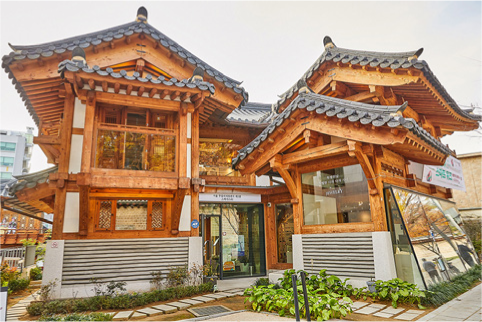
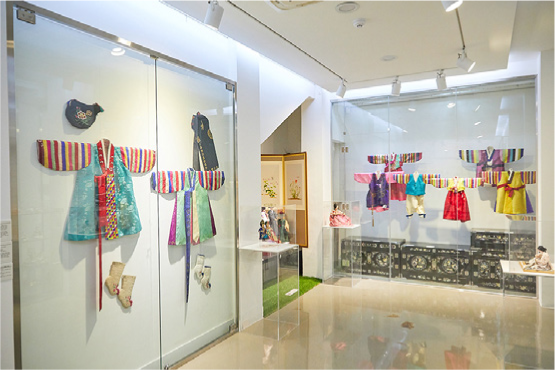
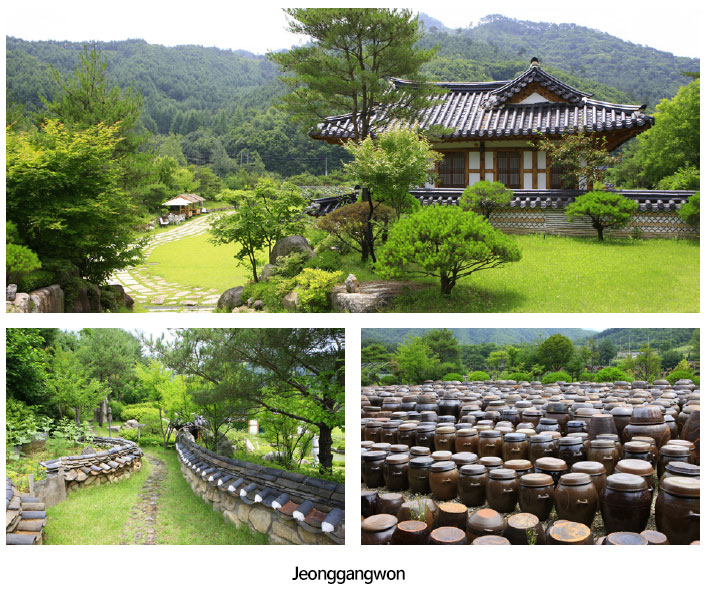
Jeonggangwon (Korea Traditional Food Culture Experience Center) was established in order to preserve, research, distribute and promote the values and merits of traditional Korean food culture to the world. The hanok-style buildings of Jeonggangwon include a food museum, as well as a hanbok experience and cooking lessons. A restaurant that offers traditional hanjeongsik (Korean table d’hôte) is also available. The beautiful hanok buildings, garden, and hundreds of jangdok (traditional Korean crock) gathered together are especially popular among international visitors.

Korea Traditional Food Culture Experience Center, Jeonggangwon


• ‌Address: 2010-13, Geumdanggyegok-ro, Yongpyeong-myeon, Pyeongchang-gun, Gangwon-do
• ‌Operating hours: 09:00-19:00 / Closed the day of Seollal (Lunar New Year’s Day) &Chuseok (Korean Thanksgiving Day)
• ‌Fees: Free admission to Food Museum / Hanbok experience 8,000 won / Separate fees apply for hands-on activities
• ‌Website: http://www.jeonggangwon.com (Korean, English, Japanese, Chinese)

Temple within a forest of fir trees, Woljeongsa Temple

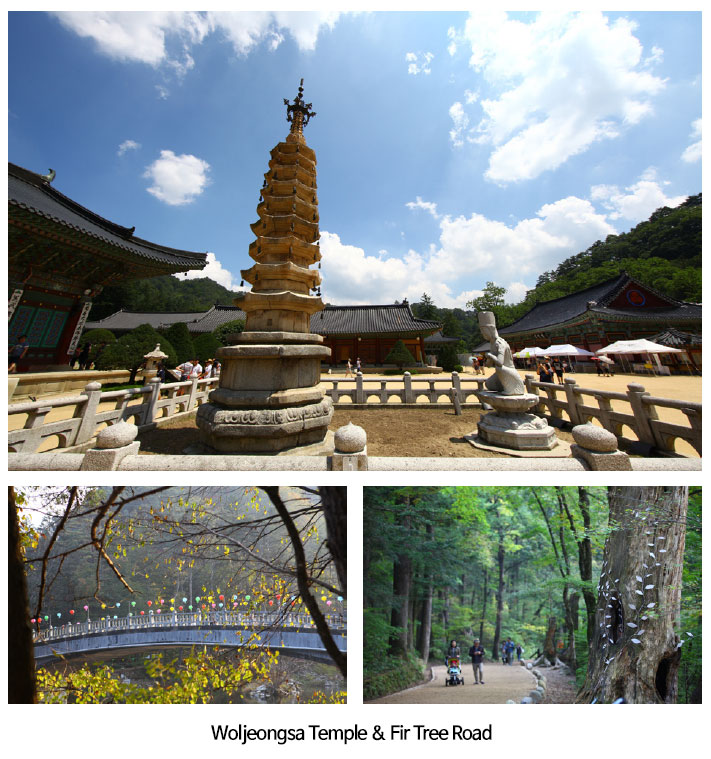
Woljeongsa Temple boasts a history of over one thousand years, making it a proud cultural site in Pyeongchang. Although many cultural assets were destroyed during the Korean War and then later reconstructed, visitors can still sense the strong coexistence of Odaesan Mountain’s nature with Woljeongsa Temple’s dignity and spirit.
Woljeongsa Temple has many national treasures, including the octagonal nine-story stone pagoda. Other national treasures that have been excavated are preserved in Woljeongsa Museum, a definite must-see if you are visiting the temple. From the entrance of Woljeongsa Temple, a separate road leads off to a path through a dense fir tree forest. Not only magnificent in appearance, walking through this pathway filled with fir trees can be equally relaxing and refreshing to one’s mind, making it a popular destination among the locals.

Temple within a forest of fir trees, Woljeongsa Temple


• ‌Address: 374-8, Odaesan-ro, Jinbu-myeon, Pyeongchang-gun, Gangwon-do
• ‌Admission: Adults 3,000 won / Teenagers 1,500 won / Children 500 won
• Website: woljeongsa.org (Korean, English)

More Info

☞ ‌Transportation (Seoul → Pyeongchang)
Dong Seoul Bus Terminal → Pyeongchang Bus Terminal (First bus 07:00, last bus 18:46 / Travel time approx. 2 hrs)
Dong Seoul Bus Terminal → Jangpyeong Bus Stop (First bus 06:35, last bus 20:20 / Travel time approx. 2 hrs)
Dong Seoul Bus Terminal → Hoenggye Intercity Bus Stop (First bus 06:35, last bus 20:20 / Travel time approx. 2 hrs 30 min)
Seoul Nambu Terminal → Jangpyeong Bus Stop (First bus 07:00, last bus 19:20 / Travel time approx. 1 hr 50 min)
Seoul Nambu Terminal → Hoenggye Intercity Bus Stop (First bus 07:00, last bus 19:20 / Travel time approx. 2 hrs 30 min)
☞ ‌Related suggested itineraries
Two Days in the Pure Scenery of Pyeongchang & Jeongseon
Travel Through Gangwon-do’s Scenic Beauty
☞ Pyeongchang Tourism website: tour.pc.go.kr (Korean, English, Japanese, Chinese, German, French)
☞ 1330 Korea Travel Hotline: +82-2-1330 (Korean, English, Japanese, Chinese)


korean-electronics.com | Blog Magazine of korean electronics, brands and Goods
Experience Jeju at a Leisurely Pace One

https://korean-electronics.com//inquiry

One of the main reasons people go on vacation is to get rid of stress. The stress-relieving powers of simple things such as enjoying a good meal or buying some new shoes are amplified when on vacation! Everything tastes better and looks better, even your home. Jeju Island is the perfect place to relax, with a natural environment, delicious local foods, and unique shopping opportunities. Set out now for your very own stress-relieving trip to Jeju-do!
There are a number of smaller islands around Jeju, including Udo and Marado Islands. These days, Gapado Island, the fourth largest island, has become a popular day-trip destination. The island resembles a swimming ray when seen from above. The island is most visited during spring, when the fields of green barley are waving in the sea breeze.

Setting off for Gapado Island
The ferry to Gapado Island departs from Unjinhang Harbor in Hamo-ri, Seogwipo-si off the southwest coast. The ferry from Unjinhang Harbor operates from 09:00 to 16:00, although the last ferry back from Gapado Island is at 16:20. Tickets are purchased as a round-trip set, so if you leave after 15:00, you’ll have to spend the night on the island and return the next morning. Tickets must be purchased at least 40 minutes before departure, in order for all passengers to be recorded. On-site ticket purchase is available but you may have to wait a few hours until the next ferry if you visit during the peak season. It’s recommended to reserve tickets in advance, either online or over the phone. Foreigners must submit their passport for verification when purchasing or picking up their ticket on-site.

Experience Jeju at a Leisurely Pace One

Fun on Gapado Island
The best way to see all the island has to offer in a short amount of time is by renting a bicycle. The bike rental is located right at the harbor, so you can’t miss it! There are both regular and tandem bicycles for rent, at a rate of 5,000 won and 10,000 won respectively. Payment is only accepted in cash, so be sure to plan ahead if you want to rent one.
There is a circular road around the coast of the island that offers beautiful sights of the sea, but don’t forget the interior of the island. One place you must see is Somang Observation Deck. Located at the highest point of the island, both Marado Island to the south and Hallasan Mountain to the north can be seen from the observation deck. The railings of the deck are decorated with many ribbons with wishes and hopes, somang in Korean, written on them, giving the location its name.
Another attraction on the island is Pang Gallery, dedicated to the unique painting style of women in the Mithila region of the Indian subcontinent. The art is created with natural dyes and pigments, using fingers and twigs as brushes. The paintings generally focus on nature, daily life, or Hindu gods and goddesses.

Eat your stress away

Special treat of the island
There are a number of local specialties on Gapado Island, foremost of which is green barley ice cream! This soft serve ice cream is popular among all ages, and the pale green color makes for beautiful photos. The ice cream can be ordered in a cup or cone, both of which are served with a small ppeongtwigi (rice puff) snack.
Other snacks on the island include green barley makgeolli (rice wine) and green barley misutgaru (roasted grain drink). All these treats can be found at the convenience stores and snack bars around the harbor. We recommend buying snacks to enjoy while you wait for the ferry to return.

Pier 22
Being an island, it’s obvious that some of the best foods you’ll find in Jeju are seafood dishes! If you’re looking for a dish favored by locals, try the red-banded lobster jjim (steamed lobster) from Pier 22 near Geumneungeutteum Beach. Red-banded lobsters are a unique species of lobster with a hard, sharp shell, found only the in southern sea around Korea. Because of the hard shell, the restaurant gives each diner a small wooden hammer to crack the shell! The sweet lobster meat tastes great dipped in ranch dressing.

Umu Pudding
Umu Pudding is a special dessert found only on Jeju Island! The name umu comes from the Korean word for red algae, umutgasari. When it is boiled, it releases a gelatin substance, known as agar. The red algae used at Umu Pudding is harvested by haenyeo, female divers of Jeju. You can choose from three flavors, the standard custard, matcha-flavored, or chocolate pudding. The shop also sells products with an Umu character design that make for great souvenirs. Before leaving, be sure to get a few pictures of the sweet interior!

Black pork
The most famous food from Jeju is heukdwaeji, otherwise known as black pork! Jeju’s local black pigs have played an important part in the history, culture, and livelihood of the island. Grilled black pork tastes best after being dipped in meljeot (salted anchovy) for about 20 seconds. To eat like a Korean, wrap the meat and some pamuchim(spicy spring onions) in a lettuce or perilla leaf.

Pork noodles
You can eat guksu (noodles) anywhere in Korea, but gogi guksu (pork noodles) is a specialty of Jeju! Each bowl is filled with noodles and pork slices for a filling meal. The pork adds to the powerful flavor of the broth. The dish is served plain but chili pepper powder can be added to taste. Even if you add a lot to make it super spicy, the broth maintains its flavor.

Beltfish & mackerel dishes
Before leaving Jeju, you have to try galchi (beltfish) or godeungeo (mackerel). These two fish can be served a variety of ways, although the most common are stewed and fried; spicy stewed beltfish is the most popular. The taste of stewed beltfish will vary slightly by restaurant, but they are all marked by their strong seasoning. The spicy yet slightly sweet flavor is addicting! Most restaurants in Jeju use a local silver beltfish, which has an even stronger taste. Radish and potatoes are also stewed with the beltfish for a full meal.

Retail therapy

Sumokwon Night Market
Sumokwon Night Market is the latest trending location for nightlife in Jeju! Located near Halla Arboretum, the market draws in as many tourists as the popular night markets in Seoul. The entire area is decorated in cute photo zones and features both local specialty products and handmade items. Purchase some of the foods available from the food trucks, such as giant turkey drumsticks, black pork ribs, or fresh pineapple juice, to quench any late-night cravings!

Jeju Local Products Exhibition & Sales Market
Jeju has developed a unique culture due to being so far separated from the Korean peninsula. Thanks to this, there are plenty of local products that will please anyone who receives one as a gift! The best place to visit for these special souvenir items is the Jeju Local Products Exhibition & Sales Market. The market has over 2,200 items created by 138 individual shops! You’re sure to find something for everyone here; just be sure you don’t forget a gift for yourself!


korean-electronics.com | Blog Magazine of korean electronics, brands and Goods
Fresh buckwheat aroma at Lee Hyo-seok Culture Village

https://korean-electronics.com//inquiry

Every autumn, buckwheat flowers blossom throughout Bongpyeong-myeon, Pyeongchang-gun. At the peak of the blooming season, you can enjoy the beautiful and romantic scenery of the snow-white fields of buckwheat flowers in the village. The village is also the setting of well-known Korean author Lee Hyo-seok’s story “When Buckwheat Flowers Bloom,” and thus PyeongchangHyoseok Cultural Festival is held here every September to commemorate the novel.
Even during the non-seasonal period of the buckwheat flowers, Bongpyeong is always ready to serve. Be sure to visit Lee Hyo-seok Memorial Hall or stop by for some memilguksu (buckwheat noodles), memilmuk (buckwheat jelly), or memilkkotsul (buckwheat blossom liquor).
• ‌Address: Lee Hyo-seok Memorial Hall, 75-25, Hyoseokmunhwa-gil, Bongpyeong-myeon, Pyeongchang-gun, Gangwon-do
• ‌Lee Hyo-seok Memorial Hall

  • Operating hours: October-April 09:00-17:30, May-September 09:00-18:30 (Last admission 30 minutes before closing) / Closed Mondays, January 1, the day of Seollal (Lunar New Year’s Day) &Chuseok (Korean Thanksgiving Day)

• ‌Admission: Adults 2,000 won / Teenagers 1,500 won / Children 1,000 won
• ‌Website: http://www.hyoseok.org (Korean only)

Discover Korea’s History in Pyeongchang, Jeonggangwon&Woljeongsa Temple

Korea Traditional Food Culture Experience Center, Jeonggangwon

Jeonggangwon (Korea Traditional Food Culture Experience Center) was established in order to preserve, research, distribute and promote the values and merits of traditional Korean food culture to the world. The hanok-style buildings of Jeonggangwon include a food museum, as well as a hanbok experience and cooking lessons. A restaurant that offers traditional hanjeongsik (Korean table d’hôte) is also available. The beautiful hanok buildings, garden, and hundreds of jangdok (traditional Korean crock) gathered together are especially popular among international visitors.
• ‌Address: 2010-13, Geumdanggyegok-ro, Yongpyeong-myeon, Pyeongchang-gun, Gangwon-do
• ‌Operating hours: 09:00-19:00 / Closed the day of Seollal (Lunar New Year’s Day) &Chuseok (Korean Thanksgiving Day)
• ‌Fees: Free admission to Food Museum / Hanbok experience 8,000 won / Separate fees apply for hands-on activities
• ‌Website: http://www.jeonggangwon.com (Korean, English, Japanese, Chinese)

Temple within a forest of fir trees, Woljeongsa Temple

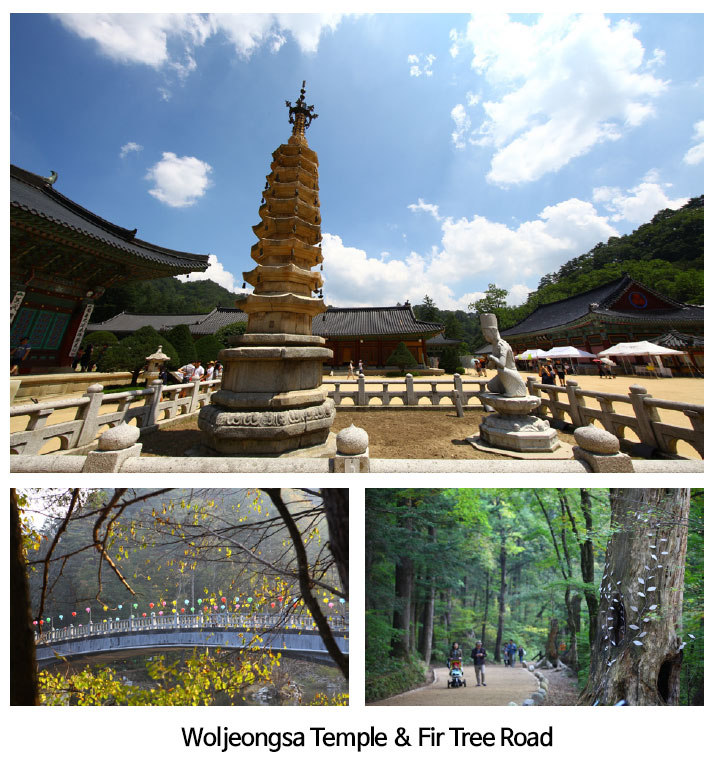
Woljeongsa Temple boasts a history of over one thousand years, making it a proud cultural site in Pyeongchang. Although many cultural assets were destroyed during the Korean War and then later reconstructed, visitors can still sense the strong coexistence of Odaesan Mountain’s nature with Woljeongsa Temple’s dignity and spirit.
Woljeongsa Temple has many national treasures, including the octagonal nine-story stone pagoda. Other national treasures that have been excavated are preserved in Woljeongsa Museum, a definite must-see if you are visiting the temple. From the entrance of Woljeongsa Temple, a separate road leads off to a path through a dense fir tree forest. Not only magnificent in appearance, walking through this pathway filled with fir trees can be equally relaxing and refreshing to one’s mind, making it a popular destination among the locals.
• ‌Address: 374-8, Odaesan-ro, Jinbu-myeon, Pyeongchang-gun, Gangwon-do
‌Admission: Adults 3,000 won / Teenagers 1,500 won / Children 500 won
Website: woljeongsa.org (Korean, English)

More Info

‌Transportation (Seoul → Pyeongchang)
Dong Seoul Bus Terminal → Pyeongchang Bus Terminal (First bus 07:00, last bus 18:46 / Travel time approx. 2 hrs)
Dong Seoul Bus Terminal → Jangpyeong Bus Stop (First bus 06:35, last bus 20:20 / Travel time approx. 2 hrs)
Dong Seoul Bus Terminal → Hoenggye Intercity Bus Stop (First bus 06:35, last bus 20:20 / Travel time approx. 2 hrs 30 min)
Seoul Nambu Terminal → Jangpyeong Bus Stop (First bus 07:00, last bus 19:20 / Travel time approx. 1 hr 50 min)
Seoul Nambu Terminal → Hoenggye Intercity Bus Stop (First bus 07:00, last bus 19:20 / Travel time approx. 2 hrs 30 min)
‌Related suggested itineraries
Two Days in the Pure Scenery of Pyeongchang & Jeongseon
Travel Through Gangwon-do’s Scenic Beauty
☞ Pyeongchang Tourism website: tour.pc.go.kr (Korean, English, Japanese, Chinese, German, French)
1330 Korea Travel Hotline: +82-2-1330 (Korean, English, Japanese, Chinese)
 
korean-electronics.com | Blog Magazine of korean electronics, brands and Goods
Experience Jeju at a Leisurely Pace

https://korean-electronics.com//inquiry

IOne of the main reasons people go on vacation is to get rid of stress. The stress-relieving powers of simple things such as enjoying a good meal or buying some new shoes are amplified when on vacation! Everything tastes better and looks better, even your home. Jeju Island is the perfect place to relax, with a natural environment, delicious local foods, and unique shopping opportunities. Set out now for your very own stress-relieving trip to Jeju-do!
There are a number of smaller islands around Jeju, including Udo and Marado Islands. These days, Gapado Island, the fourth largest island, has become a popular day-trip destination. The island resembles a swimming ray when seen from above. The island is most visited during spring, when the fields of green barley are waving in the sea breeze.

Setting off for Gapado Island
The ferry to Gapado Island departs from Unjinhang Harbor in Hamo-ri, Seogwipo-si off the southwest coast. The ferry from Unjinhang Harbor operates from 09:00 to 16:00, although the last ferry back from Gapado Island is at 16:20. Tickets are purchased as a round-trip set, so if you leave after 15:00, you’ll have to spend the night on the island and return the next morning. Tickets must be purchased at least 40 minutes before departure, in order for all passengers to be recorded. On-site ticket purchase is available but you may have to wait a few hours until the next ferry if you visit during the peak season. It’s recommended to reserve tickets in advance, either online or over the phone. Foreigners must submit their passport for verification when purchasing or picking up their ticket on-site.

Fun on Gapado Island
The best way to see all the island has to offer in a short amount of time is by renting a bicycle. The bike rental is located right at the harbor, so you can’t miss it! There are both regular and tandem bicycles for rent, at a rate of 5,000 won and 10,000 won respectively. Payment is only accepted in cash, so be sure to plan ahead if you want to rent one.
There is a circular road around the coast of the island that offers beautiful sights of the sea, but don’t forget the interior of the island. One place you must see is Somang Observation Deck. Located at the highest point of the island, both Marado Island to the south and Hallasan Mountain to the north can be seen from the observation deck. The railings of the deck are decorated with many ribbons with wishes and hopes, somang in Korean, written on them, giving the location its name.
Another attraction on the island is Pang Gallery, dedicated to the unique painting style of women in the Mithila region of the Indian subcontinent. The art is created with natural dyes and pigments, using fingers and twigs as brushes. The paintings generally focus on nature, daily life, or Hindu gods and goddesses.

Eat your stress away

Special treat of the island
There are a number of local specialties on Gapado Island, foremost of which is green barley ice cream! This soft serve ice cream is popular among all ages, and the pale green color makes for beautiful photos. The ice cream can be ordered in a cup or cone, both of which are served with a small ppeongtwigi (rice puff) snack.
Other snacks on the island include green barley makgeolli (rice wine) and green barley misutgaru (roasted grain drink). All these treats can be found at the convenience stores and snack bars around the harbor. We recommend buying snacks to enjoy while you wait for the ferry to return.

Pier 22
Being an island, it’s obvious that some of the best foods you’ll find in Jeju are seafood dishes! If you’re looking for a dish favored by locals, try the red-banded lobster jjim (steamed lobster) from Pier 22 near Geumneungeutteum Beach. Red-banded lobsters are a unique species of lobster with a hard, sharp shell, found only the in southern sea around Korea. Because of the hard shell, the restaurant gives each diner a small wooden hammer to crack the shell! The sweet lobster meat tastes great dipped in ranch dressing.

Umu Pudding
Umu Pudding is a special dessert found only on Jeju Island! The name umu comes from the Korean word for red algae, umutgasari. When it is boiled, it releases a gelatin substance, known as agar. The red algae used at Umu Pudding is harvested by haenyeo, female divers of Jeju. You can choose from three flavors, the standard custard, matcha-flavored, or chocolate pudding. The shop also sells products with an Umu character design that make for great souvenirs. Before leaving, be sure to get a few pictures of the sweet interior!

Black pork
The most famous food from Jeju is heukdwaeji, otherwise known as black pork! Jeju’s local black pigs have played an important part in the history, culture, and livelihood of the island. Grilled black pork tastes best after being dipped in meljeot (salted anchovy) for about 20 seconds. To eat like a Korean, wrap the meat and some pamuchim(spicy spring onions) in a lettuce or perilla leaf.

Pork noodles
You can eat guksu (noodles) anywhere in Korea, but gogi guksu (pork noodles) is a specialty of Jeju! Each bowl is filled with noodles and pork slices for a filling meal. The pork adds to the powerful flavor of the broth. The dish is served plain but chili pepper powder can be added to taste. Even if you add a lot to make it super spicy, the broth maintains its flavor.

Beltfish & mackerel dishes
Before leaving Jeju, you have to try galchi (beltfish) or godeungeo (mackerel). These two fish can be served a variety of ways, although the most common are stewed and fried; spicy stewed beltfish is the most popular. The taste of stewed beltfish will vary slightly by restaurant, but they are all marked by their strong seasoning. The spicy yet slightly sweet flavor is addicting! Most restaurants in Jeju use a local silver beltfish, which has an even stronger taste. Radish and potatoes are also stewed with the beltfish for a full meal.

Retail therapy

Sumokwon Night Market
Sumokwon Night Market is the latest trending location for nightlife in Jeju! Located near Halla Arboretum, the market draws in as many tourists as the popular night markets in Seoul. The entire area is decorated in cute photo zones and features both local specialty products and handmade items. Purchase some of the foods available from the food trucks, such as giant turkey drumsticks, black pork ribs, or fresh pineapple juice, to quench any late-night cravings!

Jeju Local Products Exhibition & Sales Market
Jeju has developed a unique culture due to being so far separated from the Korean peninsula. Thanks to this, there are plenty of local products that will please anyone who receives one as a gift! The best place to visit for these special souvenir items is the Jeju Local Products Exhibition & Sales Market. The market has over 2,200 items created by 138 individual shops! You’re sure to find something for everyone here; just be sure you don’t forget a gift for yourself!

  • This column was last updated in June 2019, and therefore information may differ from what is presented here. We advise you to check details before visiting.

The above article is courtesy of VisitKorea, the official website of the Korea Tourism Organization (www.visitkorea.or.kr)


korean-electronics.com | Blog Magazine of korean electronics, brands and Goods
Experience Jeju at a Leisurely Pace

https://korean-electronics.com//inquiryIOne of the main reasons people go on vacation is to get rid of stress. The stress-relieving powers of simple things such as enjoying a good meal or buying some new shoes are amplified when on vacation! Everything tastes better and looks better, even your home. Jeju Island is the perfect place to relax, with a natural environment, delicious local foods, and unique shopping opportunities. Set out now for your very own stress-relieving trip to Jeju-do!
There are a number of smaller islands around Jeju, including Udo and Marado Islands. These days, Gapado Island, the fourth largest island, has become a popular day-trip destination. The island resembles a swimming ray when seen from above. The island is most visited during spring, when the fields of green barley are waving in the sea breeze.

Setting off for Gapado Island
The ferry to Gapado Island departs from Unjinhang Harbor in Hamo-ri, Seogwipo-si off the southwest coast. The ferry from Unjinhang Harbor operates from 09:00 to 16:00, although the last ferry back from Gapado Island is at 16:20. Tickets are purchased as a round-trip set, so if you leave after 15:00, you’ll have to spend the night on the island and return the next morning. Tickets must be purchased at least 40 minutes before departure, in order for all passengers to be recorded. On-site ticket purchase is available but you may have to wait a few hours until the next ferry if you visit during the peak season. It’s recommended to reserve tickets in advance, either online or over the phone. Foreigners must submit their passport for verification when purchasing or picking up their ticket on-site.

Fun on Gapado Island
The best way to see all the island has to offer in a short amount of time is by renting a bicycle. The bike rental is located right at the harbor, so you can’t miss it! There are both regular and tandem bicycles for rent, at a rate of 5,000 won and 10,000 won respectively. Payment is only accepted in cash, so be sure to plan ahead if you want to rent one.
There is a circular road around the coast of the island that offers beautiful sights of the sea, but don’t forget the interior of the island. One place you must see is Somang Observation Deck. Located at the highest point of the island, both Marado Island to the south and Hallasan Mountain to the north can be seen from the observation deck. The railings of the deck are decorated with many ribbons with wishes and hopes, somang in Korean, written on them, giving the location its name.
Another attraction on the island is Pang Gallery, dedicated to the unique painting style of women in the Mithila region of the Indian subcontinent. The art is created with natural dyes and pigments, using fingers and twigs as brushes. The paintings generally focus on nature, daily life, or Hindu gods and goddesses.

Eat your stress away

Special treat of the island
There are a number of local specialties on Gapado Island, foremost of which is green barley ice cream! This soft serve ice cream is popular among all ages, and the pale green color makes for beautiful photos. The ice cream can be ordered in a cup or cone, both of which are served with a small ppeongtwigi (rice puff) snack.
Other snacks on the island include green barley makgeolli (rice wine) and green barley misutgaru (roasted grain drink). All these treats can be found at the convenience stores and snack bars around the harbor. We recommend buying snacks to enjoy while you wait for the ferry to return.

Pier 22
Being an island, it’s obvious that some of the best foods you’ll find in Jeju are seafood dishes! If you’re looking for a dish favored by locals, try the red-banded lobster jjim (steamed lobster) from Pier 22 near Geumneungeutteum Beach. Red-banded lobsters are a unique species of lobster with a hard, sharp shell, found only the in southern sea around Korea. Because of the hard shell, the restaurant gives each diner a small wooden hammer to crack the shell! The sweet lobster meat tastes great dipped in ranch dressing.

Umu Pudding
Umu Pudding is a special dessert found only on Jeju Island! The name umu comes from the Korean word for red algae, umutgasari. When it is boiled, it releases a gelatin substance, known as agar. The red algae used at Umu Pudding is harvested by haenyeo, female divers of Jeju. You can choose from three flavors, the standard custard, matcha-flavored, or chocolate pudding. The shop also sells products with an Umu character design that make for great souvenirs. Before leaving, be sure to get a few pictures of the sweet interior!

Black pork
The most famous food from Jeju is heukdwaeji, otherwise known as black pork! Jeju’s local black pigs have played an important part in the history, culture, and livelihood of the island. Grilled black pork tastes best after being dipped in meljeot (salted anchovy) for about 20 seconds. To eat like a Korean, wrap the meat and some pamuchim(spicy spring onions) in a lettuce or perilla leaf.

Pork noodles
You can eat guksu (noodles) anywhere in Korea, but gogi guksu (pork noodles) is a specialty of Jeju! Each bowl is filled with noodles and pork slices for a filling meal. The pork adds to the powerful flavor of the broth. The dish is served plain but chili pepper powder can be added to taste. Even if you add a lot to make it super spicy, the broth maintains its flavor.

Beltfish & mackerel dishes
Before leaving Jeju, you have to try galchi (beltfish) or godeungeo (mackerel). These two fish can be served a variety of ways, although the most common are stewed and fried; spicy stewed beltfish is the most popular. The taste of stewed beltfish will vary slightly by restaurant, but they are all marked by their strong seasoning. The spicy yet slightly sweet flavor is addicting! Most restaurants in Jeju use a local silver beltfish, which has an even stronger taste. Radish and potatoes are also stewed with the beltfish for a full meal.

Retail therapy

Sumokwon Night Market
Sumokwon Night Market is the latest trending location for nightlife in Jeju! Located near Halla Arboretum, the market draws in as many tourists as the popular night markets in Seoul. The entire area is decorated in cute photo zones and features both local specialty products and handmade items. Purchase some of the foods available from the food trucks, such as giant turkey drumsticks, black pork ribs, or fresh pineapple juice, to quench any late-night cravings!

Jeju Local Products Exhibition & Sales Market
Jeju has developed a unique culture due to being so far separated from the Korean peninsula. Thanks to this, there are plenty of local products that will please anyone who receives one as a gift! The best place to visit for these special souvenir items is the Jeju Local Products Exhibition & Sales Market. The market has over 2,200 items created by 138 individual shops! You’re sure to find something for everyone here; just be sure you don’t forget a gift for yourself!

* This column was last updated in June 2019, and therefore information may differ from what is presented here. We advise you to check details before visiting.

The above article is courtesy of VisitKorea, the official website of the Korea Tourism Organization (www.visitkorea.or.kr)

korean-electronics.com | Blog Magazine of korean electronics, brands and Goods
Suncheonman Bay, Nature’s Gifts of Garden & Sunset

https://korean-electronics.com//inquiryEvery November, the expansive field of reeds at Suncheonman Bay takes on a golden hue. Suncheonman Bay Wetland Reserve is home to the largest colony of reeds in Korea, and it is yet another perfect way to enjoy autumn and early winter by taking leisurely romantic strolls around the park. In addition, Korea’s first national garden, Suncheonman Bay National Garden is nearby, drawing in an overwhelming number of tourists. With an epithet “garden from heaven,” experience the unique nature and beauty of Korea’s most outstanding eco-system and protected wetland – Suncheonman Bay!

Gardens from around the world gathered as one, Suncheon Bay National Garden

Suncheon Bay National Garden, opened for the international Suncheon Bay Garden Expo, is the first National Garden in Korea. A wide variety of themed gardens can be found meticulously lined up at the garden. Autumn in particular is lively, with thousands of chrysanthemums in every shade, mirroring the field of reeds in the bay.
There are two entrances found at the east and west sides of the garden. The East Gate leads to Suncheon Lake Garden, World Garden and Metasequoia Path while the West Gate brings visitors to the Korean Traditional Garden, Suncheonman Bay International Wetland Center and other nearby attractions. Visitors may choose to start their excursion from either entrance. As the park is fairly large and spacious, visitors can board the sightseeing bus (adults 3,000 won) that operates around the park.

Suncheon Bay National Garden – Suncheon Lake Garden
Suncheon Lake Garden was designed by world famous landscape designer Charles Jencks during his stay in Suncheon. This garden displays the city in miniature size, including replicas of the mountains surrounding the city made into smaller hills. In a reversal of elements, the lake in the center of these hills serves as the city of Suncheon, while the wooden deck above represents Dongcheon Stream winding its way through the city. Visitors can stroll along the boardwalk or climb up the hills; the view of Suncheon Lake Garden from the hill peaks is quite stunning.

Suncheon Bay National Garden – World Garden
The World Garden is made up of garden styles from various countries, including Thailand, Japan, Great Britain, Italy, Turkey, Spain, the United States, the Netherlands, Germany, France, and China. It is an interesting experience to compare and appreciate different aesthetics presented by each nation. The Chinese Garden features a pond and pavilions, while the Turkey Garden represents the culture of the Middle East. The Dutch Garden and French Garden have models of their famous windmills and Palace of Versailles, respectively. Walking through each garden will offer visitors a chance to experience the visual differences in cultures from around the world.

Suncheon Bay National Garden – Metasequoia Path & Participation Garden
The Metasequoia Path is the most popular trail at the garden among couples. The trees were originally slated to be cut down in order to expand the highway system, but were moved to the garden to live out the rest of their lives.
The Participation Garden displays artworks designed and created by various cities, companies, and individuals in Korea, creating a feeling of visiting an art gallery. The recycling garden features aluminum cans hanging on a fence, being repurposed to hold flowers instead of drinks. The seed bank also showcases many plants, symbolic of the International Seed Bank, where seeds of every type are saved in order to replant the world should an extreme disaster take place.

Dream Bridge
The Dream Bridge, designed by installation artist Kang Ik-joong, was created by reusing 30 container boxes. The walls of the bridge are decorated with more than 140,000 vivid paintings created by children from around the world. All those who cross the bridge can feel a strong desire to protect Suncheonman Bay and the world’s natural environment.

Korean Traditional Garden
Korean Traditional Garden’s palace garden reproduces the elegant and beautiful Huwon areas of Changdeokgung Palace and Gyeongbokgung Palace. The noblemen’s garden shows a glimpse of the atmosphere in which ancient noblemen relaxed and studied with nature by their side. Lastly, the garden of hope focuses on a motif of folk beliefs. One can see many stone towers, created with the tradition of stacking a stone while making a wish in order for the wish to come true.

Lungs of the Earth – Suncheonman Bay Wetland Reserve
Suncheonman Bay is one of the world’s top five coastal wetlands, and is by far Korea’s most beautiful natural landscape. The seemingly endless field of reeds surrounded on three sides by mountains and open to the sea on the fourth is something not easily seen in the world. Moreover, Suncheonman Bay was registered with the Ramsar Convention on Wetlands in January 2006. The wetland serves as home to an array of migratory birds including species like hooded crane, Saunders’s gull and more.

Enjoying Suncheonman Bay in autumn
The Suncheon Literature Hall features the works of authors Kim Seungok and Jeong Chae-bong, both from Suncheon. Handwritten manuscripts, books, and daily living items from both writers are on display. The building was constructed as a traditional thatch-roofed house, harmonizing with the nature of Suncheonman Bay.
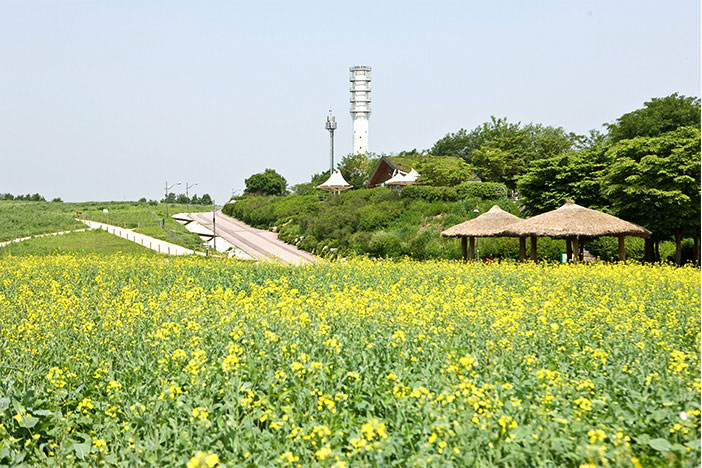
As soon as you enter the main gate of Suncheonman Bay Wetland Reserve, green lawns and ponds greet you before reaching the reed fields. As soon as you cross Mujingyo Bridge, your journey through the dancing fields of reeds begins. It takes approximately 40 minutes to walk along the path until you reach Yongsan Observatory. Relaxing views of vast fields and picturesque landscapes accompany you throughout your journey.
Visitors can comfortably stay above the mudflat where the reeds grow by walking on the wooden deck that threads its way across and around the bay. The field of reeds are beautiful in the day time but be sure to head up to the observatory before the sun sets, as you won’t want to miss out on the spectacular view over the plain’s horizon.

* This column was last updated in November 2017, and therefore information may differ from what is presented here. We advise you to check details from the official websites before visiting.

The above article is courtesy of VisitKorea, the official website of the Korea Tourism Organization (www.visitkorea.or.kr)

korean-electronics.com | Blog Magazine of korean electronics, brands and Goods
Beer, Bread, Coffee – Take a Winter Trip to Gangneung

https://korean-electronics.com//inquiry

With the new KTX running from Seoul to Gangneung, visitors are able to commute between the two cities within two hours, making a day trip to Gangneung from Seoul an option. For those who prefer the tranquil winter beach over the enthusiastic summer beach, read on for trip ideas to enjoy a winter trip to Gangneung as well as the region’s beer, bread, and coffee!

B! Beers crafted to perfection

Drink up! Gangneung craft beers available only at Budnamu Brewery
Once a makgeolli (rice wine) factory, the elegantly redesigned Budnamu Brewery now offers its own signature craft beers that incorporate Gangneung’s local characteristics. Budnamu Brewery’s signature drink Minori Session derives its name from a region in Gangneung known to cultivate rice. Other drinks such as Zeumeu Blanc and Haslla IPA also have a special tie with Gangneung; Zeumeu means “A village where the sun sets,” whereas Haslla was Gangneung’s old name, meaning “a vast ocean.” Likewise, many of the beer names crafted at Budnamu Brewery are connected to the local region, offering visitors an opportunity to learn interesting facts about Gangneung as they enjoy exquisite beer.
Newcomers to Budnamu Brewery are recommended to try out Budnamu Sampler as the menu consists of the brewery’s four signature beers – Minori Session, Zeumeu Blanc, Pine City Pale Ale, and Ojuck Stout. Minori Session is characterized by a refreshing mandarin-scented aftertaste and Zeumeu Blanc by its smooth wheat flavor followed by a hint of chrysanthemum and Chinese pepper. On the other hand, Pine City Pale Ale offers a bitter but refreshing taste, while the dark Ojuck Stout is bold in both flavor and alcohol content. Budnamu Brewery offers several side menus to go with the beer, but we recommend Budnamu Platter for a taste of the various choices, including cheese, nachos, olives, croquette, and chili.

C! Coffee and charm along the coffee road

Awaken your senses at Wanda Mansion
Wanda Mansion attracts visitors with vintage furniture, live plants, and an elegantly decorated interior. The tables are widely placed apart from each other, providing adequate space for visitors to sit and relax. The café also features a terrace where visitors can sit outside during spring and summer to enjoy the fresh blossoms and greenery, or remain inside and enjoy the view through the terrace windows over a latte during chilly winter.
Taking a photo of Wanda Mansion’s desserts is a must as they look just as charming as the café’s interior. Their appearance will delight you even before you take your first bite. Homemade sweet fruit ades are available regardless of season, but a warm latte or cup of strongly blended flat white will melt away the winter cold. Add a rich chocolate brownie to complete your perfect afternoon.

Culture and coffee meet at Bonbon Roastery
Bonbon Roastery was remodeled from an old abandoned mill and is now a café that shows appreciation for coffee and cultural arts. The atmosphere is calm and relaxing, welcoming visitors to settle down cozily at their seats. Coffee beans are personally roasted at the café then carefully poured over, pursuing excellence even to the last drop. The second floor resembles a gallery with displays of framed photos and artwork by local residents and artists of Gangneung. Treat yourself to a special break by taking a seat surrounded by outstanding works while enjoying a cup of hot coffee.
Bonbon Roastery can be characterized by its sincerity. The fragrance of carefully roasted beans fills the air, tickling your nose. Coffee lovers will be pleased with the diverse coffee options to choose from. If you’re not a fan of coffee, other beverages are also available, such as the house special lemon grape bonbon, presenting a sweet refreshing taste to recharge your energy, or the misutgaru (powder mixture of roasted grains) drink with honey to make for a filling meal in a cup.

Embrace the ocean at Bossa Nova
Café Bossa Nova is located on Gangneung’s famous Coffee Street near Anmok Beach. The café is a four-story building with a rooftop terrace on its top floor. Many people brace themselves against the cold winter breeze to take in the ocean view from this rooftop. A sip of hot coffee and the refreshing view of the blue East Sea are enough to blow your concerns and chills away along with the ocean breeze. If you can’t handle the cold for long, head on downstairs to the indoor café with floor-to-ceiling glass windows that allow visitors to enjoy the view in a warm, cozy atmosphere.
The breathtaking view of the vast ocean is not the only significance Bossa Nova has to offer – the café’s true value lies in their outstanding coffee. Only the most exceptional coffee beans are carefully selected on a seasonal basis and prepared to bring out flavors as superb as the rooftop’s view. The café opens early morning, offering fresh croissants and warm coffee to start the day. Other beverages beside coffees are also available so don’t forget to include Bossa Nova into your itinerary.

A truly romantic winter sight, Anmok and Jumunjin Beach

Beach road filled with coffee aroma, Anmok Beach
The road along Anmok Beach has gained much attention as Gangneung Coffee Street. The street across from the beach is lined with cafés that boast distinct coffee aromas of their own. The well-managed pathway along the beach provides for a pleasant walk by the calm waters. In contrast to the bustling summer beach, the winter beach gives off a quiet and tranquil ambience, setting a perfect mood to reflect on life.
Swings just the right size for two people can be found along the sandy beach, perfect for taking in the ocean view as you share body warmth with someone special. The swings especially serve as a romantic photo spot for couples along with the open beach as a wonderful backdrop. Another way to enjoy winter at Anmok Beach is to take in the ocean view with a hot cup of coffee from the nearby coffee vending machine. The sweet instant coffee is readily available at only 400 won per cup, so don’t forget to prepare some coins in advance.

Follow the footsteps of “Guardian” at Jumunjin Port) (Credit (top): CJ E&M)
Jumunjin Port and its breakwater first came into spotlight upon appearing in the popular K-drama “Guardian: The Lonely and Great God (2016),” and continues to attract hundreds of visitors to this day. Many who flock to the area seek to take memorable photos by reenacting a significant scene from “Guardian” with the ocean in the background. Originally known for fresh hoe (sliced raw fish), Jumunjin Port consists of a huge hoe center where visitors can enjoy hoe menus at a reasonable price. Other attractions are also available near the port, such as the Jumunjin Beach and Jumunjin Lighthouse.
korean-electronics.com | Blog Magazine of korean electronics, brands and Goods