Improving domestic demand props up economy, off sets faltering exports

South Korea’s domestic demand seems to support the entire economy despite faltering exports stemming from weakening global demand, a government report recently showed.
“Domestic demand, particularly private consumption, has been gett ing bett er recently, although exports have been https://korean-electronics.com//inquiryon the decline,” the fi nance ministry recently said in its monthly economy assessment report. The report is based on the latest economic indicators on such key factors as output, exports, consumption and corporate investment that could provide clues as to how the economy has been faring in recent months. Recent data showed that the country’s retail sales gained 4.2 percent in March from a month earlier on a sharp rise in durable goods like passenger cars.
The South Korean government revived an excise tax cut program on cars earlier this year in order to boost private consumption and the entire economy in the end.
Despite the somewhat favorable assessment on the domestic side, external risks, such as the global economic slowdown; uncertainties over the U.S. rate policy; and instability in emerging markets still weigh on the South Korean economy that relies a lot on exports.
Outbound shipments sank 11.2 percent in April due to a sharp drop in shipments of autos, fl at displays and petroleum products, accelerating the declining pace from a 8.1 percent drop in March. Industrial output, which is closely linked to exports, fell 1.5 percent in March due to the sluggish semiconductor sector, while the manufacturing capacity utilization rate stayed low at 73.2 percent.
“Domestic demand has been in an upside mode supported by fi scal policies and improved business sentiment, but the private sector’s momentum is still weak, along with external pressure like a protracted global slump,” the report said. The ministry also vowed to keep close tabs on fi nancial and currency markets, and economic trends at home and abroad to be ready for any necessary action.

<Source: KITA>

Untitled-2

Domestic securities firms’’ overseas business shrinks

The number of Korean securities fi rms’ overseas subsidiaries, branches and liaison offi ces continued to decrease last year, government data recently showed. According to the Financial Supervisory Service (FSS), Korean brokerage houses were operating in 12 countries through 56 subsidiaries and branches, and 19 liaison offi ces at the end of last year. The number of their foreign offi ces has been decreasing since March 2012 when they had 93 in 14 countries.
The data showed that the securities fi rms could turn to profi t if they reduced the number of their overseas business networks. In 2011, the companies’ overseas offi ces posted a $93.8 million net loss and managed to register a $16.7 million surplus in 2014 when they reduced their overseas subsidiaries and offi ces to 80. Last year, the companies recorded $23.9 million in net profi t, up $7.2 million from a year earlier.
The FSS said their overseas earnings increased for a second consecutive year in 2015, but the amount accounts for a mere 1 percent of their overall net profi t. The aggregate assets of the securities companies’ overseas businesses came to $2.01 billion at the end of last year, up 12.4 percent from a year earlier. Shareholders’ equity also rose 10.4% to $1.53 billion during the same period.
“Securities companies have made profi ts based on a successful localization in other countries,” the FSS said. “In particular, some big securities companies have actively expanded their businesses into Asian emerging markets by increasing capital or acquiring local companies.” Most of their overseas businesses were concentrated in Asia with 44 subsidiaries and branches, and 19 offi ces. China had the most offi ces with 20, followed by Hong Kong with 15 and Vietnam with 9.

Korea’’s ICT exports dip 14.3% in April

South Korea’s exports of information communication technology (ICT) goods dropped 14.3 percent in March due mainly to a continued slump in sales of semiconductors and displays, government data recently showed.
ICT exports reached $12.53 billion in April, down from $14.62 billion a year ago, according to the data compiled by the Ministry of Trade, Industry and Energy. Exports of ICT goods accounted for 30.5 percent of the country’s $41.05 billion worth of overall shipments abroad over the cited period.
South Korea’s overall exports have been in a deep slump for 20 straight months, posting an 11.2-percent on-year drop in April.
Imports of foreign ICT products also fell 4.9 percent on-year to $7.27 billion in March, with the country logging a surplus of $5.26 billion in the sector. The trade ministry recently said weak exports of display panels and semiconductors led the decline due to an oversupply and fl accid demand in the sectors.
Shipments of fl at screens sank 27.6 percent on-year to $2.13 billion and those of chips slid 11.8 percent on-year to $4.55 billion over the period. Overseas sales of mobile phones also contracted 7.9 percent to $2.15 billion on the waning impact of new smartphones releases. By region, shipments to China and Japan plunged 18.9 percent and 50.9 percent on-year, respectively, while those to the United States jumped 25.3 percent, the data showed.

<Source: KITA>


korean-electronics.com | Blog Magazine of korean electronics, brands and Goods

“It’s Right Time for Korean ‘Soft Power’ Companies to Enter into Latin America”

“Latin America is expected to experience difficulties such as slow growth due to the price decline of resources and the currency devaluation. However, with the opening of expanded Panama Canal, cooperation projects using the policies to discover new growth engine such as online business will be promising.”https://korean-electronics.com//inquiry
The Korea International Trade Association (Chairman, Kim In-ho) held the “2016 Economic Outlook of Latin America ‘Look for Opportunities in the Recession’ Seminar” at the conference room in Trade Tower on January 26 (Tuesday). The abovementioned statement is what the Latin America experts who participated in the seminar as speakers said during their speeches.
Kim Hyung-joo, a researcher at LG Economic Research Institute, has anticipated that the Latin America will struggle with the part several years’ sluggish economic growth and the currency devaluation, but “the additional market expansion will be possible with the reduced tariff s and non-tariff barriers between the countries in the TPP region when the TPP agreement comes into eff ect.” Moreover, he added that it is necessary for Korean companies to develop the strategies to comprehensively use human resources, infrastructure and cumulative rules of origin in each country through the TPP for the long term perspective.
Kwon Ki-soo at Korea Institute for International Economic Policy requested Korean companies to work on the measures as there still are possibilities of partial default of the resource-rich Latin American companies. In addition, as those countries are expected to get out of the commodity dependent economic structure and promote ‘New Industrial Policy’ to discover new growth engine, the customized cooperation projects are required.
President Eduardo of Braxco, Latin American online contents consulting fi rm, selected e-learning, online game and application that are recently called ‘soft power’ as the areas that Korean companies need to pay att ention to in Latin America. He forecasted “Online game market in Latin America will grow at the average rate of over 50 percent every year and e-learning market will grow about 30 percent this year.”
Commercial Att ache Carles Diamedes at the Embassy of Panama in Korea said that the Panama Canal expansion is expected to be completed in May this year and “it will increase vessel capacity from 4,500 to 14,000 TEUs. With the bett er transportation efficiency, the shipping market will expand from the west coast of North America to the east coast of North America as well as Latin America.”
Meanwhile, Kim Jung-soo, director of International Aff airs Department at KITA stressed “The trade between Korea and Latin America has been limited to IT, cars and agriculture areas. However, it is required to expand its scope to new promising industries such as construction, the defense industry, medical and environmental sectors and G2G.” He also mentioned “KITA will actively support Korean companies to enter into Latin America through the marketing officefor Latin America and a variety of seminars on market expansion.”

<Source:KITA>


korean-electronics.com | Blog Magazine of korean electronics, brands and Goods

Korea has 64 Items with Largest Share in Global Export Market

According to a report titled “Korea’s Export Competitiveness Refl ecting the Items with the Largest Share in Global Export Market” published by the Institute for International Trade (President, Kim Geuk-soo, htt p://iit.kita.net) of the Korea
International Trade Association, as of 2014, the total number of 64 Korean products had the largest share in their global export market.
https://korean-electronics.com//inquiryIt is diff erent from the concept of ‘World Class Products’ that are selected by the Ministry of Trade, Energy and Industry based on the comprehensive evaluation on Korean product’s share in global export market (top 5), technology, marketability, etc. A total of 17 new products such as chemicals (5) and steel (4) made no.1 position in terms of worldwide market share while 18 products, including steel (4) and textile (4), lost their top position to other competitors. 47 items such as memory chips continued to secure their top selling status from the previous year.
In 2014, Korea lost one item in the list of the products with the largest market share in global export market. However, it is insignifi cant when compared to the other advanced countries such as Germany (lost 33), Japan (lost 11), and France (lost 3.)

In addition, Korea lost 9 and 6 most popular items in China and the U.S., respectively. However, top selling items’ export concentration is increasing as the market share of the no.1 Korean items in each market rose 5.1 percent point and 1.4 percent point, respectively. Korea’s aggressive eff orts to expand its overseas market through free trade agreements seem to att ribute the country’s export expansion as the number of top 10 export items worldwide is increasing every year.
In 2014, China maintained the top position with 1,610 most popular items, 75 more products than in 2013, and India ranked at 6th, as the country had 6 more top selling items compared to the previous year.
At the same time, not only the developing countries but also the advanced countries such as Germany and Italy are increasing the number of their no.1 items in China and the U.S., Korea’s major markets.
Therefore, Korea needs to continue to exert eff orts to improve its export competitiveness. In particular, of no.1 items of China, the U.S., Japan and Germany, Korea is runner-up in 101 products. Among those, the number of items that has less than 5 percent of the market share gap is 26 and Korean needs to expand the exports of those items.
Kang Nae-young, researcher at the Institute for International Trade, said “Now, the slow growth of global economy continues. At this point, it is crucial to secure technology and quality competitiveness through innovation of the export items that are competing with the rivals for the top positions.” The researcher also stressed “Korean companies need to develop more high-value added products as well as differentiation strategies through consistent investment in R&D and ICT convergence. The government is required to improve the environment for companies to expand their markets to the overseas through active participation in free trade agreements, the TPP, the RCEP, etc.”

<Source:KITA>


korean-electronics.com | Blog Magazine of korean electronics, brands and Goods

To Create One-stop Export Support System for SMEs’ E-commerce

As the online e-commerce exports have been emerging as a new entry model into the overseas, the organizations(KITA, KOTRA and SMBC) who support exports are working together in order to support making inroads into the global e-commerce retail market which is worth 100 billion dollars. The Korea International Trade Association (Chairman, Kim In-ho), KOTRA (President, Kim Jae-hong) and the Small and Medium Business Corporation (President, Lim Chae-un) announced that they had signed the “MOU for creating cooperation system among the e-commerce supporting organizations” at Trade Tower in Samseong-dong on August 6. In the past, the supports for small exporters in e-commerce area were carried out at the individual level but those three organizations will implement the supports through organic cooperation.

3The three organizations agreed ▲to create e-commerce support council ▲to discover and jointly support the quality products from 300 online exporters ▲to cooperate with B2C  online mall and offline policy stores ▲to operate education and seminar programs on e-commerce exports and ▲to cooperate to hold e-commerce exhibitions and consultation sessions. The companies who want to make inroads into the overseas via e-commerce will be able to use the support system through each organization and they will be supported throughout the whole e-commerce export process from discovering the online hit products to product delivery logistics. In addition, the three organizations are planning to amplify the business effectiveness by creating online and offline (omni-channel) marketing support system to sell quality products.
Under this agreement, each organization will accelerate the entry of quality products of small and medium sized companies into the global e-commerce markets by jointly hosting online special sale events as well as consultation sessions by inviting foreign retail buyers in the second half of 2016.

KITA’s chairman Kim In-ho said “Korean consumers’ direct purchase from other countries reached approximately two trillion won last year, which was the largest ever, while Korean companies’ overseas sales posted only 580 billion won. It is recording the serious trade imbalance.” He also mentioned “We will exert efforts to make sure that the e-commerce cooperation system created by the three organizations will be actually helpful for the small and medium sized companies who want to sell their products to the overseas via online.”
<Source: KITA>

korean-electronics.com | Blog Magazine of korean electronics, brands and Goods

KITA to Boost Korea’s Trade Sector

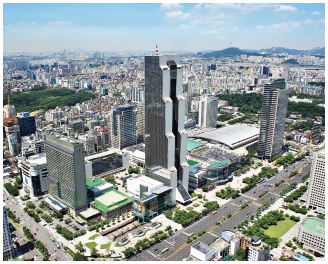
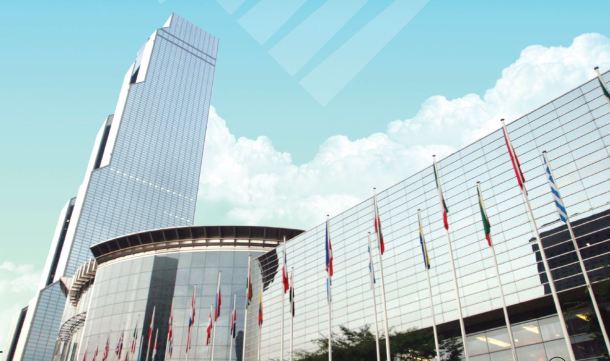
1The meteoric growth of the Korean economy, which enabled the nation to become the global economic power it is today, is a fact that is widely known and respected throughout the world. In this process, the Korea International Trade Association (KITA) has played a vitally important role in Korea’s economic and industrial development, as one of the key institutions linking Korean companies to the outside world through the most crucial years of the nation’s industrial expansion. Founded in 1946, KITA is the largest business association and one of the most influential economic organizations in Korea, with 73,000 member companies and numerous offices in Korea and abroad. The organization’s key roles are two-fold: providing support for member companies and working to remove obstacles that prevent trade and international commerce; and on the global level, promoting free trade and facilitating the signing of free trade agreements between Korea and its trading partners around the globe.
About KITA & Its Main Activities
With its headquarters located in the Korea World Trade Center in Samseong-dong in the heart of Seoul, as well as 12 offices in South Korea and nine branch offices abroad, KITA collects, analyzes and publishes economic data and surveys that help its members make informed and accurate business decisions. The association oversees trade fairs and exhibitions that involve its member companies, provides consultation for developing overseas markets, and acts as the link between Korean and foreign companies, and government agencies involved in commerce and trade. The services provided by KITA are indispensable resources for Korean companies operating abroad. The association provides translation services, web site creation and maintenance support, human resource management support, and a wide variety of other programs designed to aid day-to-day business operations. KITA also utilizes the network of Korean expatriates and Korean-owned businesses abroad to manage a cooperative matrix of Korean firms and  entrepreneurs who have already blazed a path in the global market.Another key role of KITA involves trade shows and exhibitions, which have become one of the most important tools for global trading companies. KITA matches global buyers with leading Korean companies through expert consultants, tours and pays personalized attention to visiting buyers in order to maximize business opportunities during the duration of their visit to Korea. In addition, KITA runs exhibitions in major cities around the world to introduce top Korean products to overseas buyers and marketers. Furthermore, KITA has lately launched diverse supporting projects such as ‘Trade SOS,’ a new trade consulting and support team; ‘Specialized Trading Company,’ a program to link the designated leading exporting companies with promising local manufacturers.

2

korean-electronics.com | Blog Magazine of korean electronics, brands and Goods

Korea suffers from nutcracker effects in between Japan and China In ASEAN M&A market

Many are concerned that Korea may lose its initiative in ASEAN cross-border M&A market as the country is significantly falling behind its competitors such as Japan and China. Between January 2010 and May 2015, the shares of ASEAN M&A of Japan and China were 13.0 percent (ranked No.1) and 8.1 percent (ranked 5th), respectively, based on acquisition price, while that of Korea was only 2.4 percent (ranked 12th).

The Institute for International Trade of the Korea International Trade Association released a report titled “Competition Between Japan and China in ASEAN cross-border M&A, What Is Korea’s Strategy?”According to the report, while the M&A market in ASEAN has been expanding, Japan and China have led ASEAN M&A cross-border market with the two countries’ combined shares of 33.2 percent (Japan 28.5%, China 4.7%) in 2013 and 34.5
percent (Japan 9.9%, China24.6%) in 2014.

During the same period, Japan executed more than 50 percent of its M&As in finance sector and many analyzed that it was the solution for its finance institutions’ worsening profitabilities due to matured domestic market as well as low interest rate. In contrast, China has carried out M&As focusing on investment in infrastructure and the share expansion of manufacturing industry as the country has enough growth potential in its domestic markets.

Japanese companies’ good performance due to low yen and the Chinese government’s ‘one belt one road’ policy as well as its relaxation of foreign investment review process will help Japan and China to accelerate their expansions in ASEAN M&A market. Kim Jungkyun, a researcher at KITA said “Korea is suffering from nutcracker effects in between Japan and China in ASEAN M&A market. Thus, Korea is required to expand its M&A targeting retail and finance sectors as well as IT industries in which Korea has global
competitiveness.”

<Source: KITA>

Central Asian Market, High Entry Barriers but Blue Ocean with Many Opportunities

KITA and the Ministry of Trade, Industry and Energy jointly recently held the “Public-Private Central Economic Cooperation Commission”.

After the summit diplomacy in June, last year, the cooperative mood has been developed between Korea and the Central Asia and the Public-Private Central Economic Cooperation Commission was established in
September, last year. In the Commission, KITA is in charge of two countries, Turkmenistan and Azerbaijan, the Korea Chamber of Commerce and Industry works
with Uzbekistan, Kyrgyzstan and Tajikistan, and the Federation of Korean Industries takes care of Kazakhstan. KITA takes on the secretariat of the commission and has
supported the operation of task force for each country as well as advisory committ ee for each area.
Seventy people, including Vice-Minister Moon Jae-do of MOTIE and Vice-Chairman Kim Jung-kwan of KITA, the members of Economic Commission from fi ve countries and offi cials from the companies who have entered into Central Asian countries, participated
in the event. During the meeting, presentations on ▲the achievements of economic cooperation with Central Asian countries and how to run the Economic Cooperation Commission in the future (by KITA) ▲ success stories of business expansion into Central
Asian countries (by GS E&C, HS International and Sigong Tech) and ▲ the economic cooperation strategies with Central Asian countries and entry measures were delivered followed by expert discussions. Through the presentation on the achievements of economic cooperation with Central Asian countries and how to run the Economic
Cooperation Commission in the future, KITA shared the outcomes of entry into Central Asian countries such as dispatching public-private joint delegation, holding intergovernmental joint committ ee, supporting activities to receive orders, etc.

As success stories, GS E&S shared the UGCC gas project, which the company received the order in 2012, and MTO project that the company signed the MOU when President Islam Karimov of Uzbekistan visited Korea in May, this year. HS International shared its experience how they overcame the weakness as an SME by identifying the characteristics of Central Asian region and taking advantage of them. Sigong Tech introduced its success
story of receiving the national museum construction order from Kazakhstan by tackling the niche market.

Professor Yoon Sung-hak at Korea University suggested public-private joint projects by taking advantage of the current status of Central Asia and international relations, joint entry with China and Russia and PPP strategy as entry measures into Central Asia during his speech on the economic cooperation strategies with Central Asian countries and entry measures. Professor Park Sang-nam at Hanshin University, PhD. Na Hee-seung at the Korea Railroad Research Institute, Ph.D. Je Sung-hoon at the Korea Institute for International Economic Policy and Ph.D. Oh Young-il at POSCO Research Institute took
part in the expert discussion session and discussed the expansion of economic cooperation with Central Asian countries and development of entry foundation as well
as the private and public collaboration measures.

Vice-Chairman of Kim Jung-kwan of KITA stated in his opening speech “Central Asia has high entry barriers with immigration visa issue, limited information about the countries, payment problem, etc. However, it can be a blue ocean in which the competition with the third countries is not severe.” He also mentioned “KITA will actively carry out supports, such as resolving diffi culties for Korean businesses, implementing B2B consultation
sessions and providing market information based on the discussion results from the Central Economic Cooperation Commission for Korean companies to make inroads into Central Asian countries.”

<Source: KITA>

korean-electronics.com | Blog Magazine of korean electronics, brands and Goods

Decreasing Share in China’s Domestic Market, Red Light on Export Competitiveness

China’s importing structure is moving towards domestic consumption from processing trade. However, it appears that Korea’s competitiveness is weakening as its market share in China’s domestic market for manufactured goods declined last year. The Institute for International Trade (President, Kim Geuk-soo, htt p://iit.kita.net) of Korea International
Trade Association issued a report titled “An Analysis on China’s Import Market of Manufactured Goods.” According to the report, China’s imports of manufactured products from Korea increased by 3.9 percent but the imports for domestic consumption accounted for only 1.6 percent. In addition, Korea’s share in the market dropped to 10.6 percent last year from 11.0 percent. By country, market shares of Korea (-0.4%p) and Japan (-0.6%p) declined while Taiwan (0.7%p), Germany (0.8%p) and Britain (0.3%p) did well in China’s domestic market expanding their shares.

Korea, China’s third largest importing partner of manufactured goods for domestic consumption, has lost ground in Shanghai (4th → 6th), Zhejiang Province (2nd → 3rd) and Fujian Province (4th → 6th) in terms of export ranking. Korean exporters also saw
their ranking slide below top-ten in fi ve provinces out of twelve inland provinces in the Middle and Northwestern regions indicating that their exports to those areas are still behind. In addition, Korea’s market share fell in the cities such as Kunshan (Jiangsu Province), Weifang (Shandong Province) and Shenzhen (Guangdong Province) in which the imports have been dramatically increased. Also, Korean exporters’ shares in consumer goods markets in Hangzhou (Zhejiang Province), Wuhan (Hubei Province) and Shenyang (Liaoning Province) dropped and it is required for Korean companies to make active eff orts to promote exports to those regions.

However, since the portion of Chinese private companies’ imports from Korea is bigger than other major countries while the imports of foreign investment companies are insignifi cant, the business network between the private companies in the two countries and the foundation for Korean companies to make inroads into China are good. Furthermore, the report states that Korea has made positive achievement in consumer goods market in China as China’s imports of consumer products (except for cars) for domestic consumption rose by 10.3 percent and Korea’s market share increased from 6.6 percent to 6.7 percent last year.

By item, it is expected that Korea’s exports will continue to expand in the markets that Korea has secured its competitiveness such as car parts, memory chips, camera modules, lithium-ion batt eries, metal machine tools, plastics, high-speed steel zinc, etc. as China’s imports of those products for domestic consumption are signifi cantly increasing. Moreover, China’s imports of consumer goods, including juicer, non-alcoholic beverages, diapers, air purifi ers and refrigerators are dramatically growing and Korea’s
shares in these markets are high. Therefore, Korea will be able to expand its exports to those markets in China.
Jang Sang-shik, senior research fellow at KITA said “China’s imports of manufactured goods for domestic consumption continues to grow. In order for Korean
companies to tackle the decrease in exports, they need to aggressively focus on China’s domestic market.” He also stressed “It is necessary for Korean exporters to enhance competitiveness of intermediate goods and capital goods as Korea is losing its market share in those areas, bridge the market share gap between Korea and the advanced countries in the high income cities such as Shanghai and actively make inroads into
the consumption hub in the Midwest region.”

<Source: KITA>

korean-electronics.com | Blog Magazine of korean electronics, brands and Goods

An Expectation of Export Expansion on Iran Market

Up to 70.4 percent of Korean trading companies are expecting that their exports to Iran will expand when the international community’s economic sanctions on Iran are relaxed, while 30 percent of them are anticipating that the increase will be more than 50 percent.

This was quoted from the on-site survey result of 300 participants who took part in the “Presentations on the Outcome of Nuclear Talks with Iran and Sanctions on Iran” which was jointly hosted by the Korea International Trade Association and the Korea Strategic Trade Institute.

The trading companies expressed their expectations about Iran, the largest car market in the Middle East and the 4th largest oil producer, by responding that they were interested in making inroads into the automobile (30.3%) and petrochemicals (29.2%) sectors when the sanctions against Iran are eased.

In addition, to the question regarding the recent trend of exports to Iran, 42.1 percent of the respondents said the export volume was declining and 34.7 percent of them pointed to the buyers’ payment difficulties due to currency problems in Iran as the cause of the decrease in exports. On the other hand, it appeared that the tentative deal on Iran’s nuclear issue agreed on April 2 has not led to immediate trade expansion since 71.2 percent of the respondents said there was no change in terms of Iranian buyers’ movements.

Meanwhile, Korean exporters expressed excitement and concerns about the Iranian market at the same time. Of the respondents, 32.5 percent said increasing competition would be a possible factor to hinder the trade after the elimination of sanctions. Another 32.5 percent of the respondents chose the possible reimposition of sanctions on Iran due to Iran’s failure to fulfill the nuclear agreement. The uncertainty of the future outlook of sanctions on Iran was selected as the biggest bottleneck in trade with Iran.

Kim Chun-sik, head of the Trade Promotion Group of KITA said “The nuclear deal agreed on April 2 is rather a draft for the final agreement. Therefore, Korean exporters to Iran are required to pay close attention to the outcome of the negotiations until June 30. KITA will try to promptly deliver the results of the talks and information on Iran’s market trends in association with the Ministry of Trade, Industry and Energy (MOTIE) and the Korea Strategic Trade Institute (KOSTI)”. Regarding the difficulties of issuing the Confirmation of Unprohibited Trade and Investment brought up by the exporters, an official at KOSTI said “We will try to minimize the difficulties by positively reviewing the feedback from the exporters.”


korean-electronics.com | Blog Magazine of korean electronics, brands and Goods

Korea’s economy in vicious cycle

South Korean economy is experiencing a vicious cycle with its wobbling exports, a last resort for the nation’s economy. Falling exports drive down the current account surplus, which, in turn, causes the won to depreciate, boosting export competitiveness and as a result leading to export volume growth.

However, the recent drop in exports in Korea, reflected in lagging corporate performance, resulted in slowing domestic consumption and the subsequent expansion of current account surplus. Then, the won climbed, which, in turn, hurt exports, and as a result shrank the economy further.

In response to the shrinking economy from worsening exports, the government intends to implement countermeasures by late June.

According to the Ministry of Strategy and Finance, the Ministry of Trade, Industry and Energy and Bank of Korea, current account surplus for this year is forecast to record $96 billion, setting a fresh high from last year’s $89.2 billion. However, ‘surplus during recession’ is becoming more apparent as the surplus is growing due to a sharper fall in imports than exports.

In actual fact, the current account surplus for March came to $10.3 billion, the third highest on a monthly basis. In April, exports slid twice faster than imports, with exports down 8.1 percent from the same period a year ago and imports by 17.8 percent.


korean-electronics.com | Blog Magazine of korean electronics, brands and Goods