Q-sys Co., Ltd. (Jon-hoo Hong, CEO)
Korean nano technical power takes 4th place in the world, but new market and new business creation effects using this technique are insignificant. Accordingly, the Ministry of Trade, Industry and Energy introduced the ‘Nano-fusion 2020 Project’ in order to induce early industrialization by connecting existing research performance in the Nano-fusion field to industrial demand, and to support new market and new business creation. As a result, many innovative market leading products have been produced so far
through this project. Among these products, the ‘polymer dispersed liquid crystal smart window’ developed by Q-sys is capturing attention as a world-class PDLC smart window product, and growth as a global hidden champion using this product is highly expected.
Realizing ideas through the Nano-Fusion 2020 project
When start-ups  of venture businesses were booming, Jin-hoo Hong, CEO of Q-sys, which was established in 2000 was a biochemistry polymer engineering professor in active service in the engineering college of Chosun University. He selected the company name of Q-sys that stands for ‘Cure System’ containing the meaning of ‘hardening’ and ‘healing’ in ‘Cure’, and guided Q-sys as a technical innovative small company that leads light technology. Q-sys is manufacturing and producing various functional UV coating agents, UV adhesives, and their application products used in LCD optical film, electronic materials, and coating industry, including polymer dispersed liquid crystal applied for display industry. Especially, Q-sys’ ‘polymer dispersed liquid crystal smart window’ developed through Nano-fusion 2020 Project receives attention as this product is truly the result of much R&D and made through Q-sys’ perspiration and passion.

In this context, CEO Hong said that “When we started the company in 2000, it was hard to industrialize smart windows even though we had the technical skills. First, the product price was so expensive that the market is not formed, and most of all technical skills we had were seriously insufficient compared to the USA and Japan. Due to the critical situation that the idea would have died out after all, we combined electrode material technology owned by the Korea Institute of Industrial Technology and liquid crystal technology we owned and could gradually see the way out. On that occasion, the Nano-fusion 2020 Project provided a big impetus, and finally enabled us to succeed in world-class smart window development.”
Developing next-generation smart window film that can substitute for ITO film
The price of ITO-PET film used in smart windows so far was so high that it accounted for 60% of total raw material costs of the product, and its sheet resistance wad so high, 150Ω or higher, that driving voltage is higher than 100V. And because the resistance was increasing when it was exposed to the air, the product commercialization was difficult due to long-term stability issue. Moreover, it had limit to apply existing ITO-PET film to next generation smart window film that is characterized by high efficiency, low driving voltage, color adjust function, and ultraviolet blocking function, therefore developing and applying were required for substitutive electrodes made of transparent electrode material that has superior mechanical resistance against external bending as well as better electric & optical features than ITO-PET film.
In this sense, polymer dispersed liquid crystal smart window technology developed by Q-sys will bring a new sensation to the smart window market.
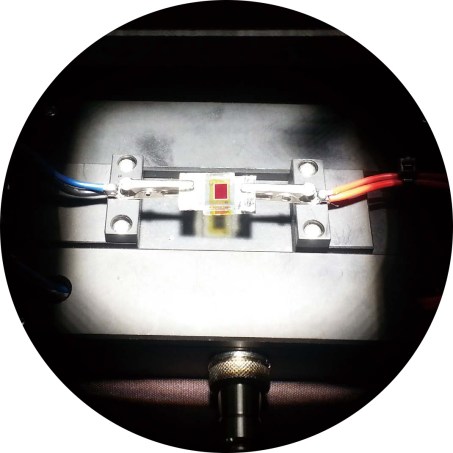
For this, Yang-bae Kim, chief of Q-sys optical material & surface treatment research center said that “If we apply high transparency and low price ZITO transparent electrode film developed by Q-sys instead of existing ITO transparent electrode film to smart window, ITO substrate that consumes too much indium, a rare earth element, can be replaced and we can achieve price reducing and improvement in droving voltage and efficiency. Especially, there is energy saving function because infrared and ultraviolet wavelength blocking is possible depending on metal oxide structure adjustment and the type and the thickness of inserted metal to be applied to transparent electrode film. Therefore we have higher technical skills compared to rival Japanese and Chinese products, and secured about 3~5 years of technical gap with late starters.”
Likewise, as Q-sys secured the world best level of smart window technology, it started the commercialization of Smart fitting product, and starting trial production in February 2014,
concluded 6 billion won of export contracts with the USA and Japan. Further sales increases are also highly anticipated.


Targeting automobile market, striving to be a globalleading company.
Smart windows, which is also a niche market, are being sold as fittings for buildings, with expanding markets being created across the world; billboards, although the volume is small; and display optical shutters. When the automobile smart window market that is predicted to be worth about 2-trillion won is open in full-scale soon or later, the position of Q-sys will be much different from now.
Indeed, Q-sys is focusing on transparent display optical shutter and smart window for automobile sunroof for which market expansion is expected. Q-sys is finding a way to become the world number 1 company worthy of its name by targeting the automobile smart window market. CEO Hong said, “This company secured technical competitiveness for world-class PDLC smart window.
Based on that we will secure superior position in automobile smart window market that is expected to grow, and at the same time we will aggressively involve new product development for the next generation special glass that is high value added and competitive product including color changeable glass, energy-saving thermalefficiency glass, and hybrid products with solar cell. We also plan to dominate the market along with new market creation, furthermore to seek smart window market exploitation for small domestic appliances and household appliances.”
Above all, however, the biggest competitive power of Q-sys can be found in true academic-industrial-research collaboration. Because strong competitive power as a united body can ultimately be secured by overcoming the limit of weak capital strength of small business and solving technical difficulties through research institutes and universities. CEO Hong also said, “Like a relief pitcher emerging from a critical situation where we would go down even before start, the Korea Institute of Industrial Technology introduced relevant substitute material technologies and Nano-fusion 2020 Project supported our research through ‘product idea industrialization support.’ Therefore we could achieve our current valuable performance.” and “We will keep investing in R&D and secure independent liquid crystal/polymer formulation and design technology and UV crosslinking production process technology to gradually expand the market share. We hope that our technology is applied to other domestic industries and contributes to creating new markets and new business.”
Also, CEO Hong explained, “Cure in the Q-sys company name means hardening of the treatment process developed by us as well as implying the spirit of customer satisfaction to cure and solve problems due to the production process. Furthermore, as shown in the management philosophy that all of the company members build a beautiful and fertile future through spiritual and practical changes and practical changes, although the market is small because it is a niche market, all of our staff and executives will do their best for a better future and to make Q-sys a small but strong company that can hold the first ranking for a long time. Also we will keep continue our efforts to take the position of a global leading company that leads the relevant markets.”
korean-electronics.com | Blog Magazine of korean electronics, brands and Goods











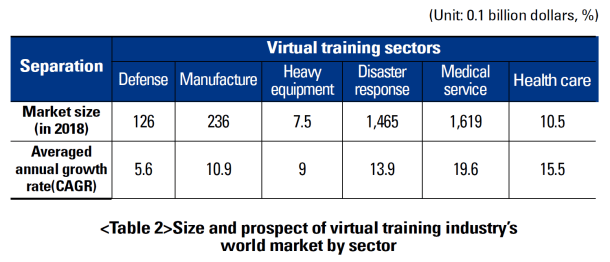
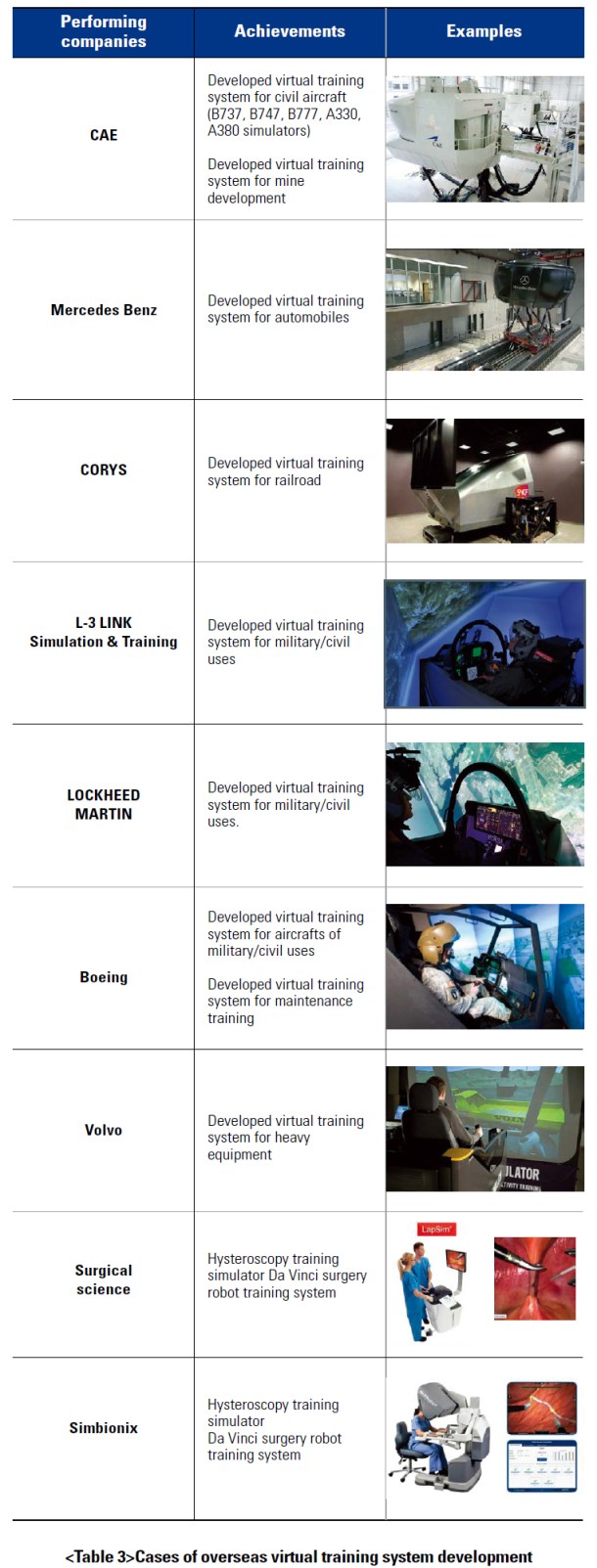
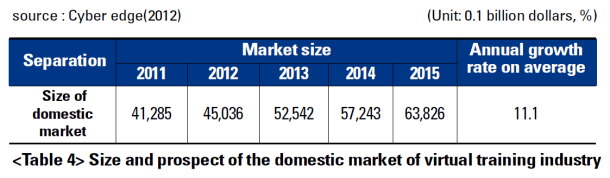
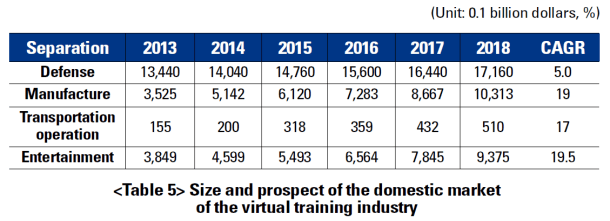
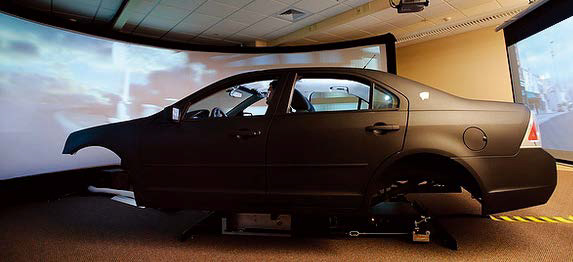
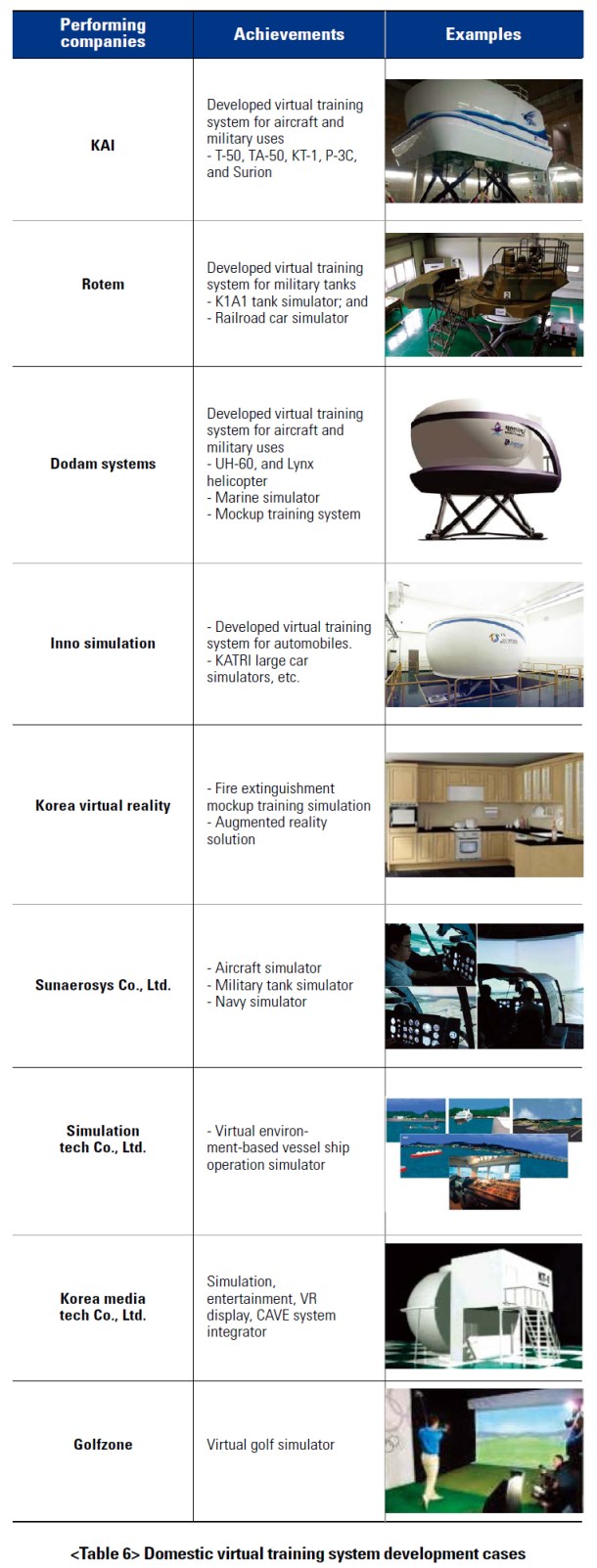
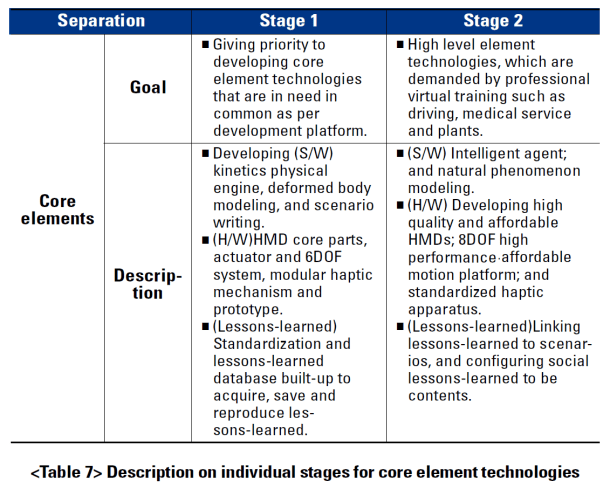
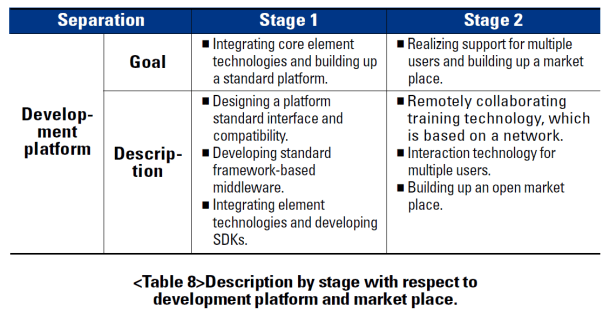
 Currently, the biggest market for the virtual training system in the world is the defense area, and the system is penetrating other markets, including the industrial area such as job training, the public area such as disaster management and medical service, and the popular area such as health, sport and entertainment. In particular, the core components of the virtual training system have been dramatically priced down, including image generator, HMD, and motion sensing, which are forming a condition to make the related industries be popular. As our country owns competitiveness in the IT area, which is crucial to the virtual training system, as well as experience and knowledge accumulated while engaging in various manufacture industries, we have full potential to lead the world market if we foster the virtual training industry systematically. To advance into the emerging markets, there is an urgent need to form an industrial ecosystem for virtual training systems, including conducting R&Ds to create a technological foundation, legal system reorganization, building infrastructure and manpower training. In this context, we are going to look into the trends of the virtual training industry, the current condition of both domestic and overseas markets and development, implications to and challenging issues of the domestic industrial ecosystem, the direction of promoting R&Ds, and expected effects, in this month’s issue.
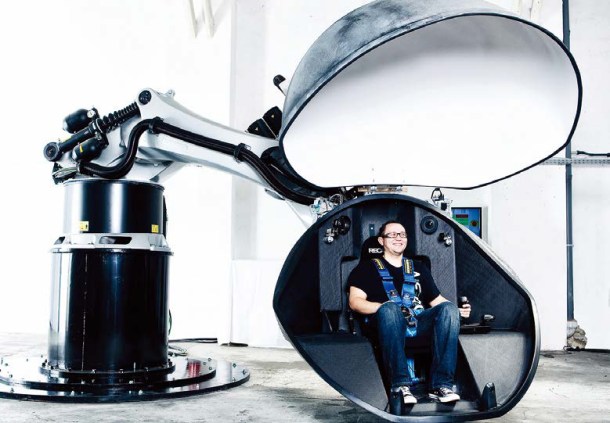
 As new virtual reality technologies advance, immersive devices for virtual training system have been dramatically priced down and the conditions for popularizing the industry are being formed. For example, the price of the existing high quality HMD was over US$5 million, and the Oculus HMD, released in recent days, is being sold at about US$300. Omni directional treadmill costs more than US$0.1 million, but the Omni Treadmill is expected to be available at US$500. As the current virtual reality gamers for home use and mobile-based mobile VRs are evolved to immersive type, it is expected that demand for virtual training system for individual/home uses will increase.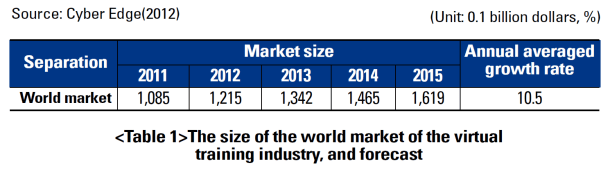


 The three organizations agreed ▲to create e-commerce support council ▲to discover and jointly support the quality products from 300 online exporters ▲to cooperate with B2C online mall and offline policy stores ▲to operate education and seminar programs on e-commerce exports and ▲to cooperate to hold e-commerce exhibitions and consultation sessions. The companies who want to make inroads into the overseas via e-commerce will be able to use the support system through each organization and they will be supported throughout the whole e-commerce export process from discovering the online hit products to product delivery logistics. In addition, the three organizations are planning to amplify the business effectiveness by creating online and offline (omni-channel) marketing support system to sell quality products.
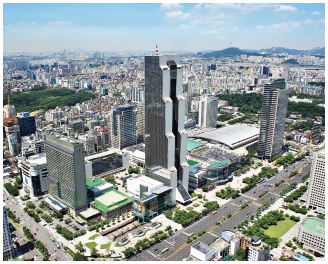 The meteoric growth of the Korean economy, which enabled the nation to become the global economic power it is today, is a fact that is widely known and respected throughout the world. In this process, the Korea International Trade Association (KITA) has played a vitally important role in Korea’s economic and industrial development, as one of the key institutions linking Korean companies to the outside world through the most crucial years of the nation’s industrial expansion. Founded in 1946, KITA is the largest business association and one of the most influential economic organizations in Korea, with 73,000 member companies and numerous offices in Korea and abroad. The organization’s key roles are two-fold: providing support for member companies and working to remove obstacles that prevent trade and international commerce; and on the global level, promoting free trade and facilitating the signing of free trade agreements between Korea and its trading partners around the globe.