Roadcam T-5000 dash cam

[INQ. NO. 1604E02] Founded in 2008, ILWOO MND has developed a dash cam (car lackbox; vehicle driving recorder). It applied patents of photo senor utilizing in car blackbox. Taking No. 1 ranking in the biggest Japanese Internet shopping mall, Lakuten and aunched 1ch HD and 2ch HD product.https://korean-electronics.com//inquiry

The roadcam T-5000 dash cam is currently the fl agship product for the company. It was selected as the crime prevention CCTV blackbox camera by police offi ces. The company was registered as a U.S. federal government offi cial vendor in 2013. In the year of 2013, it was selected as FTA utilizing global company. The company started providing dash cams even to taxi companies in 2014.
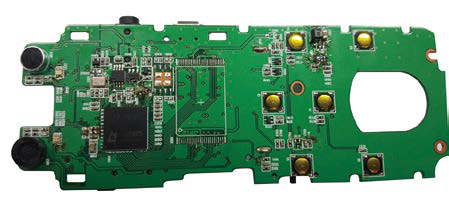
Supporting 60 frame CPU performances in total, the product delivers high temperature durability and recording stability. Basically, detection of day and night and auto control is ensured. Two kinds of software (fi rmware) – for car and CCTV – are provided. It permits dominant quality control and has a very low defect ratio. The functions of security LED and motion detection are available. It can support up to 256GB SD card.

Untitled-1.jpg

korean-electronics.com | Blog Magazine of korean electronics, brands and Goods

To become the best company in Asia in the cloud data center optimization business

Untitled-36.jpgCEO Young C. Cho

PIOLINK was first founded in 2000 when the domestic network market was
predominated by global large companies. It daringly challenged the advanced and
intellectualized application networking market. In 2006, it released successful web
firewall, which helped it expand its business range to security, and now it has
become the only and the best application and networking security company with
technological power to produce itself H/Ws and S/Ws.

We kindly ask you to introduce your company essentially and generally

https://korean-electronics.com//inquiry

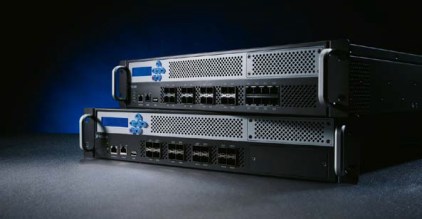
PIOLINK is a specialty company in the cloud data center optimization, providing products and services that assure the best application availability, performance and security in the industry. PIOLINK, first established in 2000 when the domestic network market had been predominated by global large companies, daringly challenged the application networking market that was advanced and intellectualized. PIOLINK concentrated its efforts in one of network domains from the early stage of its business, and as a result of consistently investing in R&Ds, different from other companies, it could be able to have competitiveness relatively fast in the industry.
Due to successfully releasing a web firewall in 2006, it could be able to extend its business to security domain, and finally it has become an application-networking security company best in Korea, having technological power for developing H/Ws and S/Ws itself. With this, it was listed in KOSDAQ via IPO in 2013. After then, it aimed at becoming a cloud data center optimization specialty company, extending its business range to developing and manufacturing network/security products, and even to DCIM(Data Center Infrastructure Management) Services and managed security services, providing client-customized solutions.

Please explain us about your company’s core technologies and products

The main products from PIOLINK can be divided into network, security, and service domains. For the network domain, the representative products include Application Delivery Controller, which model names is PAS-K, and SDN Switch (Software-Defined Networking Switch), which model name is TiFLOW. PAS-K is a core product of the data center, which enables sending an application, which a user wants, in a stable and optimized state under the web, mobile or cloud environment. It performs load-balancing, off-loading, acceleration and security to ensure uninterrupted service. Currently, it is a leading product in the market, which occupies a third of the domestic market share. It holds global competitiveness in terms of performance or completeness enough to be included in the Gartner Magic Quadrant report as a top ADC vendor in Korea. TiFLOW is a switch, applied by the next generation SDN technology, which focuses on software and is led by users. It is a basic product in building the next generation data center, or SDDC (Software-Defined Data Center), and is attracting much attention. It is possible to quickly and flexibly configure a network, and is good at high performance flow
processing. With regard to security domain, Web Application Firewall, which model name is WEBFRONT-K, and Access Security Switch, which model name is TiFRONT, are the representative products. PIOLINK joined the web application firewall-related R&D project led by the Ministry of Trade, Industry and Energy in 2013. It produced good outcome and was awarded the best prize in the commercialization technology area of the ‘this month’s industrial technology award’. WEBFRONT-K protects web services against various hackings, and is responsible for security of a high performance platform for processing application networking, which is the representative technology of PIOLINK. PIOLINK succeeded in commercializing high performance web firewall, and currently is one of the representative brands of the domestic high performance web-firewall market.

TiFRONT, an access security switch, shuts off various harmful traffics generated in a user’s terminal, such as PCs, laptop computers and smart devices, to assure a clean network. It also intercepts the attacks of stealing account data and overhearing calls, and controls accesses to a network to assure a safe inner network. As it enables to easily identify where L2 layer has a failure and its cause, which is hard to manage, it contributes to enhancing a network’s transparency. As per the service domain, PIOLINK runs and manages itself the
IDC (Internet Data Center), at the same time, providing the security managed service. Although many companies separate and manage IDC and security service, PIOLINK does both at the same time, creating synergies to develop a solution for optimizing a data center.

Please tell us about the most impressive outcome of the R&Ds your company conducted

PIOLINK has been developing high performance firewall since 2005, successfully commercializing it in 2006. It advanced Layer7 proxing technology based in its high performance application processing platform, and it released a high performance web security solution. It released a giga-class web-firewall, which had been rarely seen in Korea at the time, and the product was adopted as a security solution of a large website, and due to its performances such as product delivery to three primary telecommunication companies in Korea and to the primary financial world, it has become the representative brand in the high performance webfirewall area. At the time of releasing its product in 2006, the representative security products for a data center were network fire-wall or IPS, and the products from PIOLINK could intercept malicious cyber attacks such as XSS(Cross-site scripting), and could overcome vulnerabilities in the SQL injection, certification and session-management, which had been not possible in the past. By curbing sensitive information leakage such as credit card and bank account data, which is getting increased nowadays, the economic loss of a company can be prevented.

Untitled-38Due to the success of the project, PIOLINK could
expand its business from the existing network domain to the security market, and could grown to a competitive company with good technological power over both network and security domains, solely in Korea.
As each country has different security certification and policies, PIOLINK started exporting its web firewall products somewhat later than other products. Currently, it has penetrated into huge markets such as China and the Southeast Asia, with its sales consistently growing every year.

Please tell us about the future plan and vision of your company

PIOLINK is providing various IT infrastructure products and solutions, including data center operation and security control service, and helping maximize a range of industrial clients’ business, such as telecommunication, finance, public service and enterprise. PIOLINK will concentrate its efforts in providing stable service, high quality service and security, and quick and flexible management, toward a concept of data center optimization’, ultimately seeking for becoming no. 1 specialty company in Asia in the cloud data center optimization area. “Cloud service is essentially growing, and the network environment is also having a new paradigm. The next generation network paradigm is being spread, which focuses on software, including SDN (Software-Defined Networking) and NFV (Network Function Virtualization). PIOLINK will help companies realize business innovation using its various optimized solutions to help the companies easily adapt to such a new shift and correctly make decisions as per value.”

korean-electronics.com | Blog Magazine of korean electronics, brands and Goods

Voice synthesizer for blind and dyslexic people and AAC software

Technology overview: Voice synthesis technology is a very important IT technology for the blind and dyslexic people. For the blind people, software called ‘screen reader’ is used, which voice synthesizes text information appearing on the computer screen, https://korean-electronics.com//inquiryand they can hear this world’s information with their ears, and for the dyslexic people, software called AAC (Augmentative and Alternative Communication: complementary and alternative communication) is used, and when they type as they intend, the intent gets voice synthesized and delivered it to the counterpart. In the domestic market, the screen reader software is widely disseminated, while the AAC software is not. In this context, a voice synthesizer for the blind people, developed through this project, keeps articulation during the fast voice synthesis and can read mathematics formula. In addition, we have developed a voice synthesizer having various tones enabling dyslexic people to choose a specific tone that represents their own characteristics. In particular, we have developed AAC software called ‘mytalkie’ which contains a voice synthesizer having various tones, symbols and a text input method that is reflected by the Korean culture and language properties. Mytalkie ia an alternative and complementary communication device for those having difficulty in articulation and phonation, and as it has VoiceText™ inside, a voice synthesis solution having a range of tones and various symbols appropriate to use environment, they can express their intention via natural voice output and can interact with others.

Industrialization: We produced a voice synthesizer and an AAC software as our R&D outcome from the 1st year to the 4th year of the project, and conducted tests and evaluations based on the outcome, collecting many opinions from the users, continuously making improvements, manufacturing a pilot product using an intermediate outcome, conducting trial releasesfor some special educational institutes, and carrying out evaluations. In addition, we gave presentations at many exhibitions and societies to promote the product. It gained recognition for its productivity from the disabled people, special education instructors and related experts during the exhibitions and promotions, and some disabled people and their guardians actively participated in the trial dissemination, actually using the product. A number of disabled people participated in the trial dissemination as users and commented that they would like to buy one when it is commercialized. Thus, we stabilized the features of the AAC software-mytalkie, commercialized it, and began promotional activities. To sell the AAC software, mytalkie, to the public, it is critical to secure sales channels. It is not easy to promote the product to a few disabled people who want the AAC software, and it is also difficult to secure a sales route. More, disabled people who belong to an alienated group of a society cannot afford the product. Thus, we have joined the IT assistive technology dissemination enterprise of NIA, which is supported by the government. We were consecutively selected as an assistive technology dissemination business operator to disseminate products to disabled people at low prices during 2013~2014, when we were conducting a project, as well as in 2015, when we have completed the project.

Problem-solving in industrialization: The biggest problem facing commercialization was securing a sales network. It was hard for us to promote the product to a few disabled people individually, and they were not willing to buy it as it was expensive software. So, we decided to make use of the IT assistive technology dissemination enterprise for disabled people, of the government, and improved our product so that it could be selected as a product for dissemination to the government institutions, starting from the third year. Due to this, we could join the government’s assistive technology dissemination enterprise, and could find markets.

Technology developer: Voiceware Co., Ltd. / +82-2-3016-8500 / www.voiceware.co.kr


Utilization board 1 horizontal screen   /   Utilization board 2 vertical screen

korean-electronics.com | Blog Magazine of korean electronics, brands and Goods

RF & PLC-type smart grid remote meter reading solutions

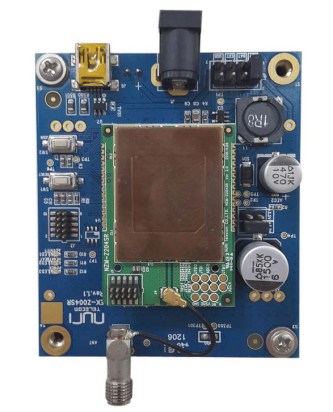
Technology overview: Advanced Metering Infrastructure (AMI), which is the key part of a smart grid, is drawing keen attention along with the growing interest in energy, and standards on https://korean-electronics.com//inquiryvarious wired/wireless communications and remote meter reading are being established also. Despite the importance of the technology, however, the domestic market is growing slowly, not effectively responding to the newest technological trends in AMI solutions. More recently, there has been an attempt to incorporate the technology into a variety of industries such as IoT (Internet of Things), smart cities, etc., and thus energy management using a smart grid will play an important role in IoT. Accordingly, reliable AMI solutions need to be secured for success in the global energy IoT industry. Hence, this project has developed a technology of combining key elements of the AMI system communications, which are mainly RF and PLC type communications, and has aimed at development of commercial products with performance similar to that of the world’s advanced technology. The research team has secured the RF solution using the 2.4GHz/900MHz band that even excels the world’s well- known technologies in this area. The frequency range can be easily industrialized, for it is widely used as the ISM band (the industrial, scientific, and medical radio band), and many nations are establishing energy IoT services using the band, creating stable demand for the technology. The research team has secured technologies for large-scale solutions for urban services, even more competitive than the world’s leading technologies, attracting the attention from the overseas market. As for PLC, the team has developed Korea’s first low-speed PLC technology and secured low-speed  PLC remote meter reading solutions that can meet international standards. This achievement has laid the foundation for an energy system that supports both infrastructure and energy management. An energy management system offers features of collecting, managing, and displaying information on integrated remote meter reading as well as generating control signals for electrical load equipment according to demand response. Its design has taken into account expandability in order to provide energy IoT services across all sections of smart grid services in the future.

Untitled-33.jpgIndustrialization: The solution has won the project of establishing the AMI system and installing digital meters for 265,000 houses from Goteborg Energy, Sweden, using the technology for long-term system improvement and maintenance. This, in turn, has led to winning the capital AMI project, especially targeting apartment houses, as part of supplementary services using NURI Telecom’s electrical AMI. The technology was used to establish a wireless communication network providing energy IoT services to the entire city of Goteborg, which has become a well-known case of such industrialization.  The system has proved the company’s outstanding technological competitiveness through continuous advancement & sophistication, and has recently won more contracts from South Africa, Ghana, India, and Iraq through the developed solutions or features with an effective proposal, applying the AMI system to a total of 1 million houses in 17 countries.
Problem-solving in industrialization: At the time of the industrialization, the AMI service using the developed technology was not available in Korea and thus the tests were carried out only in the lab, making it difficult to predict or analyze circumstances that may happen in the field. Localization of the solution was hard as well due to such limitation when a business proposal was submitted or the system was established. Hence, the research team adopted the dual approach for establishment and development, making R&D close to a real-time response and continuously applying performance-improving technologies to the existing site of system installment so as to minimize problems of other sites. More recently, AMI services using various wired/wireless technologies have become available in Korea, which helps the company improve its problem-solving ability. The given solution has completed domestic and foreign performance testing stage for each of RF and PLC.

Technology developer: Nuri Telecom Corp. / +82-2-781-0777 / www.nuritelecom.co.kr

korean-electronics.com | Blog Magazine of korean electronics, brands and Goods

BIM-based intelligent LED lighting management system

Technology overview: The environmental crisis and resources crisis faced by the whole world recently require green growth across all of the industrial fields. Especially, https://korean-electronics.com//inquiryas the construction is the field having a great impact on the environment, like taking 30~40% of total energy use, reducing energy consumption through energy efficiency in the construction field is coming to the fore as a very important issue. This technology developed in this context is composed of ‘lighting visualization and automatic control technology’ and ‘areal-unit LED lighting control protocol and system’ based on the open BIM platform and 3D space authoring technology. This developed technology can maximally reduce energy consumed for building operation by enabling the user to operate the lighting management system intuitively as well as sensing and controlling the lighting of the building automatically. The specific development content and the expectancy effect of this technology are as follows: Firstly, it performs the functions, such as grasp of the management state for the automatic control of lighting, overall surveillance and central surveillance for the subsequent management and control, surveillance of the remote state from indoor  PC or mobile phone, and performance of control function. Secondly, it provides the Human Machine Interface (hereinafter HMI) for the overall management of the lighting device in the building aiming at maximization of energy saving. Thirdly, it provides pleasant residential environment by realizing reduction of the facility management manpower and enhancement of the energy efficiency through introduction of the HMI-based Facility Management System (hereinafter FMS). Fourthly, the Lighting Energy HMI, that is, the smart lighting control system analyzes and controls in real time the energy use of lighting load on each level and individually, and can control the lighting sequentially based on the loading amount of energy set up in advance before reaching the peak loading.

Untitled-32

Industrialization: In order to improve the applicability of the developed technology, we established the development strategy of securing the independent function of each of the system lighting devices and the smart platform and, through this, have achieved diverse industrialization performance. As the dimming controller and the individual sensor were developed as the mounted type, it can be used as component part of the commercialized product having used the engine itself, and also can be industrialized as the system lighting device. In addition, the smart platform of the lighting management system has secured flexibility vis-a-vis the existing technology as it can add or delete functions having reflected requirements in various environments, such as residential environment, office environment, etc. The specific industrialization performances using this technology are as follows: Firstly, in developing the system of LED lighting simulator and automatic proposal preparation,  P Company applied and used our smart platform for lighting design, and we supported the functional evaluation of the lighting device installed at the 3D spot. Secondly, in developing and industrializing the 3D comprehensive SI of the energy FM project, K Company used this developed technology, and we supported realizing the service monitoring the amount of energy used on each level. Thirdly, C Company accomplished  their sales figures by delivering the software package (except for LED element) including operation software and hardware, and at present they are carrying forward industrialization of the total LED lighting management solution, including the lighting management system package, field devices, LED luminaires.

Problem-solving in industrialization: Although we realized the intelligent LED lighting management system of the technology advanced country level by developing the lighting visualization and automatic control technology, and space-unit LED lighting control protocol and system, main target companies of industrialization  have demanded objective and reliable data for the degree of response precision and the performance evaluation concerning the dimming when the control system, which is the element technology, is actually applied at the site. Thus, we requested the Test Production Technology Support Center of LED∙LC Packaging,  the authorized agency, and then received the test certificate after having implemented the test. As a result, we have completed the quality verification of the development product and succeeded in the industrialization.

Technology developer: Virtual Builders Co., Ltd. / +82-2-312-9249 / www.vbuilders.co.kr

korean-electronics.com | Blog Magazine of korean electronics, brands and Goods

EDA-based next-generation ESB platform

Technology overview: The increasing need for real-time analysis and processing of mass-data in the environments of the Internet, bigdata, and IoT is calling for development of
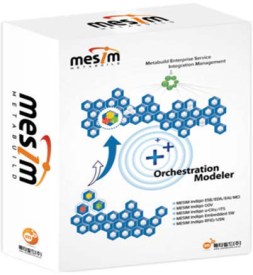
a large-scale global event processing system based on Event Driven Architecture (EDA), which makes possible high-speed data transmission and real-https://korean-electronics.com//inquirytime data analysis & processing. EDA-based next- generation ESB platform is a high-capacity distributed data processing system based on Event Driven Architecture (EDA), meeting  the requirements of high-speed/volume data processing, embedded/distributed  environment, service convergence, and so forth. The research team has developed two key technologies: one of them is a high-capacity/speed data processing middleware technology, which filters out unwanted information through a combined query plan and delivers relevant data to applications, and the other is a global event processing technology, which processes and delivers events based on publish-subscribe communications through dynamic configuration of a communications network domain in a distributed environment. This platform can be applied to various IoT-related industries such as the defenses, smart buildings, smart cities and plants, for event analysis/processing and event-distributing middleware ensuring high-reliability in real-time.

Untitled-29.jpgIndustrialization: This technology has been applied to the Sejong U-City integration platform, Songdo u-disaster prevention integrated operation system, and the smart highway project of the Ministry of Land, Transport and Maritime Affairs. As for the Sejong U-City integration platform, the CEP (Complex Event Processing) engine, part of the project’s achievements, was used as a technological element for context- awareness and analysis. With regard to the Songdo u-disaster prevention integrated operation system, the CEP engine was used to collect and process in real-time mass event data coming from the air quality data collection system, installed in the Sunrise (Haedoji) Park, Songdo District, so as to produce the data of current or future environmental status. For the smart highway project of the Ministry of Land, Transport and Maritime Affairs, the platform collected data from various  sensors  (e.g. radar,  CCTV, tolling, etc.) installed along the highways as well as vehicles, aiming to offer information on dangerous situations (icy road, obstacles, vehicle failure, etc.) through effective analysis of the data.

Problem-solving in industrialization: In an early stage of development, the market was not mature enough, and customers were unfamiliar with the concept, making it hard to promote the products and industrialize the technology. Over time, however, the technology was successfully applied to various projects through active promotion, especially targeting 2,000 corporate accounts. This initiative for market penetration is still in progress for a wide range of industrialization

Technology developer: MetaBuild Co., Ltd. / +82-2-598-3327 / www.metabuild.co.kr

korean-electronics.com | Blog Magazine of korean electronics, brands and Goods

Material of transparent electrode for use in flexible display

Technology overview: There is a need for material development for transparent electrodes with high transparency and low resistance that can overcome problems of ITO (Indium Tin Oxide), currently in use for transparent electrodes of display, and can replace it. Research on technology of flexible transparent electrodes has been actively ongoing locally and internationally; however, material for flexible transparent electrode that is as mechanically pliable as flexible element and has properties of metal-level conductivity, excellent light transmittance, high adhesion, high thermal resistance, surface smoothness, and processability has not been developed yet.

https://korean-electronics.com//inquiry

Through the technology development, the purpose was to develop high reliability material for transparent electrodes for use in flexible display through obtaining manufacturing technology of metal-based transparent electrode material, oxide transparent electrode material, and hybrid type transparent electrode material. For development of metal-based transparent electrode materials, complex synthesis technique for organic metal, synthesis technique of metal wire, micropattern engraving formation technique, and large-scale roll to roll thin film formation technique were developed. For development of oxide transparent electrode material, oxide sputtering target formation, high-density target manufacturing technique, and oxide thin film formation technique through large-scale sputtering method were developed. In addition, research for development of interface of thin film and base material to improve curvature resistance has been implemented. Furthermore, development of hybrid type transparent electrode material has been proceeded in order to maximize strengths of metal-based materials and oxides.

Industrialization: Currently, the application field of transparent electrodes is mostly focused on the market of flat panel displays. Material used in application is mainly ITO thin film; however, with the development of flexible transparent electrodes, it is expected to replace previously used ITO and create new industry where application of ITO is limited or nearly impossible. If board and electrode installed in the upper and lower parts of LCD and OLED are replaced with transparent electrode, it would become a cash cow in the display industry that is continuously growing. Material for transparent electrodes manufactured through this technology is expected to be applied not only to display field such as LCD, OLED, and FED but also to touch panel, transparent electromagnetic shielding, transparent heating element, electro- conductive glass, gas sensor, heat reflective coating film, solar battery, lighting and automobile, transparent anti-static film, communications antenna, and optical filter. In addition, it is expected to be applied to next-generation flexible display and electronics that have characteristics such as ultra lightness, low power, low cost, portability, and high functionality.

Problem-solving in industrialization: The most important characteristic of transparent electrode material for flexible display is to maintain high transmittance and low resistance while having excellent flexibility. While metal-based transparent electrode has high flexibility, transmittance, and sheet resistance, haze property is insufficient. On the other hand, oxide transparent electrode has excellent haze property while having insufficient flexibility. Therefore, the purpose was to to develop hybrid type, transparent electrode material that maximizes strengths of the two materials and minimizes weaknesses.

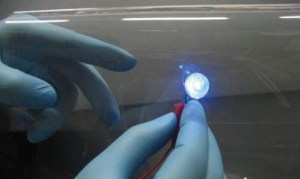
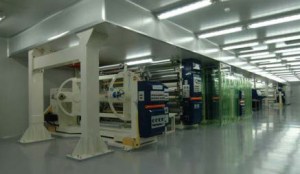
<High-quality roll to roll transparent electrode
/ Transparent electrode with high transmission and low resistance
/ Roll to roll coating equipment>

Technology developer: InkTec Co., Ltd. / +82-31-494-0001 / www.inktec.com

korean-electronics.com | Blog Magazine of korean electronics, brands and Goods

High performance, high reliability microwave coaxial cable and connector with 50GHz ultra-wideband for aerospace and defense use

Technology overview: Due to improvement in communications and dramatic increase of users, development of communications equipment for super-high frequency (microwave) is needed, and ultra-wideband  has been used in response to the current trend. In addition, high-quality, active and passive parts in communications equipment are required to have ultra-wideband performance. High frequency parts processing, high frequency signal mainly use coaxial cable that is convenient in making ground connection electrically while combining individual module mechanically in order to connect circuit with the outside world. Coaxial cable is also beneficial since signal wire can be easily connected by soldering.

https://korean-electronics.com//inquiry

Input/output port of RF (Radio Frequency) communications  equipment consists of a coaxial connector that is convenient for locking. However, when modules are connected or an antenna signal is sent or received through coaxial cable, discontinuity effect occurs due to structural differences between connector and cable, and mismatching in transmission mode is also caused. In addition, property of high frequency transmission is decreased due to parasitic capacitance, which leads to huge restriction in overall performance of super-high frequency and millimeter wave system. In particular, as the length of coaxial cable is extended, insertion loss is also increased, which requires an amplifier with high gain, thereby causing serious problems in power consumption and production cost. Low-loss cable consists of central conductor, dielectric, GND tape, GND braid, and jacket, which is the same composition as general  RF cable,  but it forms air space in dielectric. When dielectric constant of 50 Ohm coaxial cable is reduced, the size of the central conductor can be enlarged, which in turn can dramatically reduce the loss of transmitted signals.

Industrialization: Since manufacturing technology for low-loss cable has been insufficient in Korea, high frequency coaxial cable, connector, and sealing cable assembly have been entirely dependent on foreign countries. GigaLane secured technology, implemented the same performance, and applied to domestic and international fields of aviation, aerospace, and defense. In the aviation field, low-loss sealing cable assembly for aviation use has been supplied to client companies, mounted in trainer aircraft and combat aircraft. In addition, GigaLane’s low loss cable is being applied to the next-generation TICN (Tactical Information Communication Network) in the defense field.

Problem-solving in industrialization: There are only a few companies in the USA and Europe that have developed high-frequency broadband cables and connectors, and materials and technologies have not been known to public. In addition, convergence technology combining RF technology and mechanism engineering has to be implemented since product needs to be developed and manufactured through facilities. Through implementation  of required assignments, supply and demand of materials along with technique and know-how have been accumulated, which has led to the successful development.

Untitled-25.jpg

Technology developer: GigaLane Co., Ltd. / +82-31-233-7325 / www.gigalane.com

korean-electronics.com | Blog Magazine of korean electronics, brands and Goods

Design technique for MPSoC

Technology overview: In general, SoC (System-on-Chip) means integration of circuits that have various functions in one chip. Due to dramatic reduction of product life cycle and intensified time-to-market https://korean-electronics.com//inquiryconstraints, there have been increased efforts and requests to make improved flexibility of previously designed SoC, thereby being utilized in more products. Reuse of SoC depending on applications has been implemented through a method that uses embed of a strong, universal-use microprocessor as software to realize functions required by applications as needed. Real-time processing of various jobs in a single processor requires high operating frequency, and this resulted in low energy efficiency in SoC.

Therefore, in embedded system where power performance and energy efficiency are highly emphasized, a single processor-based or DSP based system is no longer considered as a proper SoC structure.  In most embedded applications, use of task-level parallelism is highly probable; therefore, integration of numerous types of processors, DSPs, and accelerators  for specific application field into one chip is much more favorable in area, power, and reusability of SoC. MPSoC (Multi-Processor  System-on-Chip) is a design method for SoC with new concept satisfying the above-mentioned conditions.It means that the MPSoC technology installs several types of processors, large quantity of memory system, interfaces, and other various IP in one single chip. Development of the design technique enables development of elements that can build low power, high performance MPSoC. Development of compiler and system software to support the created MPSoC has resulted in development of technology that can rapidly construct and industrialize MPSoC required in various application fields.

Untitled-24

Industrialization: Industrialization of the developed MPSoC has been implemented in two directions. The first direction wasto develop own SoC chip utilizing MPSoC technology and sell it. The second direction was to use licensing MPSoC design technique or to develop ASSP (Application  Specific Standard Product) SoC chip through cooperation with client companies. SoC chip in the first direction that was self- developed through utilization of MPSoC technology was industrialized as the main MCU in digital voice tracer sold as Phillips ODM (Original Development Manufacturing).

As the main MCU, a 32-bit dual-core processer was used, and a 16-bit DSP was applied as co-processor. Peripheral circuits such as USB 2.0 OTG, 24-bit sigma-delta audio CODEC, NAND  flash I/F, and DDR memory I/F were embedded in SoC chip, and has been accomplishing exports of $4 million annually. Development and industrialization of ASSP SoC in the second direction through cooperation with client companies have led to development of SoC chip for voice recognition,  SoC for handwriting recognition, and LTE M2M modem SoC. 32-bit dual-coreor quad-core is used as main MCU, and HW accelerator that can process each application in an efficient way is embedded. SoC chip for voice recognition has been industrialized on an annual scale of 300~500Kpcs, and SoC chip for handwriting recognition is currently in development stage of the set with the developed chip. The first industrialized products were released in August 2015.

Problem-solving in industrialization: The biggest challenge in industrialization of design technique of MPSoC is the high cost of the initial stage of development for SoC chips.  When  several  IPs such as PLL, USB, ADC, DAC, etc. are used with 55nm process to manufacture  SoC chips, development expense ranges from KRW 800 million to KRW 1 billion, which is considered a huge risk for SMEs to take. Developing industrialized chip through cooperation with client companies poses another difficulty other than the huge cost spent in initial development, which is a fact that many client companies do not have experience related to developing processor embedded SoC. In order to solve this problem, planning HW and supporting SW technology are essential. For example, technological support for HW developed by client companies and I/F design of main processor must be provided. In most cases, SW support such as writing Initial Boot Code, OS porting support and driver preparation for used circuits in surrounding is essential, and development of industrialized chip can only be made possible through these technological supports.

Technology developer: Zaram Technology Inc. / +82-31-779-6700 / www.zaram.com

korean-electronics.com | Blog Magazine of korean electronics, brands and Goods

Success of high-efficiency electro-thermal sheet development through self-developed technology

Kukil Paper Co., Ltd. (Sun-young Shon, CEO)

Thinking outside the box has influenced a large part of human development in various forms: innovation, creation, and invention.https://korean-electronics.com//inquiry
‘Paper’, invented by Chaeryoon in the Later Han in A.D. 105, was also the result of thinking outside the box, and this great result is rated as having enormous value as a barometer of cultural transmission and cultural development beyond the value of a simple
tool for writing.
And now, centuries after, there is a movement again to do away with the stereotype of paper, and Kukil Paper’s unusual performance in that movement raises high expectations. Beyond the concept and limitation of paper that we know Kukil Paper has reconsolidated its position as the nation’s best industrial paper and special paper manufacturer, and now they have succeeded in the technical development of electro-thermal sheet and paper thread in total heat exchanger in the result of challenging whatever they can do with paper. They are thus expected to score another innovation and creation.

The nation’s best paper manufacturer specialized for special/ industrial papers

Kukil Paper is different manufacturer from other large paper companies in Korea. While woodfree paper most commonly used in notebooks or as copy papers is the main product of large paper companies, the main products of Kukil Paper are special papers or industrial papers such as cigarette filter sheet, steel sheet protective paper, and food paper. One may question that ‘Are they all paper in the end?’ But papers produced by Kukil Paper are functional paper differ from regular white paper, and they can be essential industrial materials. Therefore Kukil Paper is a distinctive paper company producing undoubtedly differentiated papers.

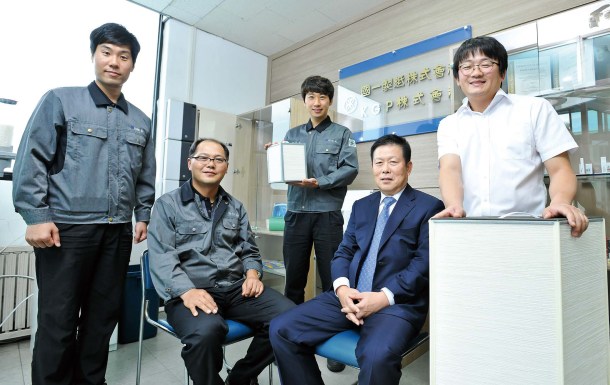
Untitled-20.jpg

Moreover, they have ‘future strategy team’ which can not befound even in large paper companies and shows Kukil Paper’s unusual effort to find future growth power. Such effort became a good stepping stone to develop ‘electro-thermal sheet’ with their own technology which has been entirely reliant on import from Japan.
Also, the success of developing electro-thermal sheet through collaboration work with Incheon National University and education foundation Clean Air Nano Tech is a model case of academicindustrial- research collaboration that has been highlighted repeatedly, which is enough to receive a favorable evaluation as a speedy responding and constitutional improvement in ever intensifying sale environment of paper companies.
In this context, CEO Sun-young Shon said that “Kukil Paper selected the niche market of special paper and industrial paper as it main business area, because the market has higher value added and more marketability sustainable as an industrial material than regular paper market like wood-free paper dominated by large paper companies. For special thin paper, we have the nation’s best technical power, even comparable in global market.”

High functional electro-thermal sheet development, great
import substitution effect

While energy-saving has been highlighted all over the world since the oil shock of the early 1970s, the structures of houses have been changed to highly sealed, highly insulated enclosed styles. But, various diseases caused by contamination of indoor air and sick building syndrome from such structure changes became a social issue, and ventilation unit entered the scene to catch two hares of energy-saving and air purification at the same time.

Ventilation units are devices that discharge contaminated indoor air to the outside, and consist of two fans, one to discharge indoor air and the other to flow in outdoor air, and a total heat exchanger that collects energy from discharging air and converts it to it to inflow air. In such processing, the most core component is the total heat exchanger.
While ventilation units are produced by some of large companies and dozens of small companies within the country, most of total heat exchangers, core component that collects heat and moisture from discharging air and deliver them to inflow air, are imported from Japan.

On this occasion, Kukil Paper succeeded in developing paper electro-thermal film for air-conditioning that is another critical component in total heat exchangers, a core component of ventilation units, and also being entirely imported from Japanese Mitsubishi Paper or Lintec. The product is praised for having excellent functions including antibiosis, fire retardance and processability as well as heat and moisture transmitting feature, which is comparable to Japanese products.

For this, Dong-hoon Kim, executive director, said that “Electro- thermal film in total heat exchanger has to have good feature for heat and moisture transmission, but metals that have good heat transmission cannot transmit moisture, whereas nonmetal polymer membranes that have outstanding moisture transmission such as Goretex, XMP, and Celgard are too expensive to be used as a material in air-conditioning total heat exchanger. Thus we decided to use paper, which is low price and has quite good heat and moisture transmission feature. But the texture should ne be high density because the heat conductivity of paper is worse than metal, and discharging air and external inflow air should not mixed through the electro-thermal film. Also, some processes are required to make the paper contains a substance having high heat conductivity or to impregnate the paper with moisture absorbent such as lithium chloride and calcium chloride, so as to remove any obstacles against moisture transmission when the texture is compact. At the same time we also need to add some functionalities including antibiosis, fire retardant, and processability. As results, we can have what Japanese companies have monopolized all the while through our company’s successful development”.

Untitled-21.jpg
But, despite Kukil Paper’s efforts they still have not delivered great results yet, as market-growth scale was nothing like what they estimated in the beginning of electro-thermal sheet development. In the development planning stage, it was estimated that ventilation unit would have considerable marketability, because of vigorous government moves to improve indoor air quality, such as obligation and legislation of indoor air quality notification.
So, it was expected that installation obligations of installing ventilation units would be continued for new buildings, and actually a few large and medium companies started to produce ventilation units around that time. Against the expectations, however, the obligation of installing ventilation units for new buildings is not more than a recommendation. Furthermore persistent economic recession in the construction business and lack of user’s precise recognition on product usage cycle made ventilation unit market be at a standstill. But, Kukil Paper recorded 1 trillion won sales every year even in such market stalemate, and they developed various special papers and industrial papers
through whatever they can to with papers as well as developing more efficient electro-thermal sheet based on technical power obtained from the development course, in order to achieve the goal of being truly the nation’s best special /industrial paper manufacturer.

Creating a new paradigm for paper

This drastic development of business of Kukil Paper in such market situation comes from their unusual philosophy for paper. “Most people associate paper with pulp, and consider that paper tears easily and its function is only writing something. However, such limited thought for the type and functions of paper is a stereotype, and this stereotype for paper restricts all we can do with paper” said CEO Shon, and he highlighted that “Whatever is flat, I consider it as paper. That is why we start developing electrothermal sheet. Although we cannot get a big profit, we are proud of our successful development. Having future strategic team in the company to seek new growth power and attempting to realize all the idea about what we can do with paper through convergence between industries, all of them started from new definition of paper, thinking outside the box.”
Indeed, Kukil Paper’s such unusual concept and view for paper enabled them to develop, in addition to electro-thermal sheet, fine thread with paper to make something like clothes of ramie cloth, and furthermore, pushed them to move forward developing special paper that can be used as a membrane in fuel cell. Therefore, for Kukil Paper which is creating a new paradigm for paper through challenges that not just anybody can take on, the expectations of the company will be much higher in future.

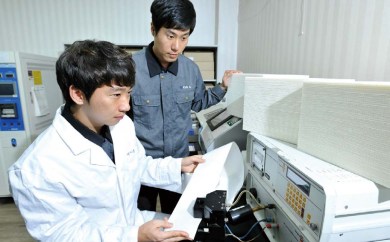
<Left: Kukil Paper’s electro-thermal sheet developed by self technology has perfect quality and function comparable to Japanese products.>

<Right: Ventilation unit and total heat exchanger electro-thermal sheet developed by Kukil Paper through academic-industrialresearch collaboration.>

korean-electronics.com | Blog Magazine of korean electronics, brands and Goods