Daum Kakao to launch a Korean Version of YouTube

Daum Kakao will begin its ‘Kakao TV’ service from this month, allowing for mobile video to be viewed and shared through the social chatting service Kakao Talk. Currently, the biggest attention is focused on whether the new service could be a rival of the existing similar services of YouTube and Facebook.

According to industry sources, Daum Kakao is boosting its promotional eff orts ahead of the launch of its Kakao TV service. The new service will distribute video clips produced by non professionals with smartphones, in addition to those produced by the existing broadcasters. A spokesperson for Daum Kakao explained, “We’re preparing to release the mobile video-oriented service and aim to circulate more video contents through Kakao Talk,” adding that the details have yet to be decided and they will be ready within June.

Kakao TV will be diff erent from the ‘Daum TV Pot’ service which is already in operation. Daum TV Pot is mostly operated on PC, while Kakao TV will be mobile-oriented and has a primary purpose of sharing smartphone-based videos. The fi rm became confi dent about the new service as more videos are being uploaded on Kakao Story.

In cooperation with video contents producers that Daum-Kakao has contracted from early this year, Kakao TV will focus on quality contents to attract more attention from viewers. Aside from Kakao TV, Daum Kakao is making eff orts to expand its Online to Offline (O2O) service which connects real life with mobile. It is actively preparing for new projects about character and mobile banking service.
Samsung Techwin develops autonomous unmanned vehicle

Samsung Techwin has succeeded in developing an autonomous unmanned vehicle, which can drive on it own on roads and even on mountainous territory and plains. It also firstly made a drone with a folding wing in a sign to spur efforts to build new technology.

Autonomous unmanned vehicles and drones are noteworthy as they fall into the future technology sector, into which global giants including Google, Amazon and Alibaba are energetically leaping, to gain predominant positions early by securing new technology and releasing pilot products.

An industry source said recently that Samsung Techwin developed its autonomous unmanned vehicle ‘Star-M’ in cooperation with around 80 researchers with masters and doctors degrees in robot and video analysis.

Autonomous unmanned vehicles (AUVs) have competitive functions of automatically driving on ordinary roads and even bumpy ones as well. Unmanned vehicles by car makers and Google need drivers, while Star-M can move automatically without drivers. Samsung Techwin recently said an AUV equipped with total solutions in unmanned robot system including robot and video analysis, Star-M can reach the destination while driving on its own in mountainous areas, unlike Google and car makers’ basic function of driving on the road.


korean-electronics.com | Blog Magazine of korean electronics, brands and Goods

Korea’s firms vie for top place in global UHD TV market

Korea’s TV makers are positioned No. 1 in the world’s UHD TV market. As of 2013, Korean firms were behind their Chinese and Japanese counterparts to remain in third spot. However, Korean firms have achieved ‘triple crowns’ in the HD TV, FHD TV and UHD TV market.

Market research firm Display Search recently said that Korean TV makers including Samsung Electronics and LG Electronics captured a combined 48.1 percent market share to retain the top share. Their market share reached at 19.7 percent in 2013. Meanwhile, Chinese TV makers, which had the highest 51.9 percent market share, saw their position slide to second place with 30.6 percent. Japanese makers had a 16.0 percent of market share last year, down from 16 percent in 2013.

Korea’s TVs dominated higher market share with higher resolution, Last year, Korea firms posted 38.1 percent market share in HD TV market, 43.9 percent in FHD TV market and 48.1 percent in UHD TV market. HD displays contain one million pixels, FHD two million pixels and UHD eight million pixels. In other words, Korean TVs are leading the premium TV market.


korean-electronics.com | Blog Magazine of korean electronics, brands and Goods

Samsung Electronics sees the rebirth of system semiconductors as a money-making player

Boosted by excellent performance of three major parts of system semiconductors, Samsung Electronics’ system LSI business is positioning itself as a moneymaking division, from a money-losing body. Last year, System LSI recorded around one trillion won ($881million) deficit, but this year it is expected to post at least 500 billion won profit.

An electronics industry source recently said that the major contributor to the revival is the Application Processor (AP), the core part of smartphones. As it again signed a cooperation deal with Apple and released the 14-nano FinFET AP, Samsung is expected to generate higher AP revenue from the first half of this year. The global electronics giant has succeeded in mass-producing mobile AP using 14-nm FinFET. Apple plans to incorporate the 14-nano FinFET technology in its iPhone7, scheduled to be released in October.

The abovementioned 14-nm refers to the 14 of one billion-thick meter semiconductor circuit. FinFET is the technology that accelerates the speed of the information process by making semiconductor devices a thirddimension structure. No others can compare with Samsung in this technology, placing it in the dominant position in the world. Qualcomm last year pulled in more than half of the sales in the global market worth $5.7 billion, with Samsung Electronics’ share accounting for 4.2 percent, according to a market research firm SA.


korean-electronics.com | Blog Magazine of korean electronics, brands and Goods

LG’s plans to inject record high US$5.6bn into R&D

LG Group plans to spend a record high amount on research and development (R&D) this year in order to develop new technologies that will help the conglomerate lead the market.

In 2015, the company group expanded its number of researchers and technical advisers (executive levels) to the highest level. It recently said that it will invest 6.3 trillion won ($5.6 billion) in R&D projects this year. This is the first time for the company group to put aside over six trillion won worth of annual R&D budget, equivalent to 39.4 percent of LG’s total investment for 2015 of 16 trillion won.

The allocation of the total investment on a group level also hit an all-time high. The group set aside 37.1 percent or 5.9 trillion won of the total 15.9 trillion won investment last year. Such ever-high aggressive investment on R&D will be focused on three major areas of electronics, chemicals and telecommunication, service. In particular, more than two-thirds of the entire investment or 4.2 trillion won will be used for the electronics area, which is scheduled to be carried out by LG Electronics and LG Display.

In the electronics sector, focus on technologies of next-generation mobile and display will be at the center of the investment. In the communications and services sector, the investment focus will be the 5G mobile communication network technology and big data processing technologies.

In addition to three areas of electronics, chemical and telecommunication, LG’s investment will also be created for R&D for technological development of new growth engines including the convergence industry.


korean-electronics.com | Blog Magazine of korean electronics, brands and Goods

CES 2015

CES 2015 reaffirms Korea as an electronics powerhouse with challenges to fundamentally improve the nation’s electronics industry

The recently ended CES 2015 was a place by which Korean people could reassert its status as a one of the global leading nations in the electronics industry. At the same time, concerns were raised among participants over too much investment in TVs and home appliances compared with other areas of electric items.

Samsung Electronics and LG Electronics displayed SUHD TVs and OLED TVs, each, and succeeded in making a big promotion at a similar level to what they intended. The two companies have also competitively unveiled futureoriented home appliances including next-generation washing machines capable of supporting high competitive washing functions. In particular, they emphasized “openness” in line with the era of Internet of Things (IoT). This means such an approach could help Korea take the market initiative of IoT in the near future in the global market.

CES-2015_! However, warning voices among industry experts are being raised over excessive underestimation of overseas competitive rivals including companies of Japan and China. A series of related products including 4K(3840 x 2160)cameras, switchers, from Sony, switchers, displayed at the CES 2015, were in the middle of such atmosphere – industry experts openly say Japanese companies still partly affect the quality of Korean-made TVs. Also, Sony’s integrated 4K chipset technology and Panasonic’s aerial entertainment system, unveiled at the exhibition, raised awareness of the importance of the secure of the basic technologies among participants at the fair.

The growing competition from Chinese home appliance makers emerged as an urgent challenge that needs to be addressed in the near future. In fact, Some Chinese companies including Hisense, Changhong, massively presented their cutting-edge technologies in the area of smart home including smart switch, electric bulb by utilizing their prior experiences of chasing after Korean companies in the field of TVs. Chinese-made products are being considered home appliances enhanced in terms of design and performance. This means, regarding the so-called, “Chinese Shock,” by last year, TVs were at center stage, but from this year, home appliances are emerging as a frontrunner by replacing the existing role of TVs.

CES-2015


Korean-Products.com | Blog Magazine of Korean products, brands and Goods

기계 마지막 문단

The world’s 1st IoT complexes led by Korean government to be materialized

According to a recent announcement by the Ministry of Science, ICT and Future Planning and the National IT Industry Promotion Agency (NIPA), two complexes of Internet of Things (IoT) will be constructed in Korea for the first time in the world. The so-called ‘Smart Service’ is expected to be realized in some cities of Korea from the second half of this year.

The-world’s-1st-IoT-complexes In these complexes, business processes can be connected to the Internet, beyond connections between equipment and person and between equipment and equipment.

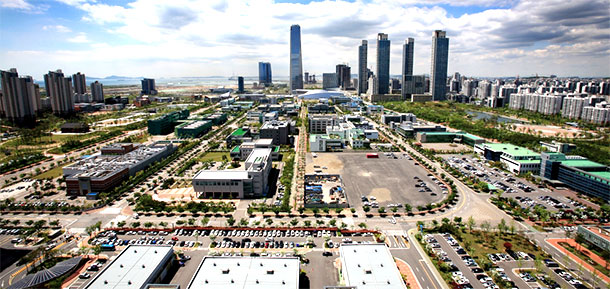
The candidate locations discussed for the plan are now in four cities – Bukchon (traditional culture) in Seoul; Centum City in Haeundae, Busan; Songdo in Incheon; and Healthcare Complex in Daegu. Korean government will select two among the four candidate places by March, introducing service in the second half through preparations including platform construction. The government has already arranged budget worth 12.5 billion won ($11.5 million) for the realization of the complexes.

The-world’s-1st-IoT-complexes_1 A spokesperson of the ministry noted, “The purpose of the IoT complexes, which have been pursued this time, is to identify profitable services by integrating public information with technologies from the private sector,” adding, “We are considering to offer developer tools, which are easy to develop, for private companies to lead in the global market.” Korean government selected home appliances, home, vehicles, education, distribution, industrial safety and energy as fields for new industrialization of IoT.


korean-electronics.com | Blog Magazine of korean electronics, brands and Goods

Korea-NZ FTA

Korean industrial circles see Korea-NZ FTA to be beneficial for the nation’s industry

S. Korean industrial circles estimate the nation’s free trade agreement with New Zealand would be beneficial for the nation’s industry because under the pact, the two sides can potentially generate clear mutual benefits based on each other’s industrial backgrounds: manufacturingfocused country of S. Korea and an agriculture-focused nation of New Zealand.

New Zealand has been positioned as Korea’s 44th largest trading partner and relies on importation to meet its domestic demand for industrial products, meaning that the nation is the ideal FTA partner to the world’s 15th largest economy.

Korea-NZ-FTA_1 Cars from South Korea, the main export item of the nation, have already been shipped to New Zealand with no tariff, so benefits from the FTA will also be specific in other industry sectors like gasoline, heavy equipment and electronic products. Exports of car ties and washing machines will increase thanks to the FTA and tariff on car parts and refrigerators will disappear in three years.

S. Korea hopes competitiveness would be strengthened against rival economies as the FTA requires the abolition of tariff on bus, truck and other commercial vehicles in three years, where Korea competes with Japan fiercely. Korea’s textile industry in rivalry with China will be benefitted from tariff removal that will be realized within seven years.

Korea-NZ-FTA New Zealand agreed to remove tariffs on all Korean products within seven years. Agricultural machinery, food processing and packaging facilities and small miscellaneous goods will be subject to tariff removal, which will encourage S. Korea’s small-and mediumsized enterprises (SMEs) to go overseas. The issue of display of the nation of origin was not contentious in the FTA negotiations because products in competition between the two partners are not overlapped.


korean-electronics.com | Blog Magazine of korean electronics, brands and Goods

Korean semiconductor giants’ recent noticeable movements in the global market

New expectations are being created in the Korean semiconductor industry. Semiconductors are playing a vital role in the recovery of the nation’s industry competitiveness, given the face that Chinese companies are competing strongly in Korea’s major export industries – including smartphones, shipbuilding and steel. In addition, global advanced enterprises in the United States and Europe are asserting technological superiority over Korean makers in medical, software, and aerospace industries.

Industry-Trends

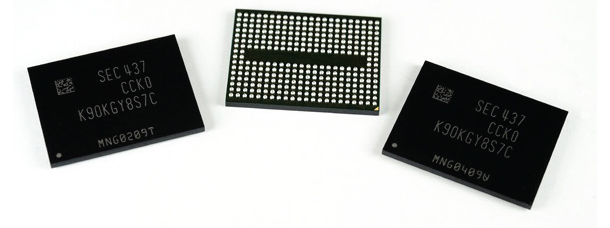
Industry-Trends_1 Samsung Electronics, last month, said that it has launched massproduction of “three-bit V Nand Flash Memory” for the first time in the world. The memory is ten nano class of 128Gb product and boasts excellence in terms of processing speed, power efficiency, and size. That means the global tech giant can obtain at least two years of technological gap over its competitors including Toshiba.

SK Hynix also started mass-production of SSD (Solid State Drive), a next generation storage device replaceable of HDD (Hard Disk Drive), by using a onelevel of improved micro-process technology, and it has begun delivering them to two large server companies in the United States.

Samsung Electronics is overwhelming competitors in the global market, with its unparalleled V Nand memory, a technology allowing semiconductor chips to be stored vertically. SK Hynix is now ahead of overseas memory makers, with its micro-processing (by making the semiconductor’s circuit thickness thinner).

LG Electronics is also broadening its presence in the market by spurring in its efforts in the development of system semiconductors for vehicles.

A spokesperson of the MOTIE (Ministry of Trade, Industry and Energy), recently disclosed the factor behind such successful drives led by Korean semiconductor makers, by saying that “Samsung Electronics and SK Hynix’s technologies concerning semiconductor processing are now at the top position in the world market”, and “the current remarkable result is wholly attributable to the consistent and massive investment on the areas led by the Korean leading tech makers.

LG Innotek recently succeeded in mass-producing ultraviolet (UV) LED (Light-Emitting Diodes). So far, LED has been applied to general lighting, the application of LED, and thanks to the company’s improvement in technology, could be expanded into a greater diversity of areas including purifiers, water purifiers, and sterilizers.


korean-electronics.com | Blog Magazine of korean electronics, brands and Goods

LG Chem became a supplier of batteries for Germany’s largest energy storage system (ESS) project

LG Chem became a supplier of batteries for Germany’s largest energy storage system (ESS) project

Germany-based renewable energy company Energiequelle recently announced that it had chosen the LG Chem as a battery supplier for the ESS construction project underway in Feldheim, Brandenburg state. The South Korea-based chemical giant company intends to provide lithium-ion modules by the end of this year and complete their installation by the first quarter of next year.

The ESS facility to be built in Feldheim will have Germany’s largest 10.8 megawatt-hour (MWh) output. The capacity is equivalent to daily electricity consumption of about 2,000 households nearby.

Feldheim is an eco-friendly village that has gained energy-independence based on renewable energy. The village has a solar farm equipped with 43 wind power turbines and 9,844 photovoltaic modules and a biomass plant that relies on pigs’ excrement and corns. All eyes of the world are on the village as a future model. About 130 residents of 37 households in the village use only one percent of the independently produced power and sell the remaining electricity for profit.

A spokesperson of LG Chem noted that this supply deal would help the company gain proven experience in the storage and management of electricity generated from multiple renewable energy sources and secure an edge in gaining a foothold in the microgrid market, which combines globally expanding renewable energy power generation with ESS.


korean-electronics.com | Blog Magazine of korean electronics, brands and Goods