 State-run Korea Trade Insurance Corp. will back Kia Motors’ $1 billion capital investment in India to build its first manufacturing base in the world’s second most populous market through guarantees of up to $650 million.
Korea Trade Insurance recently inked a memorandum of understanding with Kia Motors to extend payment guarantee of up to $650 million. Backing from a state agency would make it easier for Kia to raise loans for its investment in India as well as recruiting builders and suppliers for the manufacturing facility.
In April, Kia Motors signed an agreement with the Indian state government of Andhra Pradesh in the Anantapur district to build its first auto-making plant in southern India. The company will construct the plant on a site of 2,160,000 square meters at a total cost of $1.1 billion. It aims to complete building the plant by 2019 and churn out 300,000 vehicles a year. The Indian factory reportedly would make smallsized sedans and sport utility vehicles tailored to the Southwest Asian market.
korean-electronics.com | Blog Magazine of korean electronics, brands and Goods
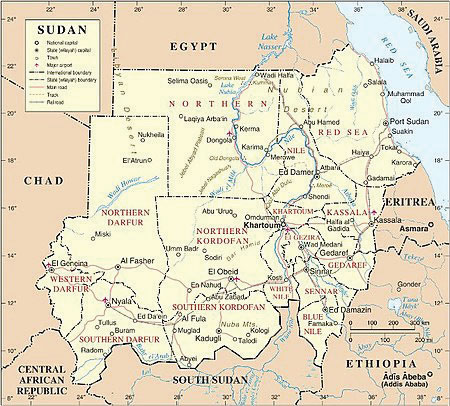
 Macroscopically, after oil exports taking a hit due to the independence of South Sudan that took over 75% of overall oil deposits, Sudan has been unable to overcome its reform of economic structure completely.
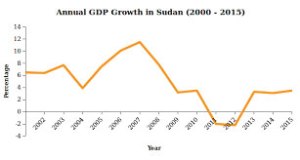 lifting of economic sanctions on Sudan, which lasted for the past 20 years.
 With this sanctions lifting, Sudan is expected to vitalize imports and exports due to restrictions on finance and foreign exchange being eased in the short run. In the longer term, foreign investment and infrastructure project development are expected to expand. For a long time, Sudan has faced difficulties such as extremely low foreign exchange, price spikes and depreciation of its own currency.
 purchasing contract, which gave our companies a hard time. It is expected that this sanction release will liberalize foreign exchange so that depreciation of its currency against the dollar can be stabilized. Recent rebound of its currency against the dollar reflects its expectation of sanctions lifting.
 cutting-edge new materials sparked off by a global economic recovery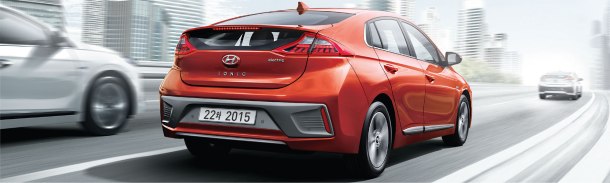
 GM and Renault Samsung also showed their dependence on a few popular models in sales. GM Korea, the U.S.-based carmaker’s local sales unit, had its best performance in sales last year since it started business operations in 2002, but the glory was led by a few models.
 Meanwhile, Song said the government is seeking to extend a swap deal with China, which expires in October this year. In March last year, Korea and China agreed to extend their swap deal “in principle.” However, with Seoul’s decision to deploy a U.S. Terminal High Altitude Area Defense (THAAD) battery on its soil, uncertainties still linger over the extension.

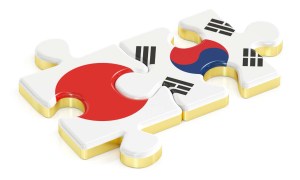
 Korea gained political independence from Japanese rule exactly 71 years ago. As far as the economy is concerned, however, the former seems to be still dominated by the latter. Since the two nations signed a trade pact to resume cross-border transactions in 1965, Korea has never recorded a trade surplus with Japan and the deficit has totaled $516 billion over the past five decades.