
Steady growth of the world’s market size for wearable devices

https://korean-electronics.com//inquiryThe world market for wearable devices is expected to grow from 30 billion dollars in 2015 to 150 billion dollars in 2026.
Wearable devices are smart devices that are attached to the body in order to input, output and process information, such as smart watches, smart glasses and smart bands. It is a fusion technology industry that combines materials and parts such as semiconductors, sensors and displays with IoT, virtual/augmented reality and artificial intelligence.

Currently, the wearable device market is formed around accessories like smart watches, but in the future, experts predict that the devices will be attached to the body or implanted along with growth of VR/AR and health medical devices.

The Fusion device industry such as wearable devices is an industry that requires cooperation among departments more so than in any other field. So far, the Ministry of Science Technology Information and Communication and the Ministry of Industry have made efforts through cooperation for the development of the wearable devices industry. They have come up with ‘Future Growth Power – Industry Engine Comprehensive Implementation Plan’, ‘Manufacturing Industry Innovation 3.0 Strategy Implementation Policy’, ‘K-ICT Smart Device Promotion Measures’.

From the last year, they are working together for ‘Wearable Smart Device Core Parts and Element Technology Development Project’.

In relation to this, the Ministry of Science Technology Information and Communication and the Ministry of Industry Commerce and Resources will host ‘Wearable Device Technology Development Workshop’ at Yangjae L Tower on the 13th to examine and explain the current status of research and development in the wearable device industry and to strengthen cooperation between the two ministries.

At the workshop, recent wearable device trends and market forecasts will be shared. Technology development projects under the two ministries are divided into three sections, health medical, biometric data, and terminal, so that experts from these related fields may get together for in-depth discussions for future technology development cooperation measures.

During the discussions by sections, a total of five projects including ‘Development of Multiple Wearable Software Fusion Module and Application Platform to Support Integrated Management of Body Activities’ from the Ministry of Science, Technology, Information and Communication and a total of twelve projects including ‘Development of Core Technologies for Open Type Wearable Development Kit Applicable to Various Services’ from the Ministry of Industry and Commerce will be shared among staffs for technology development status to discuss future commercialization and technology cooperation.

These two ministries have declared their common interest for the need to strengthen cooperation for the vitalization of wearable device industry through these workshops.

A government official declared that, “Even in the future, the two ministries plan to make efforts together not only for technology development, but also for personnel training and corporate support, to commonly utilize development results and promote commercialization continuously.”

korean-electronics.com | Blog Magazine of korean electronics, brands and Goods
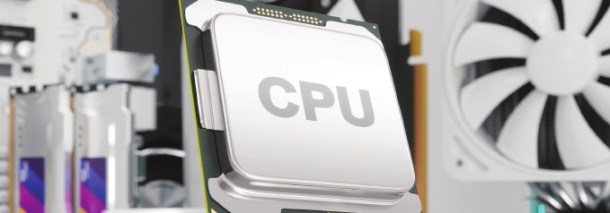
Samsung Elec Unveils World’s LargestCapacity V-NAND Chip and New SSD

https://korean-electronics.com//inquiryThe world’s largest memory chip maker Samsung Electronics Co. unveiled its new Vertical NAND (V-NAND) flash memory with the world’s biggest storage capacity of 1-Terabit (Tb) along with next-generation solid state drive (SSD) solutions.

At the Flash Memory Summit 2017 recently held at the Santa Clara (CA) Convention Center, Samsung Electronics presented its new 1-Tb V-NAND chip.

V-NAND is the flash memory technology used in data storage devices including mobile phones and digital cameras. The V-NAND in a stacked structure can provide higher single-die density than those with 2-dimensional (2D) cellarrays, and demand for it is growing rapidly along with rising applications of artificial intelligence and Internet of Things (IoT).

The company said in a statement that with the new 1-Tb V-NAND chip that boasts twice larger storage capacity than the existing 512-Gigabit (Gb) chip, it is possible to construct2-Terabyte (TB) memory in a single V-NAND package by stacking 16 1Tb dies.

Considering that 1 Tb is equal to 128 GB, and a typical two-hour-long HD movie takes up 1.5 to 2 GB of memory capacity, about 60 to 70 movies can be stored in a single V-NAND chip.


Samsung aims to introduce the world’s largest-capacity SSD applying 1-Tb V-NAND memory technology next year. At the summit, Samsung Electronics also presented its new SSD technology, dubbed Next Generation Small Form Factor (NGSFF) SSD, which is expected to dramatically improve the memory storage capacity. With the new NGSFF SSD, four times larger memory storage capacity can be secured in the same server, so data centers and customers using the server can build more efficient system, according to Samsung, said Samsung. The company plans to begin mass producing it in the fourth quarter of this year.

An SSD is a storage device that can replace a hard disk drive (HDD). It uses high-speed memory semiconductors such as NAND flash memory or dynamic random access memory (DRAM) chips for storage that ensure high processing speed, low heating and little noise.

<Source : KITA>

korean-electronics.com | Blog Magazine of korean electronics, brands and Goods

Samsung Display Unveils 65-inch, Next-Generation Curved Display LCD

https://korean-electronics.com//inquirySouth Korea’s Samsung Display Co. recently unveiled nextgeneration curved panels in liquid crystal display (LCD), pushing the rigid display technology to a new level as it has been quickly losing appeal against flexible OLED.

The company presented its 65-inch S-Curved LCD and 65-inch Curved Glass Light Guide Plate (LGP) at the 2nd Curved Forum held at the Yanqi Lake International Convention Center in Beijing, China.

The 65-inch S-Curved LCD is a next-generation display that bends all four sides including above and below. The center of the screen looks as if it is slightly dented, which the company says provides a more vivid viewing experience. The 65-inch curved glass LGP has also applied next-generation technology as it has an edge thickness of only 4.9 millimeters.

A spokesperson for Samsung Display said that a display product that is curved on both sides has already been commercialized in the market but it is the first type in LCD.


The 65-inch curved glass LGP with an edge thickness of 4.9 millimeters also provides improved light transmittance and thinner display as it replaces plastic light guide panel component that evenly disperses light within LCD with glass.

The spokesperson said that applying glass LGP to televisions provides improved image quality and also more flexible design for living space interior. Samsung Display, meanwhile, plans to enhance its partnership with major TV manufacturers including TCL Corporation and Hisense Co. in China, the world’s largest premium TV market, to boost the overall curved display market. The company is betting on curved products as core technology that will lead to new solutions in the LCD market that has shown sluggish growth recently.

<Source : KITA>

korean-electronics.com | Blog Magazine of korean electronics, brands and Goods
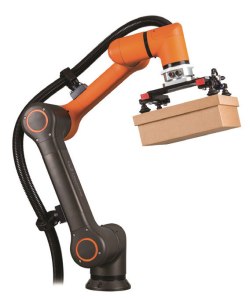
Hanwha Techwin has released an industrial collaborative robot for the first time in Korea

https://korean-electronics.com//inquiryNew markets for industrial collaborative robots have been steadily growing, as it is expected that the market for industrial collaborative robots, compared to the existing industrial robot market, will be the driving force to lead the growth of the industrial robot market, which is saturated in an early stage.

Regarding the already released industrial collaborative robots of global companies, there are UR3, UR5 and UR10 from Universal Robots, Baxter and Sawyer from Rethink Robotics Baxter, LBR iiwa from KUKA, Yumi from ABB, P-Rob from F7P Robotics and CR-35iA from Fanuc.

In March this year, Hanwha Techwin entered this market by releasing HCR-5, an industrial collaborative robot, for the first time in Korea. More companies are directly developing and implementing marketing by importing industrial collaborative robots of overseas brands by establishing a robot business department.

According to the definition by the ISO International Standards, the collaborative robot is an industrial robot fulfilling the collaborative operation conditions for humans and robots to work together in the same workspace. This is the definition that is strictly distinguished from cooperation among robots.
As in the definition of international standards, robots that can collaborate with humans should be obligatorily verified for their safety. Collaborative robots can work with humans side-by-side without a safety fence, according to the International Safety Technology Standard (ISO/TS 15066). These robots should be designed in such a way that the safety of humans should be secured if a robot makes contact with or collides with a human when the robot is actually operating.

In 2017, the Motion Control & Machine Vision Show, held in Hall 7 & 8 of the 2nd Exhibition Center of KINTEX located in Goyang-si, Gyeonggi-do, from April 25 to April 27, a special corner for collaborative robots was established. Its popularity among visitors proved the high interest in collaborative robots.

In the special pavilion, people could examine industrial collaborative robots such as duAro from Kawasaki Heavy Industries, Ltd. of Japan, UR series from Universal Robot exhibited by Visionsemicon Co., Ltd., and OUR-I (Open Unit Robot) from Smokie Robotics of the USA, exhibited by EOTech Co., Ltd.
korean-electronics.com | Blog Magazine of korean electronics, brands and Goods

Expansion of the proportion of manpower of new industry from electric/autonomous vehicles to robots

https://korean-electronics.com//inquirySince new technology leading the 4th Industrial Revolution is changing quickly and highly unreliable, the demand for future R&D/designing manpower in the field of new industry is rapidly increasing. It is expected that 380,000 new jobs will be created in 12 new industrial fields by 2025.

The number of workers in 12 new industries from electric/autonomous vehicles to smart ships, IoT home appliances, robots, bio health, aviation/drone, premium customer goods, energy new industry, new material, AR/VR, new-generation display, and new-generation semiconductors is predicted to increase by over 11.2% annually from 203,000 in 2015 to 362,000 in 2020 and 585,000 in 2025.

In particular, it is expected that the proportion of work of ‘industrial technical manpower’ possessing professionalism such as R&D/product quality verification/producing technology, etc., among the entire workforce, will increase exponentially from 40% in 2015 to 50% in 2025.

This means that work will be reorganized focusing on high-quality technical manpower with professionalism rather than supporting manpower such as clerical work/service work, according to changes of industrial structures and development of new technology in the era of the 4th industrial revolution. Accordingly, the government will constantly expand business education and training industrial manpower of practical business in accordance with demand from the industrial field.

The Ministry of Trade, Industry and Energy recently held an industry-university-institute expert meeting seeking ways to create jobs by promoting future promising new industry. The meeting was intended to mainly discuss job creation prospects and successful cases and difficulties regarding jobs in companies investing in new industry.

Representatives of companies investing in new industry such as big data, telemedicine, driverless vehicles, etc. who participated in the meeting emphasized the need for creating private sector jobs focusing on the industrial field, along with creating public sector jobs by the new government.

As it seems that most jobs (380,000 jobs) willl be created in 12 new industries which have a huge effect of job creation, it was requested that the government should try more, led by the ‘Job Committee,’’ to create an environment that companies can create more jobs. It was also requested that capable expert manpower, be trained to support the flexible transfer of manpower from other industries, expand infrastructure such as laws and systems and support new technology development (R&D) of the government and institutions.

korean-electronics.com | Blog Magazine of korean electronics, brands and Goods

Kia Motors’ Niro Ranks 4th in U.S Hybrid Car Market in Feb. 2017

https://korean-electronics.com//inquiryKia Motors Corp.’s compact hybrid sports utility vehicle (SUV), Niro, ranked fourth in the U.S. hybrid vehicle market based on sales within just a month of its release in America.
According to American hybrid car review website HybridCars.com, Kia’s Niro sold 2,143 units in January to rank the fourth in the U.S hybrid car market based on sales. Japan-based Toyota’s Prius topped the list with 5,418 units sold followed by Ford’s Fusion Hybrid with 4,939 units. Toyota’s RAV4 ranked the third by having sold 3,080 units. Kia’s Niro comprised 7.56 percent in America’s total hybrid car market.
Kia Niro’s quick success comes largely from its outstanding performance and design that were recognized internationally. The eco-friendly SUV sold a total of 50,407 units including 19,683 units at home and 30,722 units abroad until January this year to surpass the 50,000 unit milestone in just 10 months since its launch.
The automaker’s Super Bowl, the most beloved sports event in the USA, commercial for the all-new 2017 Niro crossover also has contributed to the hybrid SUV’s success, industry watchers said. Its TV commercial titled “Hero’s Journey” that aired in the third quarter of the big American football game was selected as the favorite in the 2017 YouTube AdBlitz championship and the 29th annual USA TODAY Ad Meter competition. It also recorded over 20 million views on the global video portal site YouTube.

<Source:KITA>

korean-electronics.com | Blog Magazine of korean electronics, brands and Goods

Samsung Elec, SK Hynix to Boost 11%, 16% in Capex Spending This Year

https://korean-electronics.com//inquirySouth Korean memory chipmakers Samsung Electronics Co. and SK Hynix Inc., which are the world’s largest two players in the dynamic random access memory (DRAM) market will boost capital investment by 11 percent and 16 percent, respectively this year, buoyed by recovery in prices of mainstream memory and heated demand for nextgeneration memory to power high-performance computing and mobile devices, according to global market data provider IC Insights.
Samsung Electronics will top the Capex ranking with estimated spending of $12.5 billion, up 11 percent from last year. SK Hynix pledged $6 billion to ramp up capacity to meet burgeoning demand in 3D non-volatile storage (NAND) fl ash. They had cut spending by 13 percent and 14 percent, respectively, last year on the back of a weak DRAM market that ended up in a supply shortage and jump in DRAM prices toward the end of the year.
SK Hynix has already approved a budget for 7 trillion won spending largely to expand cleanroom space at the M14 fab in Icheon, Gyeonggi Province.
The world’s largest memory chipmaker is yet to announce its spending plans for this year. Samsung Electronics is building the world’s largest chipmaking compound in Pyeongtaek, south of Seoul. From the latt er half, the facility will turn out NAND fl ash.

korean-electronics.com | Blog Magazine of korean electronics, brands and Goods

LG’s Game Changer G6 to be Revealed This Month

https://korean-electronics.com//inquiry

LG announced on January 12 that it will reveal its latest smartphone G6 at the Mobile World Congress (MWC) to be held in Barcelona, Spain, in late February. The G6 will come with a larger screen with the 18:9 aspect ratio display optimized to show multiple images simultaneously.

It is also expected to have enhanced functionality such as one-hand operation for text messaging along with waterproof and dust-resistant features. Although LG’s G6 was expected to be revealed at MWC 2017, this was the first time LG officially announced the date of its debut.

LG posted a 40-second video on its social networking services including Facebook and YouTube, suggesting the new features of G6 with a subtitle “February 2017.” A spokesperson for LG explained, “The date February 2017 refers to the MWC event. The video makes it official that LG will reveal G6 in February.”

201702e_%ed%8e%98%ec%9d%b4%ec%a7%80_55_03The G6 teaser video shows interviews with seven citizens in New York being asked what features they think ideal smartphones should have. The seven interviewees mention features such as a big screen for multitasking, compact sized-body easy to fit in a pocket, and a phone with a stable grip. They also talk about one-hand operation for text messaging, waterproof, durability, indicating that these are the features of G6 that LG wants to emphasize.

LG has previously introduced that its G6 will be equipped with a 5.7-inch display with a unique 18:9 aspect ratio. Moreover, it has announced that LG’s G6 will not have a removable batt ery but will be equipped with waterproof and dust-resistant features. The G6 will also feature a wide-angle camera lens and add new functions such as a one-handed usage for text messaging.

It is reported that LG’s smartphone business unit MC division saw an operating loss of 500 billion won during the fourth quarter of last year. However, a rebound during the first quarter of this year can be expected depending on the success of the G6.

korean-electronics.com | Blog Magazine of korean electronics, brands and Goods

Samsung SDS Develops a Security Solution for Samsung Electronics’ Gear S3

https://korean-electronics.com//inquiry

Samsung SDS announced on last January 5 that it has completed the development of its Enterprise Mobility Management (EMM) solution for wearables including for Tizen-based smart watches such as Samsung Electronics’ Gear S3.

The EMM for wearables is a security solution independently applicable to wearable devices without using a smartphone. It safeguards the data stored in the device while assisting the user to manage enterprise applications on the device.
By simply downloading the solution on Samsung Electronics’ smart watch Gear S3, the user is all set to use the wearable EMM.

201702e_%ed%8e%98%ec%9d%b4%ec%a7%80_54_03Once the solution is installed, the administrator is able to control the wearable devices remotely. If they are lost, the administrator can simply lock the screen or reset the devices.
Samsung SDS explains that the solution is especially useful for users who need to use both hands freely while working such as ground staff at airports, fl ight att endants, and employees at theme parks.

The wearable EMM was launched on January 5 (local time) at CES 2017, the world’s largest tech show held in Las Vegas, USA.

“It’s a key solution to manage enterprise wearable devices,” said Hong Won-pyo, president of Samsung SDS’ solutions unit. “We’ll provide diff erentiated solutions and services for global customers.”

201702e_%ed%8e%98%ec%9d%b4%ec%a7%80_54_07

korean-electronics.com | Blog Magazine of korean electronics, brands and Goods

KT to commercialize world’s first 5G mobile network in 2019

https://korean-electronics.com//inquiry South Korea’s leading telecommunications company KT Corp. pledged on Tuesday that it will offer the world’s first commercial service of fifth-generation (5G) mobile network in 2019, a year earlier than its initial goal of 2020.

In a press conference at KT Square in Gwanghwamun, central Seoul, KT said it aims to commercialize a 5G connection after it demonstrates its trial service based on standardized 5G-SIG specifications during the 2018 PyeongChang Winter Olympics in Korea and manages to meet global standardization requirements.

5G is a next-generation wireless network technology that boasts of more than 20 times faster data transfer speed compared to the currently available long term evolution (LTE) service. This advanced connection is said to be essential in fostering the growth of fledgling technologies such as virtual reality, three-dimensional multi streaming videos, self-driving vehicles, and delivery drones.

Following the announcement on Tuesday, KT added a new section to its web site dedicated to 5G services and unveiled specifications of its 5G-SIG standard that has been jointly developed by major global vendors including Nokia Corp., Intel Corp., Qualcomm Inc. and Samsung Electronics Co. KT has invited mobile device manufacturers and developers at home and abroad to take part in its initiative to establish a standard for 5G network technology for the trial service and accelerate global standardization of 5G network technology.

According to KT, its 5G-SIG specifications meet more than 70 percent of major 5G requirements and technical criteria presented by global mobile technology organizations including the International Telecommunications Union and the 3rd Generation Partnership Project.

An unnamed official from KT expected that the introduction of its 5G standard specifications would enhance research by small- and mid-size enterprises and research institutes from home and abroad on 5G repeaters, components and devices, and encourage them to join KT’s 5G standard.

KT and global vendors plan to complete the development of 5G base stations, related devices, and core network equipment this year, which will be used for the trial service in 2018. They plan to establish a 5G test network in February next year, and complete the trial service in the following year during PyeongChang Winter Olympics before ultimately standardizing 5G wireless network.

korean-electronics.com | Blog Magazine of korean electronics, brands and Goods