Smartphone photo printer

[INQ. NO. 1608E01] Prinics is a https://korean-electronics.com//inquirymanufacturer of photo printers for Apple & Android™ devices and its accessories.

Prinics was established in 2005 with the vision to be the “World’s No. 1 photo printer,” and since then it has been producing top quality digital photo printers.
Prinics develops its own engine and simplifi ed all-in-one cartridge. Because of this technology and ability it possesses, it obtained patents from Korea, the United States, China and Japan. Prinics is the world fi rst MFi (Made for iPod touch, iPhone and iPad) licensee of smartphone photo printers and it also has a PictBridge license for digital camera printing.
Prinics’s PICKIT is a portable size photo printer that can print photos from a smartphone.
2016-08-24 11;50;56.PNGPICKIT provides free applications in iOS and Android. By NFC tag in the printer, users can connect the printer to their phones automatically via Wi-Fi direct. With various photo editing features of the application, users can print their fun and enjoyable moments at any time within 50 seconds.
Patented PICKIT cartridge and Untitled-1.jpgbuilt-in batt ery makes user experiences a lot more convenient. Prinics is constantly making new developments to ensure that users are always provided with the most convenient and latest features in photo printing so that users have the best photographic experience.

korean-electronics.com | Blog Magazine of korean electronics, brands and Goods

Industrial connectors

[INQ. NO. 1608E02] Established in 1993, HoSung Technics has been specialized in manufacturing and supplying https://korean-electronics.com//inquiryvarious types of industrial connectors for global client companies, contributing to the nation’s economy. Through starting exports to overseas markets in 1998 including Singapore and Europe, HoSung Technics has seen steady growth in its size.
In 2008, HoSung Technics received a $5 Million Export Tower award from the Korea International Trade Association (KITA), recognizing that the company saw noticeable growth in exports withing a relatively short time.
Its current main products are the RF coaxial connector, surge arrester, adapter, power splitt er, directional coupler, and cable assembly. Among them, the RF coaxial connector is
the most representative. The connector ensures high mechanical strength and high durability.
Untitled-2.jpgFor customer convenience, customized connectors are available. It can be eff ectively applied for antenna, infrastructure installation, and telecommunication modules.
Cable assembly from the company is also highly att ractive with many points after long years of intensifi ed R&D.
Already recognized as high reliable, it allows easy maintenance. The cable assembly, various cable assembly works are possible. Semi-rigid, fl exible, corrugated copper tube cable is available. The cable assembly is being used for telecommunication modules and system integration. It is visionary for potential customers to enjoy bett er satisfaction with its use, thanks to its further utmost eff orts, mainly focused on ceaseless R&D.

korean-electronics.com | Blog Magazine of korean electronics, brands and Goods

Intelligent WEB application firewall

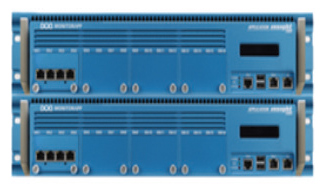
[INQ. NO. 1606E01] AIDFW(Application Insight DB Firewall) from MONITRAP is a https://korean-electronics.com//inquirysolution based on complete Query analysis authoring strong user authorization and access control. With profile based automated security policy, AIDFW detects and blocks abnormal DB access. Post audit function based on access history will secure your DB from dangers from external and internal security threats.
AIDFW provides fail-over function for enhanced logging performance and large log processing module with uninterrupted web. In addition, sniffing gateway which has three times the performance of proxy way provides hybrid mode without requiring any additional tap equipment.
WEB-database log correlation and linkage analysis related to actual attacker’s IP through detection and prevention (Patent No.10- 0937020) enables user tracking as well.

Untitled-44.jpg

korean-electronics.com | Blog Magazine of korean electronics, brands and Goods

Touchscreen panel for mobile devices

[INQ. NO. 1606E02]
Untitled-42.jpgResistive touch screens are being fast replaced by capacitance screens along with appearance of iPhone, etc. because capacitance screens provide a much softer touch. Today, a touch screen has become the most preferred input device as it allows a user to perform more easily and instinctively.
A slim touch sensor technology, which is applied to a wide range of devices such as tablet PCs in addition to smartphones, appears to be emerging as a major trend in the area. A touch sensor with integrated window does not require ITO film and thus can be made slim with competitive prices, high transmittance, and thin bezel. Integrated windows can be made by either a cell process or a sheet process but the sheet process is more advantageous in terms of productivity and prices.
https://korean-electronics.com//inquiryTo make the sheet process possible, the touch sensor unit is coated with tempered glass but the strength of tempered glass gets lowered during the cutting process and this is the reason why new technologies should be developed such as technologies for increasing strength of sheet glass and tempered glass, cutting tempered glass, securing strength of tempered glass, and manufacturing thin film material and sheet for a touch sensor.
UTI’s development of the touch screen with integrated window for a smartphone began in January 2011 and was completed at the end of 2012 along with mass-production.
The product began to be shipped to Company S in Japan from 2012, and the accumulated sales have reached KRW 125 billion.
In 2015, mass-production of a camera window, employing the same technology, succeeded through the sheet process, and supply of the product to Company S in Korea has led to sales of KRW 12 billion. This mass-produced product has applied GDP (Glass Direct Patterning) for the first time and allowed the company to be registered as a primary vendor for Company S. In 2016, the technology is applied to 0.1~0.2mmthick tempered glass products such as a finger-scanning home key, whose sales are increasing in the market. This is expected to allow the company to increase export and to enter new markets.
Untitled-43.jpgIt was not easy to introduce the new touch screen product to major smartphone brands without sales records from the establishment of the venture business in 2010. But the company has met quality requirements of a customer by developing samples a dozen times and won trust from a demanding Japanese customer by presenting meticulous plans for massproduction and installation of the necessary facilities.
korean-electronics.com | Blog Magazine of korean electronics, brands and Goods

SCCM industrialization and applications

Technology overview: Public interest in fresh and safe food is growing faster than ever along with improved quality of life and the use of online markets is giving rise to the demand for cold chain systems. However, the domestic market for refrigerated transportation is seriously lacking modernized systems and technologies for effective establishment and operation of the systems.
Inhttps://korean-electronics.com//inquiry particular, pre-cooling is hardly applied to agricultural products at production sites, and only 27.8% of such farm produce is shipped under refrigeration. Lack of proper temperature control often leads to considerable loss of products and even to disposal.
This project of SCCM Industrialization and Application was carried out in response to the rising demand for cold chain systems in order to develop smart cold chain management technologies for real-time remote temperatures/humidity control.
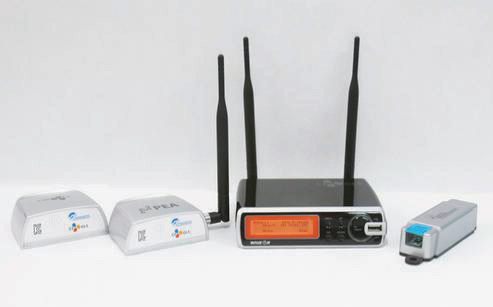
The smart cold chain management technology monitors temperatures/humidity in real-time by installing wireless sensors in vehicles and logistics facilities, collecting data from 50 sensors at the same time for location-specific management. Additional features can be easily installed as well. The application of the smart cold chain management is expected to improve the quality of logistics services and minimize the costs of the entire supply chain.

Industrialization: The smart cold chain management technology has been applied to a variety of sites in order to assess feasibility of industrialization. As to the food industry, temperature/humidity sensors were installed in a mushroom container, monitoring the inside of the container in real-time so as to analyze causes of product spoilage, which reduced annual average logistic costs and products loss by KRW 500 million. In the pharmaceutical industry, the smart cold chain system was applied to logistic warehouses so as to track temperatures of medicine, and application to hospitals has been verified as well through process analysis and test bed establishment, targeting four major hospitals in Korea.
In the apparel industry, the technology was applied to products sensitive to humidity such as leather with the purpose of preventing mold, which actually saved annual average product loss of KRW 26 million. In the CPG industry, the technology proved to be useful for preventing product damage and quality degradation during winter, lowering damage of CPG with high water content from 3% to 2%.

Problem-solving in industrialization: In Korea there are no regulations or regulatory systems on frozen or refrigerated food for the smart cold chain management and thus, internal standards of manufacturers or logistics services providers are applied voluntarily. There are no standardized regulations for handling perishable food either. As for livestock products, there are recommended expiry dates (24 months for frozen meat, 90 days cooled beef, and 45~55 days for cooled pork). Only the Livestock Products Sanitary Control Act stipulates that temperatures of transport vehicles should be maintained at 0~15℃.
Due to this lack of laws and regulations for mandatory temperature control of food, application of the smart cold chain management system was not easy but the company persuaded customers by highlighting that introduction of the system can prevent food spoilage or mold on clothing and improve quality of products through effective temperature/humidity control solutions applied to vehicles and storehouses.

Untitled-29.jpg

korean-electronics.com | Blog Magazine of korean electronics, brands and Goods

Proprietary technology of factory-integrated DMS

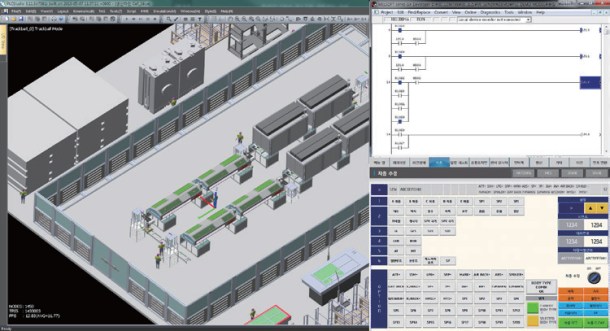
Technology overview: The technology of a digital factory and simulation realistically visualizes key elements of automatic manufacturing processes via 3D graphics so that a user can operate a virtual factory with the purpose of predicting and analyzing possible problems, performing design, verification, and correction of production methods in advance, and supporting optimized distribution of the factory’s resources, facilities, and human resources.https://korean-electronics.com//inquiry
More specifically, the technology establishes a virtual factory based on a general drawing and facilities control codes without building actual production lines. In addition, operation of facilities can be performed/verified/corrected in advance by applying control logic of facilities to a virtual factory. The company has also secured a technology for creating 3D models containing kinematic/electrical information and physical sensors and for high-speed processing of large-volume 3D graphic data.
Furthermore, they have succeeded in conversion and simplification of facility design data for 3D simulation, performance of a safety/equipment collision test, creation of an operator-friendly process chart, alignment of simulated production methods and mechanical movements with control programs, and application of a physical PLC controller and HMI in use.

Untitled-28.jpg

Industrialization: The 3D simulation technology was applied to thirty domestic/overseas new, modified, and mixed assembly lines of the Hyundai-Kia Automotive Group in order to verify their mechanical and electrical design, which reduced designed man-hour and improved the quality of control programs. Prior to actual set-up of a factory, virtual trial operation could minimize the period of the actual trial operation for preparing massproduction.
Furthermore, the technology could help to deal with frequent modification of production methods and mixed models, standardize PLC programs, and improve competitiveness compared with imported SW, and thus is being applied to the body, press, painting, and trim lines.
Currently, advancement of the technology is under way in response to requests of customers such as a phase shift circuit and monitoring. The technology has been applied to the standard PLC simulator of the global production technology training center of the Hyundai-Kia Automotive Group and to the integrated simulator and CPS simulator of the 3D virtual technology support center of the Korea Electronics Technology Institute.

Problem-solving in industrialization: Since domestic companies have introduced high-priced SW licenses, companywide application was not easy and customers had difficulty in using the virtual factory and simulator.
Requirements of customers were different depending on circumstances of each site, calling for continuous field tests to produce effective results. Thus, the company established a standardized template suitable for automobile manufacturing processes and achieved a virtual factory and simulation engineering services that match the site by up to 95%. These achievements were included in the regular process development procedures along with relevant services. The industrialization was largely divided into licenses and engineering services thereafter.
Based on the confidence that the smart factory technology is crucial to the future manufacturing industry, ceaseless R&D efforts were made in order to meet specific requirements of the site. The pilot and performance tests helped to reflect a customer’s know-how and specific production features of each industry. With the proprietary technology of the smart factory, the company offered effective management and standardization for control of old facilities and operation of processes.
The simulator was made more user-friendly while solutions for a simulator, controls design, operation, and monitoring as well as relevant training programs were offered to the global production technology training center of the customer.

korean-electronics.com | Blog Magazine of korean electronics, brands and Goods

Multi I/O digital predistortion amplifier module for 4G LTE and WiMAX

Technology overview: The goal of this task is to develop a multiple I/O digital https://korean-electronics.com//inquirypredistortion power amplifier module and RRH system, and technologies for respective components are as follows: First, CPRI ASIC chip development was progressed based on CPRI standard interface protocol through RTL code design verification, commercial trial product manufacturing, and CPRI Back-end design, and signal properties were verified through system interlocking test. Second, CFR•DPD ASIC chip development was progressed based on RTL design for CFR•DPD algorism through small low power commercial CFR•DPD trial product manufacturing and CFR•DPD Back-end design, and signal properties were verified
through system interlocking test. Third, CFR•DPD predistortion technology and commercial high efficiency power amplifier module suitable for RRH system were developed, and Asymmetric Doherty structure power amplifier was developed to improve efficiency.
Also, peak power and phase were optimized applying phase shift based drive stage structure, and high efficiency power amplifier was developed, enhancing the efficiency of power amplifier one step more and applying Envelope Tracking technology for gate bias.
Finally, small, low power, light RRH system could be developed based on the development of respective elements mentioned above, and high efficiency RRH system that could satisfy the task goal was developed through tests.

Industrialization: High efficiency RRH facility investment was promoted by mobile communication service providers during domestic 4G LTE commercialization and service expansion in 2012. For domestic 4G RRH, Samsung Electronics led the supply of 4G RRH, while FRTEK utilized the technology developed through this task, promoted joint development agreement with Samsung Electronics and achieved industrialization. In 2012, KT and Samsung concluded accompanied growth agreement, participated in constant 4G LTE RRH development, and completed development for KT LTE RRH 20W (Samsung RRH ODM). Since 2012, FRTEK has carried out industrialization persistently for high efficiency 4G RRH. Also, in regard to high efficiency power amplifier, one of participant, Sungsan Electronics & Communication applied Asymmetric Doherty power amplification technology, achieved the industrialization of power amplifier with Axell Wireless in UK. The company also developed 40W Asymmetric Doherty power amplifier for US use and keep promoting high efficiency AMP industrialization persistently.
FRTEK utilized technology developed through this task, applied high efficiency direct to Multiband in-building DAS system, and now the company is progressing the expansion of
industrialization areas and promoting constant business expansion through high efficiency technology in the field of mobile communication.

Problem-solving in industrialization: Because there is significant data consumption due to the expansion of 4G LTE services, mobile communication frequency and service bandwidth are expanded, which causes difficulties in utilizing high-efficiency technology, but technical skill for GaN TR, a broadband highefficiency amplifier element, and Doherty utilizing technical skill has been consistently developed. In system field, application of DPD•APD, which is digital technology, was excavated, and issues about multiband multi operator were solved and the industrialization is being expanded consistently.

LTE RRH system (output applied FDD RRH•TDD RRH system)
CFR•DPD module and ASIC


korean-electronics.com | Blog Magazine of korean electronics, brands and Goods

0.8mm touchscreen panel with an integrated window for mobile devices using thin tempered glass

Technology overview: Resistive touch screens are being fast replaced by capacitance screens along with appearance of iPhone, etc. because capacitance screens provide a much softer touch. Today, a touch screen has become the most preferred input device as it allows a user to perform more easily and instinctively.https://korean-electronics.com//inquiry
A slim touch sensor technology, which is applied to a wide range of devices such as tablet PCs in addition to smartphones, appears to be emerging as a major trend in the area. A touch sensor with integrated window does not require ITO film and thus can be made slim with competitive prices, high transmittance, and thin bezel. Integrated windows can be made by either a cell process or a sheet process but the sheet process is more advantageous in terms of productivity and prices.
To make the sheet process possible, the touch sensor unit is coated with tempered glass but the strength of tempered glass gets lowered during the cutting process and this is the reason why new technologies should be developed such as technologies for increasing strength of sheet glass and tempered glass, cutting tempered glass, securing strength of tempered glass, and manufacturing thin film material and sheet for a touch sensor.

Industrialization: Development of the touch screen with integrated window for a smartphone began in January 2011 and was completed at the end of 2012 along with mass-production. The product began to be shipped to Company S in Japan from 2012, and the accumulated sales have reached KRW 125 billion.
In 2015, mass-production of a camera window, employing the same technology, succeeded through the sheet process, and supply of the product to Company S in Korea has led to sales of KRW 12 billion. This mass-produced product has applied GDP (Glass Direct Patterning) for the first time and allowed the company to be registered as a primary vendor for Company S. In 2016, the technology is applied to 0.1~0.2mm-thick tempered glass products such as a finger-scanning home key, whose sales are increasing in the market. This is expected to allow the company to increase export and to enter new markets.

Problem-solving in industrialization: It was not easy to introduce the new touch screen product to major smartphone brands without sales records from the establishment of the venture business in 2010. But the company has met quality requirements of a customer by developing samples a dozen times and won trust from a demanding Japanese customer by presenting meticulous plans for mass-production and installation of the necessary facilities.

korean-electronics.com | Blog Magazine of korean electronics, brands and Goods

Intelligent BT-NT-IT integrated platform based water-treatment core technology

Technology overview: Intelligent BT-NT-IT https://korean-electronics.com//inquiryplatformbased water-quality automatic measurement core technology and water treatment core technology has been developed that can monitor water quality of a stream or water quality change of a sewage-treatment facility in real-time using data obtained from the micro-modular water quality automatic measurement device and provide the function of actively preventing environmental pollution.
Using developed technology not only can it detect and respond to a water-quality-pollution accident by monitoring, in real-time, pollutants such as organic matters, nitrogen, phosphorus, etc., existing in first rainwater overflows and wastewater from a sewage treatment plant flowed in to a stream and lake but also it can actively change an operation module of a sewage treatment plant responding to pollutant inflow change.
Developed technology is composed of three specific technologies: First, micro-modular water quality monitoring technology is the measurement technology calculating TN, TP and BOD by analyzing concentration of organic matters (DOC), nitrogen (NH4+, NO2-, NO3-) and phosphorus (PO43-), which is the core information for water quality of streams (including lakes), first rain water overflows and wastewater of a sewage treatment plant, and 6 general items and, based on this, operating a software sensor. All of these measurements are completed in 5 minutes and it has accuracy less than 5%.

Manufactured Micro-modular Water Quality Automatic Measurement Device
/ Manufactured Smartphone Based General Items Water Quality Measurement Sensor

Second, micro-modular water quality automatic measurement device based water quality gathering and responding technology is the technology that can detect, predict and respond to a water quality polluted situation using a developed model by collecting measured water quality information as a standardized form through a smartphone communications network or wireless communications network such as WiFi, etc. Third, water quality automatic measurement device based city overflows/sewage treatment facility process controlling technology is the technology detecting water quality change of city overflows and sewage inflows in real time using the micro-modular water quality automatic measurement system and based on this, controlling facilities treating city overflows and sewage treatment plants. Based on this, among overflows flew in to a stream quickly when raining, BOD, SS and TP are removed about 7~80%, > 90%, > 90% respectively.

Industrialization: The intelligent BT-NT-IT integrated platform based water treatment core technology development research team achieved results of 33 cases of technology transfer and 49 cases of industrialization (technology transfer 641 million won, sales 1.44 billion won) until a task is completed. First, the foundation for advancement into overseas markets has been established through development of a micro-modular water quality automatic measurement device. Water quality automatic measurement devices developed in this project and water quality information and management technology have been applied to the developing country (Sri Lanka) project to establish a system optimized to operate a water treatment system. Next, a multi-channel water quality measurement device was exported to Malaysia and future industrialization was promoted through micro-modular water quality information gathering and responding technology. Furthermore, the flow analysis and modelling to manage water quality has been conducted by applying a stream water quality prediction model developed in this project to Malaysian streams. Through this, sales of about 660 million won were achieved. Also, a contract to introduce a Malaysian traditional market sewage treatment plant of the water treatment system was under way based on this.

Problem-solving in industrialization: There was a difficulty when applying for a formal approval in Korea for the reason that it is excellent technology but different from existing methods. However, to overcome difficulties to enter into a domestic market due to regulations enacted mainly for existing measurement methods, we advanced to an overseas market first and succeeded in overseas industrialization while proceeding with a product’s field application and enhancement. Regarding developed water treatment technology, we faced the reality of the saturated domestic market and proceeded with technology marketing through overseas human networks of a person in charge of research. Also, technology verification and field visits were managed while continuously operating a pilot plant installed in a domestic sewage treatment plant. Through these efforts, we established the foundation of overseas business and overcame difficulties of domestic business by transferring technology to domestic and overseas companies.

korean-electronics.com | Blog Magazine of korean electronics, brands and Goods

Vessel sealer of laparoscope operation tools

Technology overview: Of laparoscope operation tools, vessel sealer is used to control hemorrhage in blood vessel with high frequency. If a blood vessel is not bound up properly during operation, https://korean-electronics.com//inquirythere would be serious internal bleeding, sothis is a high risk product and many trials and errors were required in manufacturing all parts because this is the nation’s first production. The first approach to make a difference from existing multinational companies’ products is design for user’s convenience, as a handle is applied so it can reduce muscle fatigue than existing products. Second, Sunnedix insulates pipe and rod and removes wires, whereas existing products are using wires to flow bipolar electricity to 5mm diameter pipe. This driving unit allows it to rotate 360 degrees with improved electric safety. Terminal tissue contacting area is manufactured by applying metal powder injection molding, and recovery rate is increased by applying coining technique (Re-constructing) after molding for precise dimension. IEC 60601 3rd version is applied to the test for CE certification, ISO 9001 and ISO 13485 are applied to entire manufacturing processes from development to packing and sterilization, and commercialized is focused on systemized follow-up management.

Industrialization: An unexpected problem encountered in domestic industrialization was the user’s and buyer’s motivation of purchase. Sunnedix’s capability was too poor to win through the material superiority of intense marketing and persistent product training by multinational companies. Thus, the company cooperated with a domestic electric operation tool manufacturer and requested it to take full charge of marketing in 2015. In overseas markets, Saudi Arabia, Italy, Portugal, Spain, and Japan showed interest and currently sample assessment is ongoing.
Taking into account the fact that the medical market is, generally speaking, conservative, it is considered necessary that the company now follows the advisable course, and reinforcing sales capability such as exhibition is expected to produce fine results.

Problem-solving in industrialization: Registration procedures in each country is the biggest issue in export. Required registration period takes 1~2 years, and related costs are high, which are used as invisible trade barriers. Sunnedix is overcoming the difficulties using fellowship with existing customers, and now registration is under process in Egypt. The biggest problem in domestic industrialization is Sunnedix’s poor business network because the company has been focusing on export, therefore the company now proceeds to contract in the consideration that it is better to request its sales to a big company with strong domestic sales capacity.

korean-electronics.com | Blog Magazine of korean electronics, brands and Goods