Technology overview: The goal of this task is to develop a multiple I/O digital  predistortion power amplifier module and RRH system, and technologies for respective components are as follows: First, CPRI ASIC chip development was progressed based on CPRI standard interface protocol through RTL code design verification, commercial trial product manufacturing, and CPRI Back-end design, and signal properties were verified through system interlocking test. Second, CFR•DPD ASIC chip development was progressed based on RTL design for CFR•DPD algorism through small low power commercial CFR•DPD trial product manufacturing and CFR•DPD Back-end design, and signal properties were verified
through system interlocking test. Third, CFR•DPD predistortion technology and commercial high efficiency power amplifier module suitable for RRH system were developed, and Asymmetric Doherty structure power amplifier was developed to improve efficiency.
Also, peak power and phase were optimized applying phase shift based drive stage structure, and high efficiency power amplifier was developed, enhancing the efficiency of power amplifier one step more and applying Envelope Tracking technology for gate bias.
Finally, small, low power, light RRH system could be developed based on the development of respective elements mentioned above, and high efficiency RRH system that could satisfy the task goal was developed through tests.
Industrialization: High efficiency RRH facility investment was promoted by mobile communication service providers during domestic 4G LTE commercialization and service expansion in 2012. For domestic 4G RRH, Samsung Electronics led the supply of 4G RRH, while FRTEK utilized the technology developed through this task, promoted joint development agreement with Samsung Electronics and achieved industrialization. In 2012, KT and Samsung concluded accompanied growth agreement, participated in constant 4G LTE RRH development, and completed development for KT LTE RRH 20W (Samsung RRH ODM). Since 2012, FRTEK has carried out industrialization persistently for high efficiency 4G RRH. Also, in regard to high efficiency power amplifier, one of participant, Sungsan Electronics & Communication applied Asymmetric Doherty power amplification technology, achieved the industrialization of power amplifier with Axell Wireless in UK. The company also developed 40W Asymmetric Doherty power amplifier for US use and keep promoting high efficiency AMP industrialization persistently.
FRTEK utilized technology developed through this task, applied high efficiency direct to Multiband in-building DAS system, and now the company is progressing the expansion of
industrialization areas and promoting constant business expansion through high efficiency technology in the field of mobile communication.
Problem-solving in industrialization: Because there is significant data consumption due to the expansion of 4G LTE services, mobile communication frequency and service bandwidth are expanded, which causes difficulties in utilizing high-efficiency technology, but technical skill for GaN TR, a broadband highefficiency amplifier element, and Doherty utilizing technical skill has been consistently developed. In system field, application of DPD•APD, which is digital technology, was excavated, and issues about multiband multi operator were solved and the industrialization is being expanded consistently.


LTE RRH system (output applied FDD RRH•TDD RRH system)


CFR•DPD module and ASIC
korean-electronics.com | Blog Magazine of korean electronics, brands and Goods


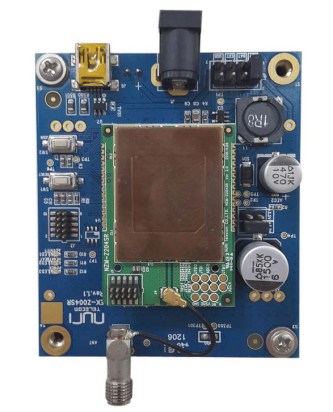 Industrialization: The solution has won the project of establishing the AMI system and installing digital meters for 265,000 houses from Goteborg Energy, Sweden, using the technology for long-term system improvement and maintenance. This, in turn, has led to winning the capital AMI project, especially targeting apartment houses, as part of supplementary services using NURI Telecom’s electrical AMI. The technology was used to establish a wireless communication network providing energy IoT services to the entire city of Goteborg, which has become a well-known case of such industrialization. The system has proved the company’s outstanding technological competitiveness through continuous advancement & sophistication, and has recently won more contracts from South Africa, Ghana, India, and Iraq through the developed solutions or features with an effective proposal, applying the AMI system to a total of 1 million houses in 17 countries.