 [INQ. NO. 2002E09] Luvis — developed, produced, and sold by DENTIS Co., Ltd.— is a representative Korean-made LED astral lamp brand that is currently being exported to more than 80 nations worldwide.
DENTIS now produces a varied line-up that meets the needs of diverse medical areas requiring professionality and suitable for use in different environments – including lamps specifically for dental work, lamps for experiments and tests, small-sized lamps for operations, and medium- and large-sized lamps.
The M/L series, an initial series that gained recognition as a representative Korean-made product, ensures the world’s level of shadowless effect and product performance, following from the C series that was renowned as a leading Korean-made product for dental treatment, to the S series that is a bestseller model and enjoys steady demand in such various areas as gynecology, dermatology, zoological hospital, etc. DENTIS has plans to officially release the new ML/400 model and s300 model.
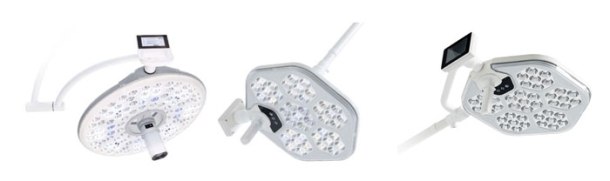 LM/L400 features premium specifications with highest-level multi-function and remote-control option. The S300 is designed to be smaller in size, well reflecting the spirit of innovatively seeking “compactness,” and thus changing people’s preconceived ideas.
Luvis, a brand highly recognized as a good design brand and a world-class product brand by Korean governmental agencies, intends to maximize the innovativeness in design and convenience through the unveiling of these new products.
korean-electronics.com | Blog Magazine of korean electronics, brands and Goods
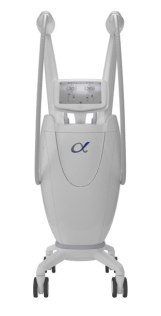 maximize the effect. Each applicator is highly recognized for its convenience and safety for both user and patient.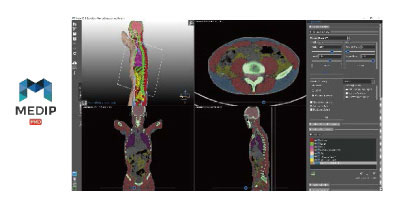
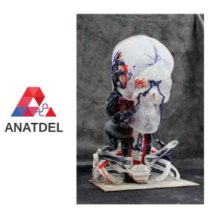 MEDIP has drastically shortened 3D modeling time, and more technologies have been added and developed to enhance the functionality such as VR/AR, mobile communication service, and body composition analysis. ANATDEL, 3D-printed artificial organs, are very similar in size, texture, and elasticity to actual organs, so they are widely used for medical simulations of surgeons, education and practice of medical students, and testing medical devices. In particular, the demand for ANATDEL is expected to increase as a substitute for cadaver use.
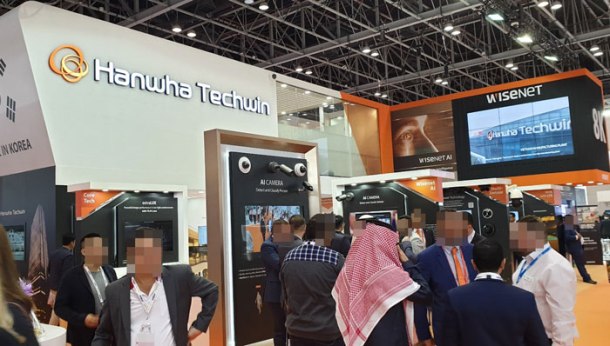 In addition, the company introduced a broad range of Middle East-specialized solutions, one being the 16CH NVR(XRN-1610G), which boasts a built-in modem that permits seamless video and status transfer to a control center using 3G or 4G, allowing operators to remotely monitor multiple devices across long distances in real time. Moreover, since heavy industrial facilities such as gas pipelines, petrochemical plants, and oil refineries are potentially explosive, it is crucial that video surveillance systems used in such facilities pose zero risks of exploding, while capturing high-quality footage at the same time. Wisenet explosion-proof cameras more than meet these requirements, via powerful networks and a protective stainless-steel housing enclosure.
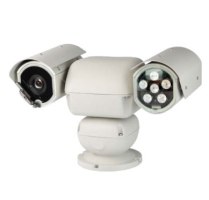 Triple H/W codec enables transmission of up to three independent streams with different settings for different requirements. Therefore, it is possible to combine seamless remote video monitoring using H.264/H.265 with simultaneous transmission to a network video recorder.
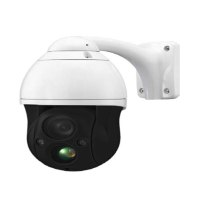 Due to the Micro-step technology, on step angle of this camera is divided by 256. Accordingly, high accuracy as well as ultra-low sound noise can be achieved. Micro-step technology enables ultra-low speed down to 0.05°/s.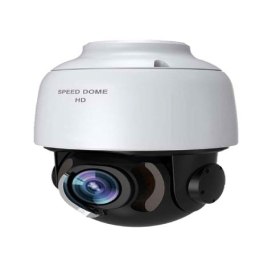
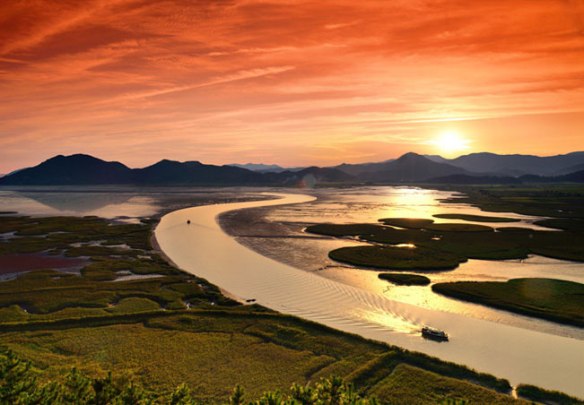
 Suncheon Bay National Garden, opened for the international Suncheon Bay Garden Expo, is the first National Garden in Korea. A wide variety of themed gardens can be found meticulously lined up at the garden. Autumn in particular is lively, with thousands of chrysanthemums in every shade, mirroring the field of reeds in the bay.
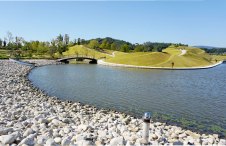 Suncheon Lake Garden was designed by world famous landscape designer Charles Jencks during his stay in Suncheon. This garden displays the city in miniature size, including replicas of the mountains surrounding the city made into smaller hills. In a reversal of elements, the lake in the center of these hills serves as the city of Suncheon, while the wooden deck above represents Dongcheon Stream winding its way through the city. Visitors can stroll along the boardwalk or climb up the hills; the view of Suncheon Lake Garden from the hill peaks is quite stunning.
 The World Garden is made up of garden styles from various countries, including Thailand, Japan, Great Britain, Italy, Turkey, Spain, the United States, the Netherlands, Germany, France, and China. It is an interesting experience to compare and appreciate different aesthetics presented by each nation. The Chinese Garden features a pond and pavilions, while the Turkey Garden represents the culture of the Middle East. The Dutch Garden and French Garden have models of their famous windmills and Palace of Versailles, respectively. Walking through each garden will offer visitors a chance to experience the visual differences in cultures from around the world.
 The Metasequoia Path is the most popular trail at the garden among couples. The trees were originally slated to be cut down in order to expand the highway system, but were moved to the garden to live out the rest of their lives.
 The Dream Bridge, designed by installation artist Kang Ik-joong, was created by reusing 30 container boxes. The walls of the bridge are decorated with more than 140,000 vivid paintings created by children from around the world. All those who cross the bridge can feel a strong desire to protect Suncheonman Bay and the world’s natural environment.
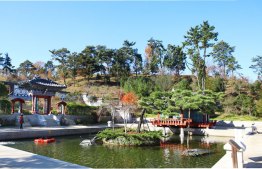 Korean Traditional Garden’s palace garden reproduces the elegant and beautiful Huwon areas of Changdeokgung Palace and Gyeongbokgung Palace. The noblemen’s garden shows a glimpse of the atmosphere in which ancient noblemen relaxed and studied with nature by their side. Lastly, the garden of hope focuses on a motif of folk beliefs. One can see many stone towers, created with the tradition of stacking a stone while making a wish in order for the wish to come true.
 Suncheonman Bay is one of the world’s top five coastal wetlands, and is by far Korea’s most beautiful natural landscape. The seemingly endless field of reeds surrounded on three sides by mountains and open to the sea on the fourth is something not easily seen in the world. Moreover, Suncheonman Bay was registered with the Ramsar Convention on Wetlands in January 2006. The wetland serves as home to an array of migratory birds including species like hooded crane, Saunders’s gull and more.
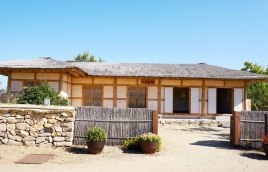 As soon as you enter the main gate of Suncheonman Bay Wetland Reserve, green lawns and ponds greet you before reaching the reed fields. As soon as you cross Mujingyo Bridge, your journey through the dancing fields of reeds begins. It takes approximately 40 minutes to walk along the path until you reach Yongsan Observatory. Relaxing views of vast fields and picturesque landscapes accompany you throughout your journey.