Conductive materials for direct nano-patterning

Technology overview: Ag and Cu nano-particle and nano-ink were key subjects of development as materials to form fine patterns through more improved methods than the classic photolithography process. https://korean-electronics.com//inquiryAnd products were developed to satisfy functional performances, such as nano-particles that have shape and dispersion properties suitable to direct patterning and electrical conductivity; and that satisfies process performances such as flow characteristics of ink, low temperature sintering process for the densification of pattern, conjugational property with substrate, and patterning resolution. For flexible electronics field which is highlighted as a future promising business, a technology that can realize a pattern on ductile substrate is essential, and direct patterning technology has great competitiveness as it is assessed as having the most competitive power in this field. Developed nano-ink provides a technical base to apply new processes from applications such as FPCB, Touch Screen Panel, Solar Cell, RFID, TFT to energy and bio, future promising industrial fields by utilizing various printing techniques including the adjustment of material (Ag) content, solvents, and additives, EHD (Electrohyrodynamic), ink-jet printing, gravure offset printing, and screen printing.

Industrialization: The technical area of direct nano-patterning covers various industrial areas including semiconductor, energy, bio, and display, and relevant application market is expected to grow up to 25 trillion won by 2025, therefore, the development of its core base technology which is direct nano-patterning is meaningful from an industrial economic perspective. Aided by such trends, the process technology established by AmogreenTech is an eco-friendly technology with mass productivity and considered as a more economically feasible nano-particle production process. Currently, a process was developed for economical feasibility in producing less than 20nm circular Ag nano-particles, and Nano-ink using that process allows EHD jetting within 1~1500cP of broad viscosity range and can realize patterns with 5B of adhesive strength.
The specific resistance of pattern manufactured with the produced Ag nano-ink shows low specific resistance as 4.48 uΩcm (for 200℃) or 9.11 uΩcm (for 130℃), and recently lower specific resistance like 3~4 uΩcm (Ag nano-ink), or 10 uΩcm or less (Cu nano-ink) is possible by applying optical sintering technology, thus there are active reviews on the applications that request lower resistance.

Problem-solving in industrialization: As demand for applying printed electronic technology is rapidly expanding in application fields like flexible substrate and large area touch screen, there have been persistent attempts to develop an ink that allows lower temperature sintering in foreign countries, but lower specific resistance, and improvements of adhesive strength and reliability are required. Also, utilizing wiring patterned with existing conductive ink is limited due to limitation to substrate materials, because the line width is around 50㎛, the specific resistance shows considerably high value compared to pure metal, and the heat treatment temperature to get appropriate adhesive strength with substrate is as high as hundreds degree.
In addition, there are research attempts on conductive materials utilizing Au or Ni, but their practical value is very limited due to pricing issue and high heat treatment temperature. Therefore, a technical team in AmogreenTech developed nano-particle manufacturing technology that allows plasticity in low temperature using Ag and Cu as conductive materials, and ink manufacturing technology that can enhance conductivity and adhesive power to overcome the limitation of substrate material and utilization.

korean-electronics.com | Blog Magazine of korean electronics, brands and Goods

Computed radiography system

[INQ. NO. 1604E03] JPI Healthcare is more than an X-ray component and equipment company; it is your imaging solution provider. Since 1980, JPI has contributed to the improvement of the quality of healthcare, and continues to develop new technologies that advance the ever-changing field of radiology. JPI works closely with X-ray equipmenthttps://korean-electronics.com//inquiry
manufacturers to enhance image quality, ensuring early intervention through proper diagnosis. JPI’s core competency is its ever diligent R&D team and commitment to manufacturing superior products and components. JPI Healthcare is confi dent in both its conventional as well as digital X-ray product lines.
JPI’s recently released computed radiography system model, ExamVueCR Pro, is an ideal solution for a clinic that wants to minimize its spending but still wants to upgrade its analog X-ray system into digital. All you have to do is to replace the current analog fi lm cassett e and fi lm processor with the CR system and it brings you high quality digital image right away. JPI’s digital upgrade kit ExamVueDR is an ideal solution for clinic that is willing to invest more into upgrading its analog X-ray system into digital. With the
current cassett e-sized detectors available, there is no need for major work to implement the system. Images are acquired much faster than both analog and CR systems, and the image quality is superb.

2016-05-10 10;01;59.PNG
JPI’s own X-ray system, the DRE series, is an ideal solution for those who are just starting a new clinic as it can be used as an analog system, with a CR system or full digital system.
Regardless of the fi nal confi guration, the DRE series will provide you with peace of mind
thanks to its durability and image quality.

korean-electronics.com | Blog Magazine of korean electronics, brands and Goods

Roadcam T-5000 dash cam

[INQ. NO. 1604E02] Founded in 2008, ILWOO MND has developed a dash cam (car lackbox; vehicle driving recorder). It applied patents of photo senor utilizing in car blackbox. Taking No. 1 ranking in the biggest Japanese Internet shopping mall, Lakuten and aunched 1ch HD and 2ch HD product.https://korean-electronics.com//inquiry
The roadcam T-5000 dash cam is currently the fl agship product for the company. It was selected as the crime prevention CCTV blackbox camera by police offi ces. The company was registered as a U.S. federal government offi cial vendor in 2013. In the year of 2013, it was selected as FTA utilizing global company. The company started providing dash cams even to taxi companies in 2014.
Supporting 60 frame CPU performances in total, the product delivers high temperature durability and recording stability. Basically, detection of day and night and auto control is ensured. Two kinds of software (fi rmware) – for car and CCTV – are provided. It permits dominant quality control and has a very low defect ratio. The functions of security LED and motion detection are available. It can support up to 256GB SD card.

Untitled-1.jpg

korean-electronics.com | Blog Magazine of korean electronics, brands and Goods

Voice synthesizer for blind and dyslexic people and AAC software

Technology overview: Voice synthesis technology is a very important IT technology for the blind and dyslexic people. For the blind people, software called ‘screen reader’ is used, which voice synthesizes text information appearing on the computer screen, https://korean-electronics.com//inquiryand they can hear this world’s information with their ears, and for the dyslexic people, software called AAC (Augmentative and Alternative Communication: complementary and alternative communication) is used, and when they type as they intend, the intent gets voice synthesized and delivered it to the counterpart. In the domestic market, the screen reader software is widely disseminated, while the AAC software is not. In this context, a voice synthesizer for the blind people, developed through this project, keeps articulation during the fast voice synthesis and can read mathematics formula. In addition, we have developed a voice synthesizer having various tones enabling dyslexic people to choose a specific tone that represents their own characteristics. In particular, we have developed AAC software called ‘mytalkie’ which contains a voice synthesizer having various tones, symbols and a text input method that is reflected by the Korean culture and language properties. Mytalkie ia an alternative and complementary communication device for those having difficulty in articulation and phonation, and as it has VoiceText™ inside, a voice synthesis solution having a range of tones and various symbols appropriate to use environment, they can express their intention via natural voice output and can interact with others.

Industrialization: We produced a voice synthesizer and an AAC software as our R&D outcome from the 1st year to the 4th year of the project, and conducted tests and evaluations based on the outcome, collecting many opinions from the users, continuously making improvements, manufacturing a pilot product using an intermediate outcome, conducting trial releasesfor some special educational institutes, and carrying out evaluations. In addition, we gave presentations at many exhibitions and societies to promote the product. It gained recognition for its productivity from the disabled people, special education instructors and related experts during the exhibitions and promotions, and some disabled people and their guardians actively participated in the trial dissemination, actually using the product. A number of disabled people participated in the trial dissemination as users and commented that they would like to buy one when it is commercialized. Thus, we stabilized the features of the AAC software-mytalkie, commercialized it, and began promotional activities. To sell the AAC software, mytalkie, to the public, it is critical to secure sales channels. It is not easy to promote the product to a few disabled people who want the AAC software, and it is also difficult to secure a sales route. More, disabled people who belong to an alienated group of a society cannot afford the product. Thus, we have joined the IT assistive technology dissemination enterprise of NIA, which is supported by the government. We were consecutively selected as an assistive technology dissemination business operator to disseminate products to disabled people at low prices during 2013~2014, when we were conducting a project, as well as in 2015, when we have completed the project.

Problem-solving in industrialization: The biggest problem facing commercialization was securing a sales network. It was hard for us to promote the product to a few disabled people individually, and they were not willing to buy it as it was expensive software. So, we decided to make use of the IT assistive technology dissemination enterprise for disabled people, of the government, and improved our product so that it could be selected as a product for dissemination to the government institutions, starting from the third year. Due to this, we could join the government’s assistive technology dissemination enterprise, and could find markets.

Technology developer: Voiceware Co., Ltd. / +82-2-3016-8500 / www.voiceware.co.kr


Utilization board 1 horizontal screen   /   Utilization board 2 vertical screen

korean-electronics.com | Blog Magazine of korean electronics, brands and Goods

RF & PLC-type smart grid remote meter reading solutions

Technology overview: Advanced Metering Infrastructure (AMI), which is the key part of a smart grid, is drawing keen attention along with the growing interest in energy, and standards on https://korean-electronics.com//inquiryvarious wired/wireless communications and remote meter reading are being established also. Despite the importance of the technology, however, the domestic market is growing slowly, not effectively responding to the newest technological trends in AMI solutions. More recently, there has been an attempt to incorporate the technology into a variety of industries such as IoT (Internet of Things), smart cities, etc., and thus energy management using a smart grid will play an important role in IoT. Accordingly, reliable AMI solutions need to be secured for success in the global energy IoT industry. Hence, this project has developed a technology of combining key elements of the AMI system communications, which are mainly RF and PLC type communications, and has aimed at development of commercial products with performance similar to that of the world’s advanced technology. The research team has secured the RF solution using the 2.4GHz/900MHz band that even excels the world’s well- known technologies in this area. The frequency range can be easily industrialized, for it is widely used as the ISM band (the industrial, scientific, and medical radio band), and many nations are establishing energy IoT services using the band, creating stable demand for the technology. The research team has secured technologies for large-scale solutions for urban services, even more competitive than the world’s leading technologies, attracting the attention from the overseas market. As for PLC, the team has developed Korea’s first low-speed PLC technology and secured low-speed  PLC remote meter reading solutions that can meet international standards. This achievement has laid the foundation for an energy system that supports both infrastructure and energy management. An energy management system offers features of collecting, managing, and displaying information on integrated remote meter reading as well as generating control signals for electrical load equipment according to demand response. Its design has taken into account expandability in order to provide energy IoT services across all sections of smart grid services in the future.

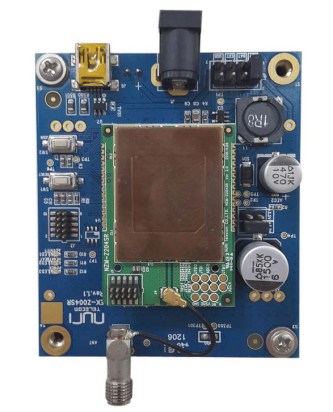
Untitled-33.jpgIndustrialization: The solution has won the project of establishing the AMI system and installing digital meters for 265,000 houses from Goteborg Energy, Sweden, using the technology for long-term system improvement and maintenance. This, in turn, has led to winning the capital AMI project, especially targeting apartment houses, as part of supplementary services using NURI Telecom’s electrical AMI. The technology was used to establish a wireless communication network providing energy IoT services to the entire city of Goteborg, which has become a well-known case of such industrialization.  The system has proved the company’s outstanding technological competitiveness through continuous advancement & sophistication, and has recently won more contracts from South Africa, Ghana, India, and Iraq through the developed solutions or features with an effective proposal, applying the AMI system to a total of 1 million houses in 17 countries.

Problem-solving in industrialization: At the time of the industrialization, the AMI service using the developed technology was not available in Korea and thus the tests were carried out only in the lab, making it difficult to predict or analyze circumstances that may happen in the field. Localization of the solution was hard as well due to such limitation when a business proposal was submitted or the system was established. Hence, the research team adopted the dual approach for establishment and development, making R&D close to a real-time response and continuously applying performance-improving technologies to the existing site of system installment so as to minimize problems of other sites. More recently, AMI services using various wired/wireless technologies have become available in Korea, which helps the company improve its problem-solving ability. The given solution has completed domestic and foreign performance testing stage for each of RF and PLC.

Technology developer: Nuri Telecom Corp. / +82-2-781-0777 / www.nuritelecom.co.kr

korean-electronics.com | Blog Magazine of korean electronics, brands and Goods
BIM-based intelligent LED lighting management system

Technology overview: The environmental crisis and resources crisis faced by the whole world recently require green growth across all of the industrial fields. Especially, https://korean-electronics.com//inquiryas the construction is the field having a great impact on the environment, like taking 30~40% of total energy use, reducing energy consumption through energy efficiency in the construction field is coming to the fore as a very important issue. This technology developed in this context is composed of ‘lighting visualization and automatic control technology’ and ‘areal-unit LED lighting control protocol and system’ based on the open BIM platform and 3D space authoring technology. This developed technology can maximally reduce energy consumed for building operation by enabling the user to operate the lighting management system intuitively as well as sensing and controlling the lighting of the building automatically. The specific development content and the expectancy effect of this technology are as follows: Firstly, it performs the functions, such as grasp of the management state for the automatic control of lighting, overall surveillance and central surveillance for the subsequent management and control, surveillance of the remote state from indoor  PC or mobile phone, and performance of control function. Secondly, it provides the Human Machine Interface (hereinafter HMI) for the overall management of the lighting device in the building aiming at maximization of energy saving. Thirdly, it provides pleasant residential environment by realizing reduction of the facility management manpower and enhancement of the energy efficiency through introduction of the HMI-based Facility Management System (hereinafter FMS). Fourthly, the Lighting Energy HMI, that is, the smart lighting control system analyzes and controls in real time the energy use of lighting load on each level and individually, and can control the lighting sequentially based on the loading amount of energy set up in advance before reaching the peak loading.

Untitled-32

Industrialization: In order to improve the applicability of the developed technology, we established the development strategy of securing the independent function of each of the system lighting devices and the smart platform and, through this, have achieved diverse industrialization performance. As the dimming controller and the individual sensor were developed as the mounted type, it can be used as component part of the commercialized product having used the engine itself, and also can be industrialized as the system lighting device. In addition, the smart platform of the lighting management system has secured flexibility vis-a-vis the existing technology as it can add or delete functions having reflected requirements in various environments, such as residential environment, office environment, etc. The specific industrialization performances using this technology are as follows: Firstly, in developing the system of LED lighting simulator and automatic proposal preparation,  P Company applied and used our smart platform for lighting design, and we supported the functional evaluation of the lighting device installed at the 3D spot. Secondly, in developing and industrializing the 3D comprehensive SI of the energy FM project, K Company used this developed technology, and we supported realizing the service monitoring the amount of energy used on each level. Thirdly, C Company accomplished  their sales figures by delivering the software package (except for LED element) including operation software and hardware, and at present they are carrying forward industrialization of the total LED lighting management solution, including the lighting management system package, field devices, LED luminaires.

Problem-solving in industrialization: Although we realized the intelligent LED lighting management system of the technology advanced country level by developing the lighting visualization and automatic control technology, and space-unit LED lighting control protocol and system, main target companies of industrialization  have demanded objective and reliable data for the degree of response precision and the performance evaluation concerning the dimming when the control system, which is the element technology, is actually applied at the site. Thus, we requested the Test Production Technology Support Center of LED∙LC Packaging,  the authorized agency, and then received the test certificate after having implemented the test. As a result, we have completed the quality verification of the development product and succeeded in the industrialization.

Technology developer: Virtual Builders Co., Ltd. / +82-2-312-9249 / www.vbuilders.co.kr

korean-electronics.com | Blog Magazine of korean electronics, brands and Goods

EDA-based next-generation ESB platform

Technology overview: The increasing need for real-time analysis and processing of mass-data in the environments of the Internet, bigdata, and IoT is calling for development of
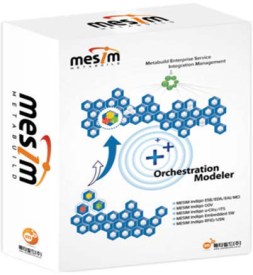
a large-scale global event processing system based on Event Driven Architecture (EDA), which makes possible high-speed data transmission and real-https://korean-electronics.com//inquirytime data analysis & processing. EDA-based next- generation ESB platform is a high-capacity distributed data processing system based on Event Driven Architecture (EDA), meeting  the requirements of high-speed/volume data processing, embedded/distributed  environment, service convergence, and so forth. The research team has developed two key technologies: one of them is a high-capacity/speed data processing middleware technology, which filters out unwanted information through a combined query plan and delivers relevant data to applications, and the other is a global event processing technology, which processes and delivers events based on publish-subscribe communications through dynamic configuration of a communications network domain in a distributed environment. This platform can be applied to various IoT-related industries such as the defenses, smart buildings, smart cities and plants, for event analysis/processing and event-distributing middleware ensuring high-reliability in real-time.

Untitled-29.jpgIndustrialization: This technology has been applied to the Sejong U-City integration platform, Songdo u-disaster prevention integrated operation system, and the smart highway project of the Ministry of Land, Transport and Maritime Affairs. As for the Sejong U-City integration platform, the CEP (Complex Event Processing) engine, part of the project’s achievements, was used as a technological element for context- awareness and analysis. With regard to the Songdo u-disaster prevention integrated operation system, the CEP engine was used to collect and process in real-time mass event data coming from the air quality data collection system, installed in the Sunrise (Haedoji) Park, Songdo District, so as to produce the data of current or future environmental status. For the smart highway project of the Ministry of Land, Transport and Maritime Affairs, the platform collected data from various  sensors  (e.g. radar,  CCTV, tolling, etc.) installed along the highways as well as vehicles, aiming to offer information on dangerous situations (icy road, obstacles, vehicle failure, etc.) through effective analysis of the data.

Problem-solving in industrialization: In an early stage of development, the market was not mature enough, and customers were unfamiliar with the concept, making it hard to promote the products and industrialize the technology. Over time, however, the technology was successfully applied to various projects through active promotion, especially targeting 2,000 corporate accounts. This initiative for market penetration is still in progress for a wide range of industrialization

Technology developer: MetaBuild Co., Ltd. / +82-2-598-3327 / www.metabuild.co.kr

korean-electronics.com | Blog Magazine of korean electronics, brands and Goods

Material of transparent electrode for use in flexible display

Technology overview: There is a need for material development for transparent electrodes with high transparency and low resistance that can overcome problems of ITO (Indium Tin Oxide), currently in use for transparent electrodes of display, and can replace it. Research on technology of flexible transparent electrodes has been actively ongoing locally and internationally; however, material for flexible transparent electrode that is as mechanically pliable as flexible element and has properties of metal-level conductivity, excellent light transmittance, high adhesion, high thermal resistance, surface smoothness, and processability has not been developed yet.

https://korean-electronics.com//inquiry

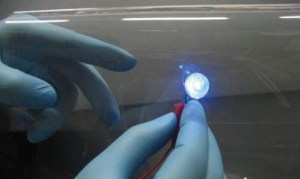
Through the technology development, the purpose was to develop high reliability material for transparent electrodes for use in flexible display through obtaining manufacturing technology of metal-based transparent electrode material, oxide transparent electrode material, and hybrid type transparent electrode material. For development of metal-based transparent electrode materials, complex synthesis technique for organic metal, synthesis technique of metal wire, micropattern engraving formation technique, and large-scale roll to roll thin film formation technique were developed. For development of oxide transparent electrode material, oxide sputtering target formation, high-density target manufacturing technique, and oxide thin film formation technique through large-scale sputtering method were developed. In addition, research for development of interface of thin film and base material to improve curvature resistance has been implemented. Furthermore, development of hybrid type transparent electrode material has been proceeded in order to maximize strengths of metal-based materials and oxides.

Industrialization: Currently, the application field of transparent electrodes is mostly focused on the market of flat panel displays. Material used in application is mainly ITO thin film; however, with the development of flexible transparent electrodes, it is expected to replace previously used ITO and create new industry where application of ITO is limited or nearly impossible. If board and electrode installed in the upper and lower parts of LCD and OLED are replaced with transparent electrode, it would become a cash cow in the display industry that is continuously growing. Material for transparent electrodes manufactured through this technology is expected to be applied not only to display field such as LCD, OLED, and FED but also to touch panel, transparent electromagnetic shielding, transparent heating element, electro- conductive glass, gas sensor, heat reflective coating film, solar battery, lighting and automobile, transparent anti-static film, communications antenna, and optical filter. In addition, it is expected to be applied to next-generation flexible display and electronics that have characteristics such as ultra lightness, low power, low cost, portability, and high functionality.

Problem-solving in industrialization: The most important characteristic of transparent electrode material for flexible display is to maintain high transmittance and low resistance while having excellent flexibility. While metal-based transparent electrode has high flexibility, transmittance, and sheet resistance, haze property is insufficient. On the other hand, oxide transparent electrode has excellent haze property while having insufficient flexibility. Therefore, the purpose was to to develop hybrid type, transparent electrode material that maximizes strengths of the two materials and minimizes weaknesses.

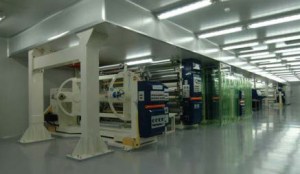
<High-quality roll to roll transparent electrode
/ Transparent electrode with high transmission and low resistance
/ Roll to roll coating equipment>

Technology developer: InkTec Co., Ltd. / +82-31-494-0001 / www.inktec.com

korean-electronics.com | Blog Magazine of korean electronics, brands and Goods

High performance, high reliability microwave coaxial cable and connector with 50GHz ultra-wideband for aerospace and defense use

Technology overview: Due to improvement in communications and dramatic increase of users, development of communications equipment for super-high frequency (microwave) is needed, and ultra-wideband  has been used in response to the current trend. In addition, high-quality, active and passive parts in communications equipment are required to have ultra-wideband performance. High frequency parts processing, high frequency signal mainly use coaxial cable that is convenient in making ground connection electrically while combining individual module mechanically in order to connect circuit with the outside world. Coaxial cable is also beneficial since signal wire can be easily connected by soldering.

https://korean-electronics.com//inquiry

Input/output port of RF (Radio Frequency) communications  equipment consists of a coaxial connector that is convenient for locking. However, when modules are connected or an antenna signal is sent or received through coaxial cable, discontinuity effect occurs due to structural differences between connector and cable, and mismatching in transmission mode is also caused. In addition, property of high frequency transmission is decreased due to parasitic capacitance, which leads to huge restriction in overall performance of super-high frequency and millimeter wave system. In particular, as the length of coaxial cable is extended, insertion loss is also increased, which requires an amplifier with high gain, thereby causing serious problems in power consumption and production cost. Low-loss cable consists of central conductor, dielectric, GND tape, GND braid, and jacket, which is the same composition as general  RF cable,  but it forms air space in dielectric. When dielectric constant of 50 Ohm coaxial cable is reduced, the size of the central conductor can be enlarged, which in turn can dramatically reduce the loss of transmitted signals.

Industrialization: Since manufacturing technology for low-loss cable has been insufficient in Korea, high frequency coaxial cable, connector, and sealing cable assembly have been entirely dependent on foreign countries. GigaLane secured technology, implemented the same performance, and applied to domestic and international fields of aviation, aerospace, and defense. In the aviation field, low-loss sealing cable assembly for aviation use has been supplied to client companies, mounted in trainer aircraft and combat aircraft. In addition, GigaLane’s low loss cable is being applied to the next-generation TICN (Tactical Information Communication Network) in the defense field.

Problem-solving in industrialization: There are only a few companies in the USA and Europe that have developed high-frequency broadband cables and connectors, and materials and technologies have not been known to public. In addition, convergence technology combining RF technology and mechanism engineering has to be implemented since product needs to be developed and manufactured through facilities. Through implementation  of required assignments, supply and demand of materials along with technique and know-how have been accumulated, which has led to the successful development.

Untitled-25.jpg

Technology developer: GigaLane Co., Ltd. / +82-31-233-7325 / www.gigalane.com

korean-electronics.com | Blog Magazine of korean electronics, brands and Goods

Design technique for MPSoC

Technology overview: In general, SoC (System-on-Chip) means integration of circuits that have various functions in one chip. Due to dramatic reduction of product life cycle and intensified time-to-market https://korean-electronics.com//inquiryconstraints, there have been increased efforts and requests to make improved flexibility of previously designed SoC, thereby being utilized in more products. Reuse of SoC depending on applications has been implemented through a method that uses embed of a strong, universal-use microprocessor as software to realize functions required by applications as needed. Real-time processing of various jobs in a single processor requires high operating frequency, and this resulted in low energy efficiency in SoC.

Therefore, in embedded system where power performance and energy efficiency are highly emphasized, a single processor-based or DSP based system is no longer considered as a proper SoC structure.  In most embedded applications, use of task-level parallelism is highly probable; therefore, integration of numerous types of processors, DSPs, and accelerators  for specific application field into one chip is much more favorable in area, power, and reusability of SoC. MPSoC (Multi-Processor  System-on-Chip) is a design method for SoC with new concept satisfying the above-mentioned conditions.It means that the MPSoC technology installs several types of processors, large quantity of memory system, interfaces, and other various IP in one single chip. Development of the design technique enables development of elements that can build low power, high performance MPSoC. Development of compiler and system software to support the created MPSoC has resulted in development of technology that can rapidly construct and industrialize MPSoC required in various application fields.

Untitled-24

Industrialization: Industrialization of the developed MPSoC has been implemented in two directions. The first direction wasto develop own SoC chip utilizing MPSoC technology and sell it. The second direction was to use licensing MPSoC design technique or to develop ASSP (Application  Specific Standard Product) SoC chip through cooperation with client companies. SoC chip in the first direction that was self- developed through utilization of MPSoC technology was industrialized as the main MCU in digital voice tracer sold as Phillips ODM (Original Development Manufacturing).

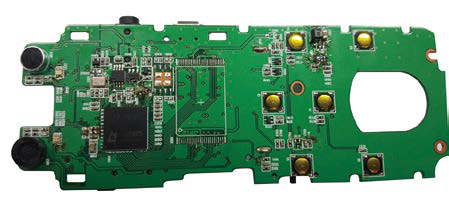
As the main MCU, a 32-bit dual-core processer was used, and a 16-bit DSP was applied as co-processor. Peripheral circuits such as USB 2.0 OTG, 24-bit sigma-delta audio CODEC, NAND  flash I/F, and DDR memory I/F were embedded in SoC chip, and has been accomplishing exports of $4 million annually. Development and industrialization of ASSP SoC in the second direction through cooperation with client companies have led to development of SoC chip for voice recognition,  SoC for handwriting recognition, and LTE M2M modem SoC. 32-bit dual-coreor quad-core is used as main MCU, and HW accelerator that can process each application in an efficient way is embedded. SoC chip for voice recognition has been industrialized on an annual scale of 300~500Kpcs, and SoC chip for handwriting recognition is currently in development stage of the set with the developed chip. The first industrialized products were released in August 2015.

Problem-solving in industrialization: The biggest challenge in industrialization of design technique of MPSoC is the high cost of the initial stage of development for SoC chips.  When  several  IPs such as PLL, USB, ADC, DAC, etc. are used with 55nm process to manufacture  SoC chips, development expense ranges from KRW 800 million to KRW 1 billion, which is considered a huge risk for SMEs to take. Developing industrialized chip through cooperation with client companies poses another difficulty other than the huge cost spent in initial development, which is a fact that many client companies do not have experience related to developing processor embedded SoC. In order to solve this problem, planning HW and supporting SW technology are essential. For example, technological support for HW developed by client companies and I/F design of main processor must be provided. In most cases, SW support such as writing Initial Boot Code, OS porting support and driver preparation for used circuits in surrounding is essential, and development of industrialized chip can only be made possible through these technological supports.

Technology developer: Zaram Technology Inc. / +82-31-779-6700 / www.zaram.com

korean-electronics.com | Blog Magazine of korean electronics, brands and Goods