Hanwha plans to build the nation’s largest photovoltaic cell plant

Hanwha Group recently announced its decision to building the nation’s largest photovoltaic cell plant. Hanwha Q CELLS Korea will invest 350 billion won ($314 million) to build a 1.5- gigawatt photovoltaic cell plant in Jincheon, North Chungcheong Province.

The Jincheon plant, which is due for completion by late this year, will be the largest in the country. The photovoltaic cells produced at the plant will supply solar energy to the entire 2.5 million population of Daegu. The company said “the cell production plant will mark a cornerstone for Hanwha to branch out into the plant producing cells by shifting its focus from the downstream operations of the photovoltaic sector (photovoltaic power plant design, construction, operation ). ”

Meanwhile, Hanwha Q Cells, another unit of Hanwha Group, also recently released its plans to add a module plant with a 250 megawatts (MW) capacity in Eumsung, North Chungcheong Province, which will begin commercial production within this month. With an additional 250 MW plant, it will operate a total of 500 MW plants.


korean-electronics.com | Blog Magazine of korean electronics, brands and Goods
Korea to launch massive economic cooperation with India

Korea decided to expand large-scale bilateral economic cooperation with India after Indian Prime Minister Narendra Modi visited Korea recently.

Korean President Park Geun-hye and the Indian premier recently had a summit meeting in Cheong Wa Dae and decided to elevate the bilateral relationship to a ‘special strategic partnership.’ The two countries entered into negotiations to improve their free trade agreement, the Comprehensive Economic Partnership Agreement (CEPA), which has been cited as an obstacle for trade due to lower tariff cuts between the two nations than those with rival countries like Japan.

Above all, Korea would provide a fi nancial package worth $10 billion for the ‘Made in India’ drive by the Indian prime minister to attract enormous investments and nurture the manufacturing industry.

The prime minister, who was in China before coming to Korea, promised investments worth $20 billion in various sectors including railroad construction, irrigation technology support and tourism cultural exchange.

The construction plans for infrastructure in India released by the presidential office on the day include the construction of 100 smart cities (a total of $15 billion with an average of $150 million by city), Delhi -Mumbai industrial corridor ($90 billion) and the construction of infrastructure for a high-speed railway ($140 billion over the next five years). The value of orders alone would amount to $200 billion. In particular, the Indian prime minister sincerely asked the Korean government and companies to construct a shipyard to build an LNG- carrier vessel during the summit with President Park.


korean-electronics.com | Blog Magazine of korean electronics, brands and Goods

LG Electronics take the 1st place in ‘telematics’ for three consecutive years

LG Electronics, South Korea’s No. 2 electronics company, became a company that took the No. 1 position in the global market share of ‘telematics,’ an essential component of autonomous vehicles, for three consecutive years.

Telematics is a component that uses a kind of communicat ions t echnology and faci l itates communication with the outside as it is installed inside vehicles. The part provides several services such as an automatic vehicle location system, vehicle remote diagnosis and traffi c information, with the 4G Long-Term Evolution (LTE) platform featuring Internet access functionality in vehicles are gett ing the limelight as a key component of Connected Cars in the future.

The company took competitive advantage of its vehicle components division as telematics in its first quarter (Q1) report recently released. According to SA, a market research institution, its market share in the telematics global market came to 30.1 percent and 30.3 percent in 2013 and 2014, respectively. The figures place it in the No. 1 position in the global market.

Since the launch of the vehicle components division in July 2013, the company released the market share of telematics for the first time. The company was followed by U.S.-based Harman with 15 percent and Japan-base Denso with 10 percent in 2014. The market share of LG Electronics was estimated at 26.2 percent in Q1 this year in the global telematics market.


korean-electronics.com | Blog Magazine of korean electronics, brands and Goods
Daum Kakao to launch a Korean Version of YouTube

Daum Kakao will begin its ‘Kakao TV’ service from this month, allowing for mobile video to be viewed and shared through the social chatting service Kakao Talk. Currently, the biggest attention is focused on whether the new service could be a rival of the existing similar services of YouTube and Facebook.

According to industry sources, Daum Kakao is boosting its promotional eff orts ahead of the launch of its Kakao TV service. The new service will distribute video clips produced by non professionals with smartphones, in addition to those produced by the existing broadcasters. A spokesperson for Daum Kakao explained, “We’re preparing to release the mobile video-oriented service and aim to circulate more video contents through Kakao Talk,” adding that the details have yet to be decided and they will be ready within June.

Kakao TV will be diff erent from the ‘Daum TV Pot’ service which is already in operation. Daum TV Pot is mostly operated on PC, while Kakao TV will be mobile-oriented and has a primary purpose of sharing smartphone-based videos. The fi rm became confi dent about the new service as more videos are being uploaded on Kakao Story.

In cooperation with video contents producers that Daum-Kakao has contracted from early this year, Kakao TV will focus on quality contents to attract more attention from viewers. Aside from Kakao TV, Daum Kakao is making eff orts to expand its Online to Offline (O2O) service which connects real life with mobile. It is actively preparing for new projects about character and mobile banking service.

Korea’s economy in vicious cycle

South Korean economy is experiencing a vicious cycle with its wobbling exports, a last resort for the nation’s economy. Falling exports drive down the current account surplus, which, in turn, causes the won to depreciate, boosting export competitiveness and as a result leading to export volume growth.

However, the recent drop in exports in Korea, reflected in lagging corporate performance, resulted in slowing domestic consumption and the subsequent expansion of current account surplus. Then, the won climbed, which, in turn, hurt exports, and as a result shrank the economy further.

In response to the shrinking economy from worsening exports, the government intends to implement countermeasures by late June.

According to the Ministry of Strategy and Finance, the Ministry of Trade, Industry and Energy and Bank of Korea, current account surplus for this year is forecast to record $96 billion, setting a fresh high from last year’s $89.2 billion. However, ‘surplus during recession’ is becoming more apparent as the surplus is growing due to a sharper fall in imports than exports.

In actual fact, the current account surplus for March came to $10.3 billion, the third highest on a monthly basis. In April, exports slid twice faster than imports, with exports down 8.1 percent from the same period a year ago and imports by 17.8 percent.


korean-electronics.com | Blog Magazine of korean electronics, brands and Goods
Korea concludes a bilateral FTA with Vietnam

Korea and Vietnam recently officially concluded a free trade agreement with Vietnam. The two countries, which are under the Korea-ASEAN FTA, are expected to expand bilateral trade with the further upgraded FTA. The Korean government has set a goal for the implementation of the FTA within this year through follow-up procedures such as ratification by the National Assembly.

The Korea-Vietnam FTA was recently officially signed by South Korean Minister of Trade and Industry and Energy, and his Vietnamese counterpart in Hanoi. Under the bilateral FTA, the countries would seek to further expand their bilateral trade based on the Korea-ASEAN FTA which came into effect in June 2007. Under the Korea-ASEAN FTA, Korea has eliminated its import tariffs on 91.7 percent of products delivered from Vietnam. Korea would raise it to 94.7 percent while Vietnam would increase it from the existing 86.3 percent to 92.4 percent.

Regarding the number of products, Korea would completely remove its import duties on 499 products and Vietnam on 272 goods, within 15 years. In particular, the FTA would eliminate tariffs on home appliances, cosmetics and major parts of cars, which were excluded from the Korea-ASEAN FTA, within 10 years to contribute to the expansion of exports of Korean products. The Korean Trade Minister explained, ”The Korea-Vietnam FTA will help Vietnam’s economic development and boost bilateral trades by expanding Korean firms’ investment in Vietnam,” adding that it would be a good example of “a mutually rewarding FTA.”


korean-electronics.com | Blog Magazine of korean electronics, brands and Goods

Gaining a competitive advantage with the development of intelligent CCTVs

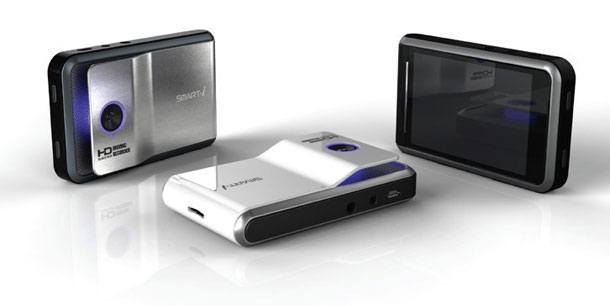
[INQ. NO. 1506E14] Established in 1998, ITX Security mainly manufactures Digital Video Recorders (DVR), Full- HD IP Cameras, CCTV Cameras and Vehicular Black Boxes, leading the local security market.

DVRs developed and manufactured by ITX Security have emerged as staple products in the domestic imaging device market based on independent technology, and their performance is highly recognized, to the extent that 39.1% of the total products are exported to North America and 26.5% of them are exported to Europe.

https://korean-electronics.com//inquiry ITX Security provides the best security solutions to clients on the strength of diverse equipment, including next-generation control systems, PC-based DVRs and specialized camera lines, as well as skilled engineers. It also makes efforts to acquire advanced quality management systems and achieve sustainable managerial development by obtaining the Certification of Quality/Environment Management System (ISO 9001, ISO 14001).

The company aimed to develop intelligent CCTVs that could save high-quality images and that boasted user-friendly design and image analytics functions. ITX Security started conducting a technology development project for the purpose of developing a wire-andwireless IPbased next-generation intelligent imagerecognizing device.

intelligent-CCTVs The existing DVRs that had been manufactured by ITX Security compressed imaged recorded in a camera and digitally saved them on a hard disk. Taking this a step further, the company produced the Network Video Recorder (NVR), an image device equipped with a built-in web server. As it has its own IP address, it can transmit data from an imaging device to a PC, making it possible to watch images without separate conversion.

Technologies developed by ITX Security include profiling, distributed data processing and video analytics. This technological development made it possible to effectively control megapixel image data exchanged on the NVR network and realize intelligent image surveillance that helps proactively respond to crimes.

The first reason why ITX Security gained a competitive edge in the CCTV market is that it made investments in human resources. Since the company decided to develop a new technology in the nextgeneration image security market, it considered the introduction of the best engineers as the top priority.

It was not easy to induce excellent engineers to join new R&D projects conducted by venture companies in the beginning. Engineers showed an unwillingness to join R&D projects conducted by venture companies that faced an uncertain future.

However, the executives of ITX Security succeeded in persuading engineers after several attempts, and they were able to secure excellent human resources. This was due to the fact that the executives were able to make engineers understand that ITX Security could take a leading role in the CCTV industry only when its corporate potential was combined with engineers’ strong competence.

intelligent-CCTVs_1 The second reason why ITX Security gained a competitive edge over other imaging device providers is that the company was able to come up with an idea to enhance convenience on the part of users.

As IP product groups exchange data on the network, each and every device owns an IP address. Existing DVR systems had a simple structure where a camera is connected to a DVR and coaxial cable.

On the other hand, an NVR had a structure where multiple cameras go through a network switch to be reconnected to the NVR, and various network set-ups, including IP address setup and sharer option setup, have to precede this. Ordinary people who have used CCTVs might have found this process difficult.

ITX Security increased the number of LAN ports from one to four to simplify the “Camera-Sharer-NVR” process to a “Camera-NVR” process based on a one-onone connection. In addition, instead of the sharer, network functions were added to enable an NVR to recognize a camera as soon as the camera is connected to a LAN line.

The idea was aimed to help users experience better performance without a drastic change in existing methods given that CCTV users are small business operators unaccustomed to using a computer. The process elicited a prompt response from excellent security companies at home and abroad as soon as it was introduced in an exposition, and it also led the company to meet S1, Korea’s largest security company.

ITX Security emerged as the first mover in the IP product group market by boldly changing existing analog image surveillance products into IP-based image surveillance ones. Prior to the new technology, main products were confined to DVRs, and the company recorded 40 billion won in annual sales while reaching a plateau.

However, it was able to post 30 billion won in sales of IP cameras and NVRs in the first half of this year after development of the new technology, and it is expected to record 80 billion won in sales this year. Two years of efforts to create jobs was not wasted. Their employees, who numbered 160 prior to the project, were increased to number 200. The global image surveillance market is expected to grow by 14% per annum for the upcoming five years, and the NVR sector is expected to record an annual growth rate of 24%.

Also, as analog CCTVs are replaced with digital ones, and demand for CCTVs in public institutions is soaring, the outlook for ITX Security is more positive. ITX Security is expected to record 120 billion won in sales in 2014 and 150 billion won in 2015, growing 25% or more every year in terms of sales. Confidence in product planning and manpower on the back of “Time to Market” is the greatest advantage and asset owned by ITX Security. ITX Security decided to advance into the interactive technology sector instead of settling for the manufacture of existing products.


korean-electronics.com | Blog Magazine of korean electronics, brands and Goods
Finger-vein authentication system

[INQ. NO. 1506E13] Korecen is a leading biometric products manufacturer in Korea. It has been developing finger-vein access control & time attendance products to cover all disadvantages of current biometric products such as fingerprint, facial and iris readers. Patents for its own finger-vein identification algorithm are registered in the USA, UK, China, Japan and Korea.

https://korean-electronics.com//inquiry Korecen’s FV-100 is the latest IP network-based finger-vein authentication control & time-attendance terminal that uses its own technologies. With the built-in world’s-highest level of algorithm, it performs 1:1,000 authentications within just one second. Supporting PoE, it allows easy installation and lessen users’ burdens.

Besides, it provides various interfaces including TCP/IP, RS-485, RS-232, Wiegand. When under the process of authentication using built-in cameras, it sends by photographing photos, thereby increasing reliability. It supplies touch-screenbased intuitive GUI and enables self-authentication using RF cards.

Finger-vein-authentication-system


korean-electronics.com | Blog Magazine of korean electronics, brands and Goods
Full HD network video recorder

[INQ. NO. 1506E12] uPrism is a leading company of the video conference solution industry in the country based on its numerous commercialization experience in providing more effective improvement of the enterprise collaboration environment, unique multimedia processing technology, and UX know-how.

Full-HD-network-video-recorder_1https://korean-electronics.com//inquiry uPrism has developed into a multimedia collaboration solution expert, providing specialized value to various imagerelated industrial fields such as disaster control, telemedicine and video surveillance that have great future growth potential.

Full-HD-network-video-recorder uPrism’s full HD network video recorder, model “INR-1600,’’ is among its multiple numbers of attractive NVRs. It provides a monitoring system for health check, storage status, and network access. It is designed with a function of real full HD display, with an ability of 16ch full HD dual recording. It fully supports easy & intelligent mobile application for iPhone, iPAD, etc. As an operating system, linux is embedded. Operating temperature is permitted within the range of from 0˚C to -40˚C in design. And also, onvif & various IP camera support is added for the solution.


korean-electronics.com | Blog Magazine of korean electronics, brands and Goods

Wireless CCTV system

[INQ. NO. 1506E11] Kanaeng’s MBro-WCS is a surveillance system that transmits highdefinition video through a control center wirelessly. The system converts HD/SD video into digital signals through wired/ wireless transmitters, which are then transmitted to the control center. Transmitted signals are reverse converted into SD/ HD video to be used for security and monitoring purposes.

https://korean-electronics.com//inquiry The system comprises a wire/wireless image transmitter (MBro-WVT), wireless image receiver (MBro-WVR), high-resolution image recording/ storing device (MBro- MVS) and image Display & Management (CMS).

The system is based on a ‘high-speed image storing patent’ and ‘long distance transmission for the high-definition video technology’ system’s capability on storing and recovering high volume of videos. This allows it to overcome traditional technical limitations on installing a massive number of CCTVs over large areas.

The MBro-WVT (wireless video transmitter) is a device that can transmit SD / HD video wirelessly from short range to long range (longer than 3km) by converting/compressing from analogue to digital signals.

Wireless-CCTV-systemDepending on the installation environment, both indoor and outdoor types exist. Choice can be made between SD composite and HD-SDI types based on its target uses. Cost-effective and diverse functionalities of the system provide high usability.

MBro-WVR provides complete compatibility with 802.11a/n wireless devices. This device provides impressive performances with industrial wireless transmission devices, wireless video transmitters (CCTV), and Point-to-Point networks. By fully supporting 5GHz bandwidth and 802.11a/n, transmission is faster and covers a large area even compared to wired connections (150 Mbps).

MBro-WVR (wireless video receiver ) also provides ‘Enclosed Wireless Mesh Technology’ which is only available in expensive wireless Mesh devices. Furthermore, the system supports ‘Bridge mode’ which allows long range transmission with 802.11a/n standard Access Points

MBro-WVR automatically selects a channel that can provide the best performance by analyzing Analog signals and Wi-Fi signals in 5 GHz bandwidth. Administrators can also monitor signal status in real time, such as Wi-Fi signal strength. The company’s MBro-MVS provides a large amount of SD/HD videos taken from camera to be transmitted and stored without losing their high quality. The device also offers a tremendously long recording time with high reliability.

New technology that allows the processor to store the data in parallel also solves performance problems with the previous version of device which was processed in serial. Such improvement enables a large number of SD/HD Videos to be saved and restored almost instantly.

The device also allows instant search/monitor mechanism (within 1s) and unlimited length recording ability to store/restore 128 channel/30fps videos. MBro-MVS offers the users with various administrative options that provide compatibility with other peripheral devices. The system is highly configurable, thus fully providing effective usage of disk drives (100% of hard disk space can be used).


korean-electronics.com | Blog Magazine of korean electronics, brands and Goods